

Backlog of bills spurs talk of special session at Colorado Capitol
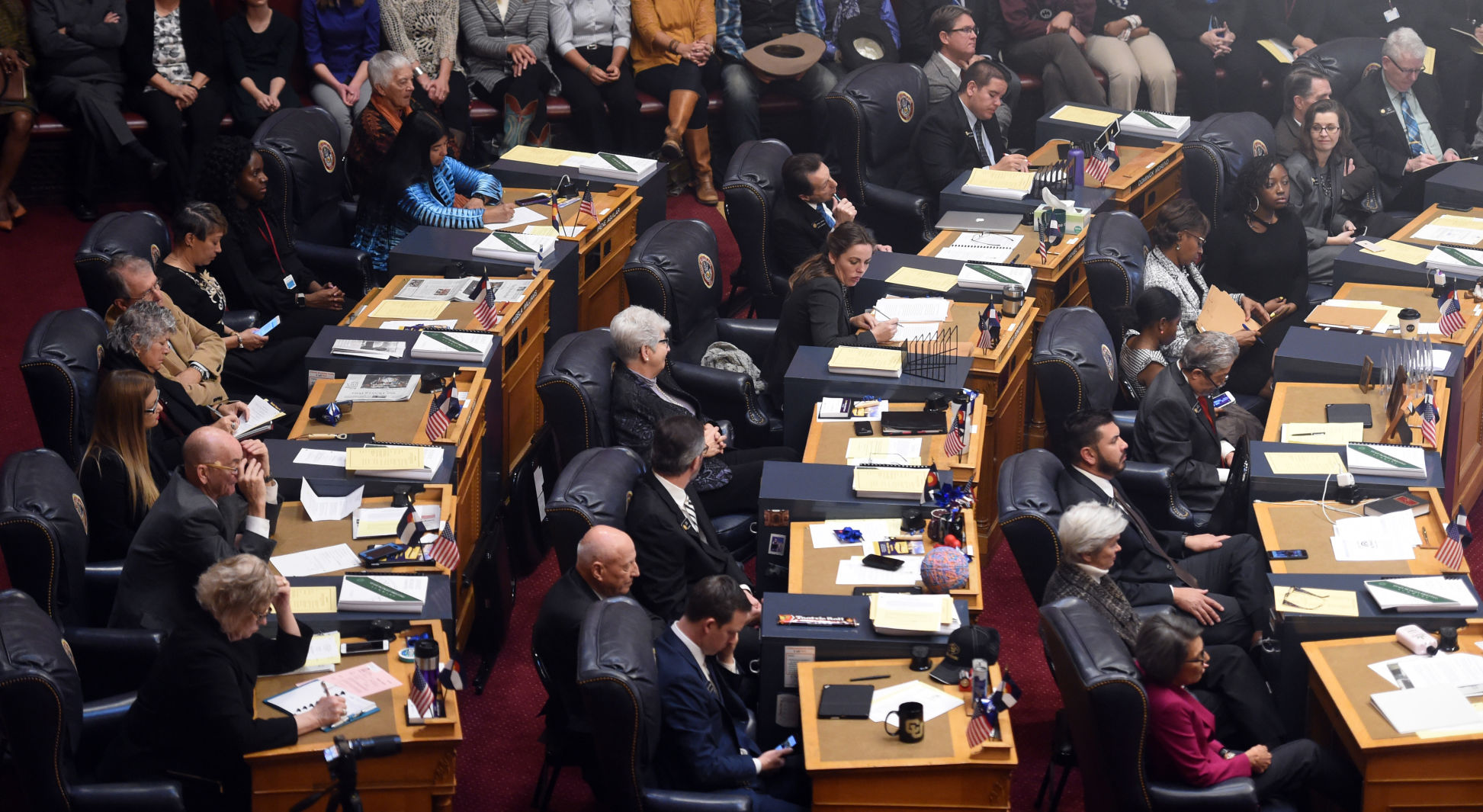
With days to go and a still-packed agenda, Democrats at Colorado’s Capitol are talking about the possibility of a special session to take up business that doesn’t get done before the General Assembly’s Friday deadline.
Majority Democrats blame Senate Republicans for stalling progress on legislation with various slowdown tactics that continued Monday. Republicans have said they are responding to Democratic overreach on controversial legislation.
By 4 p.m. Monday, two bills had passed the Senate during the day, versus dozens in the House.
At this rate, say Democratic leaders, many of the 128-plus bills left on the Senate calendar could die when the General Assembly adjourns, as required by law, by midnight Friday.
When Gov. Jared Polis mentioned the possibility of a special session a couple of weeks ago, it was speculative, said House Speaker KC Becker, a Democrat from Boulder.
Now, “there’s a good possibility of it,” she told Colorado Politics Monday.
Senate President Leroy Garcia, D-Pueblo, told Colorado Politics that he has been talking to Gov. Jared Polis about a special session, topics to be announced.
Democrat Polis has the authority to call lawmakers back for a special session, and must dictate what issues would be covered in that special session.
That call could include anything that dies on the calendar on Friday.
Asked about the possibility of Polis calling a special session late Monday, a spokesperson for the governor said: “Colorado voters expect lawmakers to do their jobs. There is still plenty of time for the legislature to accomplish what they came here to do.”
Colorado’s Constitution also allows the legislature to call a special session itself, but that would require a two-thirds vote in each chamber, meaning some Republican votes would be needed.
Under Senate rules, each member to speak for up to 20 minutes on any bill up for a final vote.
“It’s difficult when you’re seeing hours and hours of debate, and [then] bills pass 35-0,” Garcia said. “It’s uncustomary to spend six or seven hours on third-reading debates. On seconds, that’s fair. On thirds, you usually say why you’re a ‘no vote’ and move on. This is unprecedented.”
“We should be able to accomplish what we need to in 120 day-legislative session, but that’s more of a philosophical perspective” at this point, Garcia said.
Senate Minority Leader Chris Holbert, a Republican from Parker, could not be reached for comment on the matter Monday. Holbert told Colorado Politics last week that there’s a different dynamic with a split legislature than exists now with Democrats in charge in both chambers.
“We have one-party control, and we don’t control what’s introduced or what’s on the calendar,” he said. “When we have a second or third reading calendar with 30 bills, we’re going to talk about this. We’re not having bills read at length. We’re debating.”
“The tide has come in,” Holbert added. “We’re getting hit with a tsunami of bills from the House, but we’re way behind, even with fewer bills introduced this year. We’re not responsible for that.”
Among the bills awaiting action in the Senate are several sponsored by Becker, including a bill on climate change.
“We’ll just see where we end up on Friday, but there’s a pretty decent chance there could be a special session,” the speaker said.
Even bills with Republican sponsors in the Senate are caught up in the slowdown.
“They are just slowing down the process,” Becker said. “It’s not debating bills; it’s slowing down, and there’s not much that can be done.”
House Republicans have engaged in slowdown tactics, but not to the degree that such tactics are being used in the Senate. Becker attributed that to two factors: the close margin the majority holds in the Senate as opposed to the House’s wide 41-24 difference, and the relationship she and her majority leader, Rep. Alec Garnett of Denver, have with their minority counterparts in the House.
“When I was majority leader, I constantly checked in” with House Republican leader Patrick Neville of Castle Rock, a practice continued by Garnett, Becker said, and that has meant keeping the minority party apprised, informed and, most of all, included.
Neville told Colorado Politics Monday that he hadn’t heard about discussions on a special session.
The Senate “has 120 days like they always have, and if they can’t get it done in 120 days, that’s pathetic,” Neville said.
The Senate needs to make choices, he added. “In the House, we’re not debating things or using procedural moves because the House is actually prioritizing bills ahead of other pet projects. I don’t see the same happening on the Senate.”


Aurora not liable for suspended officer’s attack on woman, federal court rules
Michael Karlik
michael.karlik@coloradopolitics.com
Updated 58 minutes ago
The Denver-based federal appeals court decided on Monday that the city of Aurora cannot be held liable for an officer’s attack on a woman while he was serving a suspension for shooting a different person. Wyoma Martinez filed suit against...

Colorado’s unprecedented AI law can’t be enforced yet, judge rules
Marianne Goodland
marianne.goodland@coloradopolitics.com
Updated 21 minutes ago
A federal judge on Monday issued a delay in enforcing Colorado’s artificial intelligence law, touted by backers as a tool to protect consumers and residents from algorithmic discrimination but which critics called heavy-handed and unworkable. The lawsuit against Senate Bill...
Colorado bill dealing with administration lobbyists garners support but faces potential veto from Polis
Marianne Goodland
marianne.goodland@coloradopolitics.com
Updated 3 hours ago
A bill that would require lobbyists who work for the state government to abide by the same rules that govern their peers representing for-profit companies and organizations is winning support in both chambers of the Colorado legislature. Gov. Jared Polis,...

Colorado’s $46.8 billion budget nears finish line. Here’s what changed.
Marianne Goodland
marianne.goodland@coloradopolitics.com
Updated 3 hours ago
Colorado legislators on Tuesday adopted a $46.8 billion plan to pay for state operations and programs next year after a joint panel reconciled differences between the House and Senate versions. A small group of lawmakers had resolved those differences. Lawmakers...
Colorado lawmakers propose security overhaul after rise in political attacks nationwide
Marissa Ventrelli
marissa.ventrelli@coloradopolitics.com
Updated 4 hours ago
Colorado legislators unveiled a 60‑page bill that would expand protections for elected officials, staff, and judicial employees, responding to a string of high‑profile attacks nationwide and growing safety concerns inside courthouses and the state Capitol. Part of their effort is...

Lauren Boebert’s private financial records sought by Biden’s DOJ, U.S. House committee says
Colorado Politics
colorado-politics@coloradopolitics.com
Updated 6 hours ago
A U.S. House committee is seeking documents from a Colorado bank, saying new information shows that the Biden administration might have sought the private financial records of U.S. Rep. Lauren Boebert. This comes as part of a congressional investigation into...

Colorado Democrats eye new state requirements for ICE facilities
Marissa Ventrelli
marissa.ventrelli@coloradopolitics.com
Updated 4 hours ago
Colorado state representatives voted along party lines to pass a bill establishing additional inspection requirements for immigration detention centers and expanding civil liabilities related to sharing information with federal immigration authorities. It’s the latest proposal to come out of the...

Lawsuit from men wrongly arrested for Denver shooting dismissed by federal appeals court
Michael Karlik
michael.karlik@coloradopolitics.com
Updated 6 hours ago
The Colorado-based federal appeals court dismissed a lawsuit last week from two men who were arrested as suspects in a downtown Denver shooting when they instead appeared to be the targets. Trevor Puller and Deandre Hutchinson alleged that they were...
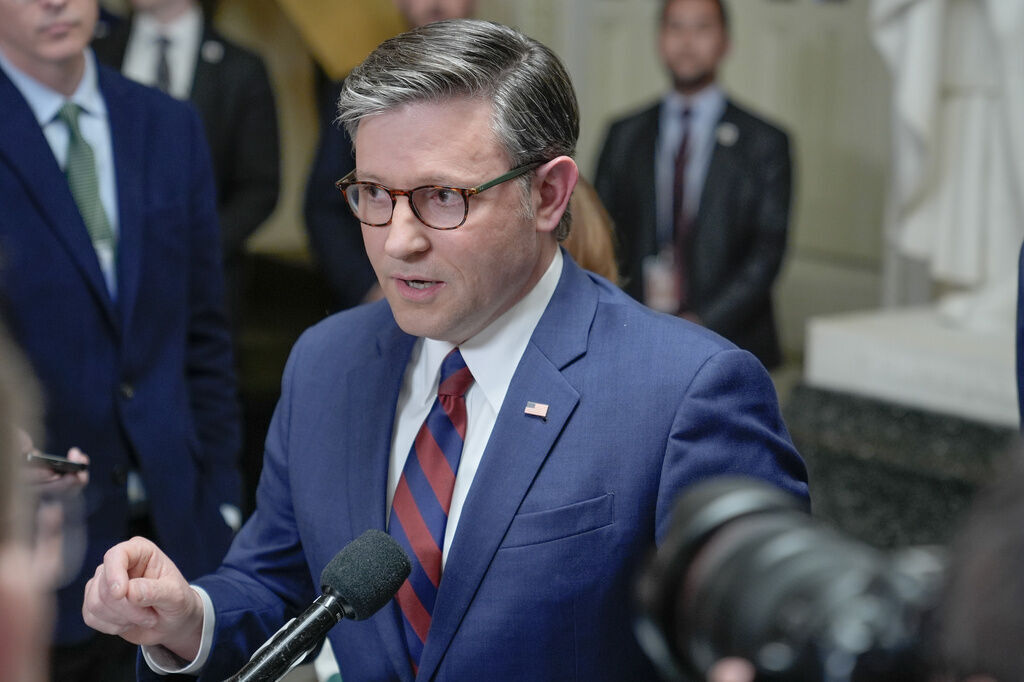
Johnson delays votes on major bills as GOP infighting derails agenda
Hailey Bullis and Lauren Green, Washington Examiner
hailey.bullis.and.lauren.green.washington.examiner@gazetteedit.wpenginepowered.com
Updated 6 hours ago
Strife within the House Republican conference is once again on public display, derailing Speaker Mike Johnson’s (R-LA) plans to pass three major pieces of legislation this week. The House Rules Committee was set to meet at 8 a.m. after having...

Trump claims Iran is in ‘State of Collapse’ and begging US to open Strait of Hormuz
Christian Datoc, Washington Examiner
christian.datoc.washington.examiner@gazetteedit.wpenginepowered.com
Updated 6 hours ago
President Donald Trump claimed on Tuesday that Iranian officials have requested the United States drop its blockade of the Strait of Hormuz as ceasefire negotiations have failed to yield substantive progress in recent weeks. Trump posted on Truth Social, just...
PREV
PREVIOUS

Trimmed-down family leave bill gets preliminary early OK in Colorado House
The Colorado House gave preliminary approval to a family leave bill Monday, but not one that actually creates the state-run wage-guarantee program. Faced with opposition from business groups and Republicans, Senate Democrats turned the insurance program into a task force to study its feasibility and, more importantly, it’s solvency. The study would shape legislation next […]

COVER STORY | The influencers: A look at how lobbying works at the Colorado Capitol
“Everything’s fair in love and April,” a Colorado lobbyist posted on Facebook. The summation referred to the Colorado General Assembly, which will adjourn its four-month romp on May 3. Through this year’s session, policies and billions of dollars have been on the legislative table for sweeping programs such as all-day free kindergarten, equal pay for […]