

Conservation-easement reforms clear Colorado House on bipartisan vote

The winds of change may finally be blowing in the direction of Coloradans who say they lost hundreds of thousands of dollars and clear title to their lands in the state’s conservation easement program.
Republican lawmakers from the Eastern Plains have tried with minimal success over the past few years to persuade Democrats to work with them on solutions for those who claim land trusts got conservation easements limiting development of their property and the landowners did not get expected tax benefits.
The latest attempt cleared the House Wednesday, when House Bill 1264 won approval on 45-20 vote. It now heads to the Senate.
The bill drew six Republican “yes” votes, including from Republican Rep. Rod Pelton of Cheyenne Wells, whose district includes many of those who claim they’ve been abused by the program.
> RELATED: COVER STORY | Pain over preservation: A battle rages over conservation easements
Under the conservation easement program, development rights to a piece of agricultural land or open space typically are donated to a land trust or other authorized entity, including local governments, while the landowner retains title. The easement holder limits development of the property. In exchange, the landowner receives a state and federal tax credit.
The landowner, such as a farmer or rancher, can still use the land under limited circumstances, but control of the land remains in the hands of the easement holder in perpetuity. The only time that can be reversed is if both parties agree to terminate the easement and obtain a court order.
The program has been around since 1999 and is credited with protecting vast rural landscapes from development. About 2.5 million acres across Colorado are held under some form of conservation easement, according to a 2017 Colorado State University study.
Depending on the easement’s value, as determined by appraisers certified by the state and often recommended by the program, the landowner could get hundreds of thousands of dollars in tax credits. Most of the time it’s a larger credit than a landowner owes in taxes, so those credits are sold, often through brokers, for a percentage. The landowner gets the cash and can use it for retirement, for their kids’ college funds, to pay off mortgages or farm equipment, or to make improvements on the farm or ranch.
This applies only to the state tax credits; federal credits cannot be sold. And the federal government, according to those who have been denied state tax credits, has never revoked its tax credits for the easements.
Groups like the Colorado Cattlemen’s Agricultural Land Trust point to the hundreds of thousands of acres they’ve helped to conserve, with success stories from around the state.
Under the program’s rules, and up until 2014, the Colorado Department of Revenue had a four-year statute of limitations to decide whether those state tax credits were valid. In 2014, the department’s authority over the program was terminated by the General Assembly in the wake of dozens of complaints over the department’s denial of credits, as well as for allegedly bullying landowners into paying the credits back.
Many landowners who had sold their state credits not only had to pay them back, but also had to pay back those who bought the credits. That’s led to bankruptcies, foreclosures and farmers losing their farms, including one last week in Prowers County, according to Republican Rep. Kimmi Lewis of Kim.
The problem is that over the years, those who received the state tax credits have said the department often waited until the last minute to deny the credits. The department would then come after the landowners for those state tax credits plus penalties and interest, sometimes as high as 300%.
The department denied state tax credits for more than 800 easements, about 20 percent of the total number of easements granted, records show. The department claimed in some instances that the appraisals for the easements were fraudulent. But only six were actually determined to be fraudulent, according to witnesses at various hearings on the matter, and only one person has ever been prosecuted for abusing the program in its 20-year history.
Lewis said Wednesday that 783 people have been wronged by the program, and 80 percent of them are in her district in southeastern Colorado.
Landowners who were denied the state tax credits told those stories again in an April 1 hearing on House Bill 1264, the latest effort to put transparency into the program.
Jim Geyer of Nucla said he donated 10 conservation easements between 2009 and 2014, for a total of 1,400 acres. He’s in litigation over the denial of tax credits, which took place in 2014. In March his bank accounts were garnished and judgment writs were issued for his vehicles, farm equipment and equipment attachments, he said.
The program may have good intentions, Geyer wrote in a letter to the House Rural Affairs and Agriculture committee, but at times it creates “horrific consequences” for the landowner.
House Bill 1264 is backed by Republican Rep. Jim Wilson of Salida and Democratic Rep. Dylan Roberts of Avon, who has said he has seen the program’s benefit for his part of the state in preserving pristine mountain lands that might otherwise be developed.
But Roberts, in the bill’s April 1 hearing, acknowledged those who have been denied tax credits need to be compensated.
“We need to do better,” he said.
The bill, as introduced, also intended to increase the amount of tax credits given to those who apply for the easements. Erik Glenn of the Cattlemen’s Land Trust indicated during the April 1 hearing that it’s becoming more difficult to get landowners to take on the financial risk of an easement, given years of bad publicity about the abuses claimed by landowners.
But the House Appropriations Committee last week stripped out that money for bigger tax credits.
Lewis, who has been the loudest advocate for the past few years for making whole those who have lost their life savings or worse, has suggested that the program be put on hiatus for a year, and the money used to pay for the tax credits, around $45 million, could be better used in paying back the affected landowners.
While that idea has yet to gain traction among Democrats, paying back the affected landowners is definitely being considered, and some of Lewis’ concerns about the program’s lack of transparency also are being addressed in House Bill 1264.
The bill requires the director of the conservation easement program within the Department of Regulatory Agencies to convene a working group that, among its duties, will examine how to repay those tax credits.
That idea initially raised eyebrows among the landowners and Lewis, too, because program director Mark Weston had been directed last year under House Bill 18-1291 to convene a working group on fixes to the program. Landowners claimed those who participated were mostly those who got the easements with little or no representation from the landowners. At a joint hearing of the House and Senate agriculture committees in December, Republicans lawmakers criticized Weston over what they saw as his failure to do what the law required.
Weston told Colorado Politics last month that he did assemble a working group last October and that surveys were emailed to about 300 people, although how many were affected landowners is unknown.
An initial draft of a 900-page report Weston submitted last December recommended that landowners be made whole, but the final report said the status quo was just fine, and it made no recommendations about changes to the program or about repaying the tax credits.
Roberts took those concerns about Weston’s 2018 efforts to heart. He amended the bill on April 1 to require the speaker of the House, Senate president and minority leaders of both chambers to each recommend two people who would be on that working group, and that it has to include landowners who’ve had experience with the easements program. That’s direct accountability to the legislature, Roberts told the agriculture committee.
As approved by the House, the bill also requires making a map of conservation easements publicly available. Currently there isn’t a statewide map that shows where these easements are.
The bill also requires landowners be provided with a written disclosure that an easement lasts forever, although that also falls far short of the warning notice that Lewis sought in an earlier bill.
Lewis’ notice, which was contained in a bill that failed in the ag committee in February, would have included language that warned potential donors that as much as 18 percent of the easements have run into problems, that appraisals tend to inflate the value of the land subject to an easement, that easements are in perpetuity and binding on future owners of the land, and that landowners can be compelled to repay tax credits when the Department of Revenue rejects the tax credits years after the tax credits are granted and even when it is not the fault of the landowner.
Glenn, of the Cattlemen’s Land Trust, told Colorado Politics after the April 1 hearing that “we’re trying to come together and resolve the issue.”
He added: “The public policy [devised by the legislature] can come up with other ways to provide some relief to these landowners and get past this situation.”
Glenn said his trust does not hold any of the affected easements, but the problems affect his organization anyway because it affects the program’s reputation. People can’t tell the difference between one land trust or another, he said.
“That’s why we have to solve this issue,” he said. “But it won’t be solved through [the Department of] Revenue or the executive branch. It will come through the legislature.”
“This issue is not going to go away,” Lewis said prior to Wednesday’s vote, during which she voted against the bill. “Banks in southeastern Colorado are paying attention. The communities are paying attention. People have been wronged and the state knows it. The bill needs more work.”
In the Senate, the bill will be sponsored by Democratic Sens. Kerry Donovan of Vail and Faith Winter of Westminster.


Colorado, Utah mourn after 3 firefighters killed in wildfires
Nicholas Fogleman
nicholas.fogleman@denvergazette.com
Updated 3 hours ago
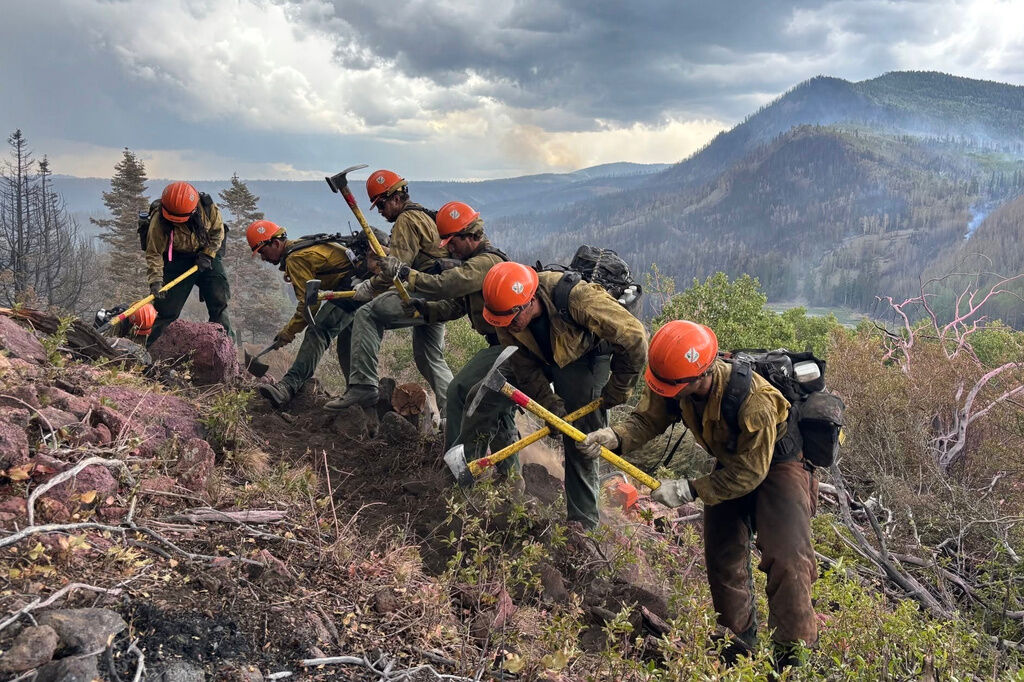
Gov. Jared Polis on Sunday mourned the deaths of three firefighters killed while battling a wildfire on the Colorado-Utah border, calling the loss a tragedy for the state and the firefighting community. The firefighters died Saturday while responding to a...

Understanding Trump’s remarkable political comeback in 2024 | Cronin and Loevy
Tom Cronin Bob Loevy
tom-cronin-bob-loevy@coloradopolitics.com
Updated 1 hour ago
President Donald Trump lost the 2020 presidential election. He inspired a riot at the U.S. Capitol to try to overthrow the results of that election. He was impeached by the U.S. House of Representatives and later was indicted for several...
Heat, wind and drought conditions spark wildfires across US West | OUT WEST ROUNDUP
Ernest Luning
ernest.luning@coloradopolitics.com
Updated 13 hours ago
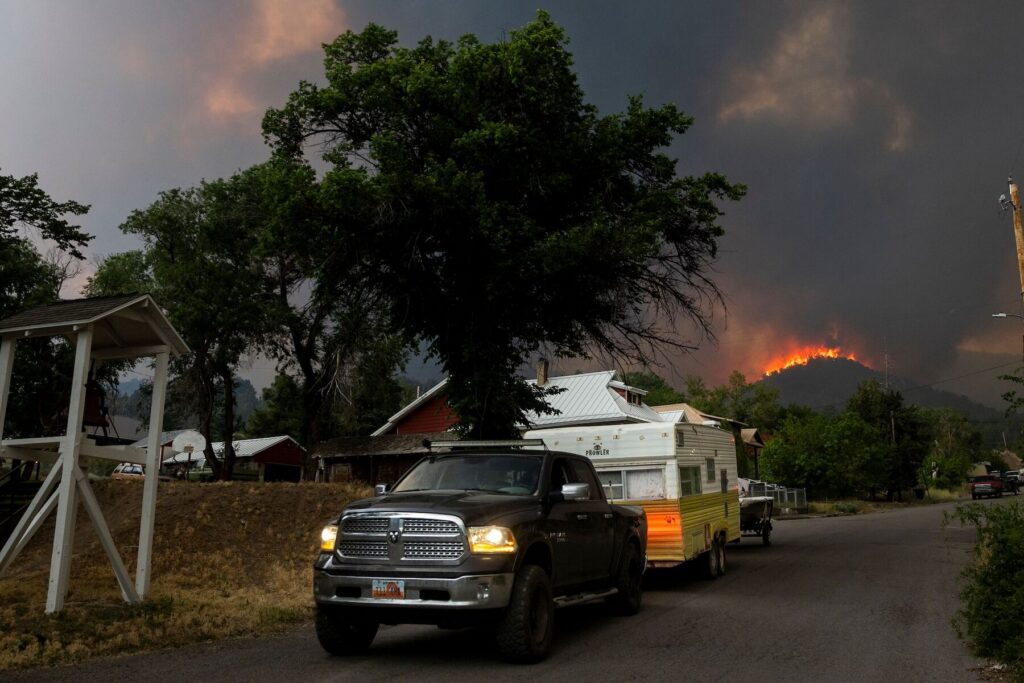
Heat, drought spark wildfires Extreme heat and dry, windy conditions fueled several wildfires in the West on June 21, including an uncontained blaze in Utah that forced the evacuation of a small town southwest of Salt Lake City. The Iron...
Crank challenger Jessica Killin signs on to new centrist Democratic group’s ‘Promise to America’
Ernest Luning
ernest.luning@coloradopolitics.com
Updated 10 hours ago
Jessica Killin, one of the Democrats running in Tuesday’s primary for the chance to challenge U.S. Rep. Jeff Crank in Colorado’s 5th Congressional District, joined with more than a dozen incumbent Democratic lawmakers and candidates this week signing on to...

Colorado Politics Calendar June 29-July 5
Rachael Wright, Special to Colorado Politics
rachael.wright@coloradopolitics.com
Updated 4 days ago
CoPo’s weekly political calendar will help you find political and public-policy events throughout Colorado. It includes candidate and issue campaign events, public policy meetings, court hearings, state and local party conventions, assemblies, debates, rallies, parades, speaking engagements, traveling dignitary appearances,...

Gov. Lamm’s GOP challenger gives insights into his campaign | A LOOK BACK
Rachael Wright, Special to Colorado Politics
rachael.wright@coloradopolitics.com
Updated 4 days ago
Forty-five years ago this week: “I see Gov. (Richard) Lamm is fairly popular in general,” said gubernatorial candidate and state Sen. Bill Hughes, R-Colorado Springs. “ … And he’ll be hard to beat.” Hughes was on a whirlwind campaign trail...
Giving credit to Polis where credit is due | SONDERMANN
Eric Sondermann
eric-sondermann@coloradopolitics.com
Updated 4 days ago
It is an understatement to suggest that Gov. Jared Polis has had a tough couple of months. The bloom was already off the rose and Coloradans were paying far more attention to the choice of his replacement than they were...

Bennet, Hickenlooper to vote against Trump’s 10th Circuit nominee from Colorado
Michael Karlik
michael.karlik@coloradopolitics.com
Updated 1 day ago
Colorado’s two Democratic senators will not vote to confirm President Donald Trump’s nominee to a vacancy on the Denver-based federal appeals court. Trump has selected U.S. District Court Chief Judge Daniel D. Domenico, who he appointed as a federal trial...
Who’s spending in Colorado to get your vote?
Marianne Goodland
marianne.goodland@coloradopolitics.com
Updated 1 day ago
Groups that raise unlimited amounts of money have spent about $20 million in May and June to try and influence Colorado voters’ choices in the upcoming June 30 primaries. By law, these groups cannot coordinate with the candidates they support....

U.S. government declines to oppose multiple challenges to immigration detention in Colorado
Michael Karlik
michael.karlik@coloradopolitics.com
Updated 2 days ago
Multiple federal judges in Colorado granted petitions from people challenging the lawfulness of their immigration detention this week after the government took the unusual step of declining to submit arguments in opposition. Colorado’s federal trial court is facing a flood of...
PREV
PREVIOUS

University of Denver business dean named president of struggling Florida school
Bethune-Cookman University in Florida has selected the dean of the University of Denver’s Daniels College of Business as its next president. Elrie LaBrent (Brent) ChriteDU Daniels College of Business The Daytona Beach News-Journal reports that Elrie LaBrent (Brent) Chrite will take over as the Florida university’s seventh president on July 1. The Daytona Beach school […]
Colorado House backs sports betting
The Colorado House made short work of a debate over expanded gambling Tuesday night. House Bill 1327 authorizes a November ballot question to ask voters statewide to allow sports betting in exchange for a 10 percent tax. The money, potentially $20 million a year, would support the state’s water conservation plan and other causes, including […]