

Q&A with Ben Lindquist | Moving Colorado’s schools beyond ‘sameness’
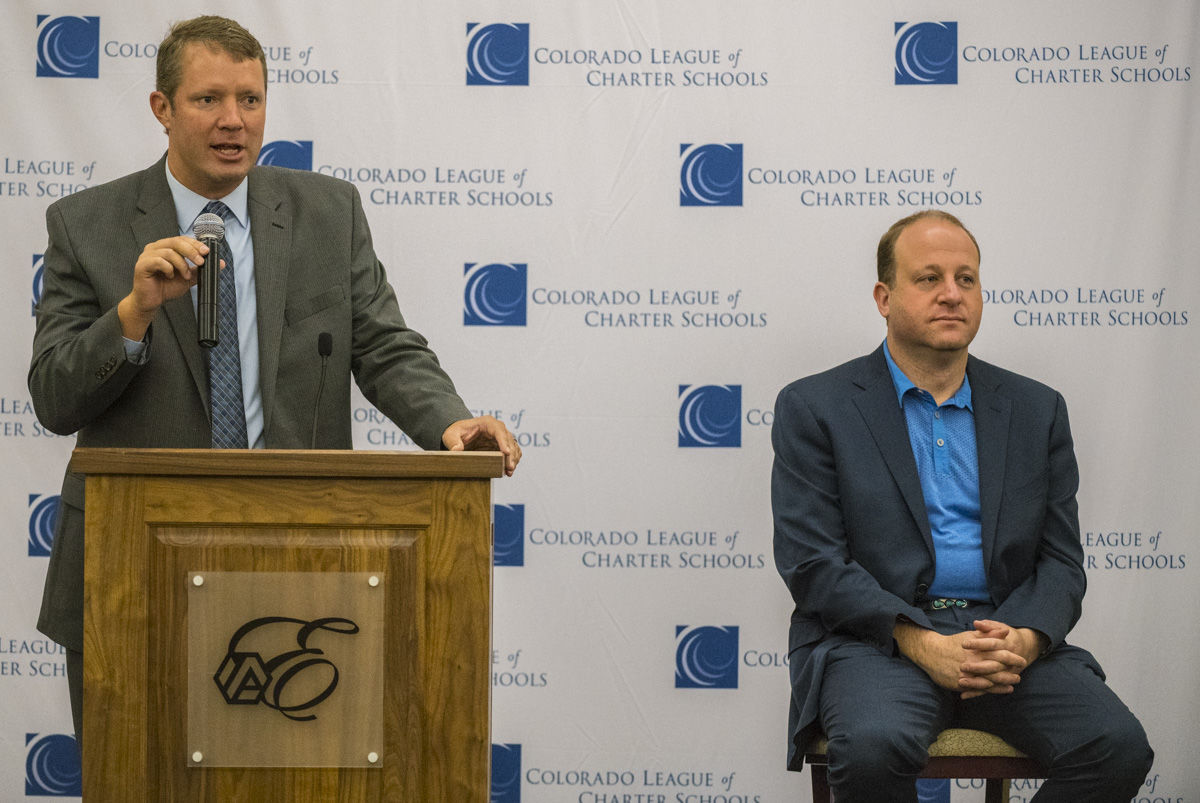
To look at the numbers – more than 250 autonomous charter schools serving well over 100,000 students within Colorado’s public education system – you’d think the only challenge associated with the rapidly growing charter movement in the state would be meeting demand.
And yet, a challenge of a different kind has arisen lately in political circles.
Colorado’s longtime leadership in pioneering and expanding charters, as well as in advancing assorted other education reforms, is drawing fire in some quarters – notably, from the ranks of disaffected Democratic Party activists.
That’s right: the party of former Gov. Roy Romer, who signed charter schools into law over a quarter-century ago; the party of former state Senate President Peter Groff and former House Speaker Terrance Carroll, who advanced legislation to expand charters – and the party of Colorado’s newly minted, charter-championing governor, Jared Polis.
But it’s also the party of the labor movement, including Colorado’s politically powerful teachers unions, which have never been happy with charter schools. And it’s the party with a populist flank that has been newly galvanized in the Trump era and that opposes most things status quo, including its own party’s pro-education reform establishment.
In the midst of that face-off, you’ll find Ben Lindquist. As the president of the Colorado League of Charter Schools, following decades in the movement, he is certainly a true believer. He’s also a forceful advocate and savvy navigator for charters as they weather the latter-day debate over how they fit into public schooling.
Much like when charters first were ushered in decades ago, critics are once again asserting that they undercut neighborhood schools, or that they siphon off the best kids, or that they undermine racial and ethnic integration.
Lindquist is a veteran of such battles and comes armed with a formidable depth and breadth of facts and figures he uses to counter those and other assertions; it’s all on display in today’s Q&A.
He goes over details often drowned out in the din of political debate, such as funding inequities that he says actually shortchange charters, and how neighborhood schools benefit from charter schools in their districts. And he takes a hard swat at a perennial meme of the anti-reform backlash – that charter schooling amounts to the privatization of public education. Read on to find out what he has to say about that and a host of other education issues.
Colorado Politics: In a blog post this month you mention a chat you had with a supporter in which he likened the recent push-back against the education-reform movement to “The Empire Strikes Back.” That “empire” was once the whole public school establishment, but these days you have major school districts like Denver’s that are ardent supporters of wide-ranging reforms.
Who or what does the empire amount to now? And what do you think is ultimately driving the newfound resistance to innovations like charter schools – despite their growing popularity among parents and the political support they command from many in both major parties?
Ben Lindquist: Education in Colorado is undergoing a transformation that could present unparalleled opportunities for our rising generation, the education profession, and our future as a state. When I began my career in 1996, PreK-12 education nationwide was still largely a monolithic system. It operated under a top-down framework of federal, state and local laws, agencies, unions, and associations of school boards and administrators. For decades, that system reinforced uniformity and standardization in policy making and school operation.
Over the past 20 years, it has become obvious that education in Colorado can no longer function effectively in such a manner. The school-age population that we as a state and nation are serving has become extremely diverse with many different ethnicities, languages, cultural values, income levels, family structures and even national origins. Initially, this transition to a more diverse population was concentrated in urban centers, but it has become the norm in a growing number of suburbs and rural communities.
Today, families and students need and desire many different things from our schools. We have access to far more science and knowledge than ever before on which to design breakthrough teaching-and-learning options.
As Coloradans and as a nation, we believe in the freedom to choose. We expect to exercise choice in public education. So it is no longer functional to operate within a framework that reinforces sameness. We must move from a compliance-driven to learner- and quality-centered approach to public education.
There are entrenched organizations whose membership, power and influence benefits from the way the system was. These organizations are trying to maintain the monolith by attacking charter schools and other forms of innovation so that they can preserve their control.
In my experience, Colorado Democrats and Republicans alike understand these agendas and are doing a good job trying to make sure that we put students and families first.
However, we need to recognize that the progress that we are making is far too slow because of the harmful influence of these entrenched interests. Hundreds of thousands of young Coloradans and tens of millions of young Americans are getting a sub-par public education – relative to what would otherwise be possible – because of the stiff opposition to change. The opposition has slowed the progress that would otherwise be made through the growth of public charter schools and other systemic reforms.
Ben Lindquist
? President, Colorado League of Charter Schools, since 2017. The league is the voice of the state’s diverse and wide-ranging charter-school movement, lobbying for policy changes at the Capitol and advocating for charters to the public.
? Previously, program director with the Waukesha, Wisconsin-based Kern Family Foundation.
? Also has worked in Colorado as a program officer for the Walton Family Foundation.
? Was on the founding team of the Charter School Growth Fund, a nonprofit venture-philanthropy fund that supports the expansion of high-performing charter schools.
? Holds a bachelor’s degree in English from St. Johns University and the College of St. Benedict in Minnesota and an MBA in finance and entrepreneurship from the Leeds School of Business at the University of Colorado Boulder.
CP: Whatever fissures may have opened in the Democratic Party over hot-button phrases like education reform or school choice, our new Democratic governor is of a different mind-set altogether on the subject. He actually helped start a couple of charter schools.
How do you see education issues this session playing out under him – not just on ed reform but also on fiscal and any other policies questions pertinent to schools?
Lindquist: Gov. Polis is an innovative thinker, business leader, education reformer and policy maker. He understands the transformation that public education is going through. He started two public charter schools in Denver – the New American School and Academy of Urban Learning – to serve diverse populations that need a specialized public education. He advocates for students and families first.
Under his leadership, I anticipate that the state of Colorado will make progress toward putting in place the resources, policies and leadership necessary to continue, and hopefully, accelerate the transformation of public education. He knows that we need to empower professional educators all across our state to lead, give communities greater ownership in our public schools, and equip parents to make choices for their children.
We must continue to open new public schools with innovative models so that we can serve a growing population and create more quality choices for all families and learners.
CP: In Colorado school districts that are still wary of charter schools, an oft-heard complaint is that they siphon money from neighborhood schools. We’ve heard this argument from charter critics even in pro-charter Denver. Yet, your counterpart, the president of the National Alliance for Public Charter Schools, wrote in a recent commentary that the problem is quite the opposite: Charter schools in Colorado and around the country sometimes lack even basic infrastructure. And per-pupil funding for their operating costs is lower than for neighborhood schools. Which is it – and why the funding disparity?
Lindquist: Funding for all public schools – traditional, charter, magnet, alternative, innovation – is provided on the basis of enrollment. When charter schools open in communities with static or declining enrollment, they are competing with other public schools to enroll the same students. Some view this competitive dynamic as healthy for all schools because it encourages them to get better. Others view it as harmful because they do not want schools to have to strive to improve. The reality is that charter schools can benefit from competition, but they can also lose from it – if they do not offer a greater value than the other public schools around them.
Fortunately, many Colorado communities are experiencing long-term enrollment gains as new families relocate into our state. When charter schools open in communities with growing enrollment, they can help districts expand the range of quality choices to meet the needs of families with differing needs and preferences. They give educators the opportunity to lead schools with their own unique vision, design new programs, and take responsibility for results. The programs that prove the most effective can thrive and expand while action is taken to improve the ones that struggle, and eventually, they can be closed.
CP: What policy changes are still needed in Colorado in your estimation regarding charters?
Lindquist: Charter schools are independent public schools that are supposed to be granted waivers from laws that reinforce a one-size-fits-all approach so that they can implement their mission and deliver the public education that their families and students want and deserve.
The Colorado League of Charter Schools works to obtain equitable funding for charter schools, protect their autonomies, provide them with access to affordable public facilities, and otherwise support their success. We are about to undertake a new initiative to redefine quality for the charter sector so that we can equip parents to make good choices on behalf of their kids.
As it stands right now, charter schools in Colorado face major disadvantages when it comes to facilities. Over the past 20 years, construction and leasing costs have increased greatly and many temporary warehouses – which used to be available to startup charters – are being utilized for marijuana production and sales.
School districts generally have access to buildings, land and bond dollars in a way that charter schools do not. Consequently, the typical charter school in Colorado has to spend upwards of $950 per student out of their limited per-pupil operating revenue to pay for facilities. While the state has dedicated some resources to this issue, we are still a long way from parity.
Another key factor that slants the playing field against charter schools is local tax revenues. While we made a big stride forward with the passage of House Bill 1375 in 2017, there is still the issue of the 17,500 students who currently attend Charter School Institute (CSI) schools across Colorado. Because CSI schools are authorized by the state, they have no access to local mill levy override revenue in the way that school districts do. This has created a nearly $30 million gap between the per-pupil funding available to CSI schools and the school districts in which they are located. This gap puts CSI schools at a significant disadvantage.
While not a complete list of concerns, these are two of the most pressing. We are working with elected officials to address them but are always seeking legislative champions to ensure a bright future for Colorado.
CP: Another criticism we hear from charter critics is that they are “privatizing” public education. When pressed on the point, the critics say they are referring to the management companies that in some cases are brought in to run charters. Roughly what percentage of charters in Colorado are run by for-profit management companies?
Lindquist: Right now, fewer than 3 percent of the 255 public charter schools in Colorado contract with private providers for education management services. It is either ignorant or intentionally misleading to say that charter schools are privatizing public education.
School districts have a long history of contracting with private providers for all kinds of offerings, from curricula, technology, recruiting and training to transportation, food service and building maintenance. Thus, there is a constructive role for private providers to play in public education, but it is important to understand that their primary motive is to generate profit by operating efficiently, so like all providers, they must be held accountable for quality and value. Traditional public schools have the opposite challenge, so they tend to be quite inefficient.
CP: Tell us a little about your background. What drew you into the school choice movement?
Lindquist: My wife and I got married when we were 24 and will celebrate our 20th wedding anniversary together this summer. We have made a home in Colorado for over a decade and have a seven-year old son at the Denver Language School (DLS), an exceptional charter school authorized by Denver Public Schools.
Every day, we commute 1½ hours with our son to and from our house in Lakewood so that he can benefit from the innovative public education that DLS provides. It would be great if there was such an option in our community.
My first job was as an education researcher and writer for a subscription-based trade journal. At the start of my career in 1996, America’s school systems were largely the same as in the 1970s. When I learned about the charter school movement, I realized that it could transform public education for the 21st Century by introducing choice, innovation, social entrepreneurship and healthy competition.
I have spent 10 of the past 23 years starting and managing charter schools in high-poverty communities and the other 13 years seeking to bring about education reform in other ways.
After 24 years, I have never felt more passionate or committed to this cause than I do now. However, I have also never felt less patient with the pace of change. Frankly, it is shocking that there remains so much entrenched resistance to transforming public education in a progressive state like Colorado when the consequences of inaction are so evident and we remain so far from delivering a 21st Century public education to all learners.
CP: Give us a prediction about the 2019 legislative session.
Lindquist: Gov. Polis’ initiative to support full-day kindergarten will succeed. Courageous legislators on both sides of the aisle will continue to champion charter schools and make sure they have the support needed to thrive. The transformation of public education will continue in Colorado – the question is at what pace.


House GOP stalls Colorado budget debate by forcing full reading of 661-page bill
Marianne Goodland
marianne.goodland@coloradopolitics.com
Updated 1 hour ago
A procedural battle at the Colorado Capitol boiled over Wednesday night when a House Republican triggered one of the chamber’s most time‑consuming tactics, demanding the 661‑page state budget be read aloud in full — a move that halted progress on...

Colorado lawmakers propose changes to family court procedures | Bills in Brief
Marissa Ventrelli
marissa.ventrelli@coloradopolitics.com
Updated 16 hours ago
Colorado lawmakers introduce hundreds of bills each year. Bills in brief cuts through the noise by explaining which proposals matter, what’s at stake, and how decisions at the Capitol could affect everyday life across the state. Colorado lawmakers from both parties are...
Aurora City Council delays vote on operating agreement for ICE, police
Kyla Pearce
kyla.pearce@gazette.com
Updated 46 minutes ago
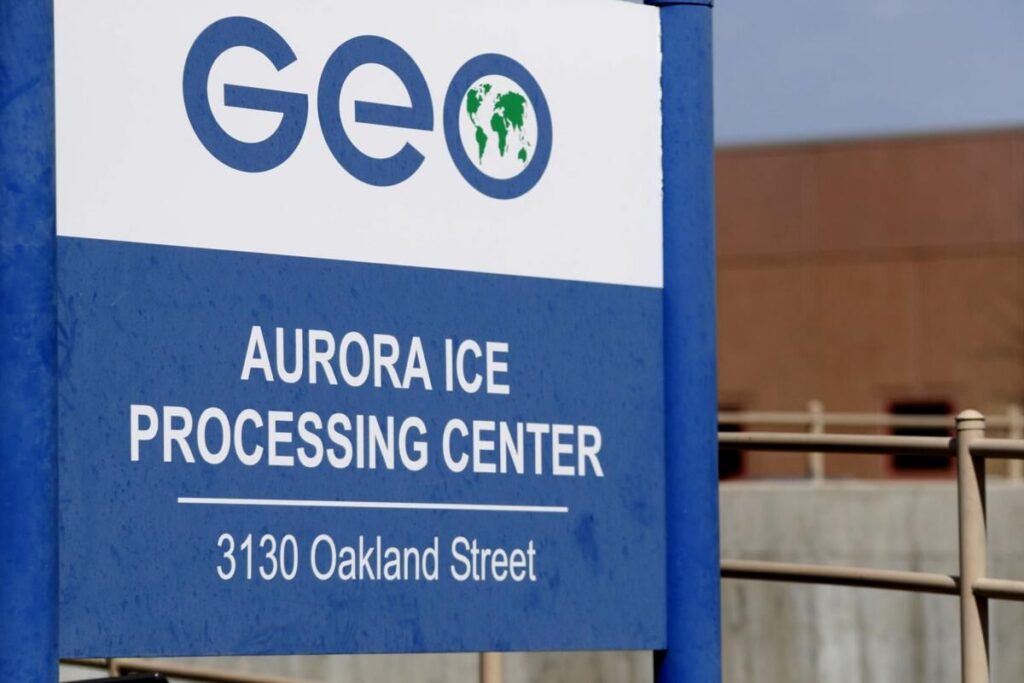
Aurora City Council members delayed a vote Monday on a memorandum of understanding that outlines guidelines for Aurora police officers responding to the GEO Immigration and Customs Enforcement facility. Since the facility is in Aurora, the Aurora Police Department is...
Federal judge partially allows second World Cup trafficking lawsuit to move forward
Michael Karlik
michael.karlik@coloradopolitics.com
Updated 18 hours ago
A federal judge allowed some claims to move forward last month against companies operating out of Colorado that allegedly participated in a human trafficking venture involving Filipino laborers who constructed facilities for the 2022 World Cup in Qatar. There are...

Melania Trump hails first conviction under new law banning AI-generated child sex abuse images
Rena Rowe, Washington Examiner
rena.rowe.washington.examiner@gazetteedit.wpenginepowered.com
Updated 19 hours ago
First lady Melania Trump highlighted on Tuesday the first arrest tied to a law she championed targeting cyberstalking, threats of violence, and non-consensual explicit content generated using artificial intelligence. James Strahler II, 37, of Columbus, Ohio, pleaded guilty Tuesday to...
Federal judge dismisses lawsuit seeking to force Colorado secretary of state to screen out scam filings
Michael Karlik
michael.karlik@coloradopolitics.com
Updated 13 hours ago
A federal judge dismissed a lawsuit last week that sought to require Colorado’s secretary of state to verify corporate filings in the state’s database to reduce the risk of future fraud. Bernard Butts of Florida, who was 83 when he...

Colorado Democrats eye new fee on home insurance companies
Marissa Ventrelli
marissa.ventrelli@coloradopolitics.com
Updated 17 hours ago
Colorado Democrats are reviving a proposal to levy a new fee on home insurance companies, with the aim of distributing grants to fund “resilient” roofing. Introduced by Sen. Kyle Mullica, D-Thornton, Senate Bill 155 creates a government “enterprise,” which would...

Poll: Colorado voters oppose legalizing prostitution, support suspending wolf reintroduction
Marissa Ventrelli
marissa.ventrelli@coloradopolitics.com
Updated 17 hours ago
A majority of Colorado residents — 61% — oppose legalizing prostitution in the state, an idea that lawmakers floated earlier in the legislative session before pulling their proposal. Just over half of Democratic respondents said they would support legalization, while...

Federal judge finds no constitutional violation by Huerfano County well inspectors
Michael Karlik
michael.karlik@coloradopolitics.com
Updated 16 hours ago
A federal judge concluded last month that two Huerfano County employees did not engage in an unconstitutional search when they approached the plaintiffs’ camper within 40 feet to investigate a potential code violation. In July 2021, the county’s building inspector,...
Colorado House opens debate on $46.8B budget already showing strain
Marianne Goodland
marianne.goodland@coloradopolitics.com
Updated 15 hours ago
With rising Medicaid costs, no dollars set aside for new legislation and dozens of bills still seeking funding, Colorado lawmakers on Wednesday began debating the proposed $46.8 billion budget that is already proving difficult to keep on track. By the...
PREV
PREVIOUS
Denver hopes to keep its schools open in a strike — and the union wants you to send your kids
Superintendent Susana Cordova says she is committed to keeping Denver schools open and continuing to educate students in the event of a strike. In Los Angeles, where a teacher strike is entering its second week, many students are watching movies and playing games. Cordova said she plans to do more for the 71,000 students in […]

Federal appeals court denies BLM gate keys to inspect oil, gas sites in Colorado
A federal appeals court in Denver ruled Friday against the U.S. Bureau of Land Management in a dispute with a well operator and landowners over access to oil and gas lease sites in western Colorado. The BLM — which administers 8.3 million acres in Colorado — has broad authority to inspect drill sites, but the […]