

Legal pot in Colorado: Fewer arrests, but trouble spots remain

By David Olinger, Special to The Gazette
A new state report on marijuana in Colorado found that arrests have dropped significantly since recreational sales began in 2014, primarily because possession charges have plummeted.
The Colorado Department of Public Safety report, released Friday, also concluded that use among youths does not appear to be increasing, that traffic deaths directly attributable to marijuana are down and that revenues have nearly quadrupled since 2014 to $247 million.
It also pointed to several trouble spots.
Organized crime charges are up. So are arrests for smuggling cannabis edibles and concentrates. Hospital and emergency room visits and poison control center calls have also grown.
The report notes, however, that its findings should be treated with caution because hidden factors may account for apparent trends. It points to decreased social stigma, for example, as a possible explanation for increased hospital reports.
The findings should be considered “baseline and preliminary, in large part because data source vary considerably in terms of what exists historically,” the department said.
The book-length report, bolstered with charts and appendices, is sure to give ample reading material to legislators who have required periodic updates on the impact of legalization.
Kristi Kelly, executive director of the Marijuana Industry Group, praised the department’s work. It shows that legalization “can be effective in mitigating the harms associated with prohibition, while putting $247 million in marijuana revenue to work to help fund or close the gap on important state priorities,” she said.
At the same time, she acknowledged that “a small group of illegal and illicit cultivators and distributors are a thorn.”
The report generally compares data from 2012, two years before recreational sales, to 2017.
Some highlights:
The department emphasized that its report is a first step toward understanding the effects of legalization.
In sum, “the lack of pre-commercialization data, the decreasing social stigma and challenges to law enforcement combine to make it difficult to translate these preliminary findings into definitive statements of outcomes,” the department concluded.



House Ethics Committee to begin hearing on Weinberg complaint
Marianne Goodland
marianne.goodland@coloradopolitics.com
Updated 3 minutes ago
The House Ethics Committee on Tuesday will begin a hearing requested by Rep. Ron Weinberg, R-Loveland, tied to an ethics complaint filed against him by Rep. Brandi Bradley, R-Roxborough Park. The ethics committee had found probable cause on two issues...

Iran war enters next phase of destroying entire missile supply chain: Hegseth
Brady Knox, Washington Examiner
brady.knox.washington.examiner@gazetteedit.wpenginepowered.com
Updated 1 hour ago
Secretary of War Pete Hegseth said the war with Iran was entering a new phase, as the United States was focusing on destroying Tehran’s defense industrial base. At a Friday Pentagon briefing, Hegseth and Gen. Dan Caine, chairman of the Joint...

Colorado plans to slash interim committee work amid budget woes
Marianne Goodland
marianne.goodland@coloradopolitics.com
Updated 26 minutes ago
In a tight budget year, the work of interim committees — those off-session groups that look at transportation, agriculture, water, healthcare, wildfires, pensions, and anything else that lawmakers want to look at — is on the chopping block. And this...
Xcel Energy: Power shutoff ‘likely’ Saturday in Boulder, Jefferson counties
Dan Boniface
dan.boniface@denvergazette.com
Updated 1 hour ago
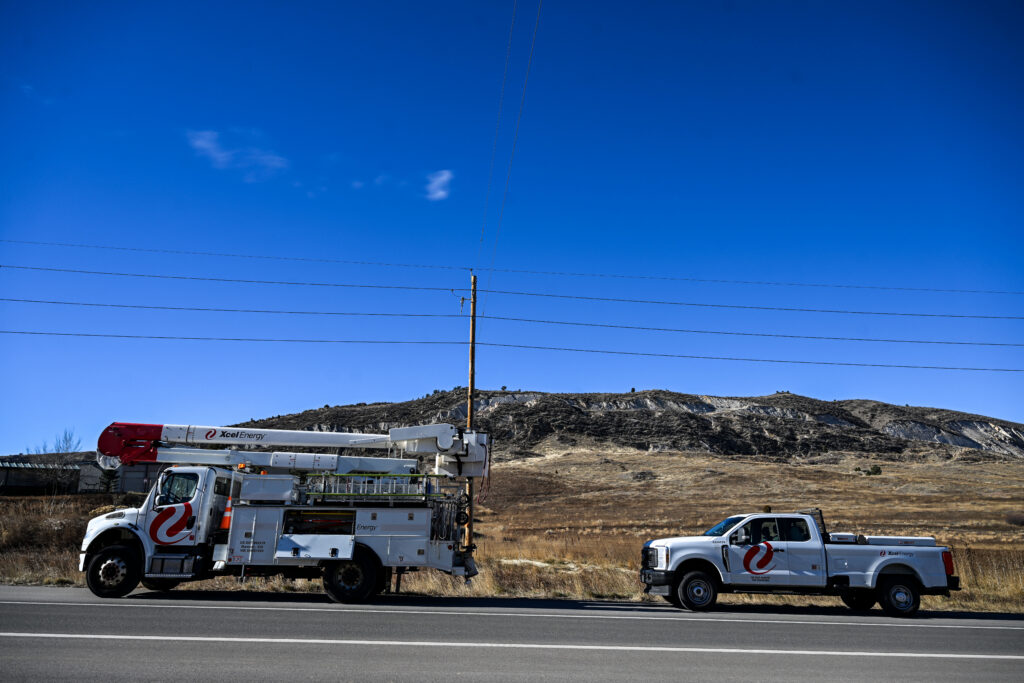
Up to 43,000 residents in parts of Boulder and Jefferson counties should be prepared to have their power shut off Saturday afternoon, Xcel Energy said. The power company said it was “planning for a likely Public Safety Power Shutoff (PSPS)...

Colorado GOP chair Brita Horn says she’ll resign next month, points to ‘divide within our party’
Ernest Luning
ernest.luning@coloradopolitics.com
Updated 18 hours ago
Colorado Republican Party Chair Brita Horn said Thursday that she will resign her position next month following the GOP’s state assembly, citing what she described as an “enduring divide” within the party “marked by vitriol and hostility.” Horn’s announcement came...

Colorado justices skeptical of appellate court’s limitation on prosecution’s appeal
Michael Karlik
michael.karlik@coloradopolitics.com
Updated 22 hours ago
The Colorado Supreme Court seemed skeptical on Tuesday that Denver prosecutors should be barred from appealing a trial judge’s permanent dismissal of a criminal case, based upon the sequence of events after the original ruling. Prosecutors charged Quinn M. Jebe...

Senate committee moves forward with Colorado ballot measure to redirect TABOR refunds to schools
Marianne Goodland
marianne.goodland@coloradopolitics.com
Updated 1 hour ago
A Senate panel on Thursday voted along party lines to move forward with a bill that would ask voters for permission to eliminate Taxpayer’s Bill of Rights refunds and redirect those dollars to K-12 public education. The 6-3 vote in...

Federal judge: Government violated order shielding man from deportation in ‘one-off mistake’
Michael Karlik
michael.karlik@coloradopolitics.com
Updated 23 hours ago
A federal judge acknowledged on Thursday that the government violated his order by deporting a man in immigration detention during his pending court case, but it “serves nobody’s interests” to require the government to return him. On Feb. 18, Tesfami...

Wolf depredation payouts in Colorado top $700,000 in 2025
Marianne Goodland
marianne.goodland@coloradopolitics.com
Updated 1 hour ago
The Colorado Parks and Wildlife Commission approved more than $706,000 in wolf depredation claims for 2025 during its March meeting last week, an amount that exceeds the state’s annual wolf compensation fund by more than double. The commission rejected another...

U.S. intelligence report suggests Iranian regime is not at risk of imminent collapse
Washington Examiner Staff, Washington Examiner
washington.examiner.staff.washington.examiner@gazetteedit.wpenginepowered.com
Updated 23 hours ago
Washington Examiner Recent U.S. intelligence reports have assessed that after nearly two weeks of Operation Epic Fury, Iran’s government leadership is not in danger of imminent collapse. The evaluation comes after 12 days of regular military strikes by United States...
PREV
PREVIOUS
Steamboat Pilot & Today: Unintended consequences of Gallagher must be fixed
The Gallagher Amendment, adopted by voters in 1982, continues to have far-reaching, unintended consequences, now forcing taxing districts, especially those in rural Colorado, to seek voter approval for workaround initiatives all of which appear on the Nov. 6 ballot. West Routt, Oak Creek, Yampa and Steamboat Springs Area fire protection districts, as well as Colorado […]

US election integrity depends on security-challenged firms — including one from Denver
It was the kind of security lapse that gives election officials nightmares. In 2017, a private contractor left data on Chicago’s 1.8 million registered voters – including addresses, birth dates and partial Social Security numbers – publicly exposed for months on an Amazon cloud server. Later, at a tense hearing, Chicago’s Board of Elections dressed […]