

OUT WEST ROUNDUP | Libertarian U.S. Senate candidate discloses cannabis investments
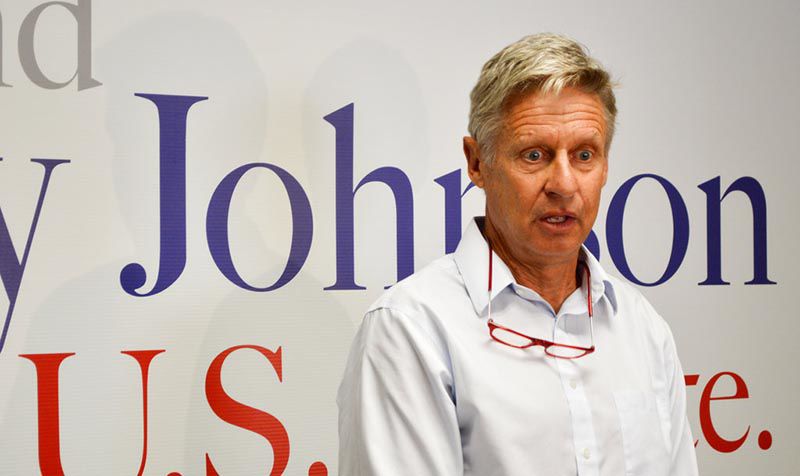
Libertarian Senate candidate discloses cannabis investments
SANTA FE – U.S. Senate candidate Gary Johnson of New Mexico has disclosed personal financial interests in the cannabis sector that include stock holdings, a profit sharing agreement and recent capital gains on investment sales, according to filings reviewed by The Associated Press.
Johnson in Senate filings in September said that he owns stock worth more than $250,000 in the Nevada cannabis company Kush and has a profit sharing agreement as the adviser to the cannabis-sector investment fund CB1 Capital.
The former New Mexico governor and two-time Libertarian candidate for president also reported capital gains of at least $100,000 from stock in the company Cannabis Sativa, where he previously served as CEO.
A longtime advocate for legalizing marijuana, Johnson announced in August his run for Senate on the Libertarian ticket against incumbent Democrat Martin Heinrich, who recently embraced the decriminalization of marijuana at the federal level. The Republican contender, construction contractor Mick Rich, opposes legalization.
Johnson said he sees no conflict of interest between his political advocacy for legalizing marijuana and personal investments in the sector because his political message has not changed in nearly two decades.
“This was a career-ending move on my part in 1999,” said Johnson of his initial support as governor for legalization when the stance was unpopular. “The last thing that I ever dreamed of happening is that somehow I would make money off this.”
New Mexico regulates the production and distribution of medical marijuana for a long list of maladies, but has not legalized recreational use. Federal law still considers marijuana an illegal substance.
States weigh options after grizzly hunt ruling
CHEYENNE – State officials frustrated by a judge’s decision to prohibit grizzly bear hunting in the Yellowstone region and put the animals back on the threatened species list will likely appeal but that’s not their only option to contest the decision.
They could lean on Congress to exempt the bears from the Endangered Species Act or take a totally new approach by ceasing to cooperate with the U.S. government on species management.
Wyoming Gov. Matt Mead and Idaho Gov. C. L. “Butch” Otter weren’t hinting at their next move. Before the ruling by a federal judge in Montana, the two states planned to let hunters kill up to 23 grizzlies this fall in the lower 48 states’ first grizzly hunt in almost three decades.
Short of capitulation, the two Republicans would have difficulty making a political misstep. Hunters thrive in both states and mistrust of the federal government and environmentalists runs deep.
U.S. District Judge Dana Christensen ruled grizzlies weren’t sufficiently recovered to sustain hunting, pointing out an estimated 50,000 bears once roamed the contiguous states.
But Mead, who is finishing his second term and has often described the Endangered Species Act as broken, pointed to the ruling as a reason why. Yellowstone’s grizzlies are a success, rebounding from as few as 136 in the 1970s to over 700 today, he said in a statement after the decision.
Keystone XL developer plans to start construction in 2019
LINCOLN, Nebraska – The developer of the Keystone XL oil pipeline plans to start construction next year, after a U.S. State Department review ordered by a federal judge concluded that major environmental damage from a leak is unlikely and could quickly be mitigated, a company spokesman said.
TransCanada spokesman Matthew John said the company remains committed to moving ahead with the project following years of reviews from federal and state regulators. The company has already started preparing pipe yards, transporting pipe and mowing parts of the project’s right-of-way in Montana and South Dakota, but TransCanada said in court documents it doesn’t plan start construction in Nebraska in the first half of 2019.
The report from the Trump administration’s State Department drew criticism from environmental groups, who say they’ll continue to fight the project they view as an environmental threat.
The original environmental impact study was issued in 2014, before Nebraska regulators approved a longer “mainline alternative” route that veered away from the company’s preferred pathway. President Donald Trump approved a federal permit for the project in March 2017, reversing former President Barack Obama’s decision to reject it amid concerns over greenhouse admissions.
Critics of the project have raised concerns about spills that could contaminate groundwater and the property rights of affected landowners. In Nebraska, opponents are trying to change the makeup of the Nebraska Public Service Commission in hopes of overturning its previous decision to approve an in-state route for the pipeline.
Green Party’s ballot benefactor may remain unknown
HELENA, Montana – Whoever bankrolled the effort to qualify the Montana Green Party for this year’s state ballot may get away with remaining unknown because the state’s campaign disclosure laws do not address anonymous groups funding certain signature gatherers.
The party was allowed to field candidates in the June primary after a political consulting company called Advanced Micro Targeting turned in more than 9,400 voter signatures gathered over just 19 days in February and March.
The Greens needed 5,000 voter signatures spread among 34 state House districts to qualify for political party ballot access by petition.
But it’s a mystery who hired the Las Vegas-based company and the 13 signature-gatherers who swooped in to push the Green Party across the finish line just before the state’s filing deadline in March. The Green Party did not hire Advanced Micro Targeting. It posted its petition online, put out a call for help collecting signatures and hoped for the best.
Advanced Micro Targeting argued it did not have to disclose who financed its campaign – and the state’s campaign regulator agreed.
Montana Commissioner of Political Practices Jeff Mangan ruled in July that Advanced Micro Targeting was not required to report its spending because it was not advocating on behalf of a candidate. Instead, Mangan ordered the Montana Green Party to report the spending by Aug. 24.
As of late September, three weeks after the deadline, the Green Party has not responded to the order. Party coordinator Danielle Breck said that the party does not know who paid the company or how much money was spent.
The Democrats have a theory. They believe it was a Republican-backed effort aimed at influencing the outcome of this year’s election between Democratic U.S. Sen. Jon Tester and his challenger, Republican State Auditor Matt Rosendale.
Republican Party chairwoman Debra Lamm said the party does not know who paid for the signature gathering effort.
Senate race could come down to fossil fuels
The two candidates for the U.S. Senate seat in North Dakota – a toss-up race with serious implications for control of the chamber next Congress – are touting their Capitol Hill energy policy chops to gain an edge in one of the tightest races in the 2018 midterm election.
The race has triggered an escalating argument between Democratic incumbent Sen. Heidi Heitkamp and her Republican challenger Rep. Kevin Cramer over which one is the best champion of the state’s fossil fuel industries that rank among the most productive in the nation.
The irony is that two the candidates have strikingly similar stances on energy and agriculture issues, said Robert Wood, a political science professor at the University of North Dakota. That has led to a policy debate with a “type of nuance that is going to get lost on the average voter.”
North Dakota ranks second in the country for production of crude oil, producing 392 million barrels in 2017, according to Energy Information Administration. The state ranked 11th in natural gas production and 9th for production of coal in 2016, according to EIA statistics.
So it’s no surprise that the debate over which candidate better supports policies in Washington that are friendly to fossil-energy production has taken on a central place in the campaign. In just the last month, both sides have tried to claim credit for a recent EIA report showing the United States has surpassed Russia and Saudi Arabia as the world’s top crude oil producer for the first time since 1973.

Judge rules that Colorado law makes it too hard for parties to bar unaffiliated voters from primaries
Ernest Luning
ernest.luning@coloradopolitics.com
Updated 4 hours ago
A federal judge ruled in favor of the Colorado Republican Party late Tuesday, saying that a portion of the state law that allows unaffiliated voters to cast ballots in party primaries is unconstitutional because it imposes an unrealistic burden on...
10th Circuit upholds regulator’s methodology for Tri-State exit fees
Michael Karlik
michael.karlik@coloradopolitics.com
Updated 7 hours ago
The Denver-based federal appeals court upheld a regulatory agency’s methodology for calculating the fee owed by entities seeking to withdraw from Tri-State Generation and Transmission Association last week. Tri-State is a Westminster-based cooperative that provides and transmits electricity to member...
Federal judge proposes sanctions against Mike Lindell’s lawyers for continued fake citations
Michael Karlik
michael.karlik@coloradopolitics.com
Updated 8 hours ago
A federal judge is once again pursuing sanctions against lawyers for MyPillow CEO Mike Lindell for continuing to cite to court cases that do not exist, likely based on the faulty output of artificial intelligence tools. Last year, a jury...
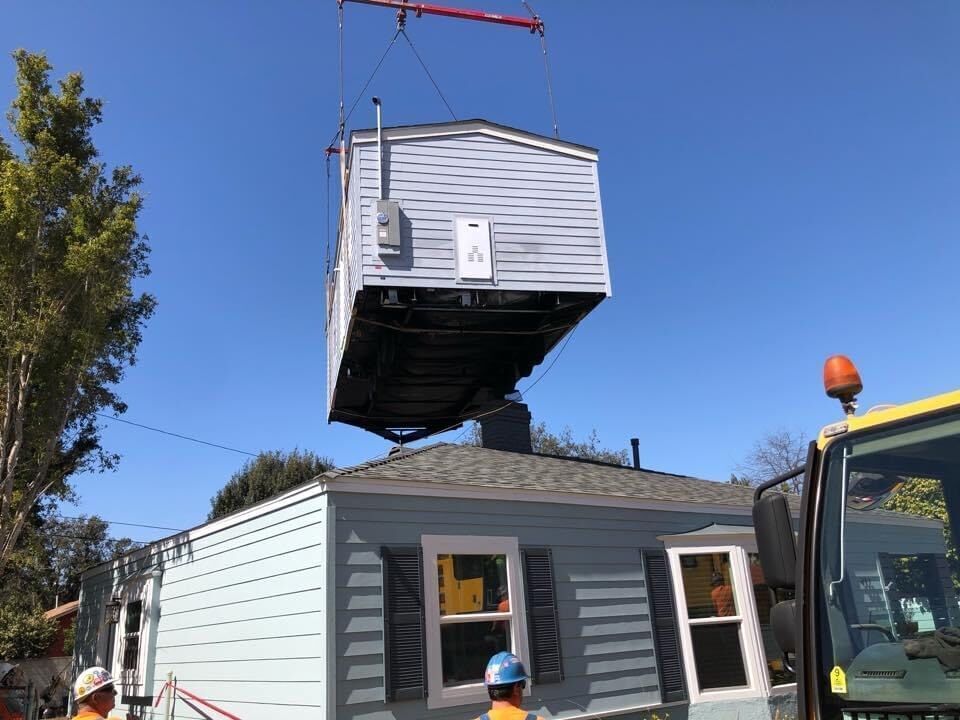
Front Range cities oppose Democratic proposal to permit lot‑splitting as a path to affordable housing
Marianne Goodland
marianne.goodland@coloradopolitics.com
Updated 8 hours ago
Colorado lawmakers are pressing ahead with a plan to let homeowners split their lots to make room for smaller, more affordable houses. The proposal has drawn sharp opposition from Aurora, Colorado Springs, Denver and other Front Range cities that argue...

Susan Blanco signals views on role of appellate courts in first opinion as Colorado justice
Michael Karlik
michael.karlik@coloradopolitics.com
Updated 11 hours ago
Justice Susan Blanco’s first solo opinion as a new member of the Colorado Supreme Court made clear her view of the guardrails that keep the state’s highest court tethered to the issues it is asked to decide. On Monday, the...

Hegseth features Fort Carson soldiers after returning from Middle East, gives warning on Iran war
Reuters
reuters@gazette.com
Updated 11 hours ago
Defense Secretary Pete Hegseth said on Tuesday the next few days in the war against Iran would be decisive and warned Tehran that the conflict would intensify if it did not make a deal. Hegseth also highlighted his trip to the Middle...

Denver Council narrowly approves deal with Axon
Deborah Grigsby
deborah.smith@denvergazette.com
Updated 15 hours ago
After weeks of delay, the Denver City Council narrowly approved a one-year $150,000 contract with Axon for 50 automated license plate-reading cameras and the necessary system hardware, replacing the city’s former vendor, Flock. The 7-6 vote came during Tuesday’s regular...

Colorado leaders weigh next steps after Supreme Court rejects state ban on ‘conversion therapy’
Marissa Ventrelli
marissa.ventrelli@coloradopolitics.com
Updated 1 day ago
Colorado leaders said they are weighing next steps after the U.S. Supreme Court on Tuesday rejected the state’s ban on “conversion therapy” for children, as critics and supporters cheered or lambasted the ruling. The court’s near-unanimous decision called the Colorado...

Aurora homeless shelter opened too early, CEO says, as mold and plumbing issues emerge
Kyla Pearce
kyla.pearce@gazette.com
Updated 15 hours ago
Aurora’s largest homeless services project launched “way too early,” its CEO told city leaders Tuesday, saying the rushed opening left residents living amid mold, plumbing failures, and other issues inside the former hotel. During Tuesday’s Housing, Neighborhood Services and Redevelopment...

Gov. Polis declares April ‘dig safely month’ to mark 40th anniversary of Colorado 811
Scott Weiser
scott.weiser@gazette.com
Updated 15 hours ago
Gov. Jared Polis declared April 2026 as “Dig Safely Month” in Colorado, an annual observance that this year highlights the 40th anniversary of Colorado 811, the state’s One-Call Notification System. “Before everyone starts their warm weather projects around the house,...
PREV
PREVIOUS

High drama in Senate for pivotal Kavanaugh-Ford showdown
The Senate Judiciary Committee braced for a history-making clash as Brett Kavanaugh and one of his accusers awaited their chance to testify Thursday about her claim that the Supreme Court nominee sexually attacked her when both were teenagers. The embattled appeals court judge emphatically rejected that allegation from Christine Blasey Ford as well as accusations […]

Pelosi beats back effort by Perlmutter, others to thwart her run for speaker -- for now
By Laura Barrón-López, Washington Examiner U.S. House Minority Leader Nancy Pelosi scored a small win in her bid to become speaker again when a petition meant to complicate her rise to the top spot was shelved Wednesday by the chamber’s Democratic Caucus. The motion – launched by a handful of House Democrats that included Colorado’s […]