

Bill to fill PERA’s $32 billion shortfall rolls out to a tentative start
The sponsors called the compromise to fix PERA a starting point, not a finish line, as a bill to do so was introduced Wednesday. Senate Republicans and House Democrats agree, however, that lawmakers must make sure the money the state pension brings in is enough to support its retirees.
Current workers, retirees and taxpayers all will take a share of the burden to make sure the Public Employees’ Retirement Association can cover its obligations for the next three decades. If it can’t, the pension for more than 560,000 local, state and school employees could go insolvent in an economic downturn. Along the way, the state’s credit rating would crater and jack up all kinds of interest rates for local and state government. That’s the break conservatives could need to get their wish and see the pension become a privatized 401(k)-style program.
“We understand, unfortunately, that paying off debt isn’t as sexy as building a highway or something else, but it’s so critically important that that’s addressed responsibly,” Sen. Jack Tate, R-Centennial, one of the bill’s the Senate sponsors, said Wednesday afternoon.
The 401(k) programs are known as defined contribution, while the pension is a defined-benefit. And the two philosophy are on a slow-moving collision course.
Under Senate Bill 200, future employees could opt to put their money into defined contribution plan, something Democrats will have a hard time with, as they fill that weakens the pension plan that older workers are relying on.
“It’s a camel’s-nose-under-the-tent kind of argument,” said House Finance Committee chairman Dan Pabon, another of the bill’s sponsors. “If we start here, then what’s the next iteration after that and the next iteration after that? Pretty soon the defined benefit plan doesn’t make any sense.”
The bill also would self-adjust retirement contributions and benefits to keep PERA from digging such an income-versus-payout gap in the future. The PERA board recommended the mechanism to avert such funding crises in the future.
Public employees would be asked to pay in an addition 3 percent of their salaries, with 2 percent more from employers starting in 2020, as well as monkeying with eligibility and retirement qualifications. Cost-of-living increases for retirees would be frozen for two years, then fall from 1.5 percent annually to 1.25 percent.
It also creates an oversight board that would work with the existing PERA directors and the legislature.
The Senate sponsors, Tate and fellow Republican Kevin Priola of Henderson, predict the plan can have enough in the bank to cover its obligations in less than the target of 30 years, possibly as few as 27.
But don’t get married to those details. They’re going to change in the legislative mix.
The bills that makes it through the Republican-led Senate is sure to get amended by the Democrats in the majority in the House. The final compromise, if there is to be one, will be done in an appointed House-and-Senate conference committee that hammers out a deal both chambers can vote on before the session ends May 9.
“There’s a different bill that gets through the Senate than gets to through the House” said House Majority Leader KC Becker of Boulder, another co-sponsor. “And then it’ll come to a conference committee and we’ll have to do our best job to find that middle ground.”
She said that no one on the right or left wants to see the PERA problem left unresolved.
“Ultimately everyone is worried about take-home pay and real impacts to real people, but we’re also worried about impacts to taxpayers. This bill is not going to be a total win or a total loss for anyone.”
The bill also is sponsored by Sen. Cheri Jahn, a former Democrat who changed her affiliation to independent before the session.
“I’m just happy to see we could end up with a bipartisan (solution), because I’m tired of seeing this issue kicked down the road,” Jahn said. “I’ve been here since 2001 and these conversations have come up multiple times … I’m really tired of folks contacting me saying, ‘Do something.'”
The Colorado PERA Board of Trustees met to discuss the bill Wednesday afternoon. They opted not to take an official position on the bill yet. Sponsors said Senate Bill 200 gives the pension overseers 80 percent of what they had asked for..
Besides the allowing non-pension retirement options and reducing cost-of-living increases, the bill raises the number of years of highest pay to calculate retirement benefits from three, which the PERA board favors, to seven. It also would increase contributions from members and employers in July rather than in 2020.
“This legislation follows through on many of the recommendations from the PERA Board,” chairman Timothy M. O’Brien sadi. “The bill reflects the board’s desire to preserve the defined benefit system, address PERA’s funding and share the responsibility of cost among members, employers and retirees.”
O’Brien said PERA is onboard to find a legislative fix.
“More than 580,000 PERA members are counting on legislative action this session to ensure PERA’s long-term sustainability,” he said.
The Colorado Education Association – the teachers’ union – isn’t as supportive of the initial proposal, but it’s open to working on it.
“The alarming provisions in this bill to expand a defined-contribution or 401k-style plan do absolutely nothing to achieve the goal of fully funding PERA in 30 years,” CEA president Kerrie Dallman, a social studies teacher in Jefferson County. said in a statement. “A drastic overhaul to PERA with political ornaments like defined-contribution are only being driven by well-funded, out-of-state interests such as the Koch Brothers and the Arnold Foundation. Our legislature needs to ignore the outside voices and instead focus on solutions informed by reliable data.”
She said studies support the threat allowing new employees to put their retirement money elsewhere just makes it harder to replace funding to retirees on the pension. She thinks the proposal also could worsen the state’s teacher shortage.
“Educators who teach our children for a long career have earned a stable income that affords them a good quality of life in their retirement years,” Dallman stated. “The defined benefits of PERA allows retirees to remain solid, dependable contributors in their local economies in all market conditions, and demonstrates Colorado’s dignity and respect for public employees who continue to make our state a great place to live, work and raise a family.”



Colorado Supreme Court signals intervention in dispute over treatment for trans children
Michael Karlik
michael.karlik@coloradopolitics.com
Updated 6 hours ago
The Colorado Supreme Court ordered Children’s Hospital Colorado on Tuesday to explain why it should not direct the organization to resume providing certain types of services to transgender children in compliance with the state’s non-discrimination law. Last month, a Denver...

Trump faces first domestic test on Iran conflict with Senate war powers vote
Ramsey Touchberry, Washington Examiner
ramsey.touchberry.washington.examiner@gazetteedit.wpenginepowered.com
Updated 8 hours ago
Administration officials are scrambling to sell members of Congress on President Donald Trump’s military operations in Iran ahead of bipartisan attempts to limit his war powers in the Middle East without approval from lawmakers. The Senate and House are set...
Supreme Court hands California parents win over secret gender transition policy
Jack Birle, Washington Examiner
jack.birle.washington.examiner@gazetteedit.wpenginepowered.com
Updated 8 hours ago
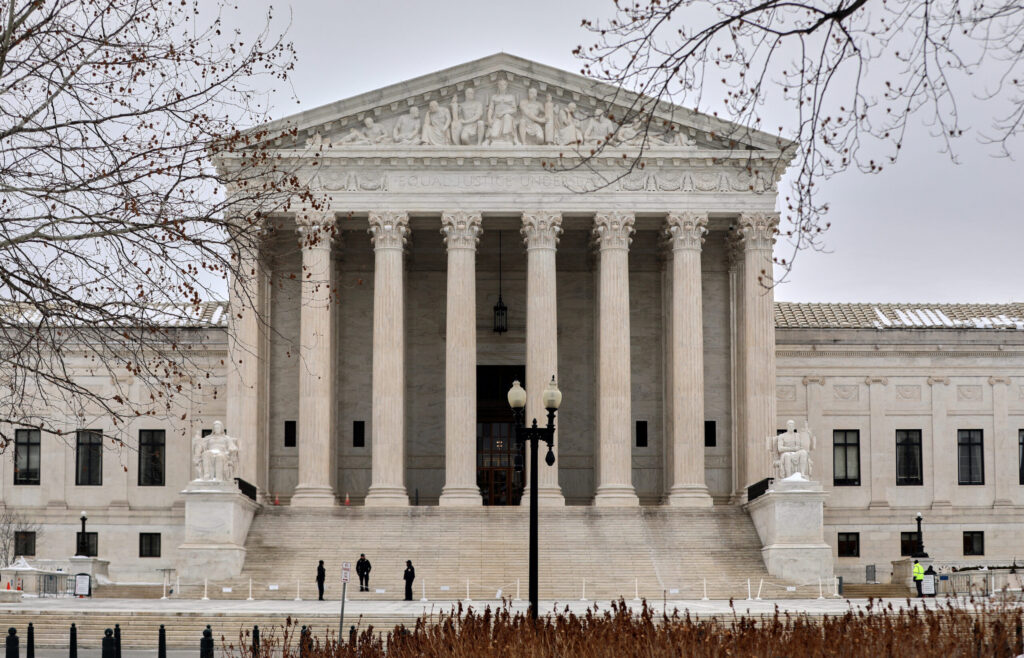
The Supreme Court gave California parents a significant victory late Monday when it kept in place a lower court’s block of the Golden State’s public school policy hiding students’ gender identity and preferred pronouns from parents. A 6-3 majority on...

Judge nixes latest policy requiring 7 days’ notice for Congress members to visit ICE facilities
Michael Kunzelman
michael.kunzelman@associatedpress.com
Updated 8 hours ago
WASHINGTON (AP) — A federal judge agreed on Monday to temporarily suspend the latest version of a Trump administration policy that requires members of Congress to provide a week’s notice before they can visit immigration detention facilities. U.S. District Judge...
Judge nixes latest policy requiring 7 days’ notice for Congress members to visit ICE facilities
Michael Kunzelman
michael.kunzelman@associatedpress.com
Updated 6 hours ago
WASHINGTON • A federal judge agreed on Monday to temporarily suspend the latest version of a Trump administration policy that requires members of Congress to provide a week’s notice before they can visit immigration detention facilities. U.S. District Judge Jia...

Gov. Polis, Upper Basin states criticize federal draft plan for managing the Colorado River
Marianne Goodland
marianne.goodland@coloradopolitics.com
Updated 8 hours ago
With no agreement among the seven Colorado River states and federal deadlines now passed, the Upper Colorado River Commission on Monday sharply criticized the U.S. Department of the Interior’s draft plan for managing the river after current guidelines expire this...

Ballot access, dual-office ban bills move swiftly through Colorado legislature
Marianne Goodland
marianne.goodland@coloradopolitics.com
Updated 9 hours ago
With an eye on the 2026 election cycle and mounting tensions with the Trump administration, Colorado lawmakers are fast-tracking a pair of election bills they say will protect the state’s mail ballot system and tighten rules for elected officials. The...
Colorado GOP chair Brita Horn loses ‘no-confidence’ vote, vows to refocus on ‘mending that divide’
Ernest Luning
ernest.luning@coloradopolitics.com
Updated 4 hours ago
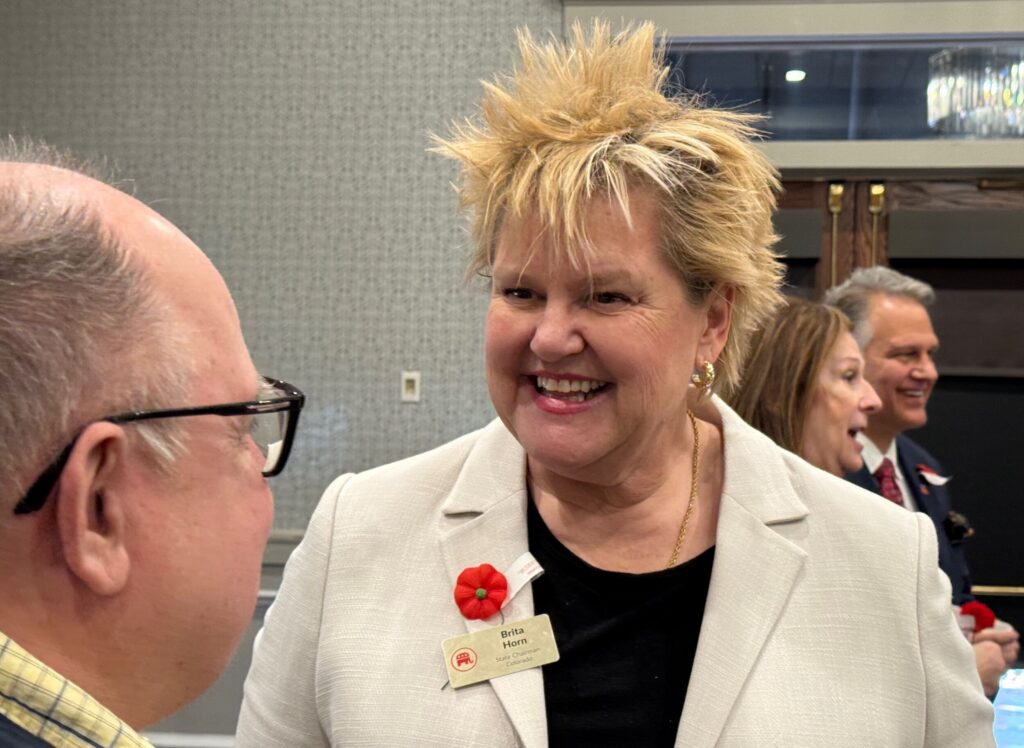
The Colorado Republican Party’s state central committee approved a resolution expressing “no confidence” in state chair Brita Horn in a landslide late Monday night near the end of an online meeting marked by rancor and confusion. Almost 80% of the...

Trump to attend White House Correspondents’ Dinner for first time as president
Washington Examiner Staff, Washington Examiner
washington.examiner.staff.washington.examiner@gazetteedit.wpenginepowered.com
Updated 12 hours ago
President Donald Trump announced on Monday that he accepted an invitation to this year’s White House Correspondents’ Dinner. It would mark the first time Trump has attended the dinner, in either term, since he’s been president. Trump announced the decision...
Primary rival sues to prevent Democrat Eileen Laubacher from going through assembly in Colorado’s 4th CD
Ernest Luning
ernest.luning@coloradopolitics.com
Updated 14 hours ago
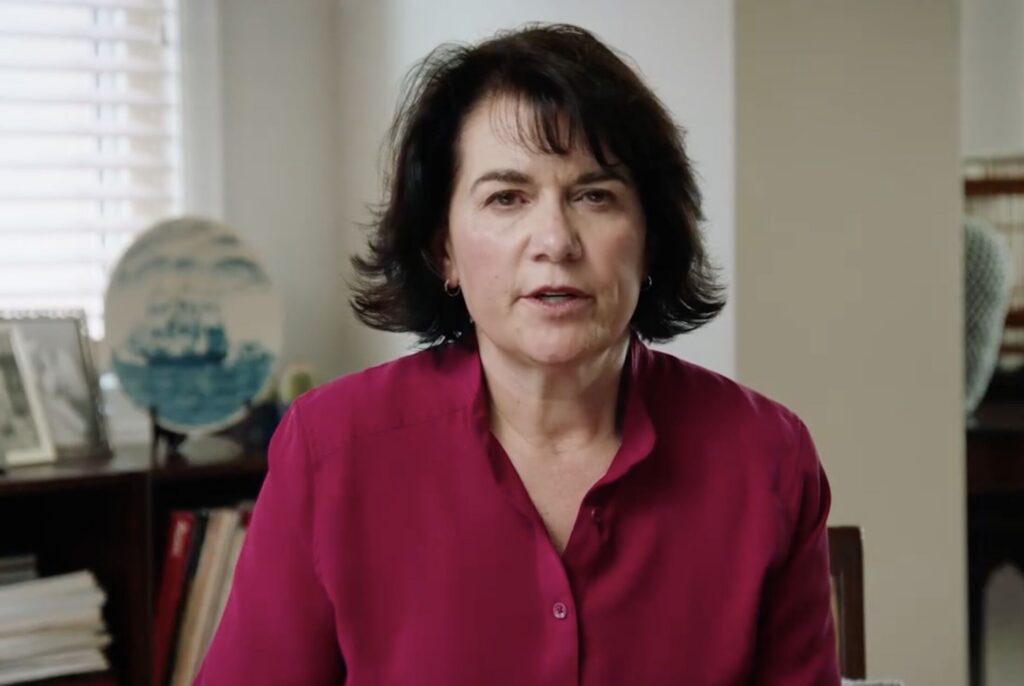
Democratic congressional candidate Trish Calvarese on Monday asked a judge to prevent one of her primary rivals, Eileen Laubacher, from participating in the caucus and assembly process to seek the nomination to challenge Republican U.S. Rep. Lauren Boebert in Colorado’s...
PREV
PREVIOUS
State Rep. Polly Lawrence, a Republican candidate for state treasurer, submits nominating petitions
State Rep. Polly Lawrence, a Douglas County Republican running for Colorado state treasurer, turned in nearly 20,000 petition signatures Monday to secure a spot on the June primary ballot, her campaign said. “Each of the signatures and the people behind them, willing to put their name literally on the line, means so much to me,” […]

Republican gubernatorial candidate Victor Mitchell turns in nominating petitions
Republican Victor Mitchell, a candidate for governor of Colorado, delivered more than 26,000 petition signatures aimed at securing a spot on the June primary ballot to the secretary of state’s office on Wednesday, his campaign said. The businessman and former state lawmaker is the third GOP gubernatorial candidate to submit petitions to the secretary of […]