

Colorado Democrats warn: The Russians want your emails, so delete anything embarrassing

Candidates, campaigns and political parties aren’t the only ones gearing up for the election, the Colorado Democratic Party warns in this month’s Democratic Dispatch newsletter. The Russian government-aligned hackers who broke into email accounts belonging to Democrats – including presidential nominee Hillary Clinton, her campaign chairman John Podesta and state Sen. Andy Kerr – in order to influence the last election look like they’re back for more, and no one involved in politics is safe, the state party’s tech team advises.
That’s right – Andy Kerr, the Lakewood Democrat who briefly ran for Congress last year and is known for bicycling to the Capitol, as well as his advocacy for education issues. In a little-noticed footnote to the 2016 campaign, more than 10,000 of Kerr’s emails wound up posted on a site used by Russian hackers to leak stolen emails, an occurrence the lawmaker told the Associated Press a couple of weeks ago still leaves him baffled.
While he said he supports transparency – presumably, most of the emails would have been available to the Russians if they’d simply filed a Colorado Open Records request – Kerr said, “It shouldn’t be up to a foreign government or some hacker to say what gets released and what shouldn’t.”
The AP checked in with Kerr after a cybersecurity company recently sounded the alarm over what appears to be early attempts by the Russian hacking operation known as Fancy Bear to penetrate the U.S. Senate’s email system. And that raised the figurative hair on the back of the Colorado Democratic Party’s neck.
“[I]f you are active in any campaign or party politics, you are a target,” the Dems write, pointing to the Kerr hack. Most of the attempts involve “phishing,” or emails that try to get the recipient to enter passwords and account information on imposter websites.
“As scary as all this sounds, you can fight back,” the Dems say, and suggest the following steps:
1. Delete and empty any email you have with secret or embarrassing content.
2. Treat all your emails as public records from now on.
3. Change your email passwords early and often.
4. Don’t respond to any websites or emails containing links to enter your passwords. Use only the official site you know is valid.
On Friday, the state party’s tech team – “volunteer coders, scripters, application designers & developers, and IT security experts” working on app development and security for the party – posted the first part of a series on protecting passwords.
There’s more to come, the tech team wrote in the party newsletter, adding, “Until then, be careful and be clean!”

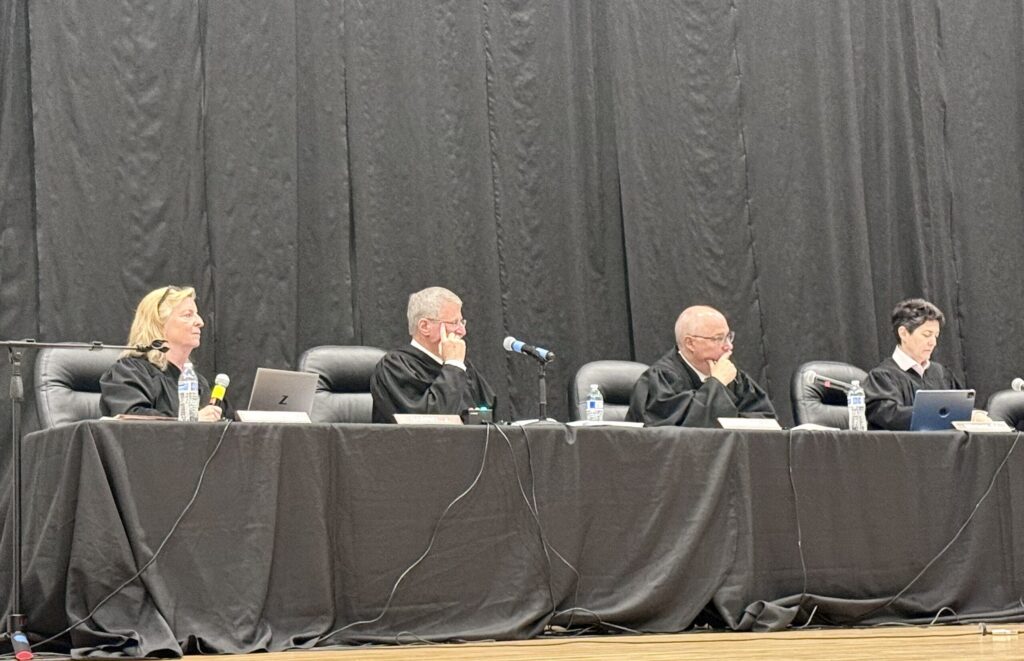
Colorado justices to hear appeal in Kendrick Castillo death lawsuit, ‘fugitive’ rule
Michael Karlik
michael.karlik@coloradopolitics.com
Updated 5 hours ago
The Colorado Supreme Court announced on Tuesday that it will decide whether it was proper to dismiss a lawsuit over the 2019 shooting death of Kendrick Castillo after the defendants paid the maximum amount of damages available to Castillo’s parents,...

Two more wolves killed by Colorado wildlife staff
Marianne Goodland
marianne.goodland@coloradopolitics.com
Updated 6 hours ago
Two yearling wolves from the Copper Creek and Three Creeks packs in Pitkin and Rio Blanco counties, respectively, were killed by Colorado Parks and Wildlife staff on Monday. That brings to 19 the number of wolves that have died under...

U.S. Rep. Lauren Boebert calls Trump’s 90-day wolf-delisting review ‘real progress’
Marianne Goodland
marianne.goodland@coloradopolitics.com
Updated 4 hours ago
President Donald Trump has directed Interior Secretary Doug Burgum to launch a 90-day review on whether gray wolves and Mexican wolves should be removed from Endangered Species Act protections. The order drew mixed reactions for Colorado’s wolf-reintroduction effort, with ranchers...

Arapahoe County judge’s frustration with defense lawyer not grounds for new trial
Michael Karlik
michael.karlik@coloradopolitics.com
Updated 6 hours ago
Colorado’s second-highest court decided last week that an Arapahoe County judge’s repeated rebukes of a defense attorney and orders to “be quiet” did not rise to the level of bias or a violation of the defendant’s due process rights. A...

Divided appeals court upholds vehicle theft conviction despite unclear origin of car’s value
Michael Karlik
michael.karlik@coloradopolitics.com
Updated 3 hours ago
Colorado’s second-highest court upheld a defendant’s conviction for aggravated motor vehicle theft last week, even though it was unclear how the Thornton Police Department estimated the value of the stolen car. Officer Marc Faivre encountered Ashley Shelee Gibbens-Martinez in a...
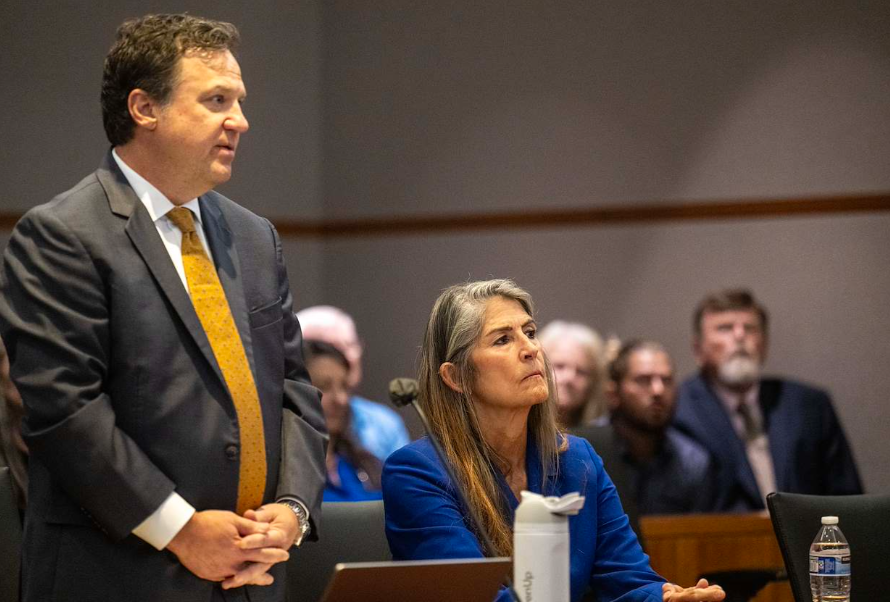
Disgraced ex-CBI analyst Missy Woods sentenced to prison in DNA scandal
Jenny Deam
jenny.deam@gazette.com
Updated 6 hours ago
A Jefferson County district court judge on Tuesday sentenced a disgraced former Colorado Bureau of Investigation DNA analyst to a decade in prison for altering and deleting data in scores of criminal cases over several years. Jefferson County District Judge...

Lindsay Clancy’s attorney makes plea for pardon from Trump
Emily Hallas
emily-hallas@coloradopolitics.com
Updated 12 hours ago
Lindsay Clancy’s attorney urged President Donald Trump on Tuesday to give her a pardon before her murder case could head for another trial. Clancy is a Massachusetts woman who admitted to strangling her three young children in 2023 but argued...

Russia launches massive, deadly, and ‘complex’ attack against Ukraine
Washington Examiner Staff
washington-examiner-staff@coloradopolitics.com
Updated 13 hours ago
Fighting between Ukraine and Russia commenced after a 72-hour pause for diplomatic visits to both countries by U.S. officials. Russia launched a massive attack on Ukraine on Tuesday, firing dozens of cruise missiles and over 140 drones as the war...

Jason Crow endorses Democrats up and down Colorado’s ballot, chips in $100K for campaign efforts
Ernest Luning
ernest.luning@coloradopolitics.com
Updated 6 hours ago
Democratic U.S. Rep. Jason Crow on Tuesday formally endorsed more than 60 Democrats running up and down Colorado’s ballot and said he’s putting $100,000 into statewide and county campaigns and organizing programs to drive turnout in the fall election. Crow,...

FBI sets $25,000 minimum reward for dozens of unsolved Indian Country cases | OUT WEST ROUNDUP
The Associated Press
the-associated-press@coloradopolitics.com
Updated 15 hours ago
SOUTH DAKOTA Indian Country rewards set SIOUX FALLS — The Federal Bureau of Investigation has established a minimum reward of $25,000 in cases where people went missing or were killed in Indian Country, part of a broader effort to address...
PREV
PREVIOUS

Ambassador, activist and heiress Swanee Hunt has lived the #MeToo struggle
Swanee Hunt, a woman of tremendous privilege, philanthropy and leadership, has known the same struggles as many other women in the workplace today. “I have had two presidents – not Bill Clinton – make passes at me,” she told Colorado cable TV talker Aaron Harber as he interviewed the former U.S. ambassador to Austria and […]

Chris Wiseman returns to old job, temporarily, to run the State Fair
Retired Colorado Department of Agriculture veteran Chris Wiseman is returning to his old job as general manager of the State Fair until a new one be hired. He held the job from 2004 until he was named deputy ag commissioner in 2015. Wiseman retired in November. Wiseman will hold the job in the interim. Sarah […]