

Colorado Supreme Court to decide whether in vitro embryos are property
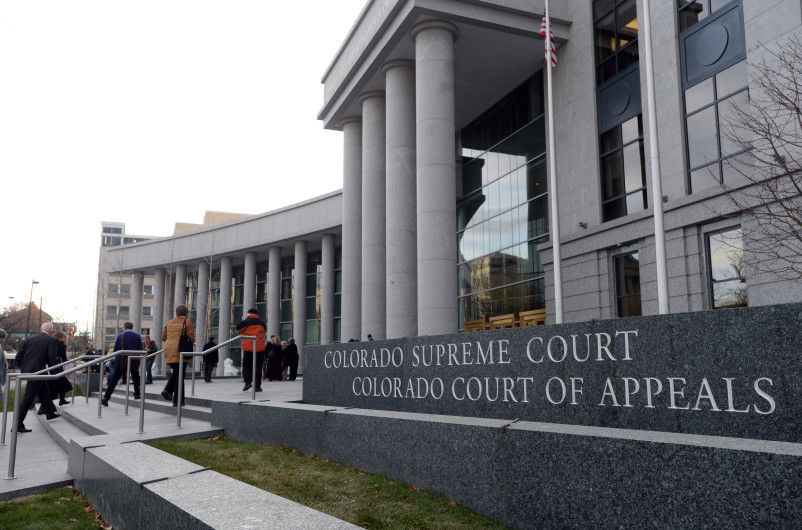
WASHINGTON – The Colorado Supreme Court is scheduled to hear a case next week on in vitro fertilization that is stretching child custody issues into times before fetuses enter their mothers’ wombs.
It also is drawing support or criticism nationwide from groups that seek to protect rights of women, parents or unborn children.
In the case of Coloradans Mandy and Drake Rooks, the now divorced parents are arguing over what should happen to the couple’s six frozen embryos.
Mandy Rooks wants to use at least one of them to bear another child. Her ex-husband wants them destroyed.
So far, lower courts have sided with Drake Rooks, saying Colorado law requires that bearing children through in vitro fertilization needs consent of both parents.The Drakes decided to use in vitro fertilization (IVF) during their marriage because of a fertility problem.
IVF is a process of fertilization in which a woman’s egg is combined with a man’s sperm outside their bodies. Afterward the fertilized egg, or embryo, can be transferred back to a woman’s uterus to make her pregnant.
Nine of Mandy Rooks’ embryos were medically conceived and cryogenically frozen. Mandy Rooks had three children through IVF.
The couple divorced in 2014 after 12 years of marriage. Afterward, Mandy Rooks wanted to use at least one more frozen embryo to have her fourth child.
Mandy Rooks used all of her eggs to make the embryos, meaning the six remaining in cryo-storage are her only opportunity to have more biological children.
The couple’s contract with the fertility clinic said that if they divorced and were unable to agree on whether to use the embryos for more children, a court must resolve the disagreement.
Both the district court and the Colorado Court of Appeals said embryos are not considered people under state law but marital property, which requires the consent of both former spouses to decide how they should be handled.
The court rulings mentioned Colorado’s Civil Remedy for Unlawful Termination of Pregnancy Act in denying the status of a “person” to a human embryo.
The district court balanced Mandy’s argument for birth against Drake’s position the embryos should be removed from freezing. Mandy appealed after the ruling in favor of her ex-husband.
The Court of Appeals cited the Uniform Parentage Act of 2002 in saying that a divorced father could be considered the parent of a child born through in vitro fertilization only if he consented.
“The trial court found that the contract was ambiguous as to how the court should award the embryos in the event of dissolution,” Division VI Judge Diana Terry wrote for the appeals court.
“It resolved the ambiguity by construing the agreement to require both parties’ mutual agreement before any of the embryos could be thawed and implanted and it therefore ruled that absent such an agreement, the embryos would be thawed and discarded on dissolution of the parties’ marriage.”
The court’s ruling blamed Mandy Rooks for failing to leave herself an option to use the embryos for more births in the contract.
“Wife could have contracted to receive the embryos on dissolution of the marriage but did not do so, and instead requested in her supplemental trial brief that the court decide the issue based on a balancing of the parties’ interests,” the ruling says.
“Applying the ‘balancing of interests approach,’ the court determined that husband’s interest in not having more children with wife outweighed wife’s interest in having another child,” Terry wrote.
Mandy’s second appeal will bring the case to the Colorado Supreme Court next week.
Her supporters include the pro-life public interest law firm the Thomas More Society, which is representing the American Association of Pro-Life Obstetricians and Gynecologists.
Their attorney filed an amicus, or friend-of-the-court, brief that said, “The appellate court erred in adopting a ‘balance of interest’ approach and treating the preserved human embryos as marital property in the divorce. Current science has established that these embryonic children are the result of procreation and are not property.
“Neither the appellate court or the lower district court cited any law that permits the court to terminate the life of a human being without a compelling reason,” the brief says.
Denver attorney Katayoun Donnelly, who is representing Mandy Rooks, did not return email or phone messages for this story.
Colorado U.S. Rep. Diana DeGette, D-Denver, who has sometimes voiced concerns on reproductive rights issues, declined to comment, saying the Rooks’ case was a state – not federal – issue.

Colorado justices skeptical that intimate messages relevant to assault case
Michael Karlik
michael.karlik@coloradopolitics.com
Updated 1 hour ago
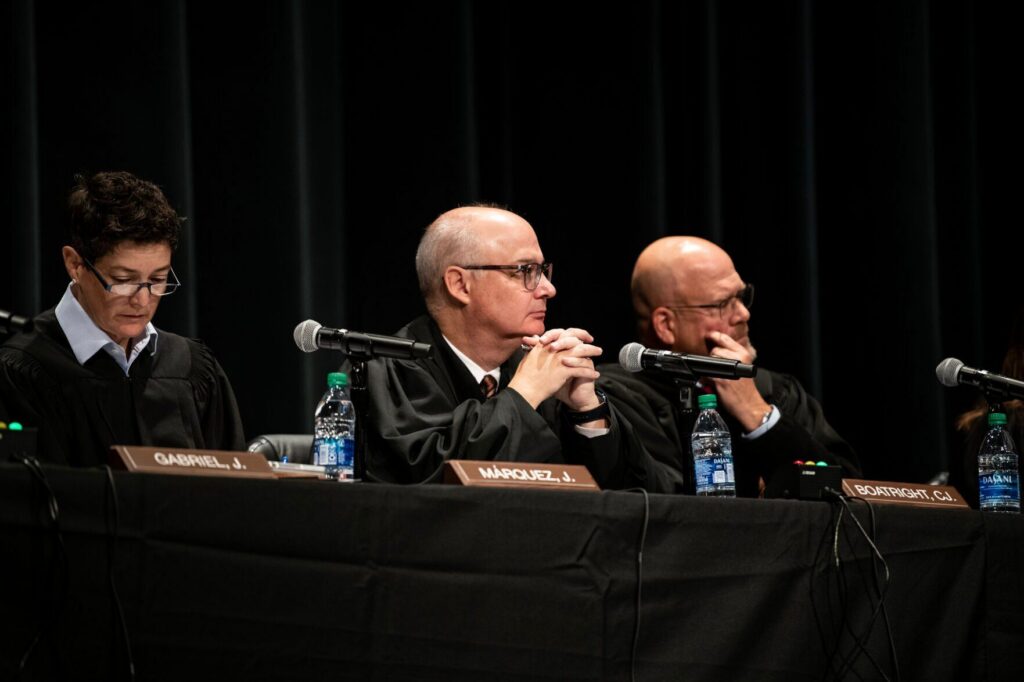
Members of the Colorado Supreme Court seemed to agree on Tuesday that a Douglas County judge acted reasonably by blocking evidence of a defendant’s BDSM-related conversations with the victim in his trial for assault and false imprisonment. Jurors found Donald Louis...
James Boasberg orders Trump to return over 100 Venezuelans deported under Alien Enemies Act
Emily Hallas, Washington Examiner
emily.hallas.washington.examiner@gazetteedit.wpenginepowered.com
Updated 4 hours ago
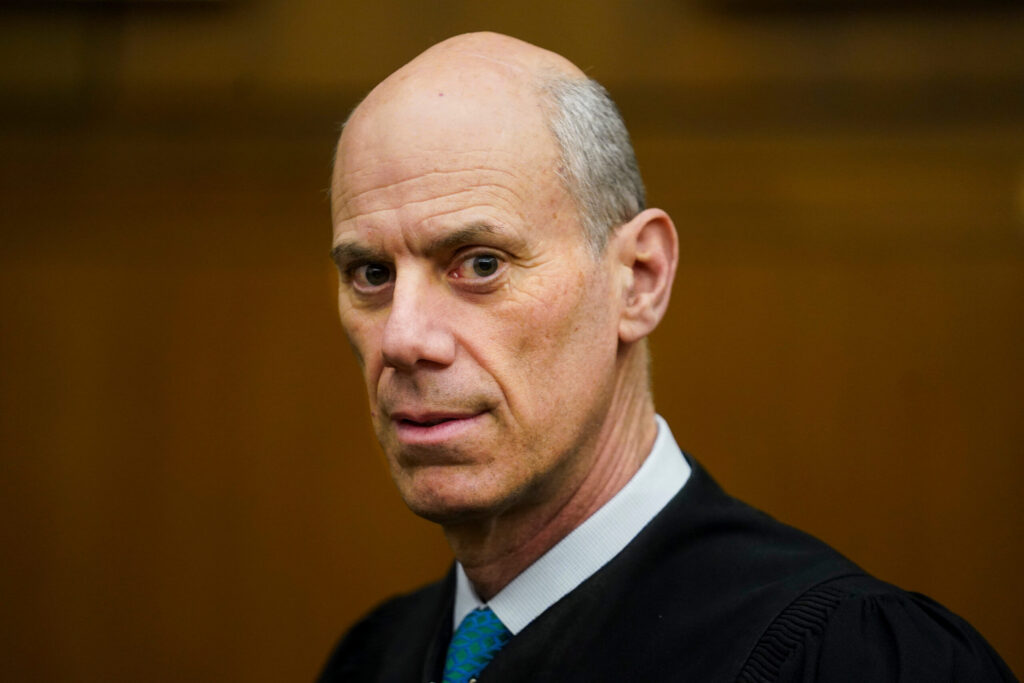
A federal judge ruled Thursday that President Donald Trump must return more than 100 Venezuelans deported to El Salvador under the Alien Enemies Act last spring. “The Court will now order the Government to facilitate the return from third countries of...
Senate Democrats weigh skipping Trump State of the Union address
David Sivak, Washington Examiner
david.sivak.washington.examiner@gazetteedit.wpenginepowered.com
Updated 4 hours ago
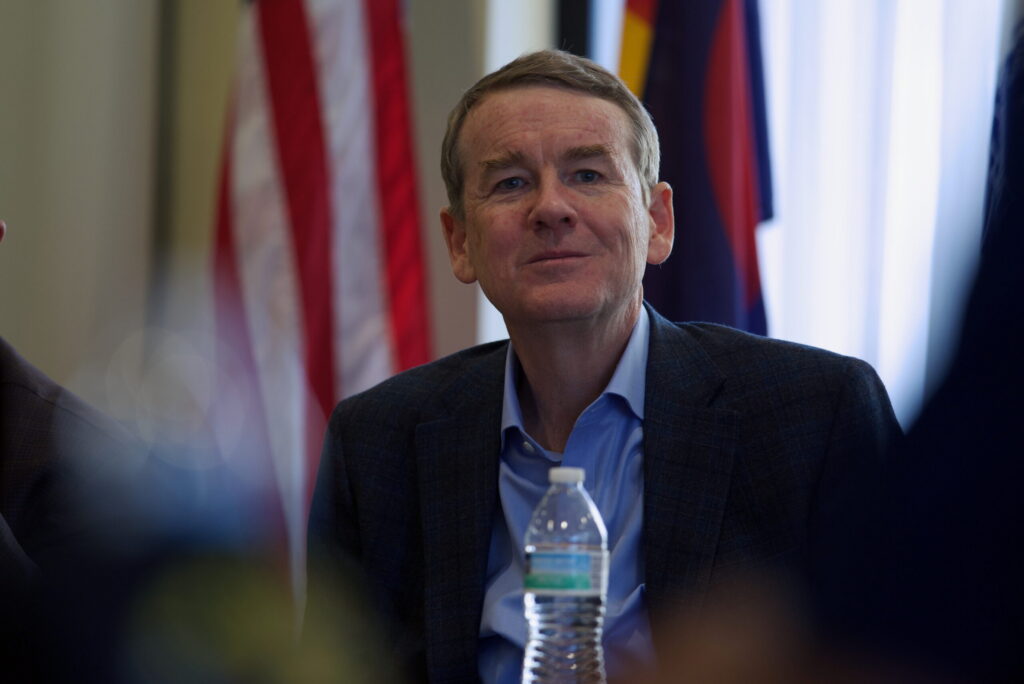
EXCLUSIVE — Senate Democrats are grappling with whether to leave their chairs empty later this month when President Donald Trump travels to the Capitol to deliver the first State of the Union address of his second term. Senior Democrats have...
Second appeals judge voices concerns about new ‘reasonable doubt’ instruction
Michael Karlik
michael.karlik@coloradopolitics.com
Updated 6 hours ago
Another member of Colorado’s second-highest court registered his concern on Thursday that a portion of the recently revised “reasonable doubt” definition improperly lowers the prosecution’s burden to prove a defendant guilty. Judge Daniel M. Taubman wrote that the current instruction...

Colorado lawmakers target ‘ghost networks’ to expand access to mental health care
Marissa Ventrelli
marissa.ventrelli@coloradopolitics.com
Updated 46 minutes ago
A few years ago, the U.S. Senate Committee on Finance conducted a “secret shopper” survey on health insurance plans across six states, including Colorado. Of the 120 providers called, one-third were either inaccurately listed in the carrier database, out of...

House passes voter ID bill with only one Democrat supporting GOP measure
Lauren Green, Washington Examiner
lauren.green.washington.examiner@gazetteedit.wpenginepowered.com
Updated 6 hours ago
By Lauren Green House Republicans passed a voter ID bill Wednesday, requiring proof of citizenship to vote with minimal Democratic support. Only one Democrat, Rep. Henry Cuellar, D-TX, supported the Safeguard American Voter Eligibility Act, also known as the SAVE...

Hickenlooper, Crow plan to donate campaign cash from Palantir execs to immigrant rights nonprofits
Ernest Luning
ernest.luning@coloradopolitics.com
Updated 56 seconds ago
Two Democratic members of Colorado’s congressional delegation said this week that they plan to donate more than $100,000 received in campaign contributions from current and former employees of Denver-based firm Palantir Technologies to local nonprofits that assist immigrants and support...

Colorado marijuana regulators consider major changes to how labs test for contaminants
Christopher Osher
chris.osher@gazette.com
Updated 8 hours ago
This article was produced for ProPublica’s Local Reporting Network in partnership with The Gazette. Colorado marijuana manufacturers would no longer be allowed to choose which product samples they send for mandatory lab testing under a new regulatory proposal discussed at...

Resolution calling for increased road funding clears Colorado Senate committee
Marissa Ventrelli
marissa.ventrelli@coloradopolitics.com
Updated 5 hours ago
A Republican legislator said he was pleasantly surprised on Wednesday when the state Senate’s transportation panel advanced a resolution brought to him by county commissioners urging the Colorado Department of Transportation to invest more money to fix roads. Road maintenance...

Hail drives up to 54% of homeowners’ insurance premiums in parts of Colorado
Marissa Ventrelli
marissa.ventrelli@coloradopolitics.com
Updated 23 hours ago
Hail is the largest cost driver of homeowners’ insurance spikes in many parts of the state, according to data collected by the Colorado Division of Insurance. The department requested data from 20 homeowners’ insurance carriers to calculate average premiums and...
PREV
PREVIOUS

Senate President Kevin Grantham focused on the next four months, not his legacy
State Senate President Kevin Grantham faces term limits after the next session, but he plays off questions about his political ambitions, assuming he has any. With the legislative session set to begin Wednesday, he prefers to talk about transportation, fixing state employees’ retirement plans, protecting the energy industry and handing off leadership to another Republican […]

Ads thanking Colorado Rep. Mike Coffman for tax vote to air this week
Next Wednesday, ads supporting the federal Tax Cuts and Jobs Act will start airing on metro Denver TV, and those ads will encourage viewers to thank U.S. Rep. Mike Coffman for his votes on the law. According to the Washington Post, the ads are coming from American Action Network and will air in 23 congressional […]