

Democrat Jared Polis says he’ll go through caucuses and circulate petitions to get on primary ballot for governor
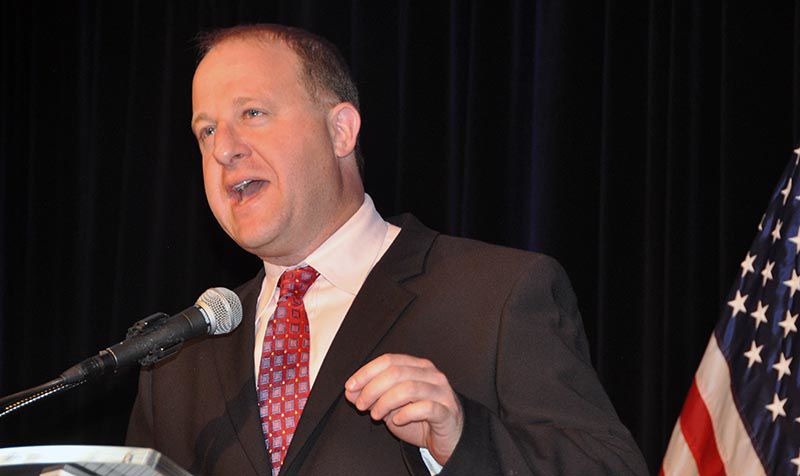
Democratic gubernatorial candidate Jared Polis said Thursday he plans to take two approaches to getting on Colorado’s June primary ballot – by going through the caucus and assembly process and by gathering petition signatures.
He’s one of five leading Democrats running for the office held by term-limited Gov. John Hickenlooper. Two of the others – Lt. Gov. Donna Lynne and businessman and civic leader Noel Ginsburg – have said they’ll try to get on the ballot by petition, while former State Treasurer Cary Kennedy announced last week she’ll go through caucuses, and former state Sen. Mike Johnston hasn’t revealed his plans.
“This truly is a people-powered campaign, and I’m so grateful to have earned the support of so many Coloradans,” Polis said in a statement. “Since we launched our campaign, I’ve been blown away by the incredible support from hardworking Coloradans across our state, from Grand Junction to Fort Collins and from Alamosa to Yuma. Voters across Colorado have been energized by our bold plans for the future, like universal pre-K, making Colorado 100-percent energy renewable by 2040, and building an economy that works for everyone. Working together, there’s no limit to what we can do for Colorado.”
There is a limit to how many candidates can emerge from caucuses and assembly onto the primary ballot. Candidates need to get at least 30 percent of delegate votes, meaning at most three – but more typically two – will emerge that way. Both major parties hold precinct caucuses across the state on March 6, and both have scheduled their state assemblies for April 14.
Statewide candidates can also land a spot on the ballot by collecting 10,500 signatures from fellow party members – 1,500 from each of Colorado’s seven congressional districts. Candidates can start circulating petitions Jan. 16, and they’re due back March 20.
In the 2016 Republican U.S. Senate primary, four candidates managed to qualify for the primary ballot via petitions, although only one made it without trips to court to force election officials to count some of their signatures. One of them, former state Rep. Jon Keyser, made the ballot despite complaints his petitions included forged signatures and the signature of at least one voter who died before she supposedly signed. That’s one reason lawmakers decided to require election officials will verify individual petition signatures this year.
Also new this year, following the passage of Initiative 108, unaffiliated voters will have the chance to cast ballots in either the Democratic or Republican primaries.
Nine Republicans are running for Hickenlooper’s seat, including former U.S. Rep. Tom Tancredo, State Treasurer Walker Stapleton and Attorney General Cynthia Coffman.


Democrat Dwayne Romero jumps in primary to challenge Republican Jeff Hurd in Colorado’s 3rd CD
Ernest Luning
ernest.luning@coloradopolitics.com
Updated 8 minutes ago
The Democrat who has been running for nearly a year to unseat Republican U.S. Rep. Jeff Hurd in Colorado’s 3rd Congressional District got some company in the primary this week. Dwayne Romero, a Snowmass Village business owner and decorated Army...

Proposed changes to wildfire code would add protections to eastern edge of Colorado Springs
Brennen Kauffman
brennen-kauffman@coloradopolitics.com
Updated 1 hour ago
New construction rules may be coming to the higher-risk wildfire areas around Colorado Springs, including the grassland on the city’s eastern side. Colorado Springs Fire Marshal Kris Cooper presented an early draft of the proposed changes to the city’s wildfire...
U.S. House probes reports of fraud, waste in Colorado’s Medicaid program
Marianne Goodland
marianne.goodland@coloradopolitics.com
Updated 13 hours ago
A congressional committee is probing reports of waste, fraud and abuse in Colorado’s Medicaid program, citing recent stories outlining over-billing in transportation spending and alleged improper payments in autism services. The U.S. House Committee on Energy and Commerce has sent...

Colorado’s congressional redistricting proposal could flip three Republican House seats | ANALYSIS
Michael Braithwaite
michael.braithwaite@gazette.com
Updated 16 hours ago
A Democrat-backed proposal to redraw Colorado’s congressional map for the 2028 election could flip three Republican districts. The proposal, introduced by a group called Coloradans for a Level Playing Field, is yet another development in a national redistricting debate after...

Appeals court overturns Douglas County vehicular homicide conviction due to faulty jury instructions
Michael Karlik
michael.karlik@coloradopolitics.com
Updated 21 hours ago
Colorado’s second-highest court overturned a defendant’s vehicular homicide conviction and 12-year prison sentence on Thursday after determining a Douglas County judge omitted key language from the jury instructions that could have resulted in a different outcome. James Paul McDonald was...
Colorado lawmakers’ speeches on immigration, Iran draw worries about decorum, grandstanding
Marianne Goodland
marianne.goodland@coloradopolitics.com
Updated 20 hours ago
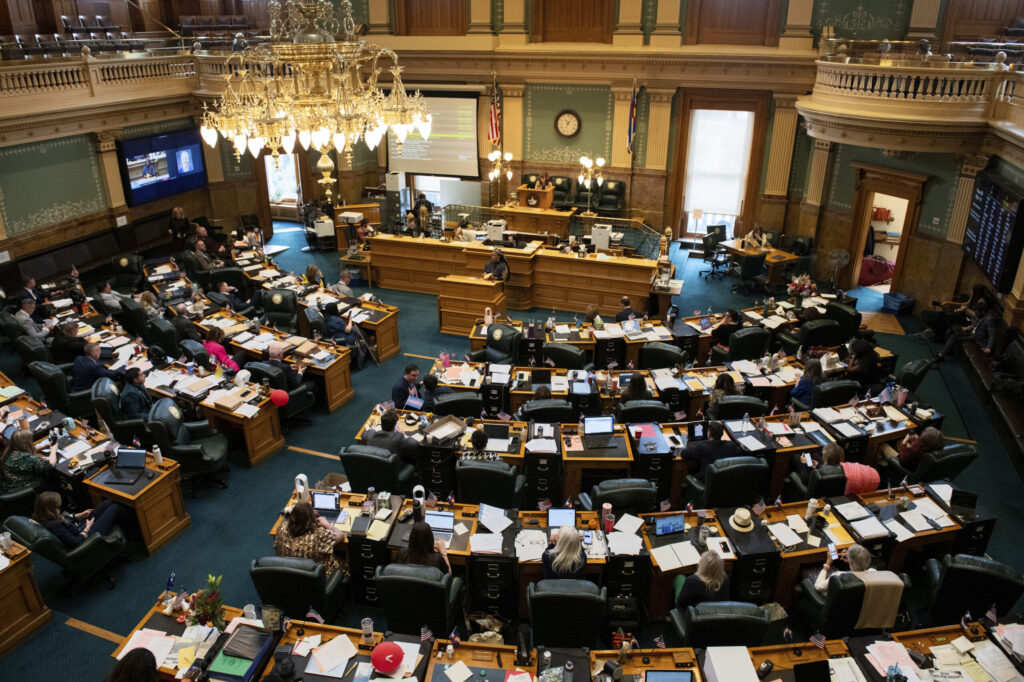
Several speeches from Colorado legislators this week have raised new worries about decorum and grandstanding in the state House after two members talked about immigration and Iran using what’s called a “point of personal privilege.” Under the rules of the...

Trump fires Homeland Security Secretary Noem after building criticism over immigration enforcement
Michelle L. Price
michelle.l..price@associatedpress.com
Updated 22 hours ago
WASHINGTON (AP) — President Donald Trump on Thursday fired his embattled Homeland Security Secretary Kristi Noem and said he will nominate in her place Oklahoma Republican Sen. Markwayne Mullin. Trump made the announcement on social media on Thursday, two days...

Trump wants to be personally ‘involved’ in picking next Iranian leader: Report
Christian Datoc, Washington Examiner
christian.datoc.washington.examiner@gazetteedit.wpenginepowered.com
Updated 23 hours ago
President Donald Trump told Axios Thursday that he wants to be personally involved with picking Iran‘s next leader, despite multiple senior administration officials repeatedly declaring that “regime change” is not a stated objective of Operation Epic Fury. Trump conducted an...

Iran widens regional war with first strike into Azerbaijan
Brady Knox, Washington Examiner
brady.knox.washington.examiner@gazetteedit.wpenginepowered.com
Updated 23 hours ago
Iran spread the growing regional war to the Caucasus with its first drone strike into Azerbaijan, hitting an airport terminal and damaging a nearby school. A video recorded by someone at Nakhchivan International Airport showed one of the drones exploding...
Rand Paul excoriates Congress for failure to pass War Powers Resolution: ‘Should be ashamed’
Claire Carter, Washington Examiner
claire.carter.washington.examiner@gazetteedit.wpenginepowered.com
Updated 23 hours ago
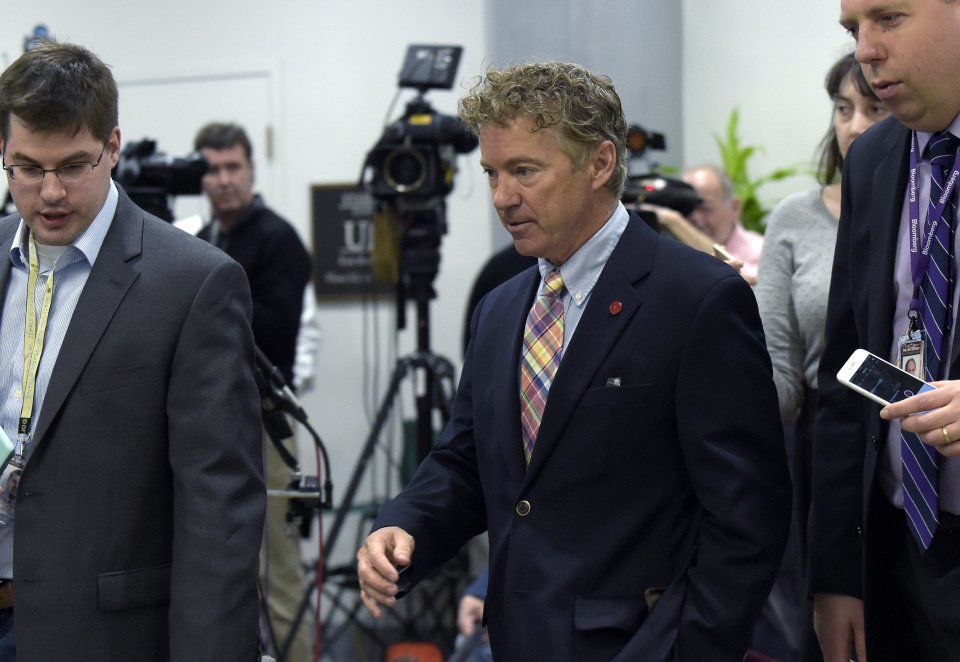
Sen. Rand Paul (R-KY) blasted his colleagues for failing to pass a resolution aimed at limiting President Donald Trump’s military campaign in Iran. The Kentucky Republican made the remarks in an opinion column published on Fox News a day after...
PREV
PREVIOUS

Lege leaders talk upcoming session at Chamber breakfast
The four leaders of the Colorado General Assembly laid out their priorities for the session that starts next week, and while there’s room for agreement on just what the priorities are, how to get there is another matter. The leaders spoke during a question-and-answer session Thursday morning for the fourth annual Legislative Preview Breakfast hosted […]

Updated: Rep. Paul Rosenthal cleared on sexual harassment charge
(Updated: This story was updated to included remarks from Rosenthal accuser Thomas Cavaness.) Colorado Rep. Paul Rosenthal is apparently in the clear over a sexual harassment complaint filed in November. The accusation that he touched another man at a party in 2012, if true., happened before he was a legislator. He was elected later than […]