

Gardner says U.S. needs new policy in trade, military relations with China
WASHINGTON – Colorado U.S. Sen. Cory Gardner promoted a new diplomatic strategy toward China that includes greater military and economic ties to the region during a U.S. Senate hearing Tuesday.
Gardner, a Republican, is chairman of the Senate Foreign Relations subcommittee on East Asia, the Pacific and international cybersecurity policy.
He called the hearing to assess risks and opportunities in China for the United States as he pushes Congress to adopt his proposal called the Asia Reassurance Initiative Act (ARIA).
The bill seeks to strengthen U.S. security commitments to East Asian allies, promote trade and encourage human rights and democracy.
“Asia will be critical for the U.S. economy to grow and for the American people to prosper through trade opportunities,” Gardner said.
Some of the bill’s critics say it could lead to an arms race if China or North Korea feels threatened by a bigger U.S. military presence.
Expert witnesses at the Senate hearing said China’s revamped economic policies propelled it to become a powerhouse in East Asian and world politics in the past 15 years.
They also said the Chinese often believe Americans are interfering with their rise to power.
“It is China’s intention to be the greatest power in the world,” said Michael Pillsbury, director of the Center for Chinese Strategy at the Hudson Institute public policy foundation.
Pillsbury cautioned that threats to the U.S. economy and military security from China’s aggressive political maneuvers should not be ignored.
“The trend may be against us if the forecasts are correct Chinese economic growth in (Purchasing Power Parity) has already surpassed us,” Pillsbury said in his testimony. Purchasing Power Parity is an economic theory that compares the strength of nations’ economies based on the purchasing power of their currencies.
The hearing follows a visit last week by President Donald Trump to Beijing and other Asian capitals for a state visit.
He arrived amid concerns that he would continue the tough talk toward China he showed during his presidential campaign.
“We can’t continue to allow China to rape our country,” Trump said during a campaign speech.
He was referring to trade policies that many Americans believed were predatory. They include allegations the Chinese copy intellectual property without compensating its U.S. owners or subsidize manufacturing industries that run American competitors out of business.
Days after taking office in January, Trump withdrew the United States form the 12-nation Trans-Pacific Partnership trade agreement with Japan, Australia, Vietnam and other Pacific Rim countries.
However, Trump’s visit last week was marked by rhetoric that appeared to seek cooperation and reconciliation with the Chinese.
“Who can blame a country for taking advantage of another country for the benefit of its own citizens,” Trump said while speaking to business executives at Beijing’s Great Hall of the People. “I give China great credit.”
Gardner asked witnesses at the Senate hearing what Trump accomplished with his Far East tour, which he said showed “the United States remains engaged and willing to lead.”
Most of the witnesses said Trump’s meetings with Asian leaders were largely ceremonial.
“I don’t think the president accomplished very much in China,” said former U.S. Ambassador to China Max Baucus. “There’s no evidence of movement on North Korea.”
The commercial gains he hoped to achieve consisted mostly of memorandums of understanding that do not require follow-up action, he said.
“More importantly, there’s nothing there I can see to address the fundamentals,” Baucus said.
Gardner asked about whether the Chinese could be convinced to curb threats from North Korea’s nuclear missile program without drawing the United States into a broader war in Asia.
The witnesses said that so far, North Korea has shown no willingness to restrain its military expansion, regardless of influence from its Chinese ally.
“I can’t imagine the regime of Kim Jong-un giving up its nuclear arsenal in any world,” said Graham Allison, a professor of government at the Harvard Kennedy School. “It’s not going to happen.”
Provisions of the ARIA legislation Gardner co-sponsored try to address North Korea and China’s weapons build-ups with funds to increase the U.S. military presence in the region, such as through joint Navy operations with allies. It also would authorize U.S. Navy ships and military aircraft to enforce freedom of navigation and overflight rights in the East and South China Seas.
Taiwan – a U.S. ally but Chinese antagonist – would receive rights to new arms sales under the bill.


Healthcare freefall: UNC’s new medical school aims to tackle Colorado’s rural doctor shortage
Hap Fry, Special to The Gazette
hap-fry@gazette.com
Updated 1 day ago
Editor’s Note: Colorado’s healthcare system is entering a period of accelerating instability — a “tsunami,” as multiple leaders describe it — driven by collapsing hospital finances, shrinking Medicaid reimbursements, disappearing services and a political fight over who is responsible for...

Healthcare freefall: Economic ripple effects grow as Colorado hospitals face financial strain
Thelma Grimes
thelma.grimes@coloradopolitics.com
Updated 1 day ago
Colorado’s hospital systems aren’t just a network of clinics and emergency rooms — they are also one of the state’s largest economic engines. So some 10 hospitals identified at any given time as vulnerable to closure, the alarm extends far...
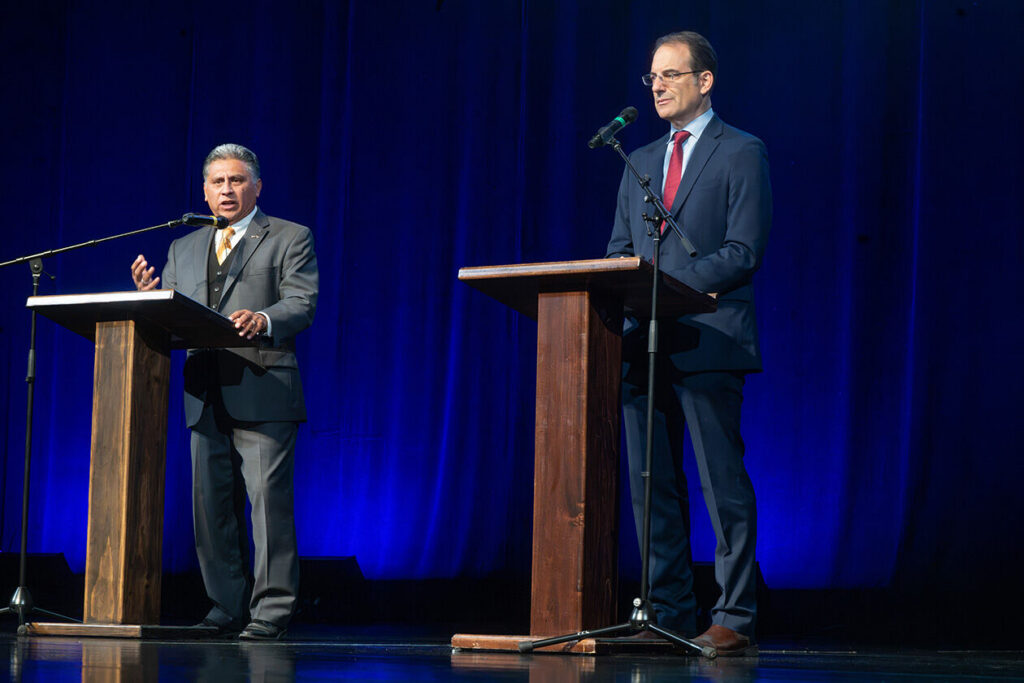
Gubernatorial candidates Phil Weiser, Greg Lopez spar, as Marx skips debate
Deborah Grigsby
deborah.smith@denvergazette.com
Updated 10 hours ago
Two of the candidates for Colorado governor squared off in a televised debate on Thursday night, when Attorney General Phil Weiser, the Democratic nominee, and former U.S. Rep. Greg Lopez, an unaffiliated candidate, delved into issues of affordability, data center...
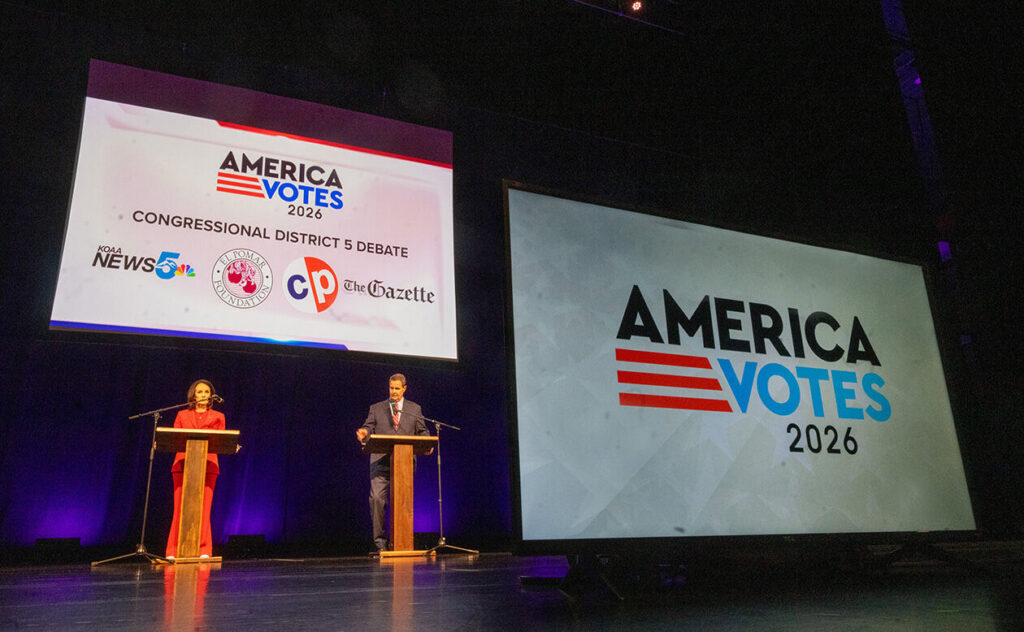
Troops, taxes, war dominate Colorado’s 5th CD debate between Jeff Crank, Jessica Killin
Deborah Grigsby
deborah.smith@denvergazette.com
Updated 11 hours ago
Republican U.S. Rep. Jeff Crank and Democratic challenger Jessica Killin on Thursday night clashed over the war in Iran, the federal budget and healthcare when they took the stage in Colorado Springs for a sold-out debate in the race to...
WATCH: Colorado gubernatorial candidates Phil Weiser, Greg Lopez face off Thursday in televised debate
Ernest Luning
ernest.luning@coloradopolitics.com
Updated 12 hours ago
Two of the candidates for governor of Colorado are set to square off in a televised debate for the first time Thursday night, when Attorney General Phil Weiser, the Democratic nominee, and former U.S. Rep. Greg Lopez, an unaffiliated candidate,...
WATCH: Republican US Rep. Jeff Crank, Democratic challenger Jessica Killin debate in Colorado’s 5th CD
Ernest Luning
ernest.luning@coloradopolitics.com
Updated 14 hours ago
Republican U.S. Rep. Jeff Crank and Jessica Killin, his Democratic challenger, are scheduled to meet for a televised debate in the race to represent Colorado’s 5th Congressional District on Thursday night. The candidates are set to take the stage at...

Colorado officials warn of e-bike safety amid increase in serious youth injuries
Matt Kyle
matt.kyle@denvergazette.com
Updated 9 hours ago
Serious injuries involving e-bikes, e-scooters and children have risen significantly in Colorado over the past year and a half. Traumatic injuries involving e-bikes have risen 184%, according to Alicia Melven, Colorado injury prevention and outreach specialist for Children’s Hospital Colorado’s...
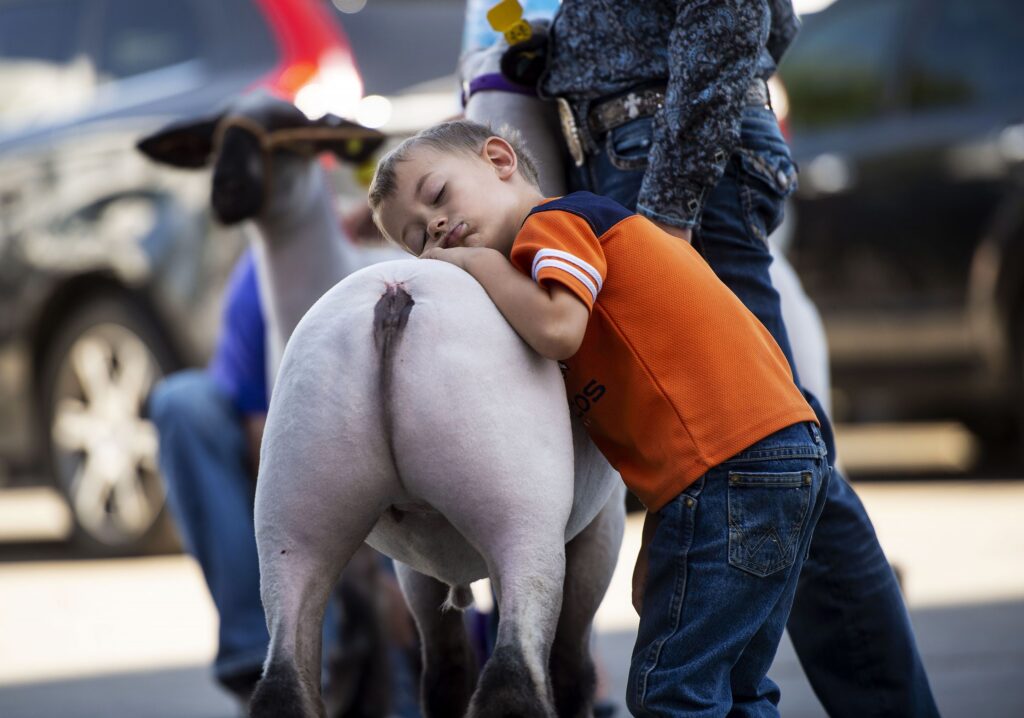
Colorado State Fair youth golf tournament celebrates 11 years
Marianne Goodland
marianne.goodland@coloradopolitics.com
Updated 16 hours ago
Twenty-eight teams tee off Friday at Walking Stick Golf Course in Pueblo for a tournament supporting 4-H, Future Farmers of America and capital improvements at the Colorado State Fair. Now in its 11th year, the Partners of Youth in Ag...

Controversial two-bag furbearer limit heads to CPW meeting under legal threat
Marianne Goodland
marianne.goodland@coloradopolitics.com
Updated 16 hours ago
Next week’s Colorado Parks and Wildlife Commission meeting in La Junta is likely to open under the cloud of threatened legal action. Safari Club International and the Sportsmen’s Alliance Foundation warned the commission this month that its July vote imposing...
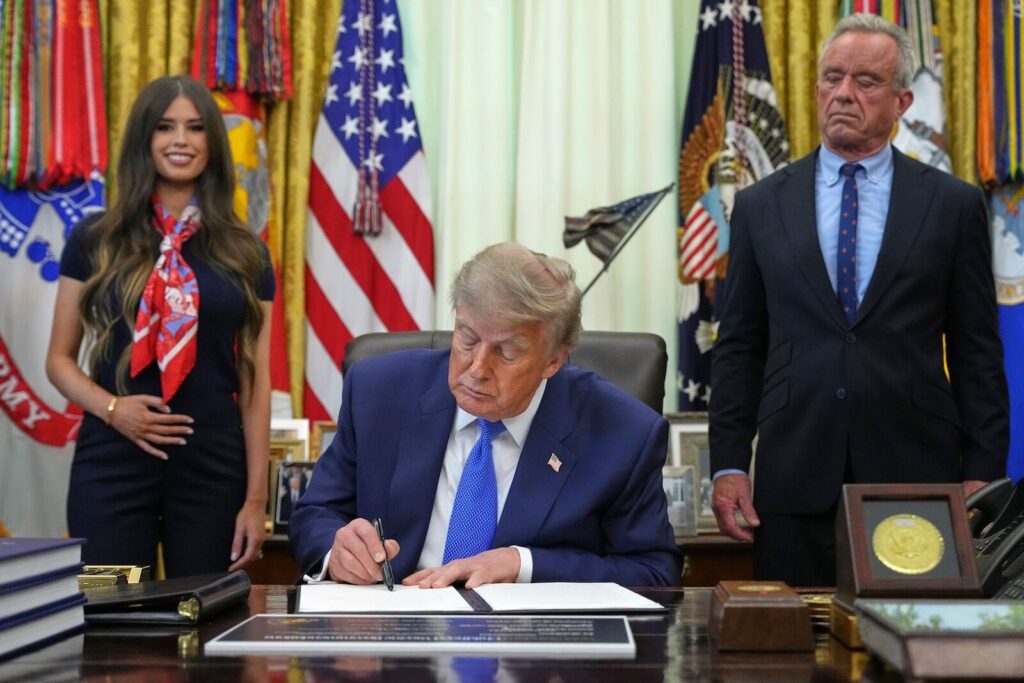
Democratic-aligned poll shows big majority of swing-seat voters support routine childhood vaccines
Ernest Luning
ernest.luning@coloradopolitics.com
Updated 18 hours ago
A new poll conducted by Democratic-aligned groups found that voters in competitive U.S. House districts — including a battleground seat in Colorado — support routine childhood vaccinations by a wide margin and oppose a recent order by President Donald Trump...