

What did Mike Coffman tell Vietnam vets? Watch for yourself
Colorado Politics told you Friday that U.S. Rep. Mike Coffman was in New Orleans to be honored as the legislator of the year by the Vietnam Veterans of America.
The organization lauded him for the fine work he has done on veterans issues. John Rowan, the organization’s national president paused during the introduction to check that Coffman, indeed, served in both the Army and Marines during his 21 of service.
“I go both ways,” Coffman answered from off camera, to laughter.
What else did Coffman tell his fellow veterans, many of whom, like him, served in combat?
He told them about his father, the late Harold Coffman, a career enlisted Army soldier who served in World War II and Korea and was wounded in action. The congressman’s father started in the infantry and joined the medical corps before retiring as a master sergeant.
His father tried to steer Coffman away from infantry units, and but the younger Coffman served in the Marine and Army infantries, deployed a total of five times and twice in combat. He’s the only member of Congress to serve in both Iraq wars.
“What defines me most as a member of Congress is a war I never fought in, the war in Vietnam,” he said Friday. “That’s it. My father’s last assignment was in 1964 and was transferred to Fitzsimons Army Medical Center in Aurora. Colo., and in 1964 it was the most beautiful post imaginable. It was quiet and all it was was this hospital with surrounded by supporting facilities, and you could walk anywhere. And as a 9-year-old I was in Heaven.
“Things started to change. In 1965 the casualties started coming in from Vietnam, and every year there were more. By ’68 it was daily. The casualties were flown into Buckley Air National Guard Base, and they were transported over to the hospital.”
He told of seeing soldiers in blue pajamas who had lost limbs fighting in the jungles. He saw hallways crowded with gurneys. He heard soldiers screaming out in pain.
Coffman volunteered with the Junior Red Cross to help soldiers and get to know them better.
“This country not only never welcomed them home, they never honored their sacrifices,” Coffman told the Vietnam Veterans of America. “And so if there’s one thing that compels me today as a member of Congress, it is to make sure no one is ever treated like those who came home from Vietnam.”
Here is the transcript of the prepared speech Colorado Politics got from Coffman’s office:
It is such an honor to be here with you today and to be recognized as one of the Legislators of the Year by the Vietnam Veterans of America. My late father was a career enlisted soldier and fought in World War II and in the Korean War and was wounded in combat during the Korea War. He was in the Army infantry but after he was wounded in Korea he finished the second half of his career in the Army Medical Corps and eventually retired as a Master Sergeant. I’ll never forget seeing my father after my junior year in high school, I thought my time would be better spent in the United States Army and decided to drop out of high school to enlist. So I went to see my late father, the now retired Master Sergeant, about my plans to enlist in the United States Army.
My father said, well if you’re going to enlist in the United States Army, enlist for three of four years where you can pick what you are going to do, and not for just two years where the Army will decide what you will be doing and they will just put you in the infantry. And my father did not want me in the Army infantry. And so I said, “No Dad, I talked to the recruiter and he said I could go in for two years and I wouldn’t have to serve in the Army infantry. Well, I served for the next two years in the Army infantry and I came home back to Colorado after my two years were up to attend the University of Colorado under the GI bill. I needed some extra money while at the University of Colorado and I missed the the camaraderie in the military anyway so I joined the United States Army Reserve.
But when I graduated I decided to switch over to the Marine Corps and go into their officers’ program. And then I saw my father and had a glossy brochure with all of the Marine Corps officers programs on it and he said “Marines? All they have is infantry.” And I said “no Dad, they’ve got logistics, intelligence, supply, aviation and lots of these other fields besides infantry.” And so, I became an infantry officer in the United States Marine Corps. Despite my five deployments, two of which were in combat, what defines me most as a member of Congress is a war I never fought in, the war in Vietnam. And just how is that?
My father’s last assignment was in 1964 when we were transferred to Fitzsimons Army Medical Center in Aurora, Colorado. In 1964, it as the most beautiful post imaginable. It was an small with quiet tree-lined streets and all it was was a hospital with the surrounding support facilities. And I could walk or ride my bike anywhere on the post. And for a nine-year-old boy it was Heaven. And then things began to change. In 1965, the casualties started coming in from Vietnam. And every year there were more. By 1968, there were wounded soldiers arriving daily. The casualties would be flown into Buckley Air National Guard Base and then transported over to the hospital.
In the summer of 1969, I was riding my bicycle and had an accident that caused a big gash in my knee. My father took me over to the Army hospital where we went to the orthopedic ward to get stitched up. Fitzsimmons Army Medical Center had become a center for wounded soldiers returning from Vietnam. Most of the wounded were amputees.
These soldiers who had lost limbs fighting in the jungles of Vietnam from mines and booby traps would be the physical signature injure of that war. So I’ll never forget when the elevator door opened up and I was trying to exit the elevator and go to the orthopedic ward with all off these seriously wounded soldiers wearing blue pajamas, missing legs, some missing arms, getting ready to be moved from one part of the hospital to another to get worked on.
I felt so embarrassed trying to navigate my way through these wheelchairs and gurneys with my superficial wound among these seriously wounded soldiers who had sacrificed so much. I could look down the corridor and see that the ward was packed full of wounded soldiers, so many wounded that there were beds permanently positioned, end-to-end, in the hallway.
I could hear a patient screaming in pain as his wounds were being worked by hospital medics. I never forgot that experience. After getting stitched up, I decided to volunteer at the hospital with the Junior Red Cross where our task was to make the lives of these wounded soldiers just a little bit easier by helping to set up recreational activities for them. And as I got to know some of the wounded, what was so profound was how incredibly low their morale was. They were just at the hospital to be stabilized, most of them were not going to be returned to active duty and were going to be medically discharged from the Army and then transferred to go to the VA for their rehabilitation.
As the American people became more divided about the War in Vietnam they also became more divided about their support for those who fought in that war. These wounded soldiers were neither welcomed home nor honored for their sacrifices.
So if there is one thing that compels me today, as a member of Congress, it is to make sure that no one is ever treated like our veterans who came home from Vietnam, and we, as a nation, must always honor our obligations to the men and women who make tremendous sacrifices in defense of our freedom.
I am so honored to be on the House Veterans Affairs Committee. On the House Veterans Affairs Committee, the bipartisanship is extraordinary with Republicans and Democrats standing shoulder to shoulder to fight for those who have fought for us. I am so proud of that, and I wish that the rest of the Congress would be like the Veterans Affairs Committee.
Unfortunately it is not. I often visit the wounded at Bethesda Joint Services Hospital in Maryland. Particularly, 2011, during the height of our surge in Afghanistan. And so it now brigns me me full circle, from when I was a young teenager volunteering at the Army Hospital – to going to Bethesda as a member of Congress. The physical signature wound of war during the surge in Afghanistan in 2011 was Soldiers, Airmen, Marines, and Sailers who had lost limbs – just like those soldiers in Vietnam.
One day I went to the hospital to meet a Marine from Littleton, Colorado who had been wounded in Afghanistan. He had lost both of his legs, a bilateral amputation above the knees and part of his hand to an IED blast. As we got better on ISR, on monitoring our roadways, and upgrading our vehicles, the Taliban changed tactics. Instead of trying to hit vehicles, they took those same IED bomb making materials and used them for mines, without any metal signature, to inflict casualties on dismounted patrols. Even the bomb-sniffing dogs were missing them.
We were having wounds that were just incredible. But the wounds were not as severe as Vietnam because of our improved ability to evacuate them and we were saving lives that were not saved in Vietnam. But when I went to visit the wounded Marine from Colorado, a corpsman came over and asked me to see if I would also visit the other wounded at the hospital. I said yes and I started going from room to room to room. I asked the corpsman what I would see in the next room, just so I wouldn’t be shocked and would be better prepared. I wanted to be able to look at each patient directly, eye-to-eye. Before I entered each room I received the same news about the patient, “bilateral amputation above the knees.”
The last wounded that I saw were two Army airborne soldiers with leg amputations very high up in. They were both sitting in wheel chairs. I could see the flags of their unit, with the black Airborne Eagle on a white background, with all the signatures from the fellow soldiers in their platoon. One of them looked up to me, he was clearly in pain and said, “do you know what we do Congressman, we work hard everyday to get well enough so that when the soldiers from our platoon come home, we can be on the tarmac to welcome them home when they get off the plane. How incredible is that. None of them said to me, “Why we, why did I make this decision to join the military.” I believe as long as we have young people like those two soldiers that are willing to make such extraordinary sacrifices for this country that we will remain a great nation. God bless you for your service, thank you so much.
Editor’s note: This story was updated to add the full text of Coffman’s prepared remarks.


Colorado health equity funder’s redirection debated
DEBBIE KELLEY
debbie-kelley@coloradopolitics.com
Updated 15 hours ago
A redirection in grantmaking that began two years ago for The Colorado Trust, a 40-year-old Denver-headquartered funder, has led some employees to now voice concerns, which has reportedly put their jobs in jeopardy. The vice president of communications for the...
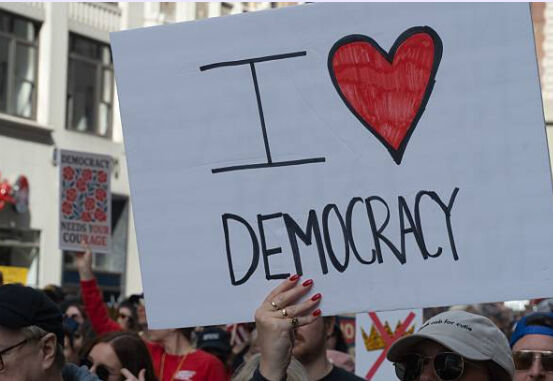
Can deliberation save democracy? | Vince Bzdek
Vince Bzdek
vince.bzdek@gazette.com
Updated 2 hours ago
By Vince Bzdek In September 2019, 523 Americans traveled to Dallas, Texas, for an experiment called “America in One Room.” The gathering was designed to test a theory: Could representative citizens deliberate productively even in an era of intense polarization?...
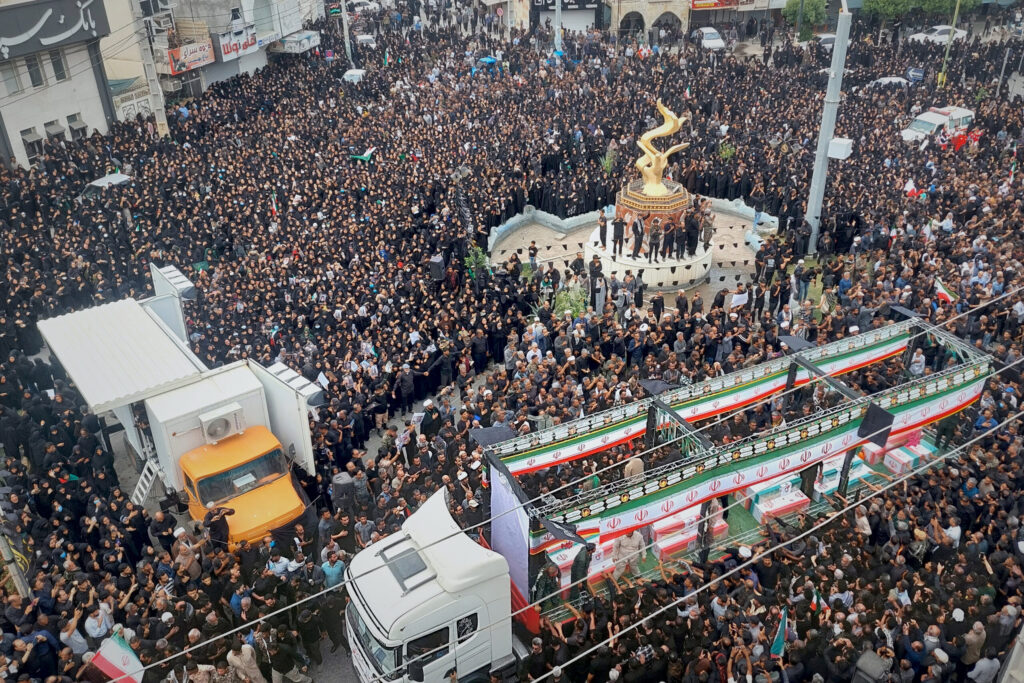
Is Trump a builder or just a latter-day headhunter? | SONDERMANN
By Eric Sondermann
by-eric-sondermann@coloradopolitics.com
Updated 2 days ago
It was well under 100 hours after President Donald Trump’s overly long, overly theatrical State of the Union speech that he unleashed American bombers across Iran. As I write, it is now less than 100 hours since those bombers started...
Democrats eye new taxes on alcohol, marijuana to fund Colorado mental health spending
Marissa Ventrelli
marissa.ventrelli@coloradopolitics.com
Updated 2 days ago
Facing a more than $1 billion budget shortfall, Colorado lawmakers are searching for ways to fund mental health services in a state that consistently ranks among the worst in the nation for mental health outcomes. Several proposals this session aim...

Colorado Politics Calendar Mar. 9-13
Rachael Wright, Special to Colorado Politics
rachael.wright@coloradopolitics.com
Updated 2 days ago
CoPo’s weekly political calendar will help you find political and public-policy events throughout Colorado. It includes candidate and issue campaign events, public policy meetings, court hearings, state and local party conventions, assemblies, debates, rallies, parades, speaking engagements, traveling dignitary appearances,...
LDS activist excommunicated from the church speaks out on women’s rights across Colorado | A LOOK BACK
Rachael Wright, Special to Colorado Politics
rachael.wright@coloradopolitics.com
Updated 2 days ago
Forty-Five Years Ago This Week: “Women must demand — now and if necessary at the peril of our lives — that we be granted civil rights in the same way rich white men in this country were granted them: constitutional...

Hopes and fears: Colorado Iranians speak out on widening war
Mark Samuelson Special to The Denver Gazette
mark.samuelson@denvergazette.com
Updated 2 hours ago
Group talks about young people protesting against the Islamic Republic, and Reza Pahlavi and the monarchy When Denver area real estate agent Fara Novin dined out for her birthday Friday night, Feb. 27, she blew out a candle on a...
DOJ publishes more Epstein documents mentioning Trump after initial omission
Rena Rowe, Washington Examiner
rena.rowe.washington.examiner@gazetteedit.wpenginepowered.com
Updated 19 hours ago
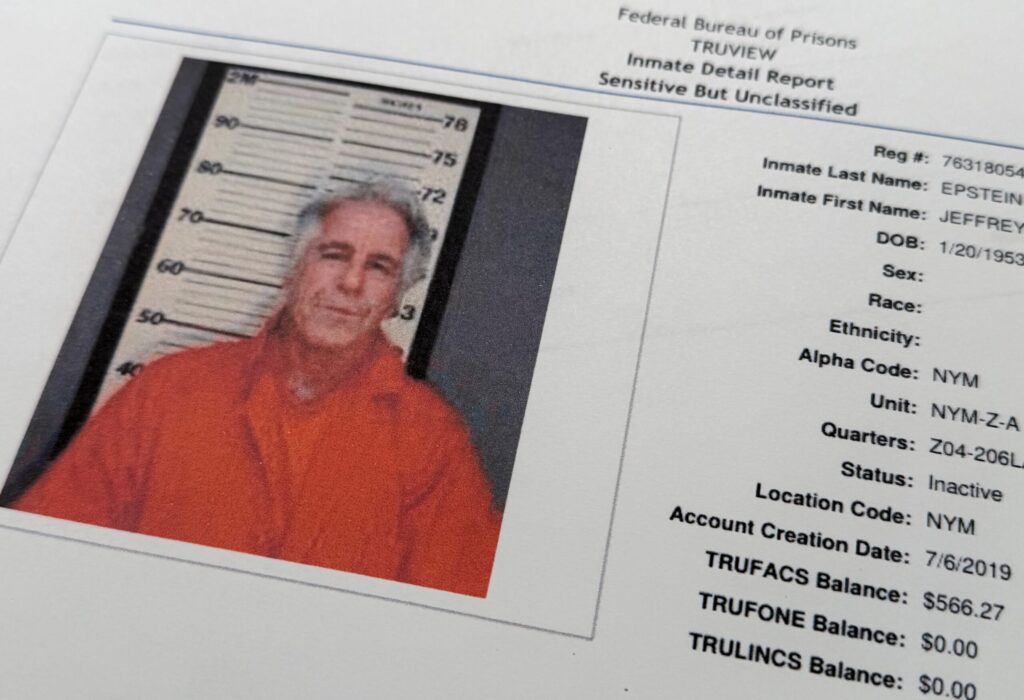
The Justice Department released additional Epstein files on Thursday, including uncorroborated accusations from a woman claiming she was sexually assaulted by President Donald Trump. Last week, Rep. Robert Garcia (D-CA), the top Democrat on the House Oversight and Government Reform...
Federal judge dismisses developer’s challenge to Denver affordable housing ordinances
Michael Karlik
michael.karlik@coloradopolitics.com
Updated 14 hours ago
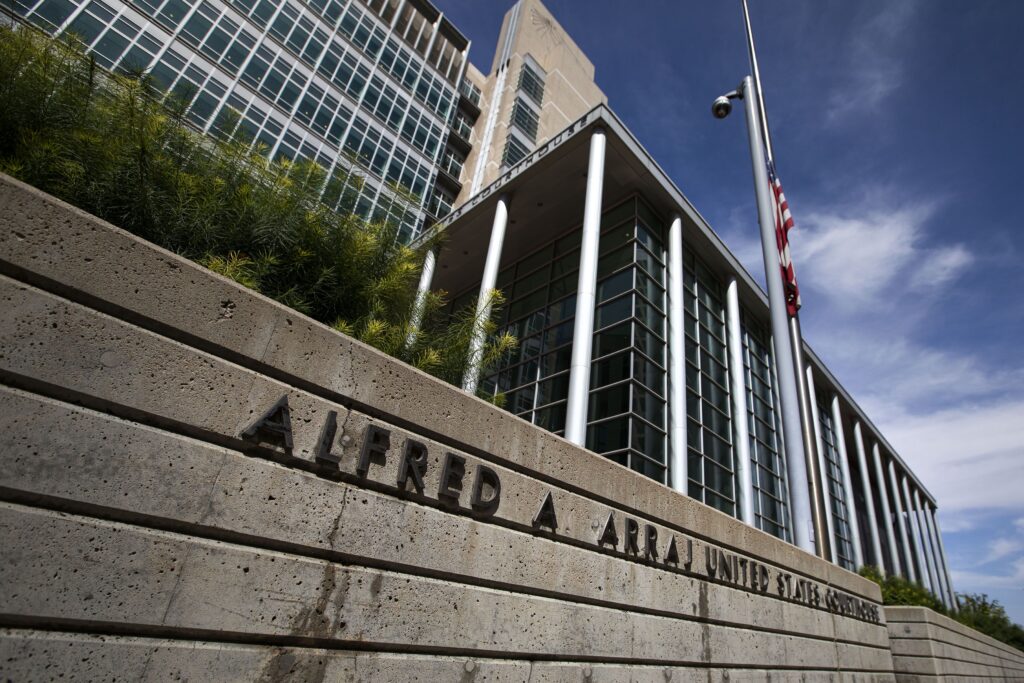
A federal judge dismissed a homebuilder’s constitutional challenge on Tuesday to a pair of Denver ordinances that impose obligations on developers related to the affordable housing demands created by new construction. Two related companies, redT Homes and redT Capital Partners,...
Another TABOR fight: Democrats plan to redirect refunds to Colorado residents
Marianne Goodland
marianne.goodland@coloradopolitics.com
Updated 13 hours ago
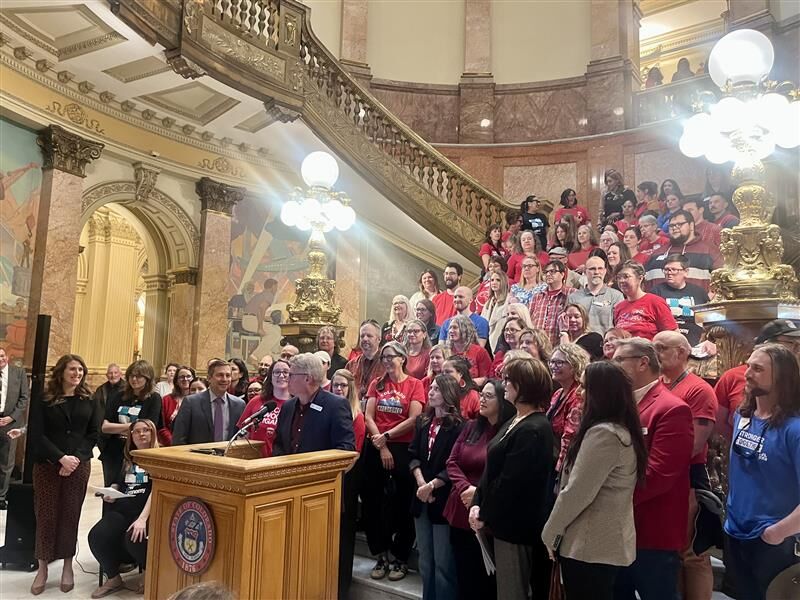
Colorado voters could decide this fall whether billions of dollars that would otherwise be returned as refunds under the Taxpayer’s Bill of Rights should instead go to public schools under a ballot measure unveiled Thursday by Democrats. Supporters say the...