

Lessons for Secretary Zinke and western politicians from the Outdoor Retailer Show
The recent announcement that the massive Outdoor Retailer trade show is moving to Denver from Salt Lake City after 25 years in Utah was a coup that sent shockwaves through the recreation, political and conservation spheres. The show will pump millions of dollars into Colorado’s economy, but more importantly, it establishes the Centennial State as the home base of America’s fast-growing outdoor-recreation industry.
It also establishes Colorado as the national leader of progressive public lands policies, and provides important lessons to politicians who seek to represent Westerners in our national, state or local governments. These lessons are especially important for President Trump’s Interior Secretary Ryan Zinke, who is in Colorado this week speaking at two events and visiting Rocky Mountain National Park.
Here’s the backstory: Outdoor recreation leaders decided to move their biannual show away from Utah after so many years because of a widening gap between Utah politicians and the values of the outdoor industry. As one industry representative put it, these values include a long-term commitment to “nurturing and protecting public lands,” since they are the places we actually go to recreate.
Over the last several years, Utah’s leaders have ramped up a war with the federal government over public lands. They demanded that the federal government turn national public lands over to the state; passed a resolution calling on the Trump administration to overturn the wildly popular Bears Ears National Monument, and spent millions of taxpayer dollars funding quixotic lawsuits to seize public lands from public hands.
Meanwhile, Colorado has forged a very different approach to the tens of millions of acres of public lands within our borders. First, in 1992, Colorado citizens passed a ballot initiative to send some lottery revenues to fund outdoors programs in the state, and what is now known as the Great Outdoors Colorado program has become a model for conservation funding across the nation.
Additionally, the politics of public lands seizure never really took hold here, and all eight attempts to pass legislation at the state level have failed. Instead, last year our General Assembly created Colorado Public Lands Day, a holiday to recognize the myriad benefits these places bring to our state.
Coloradans and our leaders also have a long history of collaborating with public lands managers on practical solutions to thorny challenges, as evidenced by how all stakeholders were brought together to build the greater sage grouse conservation plans. And, of course, we’ve achieved a considerable level of conservation for our public lands, including over 3.5 million acres of wilderness, four national parks and seven national monuments, and dozens more national forests, conservation areas, and other incredible places.
The fact of the matter is this: Because Colorado has been friendly to public lands, the outdoor recreation industry knew it was welcome in our state.
I hope that politicians in Utah have learned a lesson about the political and economic power of public lands and outdoor recreation, and that candidates across the West recognize that support for protected public lands is a path to political victory.
I also hope that Secretary Zinke has been reading the news coverage about these topics and thinking about how deeply damaging his anti-public lands actions and agenda could be for his political future and his ability to get things done in Washington.
Unfortunately Secretary Zinke and his ilk in the Trump administration are heading in a similar direction as Utah politicians. They are focusing on rolling back environmental enforcement, attempting to reduce or rescind national monuments including Colorado’s Canyons of the Ancients, and proposing to slash funding to park rangers and managers.
Despite the popularity of national parks and monuments with voters, this administration is pandering to a small number of anti-public lands politicians and lobbyists. But already, outrage and resistance have broken out, as evidenced by the 2.7 million comments on Zinke’s “review” of national monuments, nearly all of which were in support of keeping them protected.
Trump and Zinke’s radical agenda for our public lands is going to backfire, just as Utah politicians’ support of extremist ideas backfired and resulted in the state losing a tremendous economic driver when it lost the Outdoor Retailer Show.
Colorado’s collaborative, positive, and conservation-centric approach to public lands is the antidote to the anti-public lands and anti-conservation policies we see in some other states and from the Trump administration. It’s time that politicians learned some hard lessons and work on behalf of Westerners, who choose to live, work, and play in the West because of our amazing public lands and outdoor recreation opportunities.

Ain’t Polis’ Peters commutation a pity? | Hal Bidlack
Hal Bidlack
hal-bidlack@coloradopolitics.com
Updated 6 hours ago
I am hoping that, yet again, my long-suffering and very forgiving editor will pardon my rambling thoughts today, as there are too many open tabs on my computer that deal with issues I want to talk about (Ed: pretty used...
Colorado lieutenant governor candidate Markert says early discipline and key mentors set his course
Marianne Goodland
marianne.goodland@coloradopolitics.com
Updated 17 hours ago
Editor’s note: This is the first installment in a three-part series examining Colorado’s candidates for lieutenant governor. In this piece, Colorado Politics speaks with George Markert, the Republican running mate to gubernatorial candidate Victor Marx. Marx is competing against Democrat...
Colorado, like America, past due for generational change in politics | Miller Hudson
Miller Hudson
miller-hudson@coloradopolitics.com
Updated 2 days ago
I was 27 before I ever voted for president. At 19, in 1964, the Constitution had not yet been amended establishing 18-year-old voting eligibility. In 1968, I was serving overseas with the U.S. Navy at a time when there was...

Farmers and ranchers win on NIETC cancellation | Rachel Gabel
Rachel Gabel
rachel-gabel@coloradopolitics.com
Updated 2 days ago
The Department of Energy rolled into Lamar last week and Office of Electricity Assistant Secretary Katie Jereza stood in her neat, green suit in front of a room filled with farmers, ranchers and landowners. The crowd was filled with straw...

Going after the wrong butts | Jon Caldara
Jon Caldara
jon-caldara@coloradopolitics.com
Updated 4 days ago
Mayor Mike Johnston proclaimed, “It is past time Big Tobacco cleaned up the big mess it’s created.” Yep. Denver is suing tobacco companies for the cigarette butts littering the city. Because Denver’s Big Mess couldn’t possibly be the fault of...
Three districts that will answer key Colorado political questions | Paula Noonan
Paula Noonan
paula-noonan@coloradopolitics.com
Updated 5 days ago
Colorado’s legislature used to be a place where neither party was dominant. Dozens of seats were competitive and House and Senate majorities switched regularly. From 2010 to 2020, the House was predominantly Democratic with one two-year assembly under Republicans. The...

Hunting is a privilege, not a constitutional right | PODIUM
Colorado Politics
colorado-politics@coloradopolitics.com
Updated 5 days ago
By Roland Halpern Colorado voters may soon be asked to place hunting and fishing in the state constitution. Proposition 302 would establish the right to hunt, fish and take wildlife using “traditional methods,” while declaring hunting and fishing are the...

DEA’s Miguel Chino describes Colorado’s place on the ‘fentanyl pill superhighway’ | The OpEdge Podcast
Tony Olivero
tony.olivero@gazette.com
Updated 7 days ago
Miguel Chino, Acting Special Agent in Charge of the Drug Enforcement Administration’s Rocky Mountain Field Division, joins The OpEdge to paint the picture of Colorado’s place on America’s “fentanyl pill superhighways.” Chino updates Gazette and Colorado Politics Deputy Opinion Editor...
A right to buy a product? | Hal Bidlack
Hal Bidlack
hal-bidlack@coloradopolitics.com
Updated 1 week ago
A recent story in Colorado Politics caught my eye, as I learned of a “citizen initiative” that has qualified for the November ballot. It seems supporters of Initiative 177 have collected enough signatures, 146,165 legitimate ones out of a total...
Fourteen years after Aurora — we can’t afford to go backward | GUEST COLUMN
Colorado Politics
colorado-politics@coloradopolitics.com
Updated 1 week ago
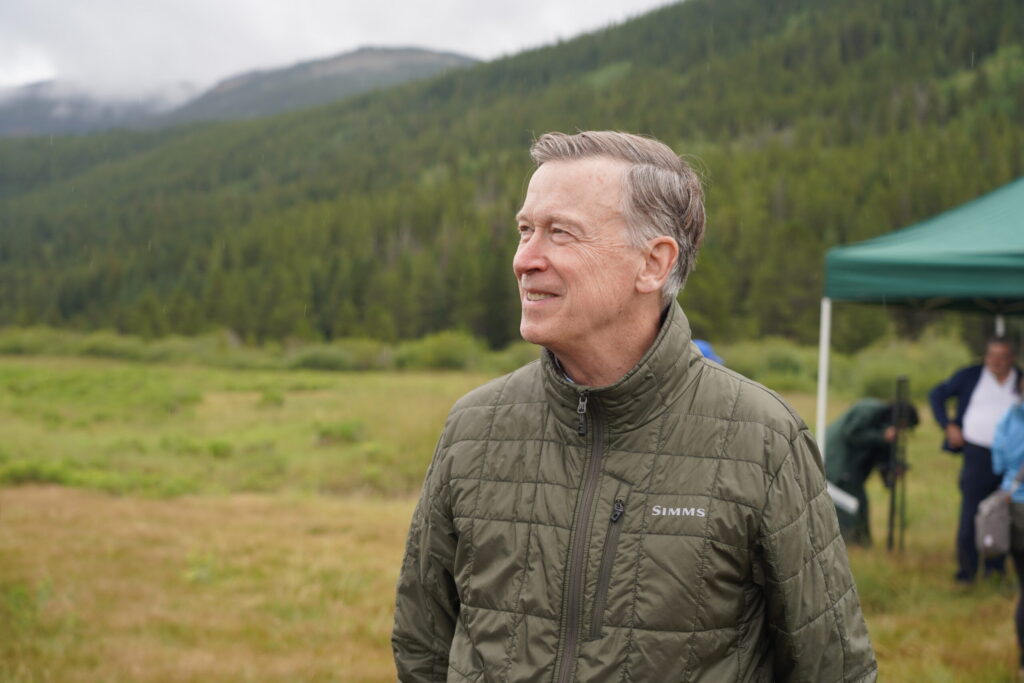
By John Hickenlooper and Gabby Giffords Two Saturdays ago, a gunman shot and killed three people and wounded several others in Twin Falls, Idaho. This latest deadly shooting comes only days after we remembered the lives we lost 14 years...