

Colorado U.S. Rep. DeGette advocates continuing troubled discount drug program
WASHINGTON – Colorado U.S. Rep. Diana DeGette led Democrats’ concern Tuesday over a Republican effort to cut subsidies for a drug discount program that serves at-risk persons.
She said during a congressional hearing that a Trump administration proposed rule to cut reimbursement for the 340B program is misguided.
Pharmaceutical companies should be investigated for skyrocketing drug prices instead of depriving medical patients who lack resources to pay for medication, she said.
“Rather than rolling up its sleeves and attempting to address the actual causes of high drug prices, the Administration’s proposed rule instead threatens to undermine the important safety net mission of 340B hospitals,” DeGette, D-Denver, said during a hearing of the House Energy and Commerce Oversight and Investigations Subcommittee.
DeGette is the ranking Democrat on the subcommittee.
Congress organized the 340B Drug Discount Program in 1992 to serve groups that have a heightened need for sometimes costly drugs. They include children’s hospitals, rural hospitals and cancer hospitals exempt from Medicaid reimbursement.
Many of the patients lack health insurance.
The 340B program requires pharmaceutical companies to offer outpatient drugs to eligible health care organizations at reduced prices, which could be as much as a 30 percent discount.
After purchasing the discounted drugs, hospitals can bill Medicare and other insurers at their regular price. The hospitals keep the difference.
In Colorado, hospitals participating in the 340B program include Denver’s St. Joseph Hospital, which is part of the SCL Health network. SCL operates seven hospitals in Colorado and others in Kansas and Montana.
The Government Accountability Office recently raised alarms that inadequate oversight of the program meant it was being abused and not as effective as Congress intended.
Last week, the Centers for Medicare and Medicaid recommended a dramatically reduced government reimbursement rate for 340B drugs.
The Trump administration and some Republicans argue that market competition without the 340B program could reduce drug prices.
DeGette and other Democrats on the Oversight and Investigations Subcommittee disagreed.
DeGette said the Trump administration proposal “would do nothing” to end high drug prices. She said the proposal “seems more like fantasy than reality.”
A better option was improved oversight of the 340B program, she said.
In addition, “I think we need a robust series of hearings that explores, in depth, the reasons for the exorbitant cost of drugs and why their prices continue to rise,” DeGette said.
Republicans like Rep. Tim Murphy (R-Pa.) said the 340B program has grown dramatically but participating hospitals sometimes are financially untrustworthy.
The Department of Health and Human Services estimates the program has saved hospitals about $6 billion since it started. Between 2011 and 2017, the number of participating health care organizations rose from more than 3,200 to more than 12,100.
“There are instances of errors and misuse,” Murphy said.
He told about one case in which a doctor referred 16 young breast cancer patients to a 340B hospital because they could not afford more expensive treatment elsewhere.
Instead of receiving treatment, the women were place on a wait list, Murphy said.
When the referring doctor investigated, he found that “the hospital chose to set a cap on the number of uninsured patients it would treat,” said Murphy, who is chairman of the Oversight and Investigations Subcommittee.
Only about 200 of the 340B hospitals are investigated each year but 63 percent to 82 percent violate regulations of the program, he said.
However, “No one has ever lost 340B eligibility because of these problems,” Murphy said.
Erin Bliss, a Health and Human Services assistant Inspector, testified that oversight improvements have been made in the 340B program but “some long-standing, fundamental vulnerabilities persist.”
One of the vulnerabilities is a “lack of clarity” about program rules “that creates uncertainty and results in uneven program implementation,” Bliss said in her testimony.
She also said, “The lack of transparency in Medicaid claims for 340B-purchased drugs hinders states’ efforts to pay providers correctly and to claim correct Medicaid rebates from manufacturers.”


Colorado justices block injured plaintiff from suing, despite alleged concealment by Manitou Springs
Michael Karlik
michael.karlik@coloradopolitics.com
Updated 6 hours ago
The Colorado Supreme Court ruled on Monday that a woman injured on a Manitou Springs sidewalk could not sue the allegedly responsible entity, the city of Colorado Springs, even though she did not learn until too late of an agreement...

Colorado marijuana regulators pledge crackdown on intoxicating hemp
Christopher Osher
chris.osher@gazette.com
Updated 9 hours ago
Citing potential tax avoidance, ‘serious risk to public safety,’ Marijuana Enforcement Division warns companies about swapping illegal chemically converted hemp for marijuana This article was produced for ProPublica’s Local Reporting Network in partnership with The Denver Gazette. Colorado regulators announced...
Rep. Eric Swalwell of California says he will resign after sexual misconduct allegations
Kevin Freking
kevin.freking@associatedpress.com
Updated 11 hours ago
WASHINGTON (AP) — Democratic Rep. Eric Swalwell of California announced Monday he will resign from Congress following sexual assault and misconduct allegations that prompted loud bipartisan calls for him to step down. The decision caps a swift political fall for...

Whistleblower contacted Democrats before filing Trump complaint that led to first impeachment, records show
Kaelan Deese, Washington Examiner
kaelan.deese.washington.examiner@gazetteedit.wpenginepowered.com
Updated 13 hours ago
Newly declassified transcripts from the Intelligence Community’s then-inspector general show that the whistleblower whose complaint triggered President Donald Trump’s first impeachment had prior contact with congressional Democrats before filing the allegation, a newly-surfaced and damning detail that was not disclosed...

Spain pushes China to assume global leadership role
Emily Hallas, Washington Examiner
emily.hallas.washington.examiner@gazetteedit.wpenginepowered.com
Updated 14 hours ago
Spanish Prime Minister Pedro Sanchez on Monday pushed China to embrace a larger role on the world stage as Europe increasingly turns to Beijing amid growing tensions with the United States. Sanchez’s speech at Beijing’s Tsinghua University follows recent moves...
Divided Colorado Supreme Court opens door to experts’ views on children’s truthfulness
Michael Karlik
michael.karlik@coloradopolitics.com
Updated 15 hours ago
The Colorado Supreme Court ruled on Monday that experts may, in certain situations, tell jurors whether child witnesses exhibited signs of being coached by adults, without running afoul of the general prohibition on witnesses testifying about the truthfulness of other...
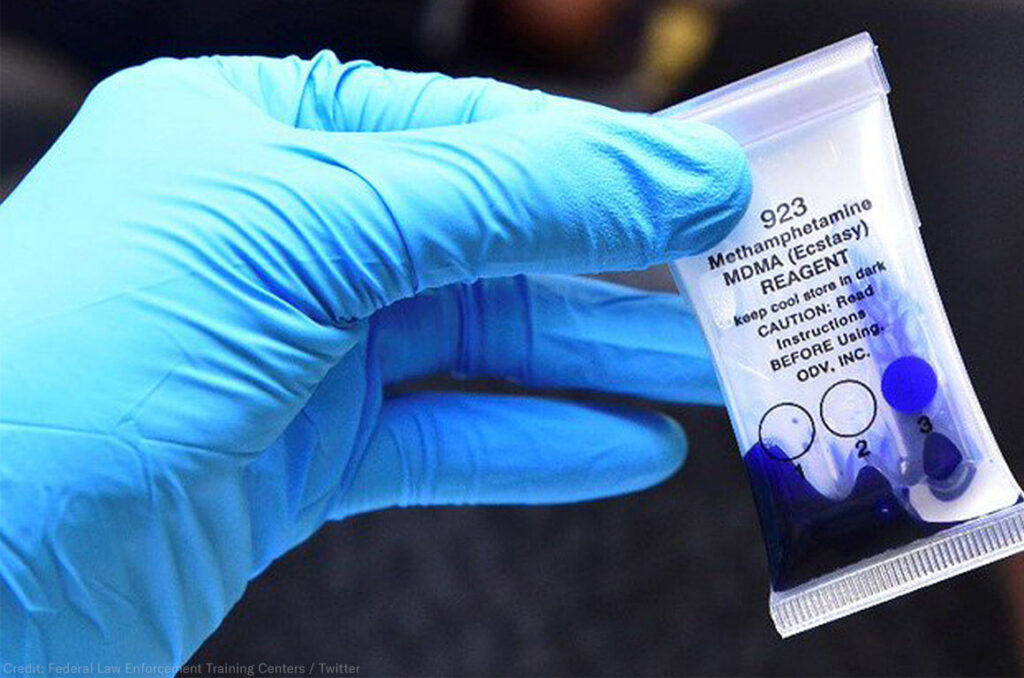
Colorado becomes first state to ban arrests solely based on field drug test results
Marissa Ventrelli
marissa.ventrelli@coloradopolitics.com
Updated 9 hours ago
Colorado has become the first state in the nation to prohibit arrests based solely on colorimetric drug tests, also known as field drug tests. Last legislative session, lawmakers passed a bill establishing a working group to make recommendations regarding the use of colorimetric drug...

State Supreme Court to hold oral arguments, federal judges find fault with bond hearings | COURT CRAWL
Michael Karlik
michael.karlik@coloradopolitics.com
Updated 9 hours ago
Welcome to Court Crawl, Colorado Politics’ roundup of news from the third branch of government. The state Supreme Court will resume hearing oral arguments tomorrow, plus some federal judges are raising the alarm about immigration judges’ handling of bond hearings....

Colorado Senate takes up $46.8 billion budget
Marissa Ventrelli
marissa.ventrelli@coloradopolitics.com
Updated 11 hours ago
The battle over Colorado’s proposed $46.8 billion spending plan for next year shifted to the state Senate, which must decide whether to acquiesce to changes made by the House. The senators could also decide to adopt their own changes, which...

JBS plant employees ratify tentative agreement
Nicholas Fogleman
nicholas.fogleman@denvergazette.com
Updated 17 hours ago
Workers at a JBS beef processing plant in Greeley ratified a tentative agreement Sunday, ending months of negotiations over a new contract. The two-year collective bargaining agreement covers nearly 3,800 workers, according to the United Food Commercial Workers Local 7...