

Early testimony in Maketa corruption trial reveals feuds, shifting alliances
Wendy Habert once thought of Terry Maketa as family – the man who walked her down the aisle when she got married, whose wife quit a job to be nanny to her first child.
But by September 2013, the love was gone, and a different side of the sheriff emerged.
Habert took the stand Thursday as the first witness in the former El Paso County sheriff’s corruption trial in 4th Judicial District Court, telling a jury she was fired and subjected to a criminal investigation after a dust-up with then-Undersheriff Paula Presley, a close Maketa ally.
Events she described formed the basis of all four felony counts against Maketa, making Habert a ripe target for Maketa’s prominent attorney, Pamela Mackey of Denver, who launched a slashing cross-examination – supplying early fireworks in a trial poised to expose shifting alliances and simmering feuds during Maketa’s turbulent third term in the Sheriff’s Office.
Habert, who helped direct three of Maketa’s successful campaigns for sheriff, said her relationship with Maketa transformed when she refused Presley’s request to be her campaign manager at a time Presley was mulling a run to succeed Maketa as sheriff.
Soon Habert was out of a job – fired by her jail contractor employer, Correctional Healthcare Companies. Two human resources representatives told her in a candid talk that her termination was decreed by their clients, for “politically driven” reasons, Habert said.
She also told jurors she was questioned about her conversations with a jail nurse under her supervision who had accused a then-deputy of domestic violence – a deputy authorities say rode dirt bikes with Maketa during off-hours.
Prosecutors say Habert’s sudden fall from favor was the result of a retaliation campaign by a man who used his authority as a cudgel. During opening statements, special prosecutor Chris Wilcox said Maketa went so far as to threaten the jail contractor that he would terminate a $5 million contract unless Habert was fired – the basis for charges of extortion and conspiracy to commit extortion.
The criminal investigation into Habert focused on whether she had coached the jail nurse who had accused Maketa’s friend of domestic violence, she told the jury. In reality, prosecutors alleged during opening statements, Maketa wanted simply to stamp out the domestic violence allegations that ended up claiming his friend’s career as a deputy.
Maketa is also accused of coercing that woman, Kelli Trull, now McMahan, to recant her story – allegations that give rise to two counts of witness tampering, both felonies. McMahan, who authorities say agreed to change her story and claim she was the aggressor, was ultimately jailed on suspicion of harassment and drunken driving.
During the defense’s opening statement, Mackey described Habert as a “problem employee” who clashed with colleagues and routinely overstepped her bounds at the jail, inserting herself into issues above her pay grade.
On cross-examination, Mackey wasted no time in teasing out an alternate explanation for why Habert ended up on Maketa’s bad side, spurring Habert to recount the salty language she used in turning down Presley’s request.
“You called her a bitch, correct?” Mackey said.
“I called her a train wreck bitch,” Habert said.
“And you’re saying this to the undersheriff of El Paso County, correct?” went Mackey’s response.
During a different exchange, Habert described a tense phone call with Maketa over her refusal to help Presley. When Maketa hung up on her, Habert called back and told him, “F- you.”
“You called him for 1 minute – just long enough to say ‘F- you’? Mackey pressed.
“It only takes a second,” Habert shot back.
Habert was made to read from an employment complaint filed against her by a sheriff’s supervisor at the jail, and confronted with transcripts of an interview with a sheriff’s detective in which she made no mention of claims that Maketa had coerced McMahan to drop her allegations.
Mackey even raked her for refusing to accept an apology from a jail commander whom Habert had accused of sexual harassment – another breaking point with Maketa.
Mackey in her opening remarks said Maketa contacted Correctional Healthcare Companies demanding only that she be transferred elsewhere, not fired. Mackey said Maketa routinely threatened to nix the company’s multimillion dollar contract when they failed to correct problems at the jail. That contract was at-will and could be terminated at any time, for any reason, Mackey said.
As for the episode involving domestic violence allegations against Maketa’s friend, Mackey said Maketa received a phone call from the woman asking for a third interview. He approved the additional interview, and that was the end of his involvement.
Maketa was initially charged with second-degree kidnapping and false imprisonment related to McMahan’s arrest, but prosecutors dropped those counts before trial, saying they didn’t have enough evidence to prove them.
The defense effort to blunt accusations against Maketa continued with exhaustive questioning of McMahan in which Mackey detailed her evolving accounts of why she recanted her abuse allegations.
McMahan told jurors that Maketa told her over a phone call that she could help get her boyfriend, Travis Garretson, out of trouble if she changed her story and told detectives she was the aggressor.
She said Maketa assured her she wouldn’t get in trouble.
Armed with sheriff’s reports and CBI interview transcripts, Mackey pointed to one later interview in which McMahan said it was Presley who pressured her, not Maketa. She referred to another version that minimized Maketa’s role.
Only in May 2016 did McMahan finally report to the Colorado Bureau of Investigation her story that Maketa had coerced her, Mackey said, drawing a protest from the witness.
“”That wouldn’t be the first time I said that at all,” she said. McMahan said she told friends about Maketa’s overture on the day it occurred.
But McMahan, who now lives in Alabama, admitted omitting the allegation in some interviews, partly because her boyfriend was around at the time and partly because she said Maketa warned her not to tell anybody.
Mackey questioned why cellphone records couldn’t be found to prove her claim that Garretson and Maketa frequently talked on the phone, handing prosecutors another potential inconsistency to combat.
Joe Briester, a bureau chief under Maketa, told the panel that Maketa ordered him to drop plans to open an Internal Affairs investigation against Garretson. Breister, now El Paso County undersheriff, said he complied.
The final witness of the day, former jail health care contract employee Carl Anderson, described being summoned to a meeting at which Maketa threatened to cancel the jail contract unless Habert was fired.
His testimony is expected to continue when the proceedings resume at 9 a.m. Friday.
The trial officially began Tuesday, with two days of jury selection, and is expected to last at least two weeks.


Can deliberation save democracy? | Vince Bzdek
Vince Bzdek
vince.bzdek@gazette.com
Updated 4 hours ago
By Vince Bzdek In September 2019, 523 Americans traveled to Dallas, Texas, for an experiment called “America in One Room.” The gathering was designed to test a theory: Could representative citizens deliberate productively even in an era of intense polarization?...

Colorado health equity funder’s redirection debated
DEBBIE KELLEY
debbie-kelley@coloradopolitics.com
Updated 17 hours ago
A redirection in grantmaking that began two years ago for The Colorado Trust, a 40-year-old Denver-headquartered funder, has led some employees to now voice concerns, which has reportedly put their jobs in jeopardy. The vice president of communications for the...

Is Trump a builder or just a latter-day headhunter? | SONDERMANN
By Eric Sondermann
by-eric-sondermann@coloradopolitics.com
Updated 2 days ago
It was well under 100 hours after President Donald Trump’s overly long, overly theatrical State of the Union speech that he unleashed American bombers across Iran. As I write, it is now less than 100 hours since those bombers started...

LDS activist excommunicated from the church speaks out on women’s rights across Colorado | A LOOK BACK
Rachael Wright, Special to Colorado Politics
rachael.wright@coloradopolitics.com
Updated 2 days ago
Forty-Five Years Ago This Week: “Women must demand — now and if necessary at the peril of our lives — that we be granted civil rights in the same way rich white men in this country were granted them: constitutional...

Democrats eye new taxes on alcohol, marijuana to fund Colorado mental health spending
Marissa Ventrelli
marissa.ventrelli@coloradopolitics.com
Updated 2 days ago
Facing a more than $1 billion budget shortfall, Colorado lawmakers are searching for ways to fund mental health services in a state that consistently ranks among the worst in the nation for mental health outcomes. Several proposals this session aim...

Hopes and fears: Colorado Iranians speak out on widening war
Mark Samuelson Special to The Denver Gazette
mark.samuelson@denvergazette.com
Updated 3 hours ago
Group talks about young people protesting against the Islamic Republic, and Reza Pahlavi and the monarchy When Denver area real estate agent Fara Novin dined out for her birthday Friday night, Feb. 27, she blew out a candle on a...
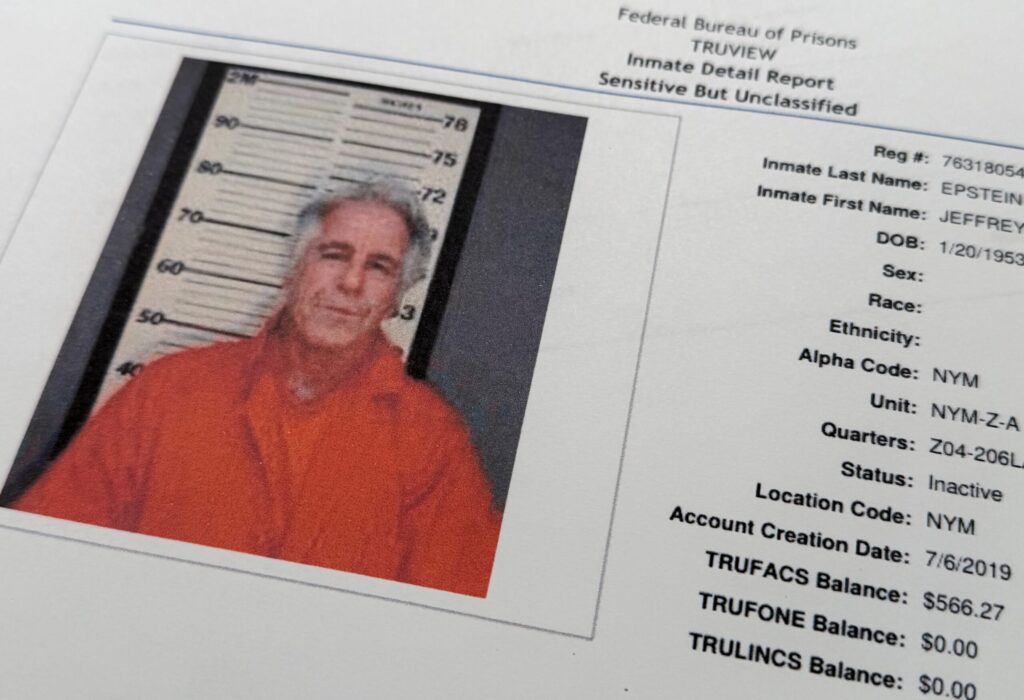
DOJ publishes more Epstein documents mentioning Trump after initial omission
Rena Rowe, Washington Examiner
rena.rowe.washington.examiner@gazetteedit.wpenginepowered.com
Updated 21 hours ago
The Justice Department released additional Epstein files on Thursday, including uncorroborated accusations from a woman claiming she was sexually assaulted by President Donald Trump. Last week, Rep. Robert Garcia (D-CA), the top Democrat on the House Oversight and Government Reform...
Federal judge dismisses developer’s challenge to Denver affordable housing ordinances
Michael Karlik
michael.karlik@coloradopolitics.com
Updated 16 hours ago
A federal judge dismissed a homebuilder’s constitutional challenge on Tuesday to a pair of Denver ordinances that impose obligations on developers related to the affordable housing demands created by new construction. Two related companies, redT Homes and redT Capital Partners,...
Another TABOR fight: Democrats plan to redirect residents’ refunds to K-12 spending
Marianne Goodland
marianne.goodland@coloradopolitics.com
Updated 1 hour ago
Colorado voters could decide this fall whether billions of dollars that would otherwise be returned as refunds under the Taxpayer’s Bill of Rights should instead go to public schools under a ballot measure unveiled Thursday by Democrats. Supporters say the...
Analysis: Colorado legislators introduce 18 energy bills amid debate over emissions goals
Scott Weiser
scott.weiser@gazette.com
Updated 21 hours ago
Colorado legislators have introduced 18 energy-related bills so far in the 2026 session, with Democrats sponsoring 14 and Republicans four, highlighting the sharp partisan split over how aggressively the state should pursue its greenhouse gas reduction goals while protecting affordability...