

Advocate for small businesses gives Colorado General Assembly a grade of B- for session
Colorado’s largest association of small businesses gave the General Assembly’s just-completed session a grade of B- in a legislative report card issued this week.
Split control of the House and Senate led to missed opportunities, said Tony Gagliardi, Colorado director for the National Federation of Independent Business, which counts 7,000 members in the state.
He lamented that the Trump administration’s pro-business fervor wasn’t embraced by the Democratic-controlled House, although he said his organization nonetheless scored some wins at the statehouse.
“It would have been the greatest session of all had the Legislature piggybacked on the great regulatory and tax reforms coming out of Washington, D.C., but given the politically divided makeup of the House and Senate about all that could have been expected did materialize on a few issues,” Gagliardi said.
“What President Trump has achieved on the regulatory front could have been complemented beautifully had the House taken the baton handed to it by the Senate, but it instead fell back on business as usual, and needlessly so,” he added.
Gagliardi was referencing two iterations of the same legislation, Senate Bills 1 and 276, both dubbed the Regulatory Relief Act of 2017, and both sponsored by state Sen. Tim Neville, R-Littleton, and House Minority Leader Patrick Neville, R-Castle Rock. The bills would have given businesses with 100 or fewer employees a chance to fix first-time violations of certain state rules without being subject to a fine.
Both bills passed the Senate and died on their first appearances before two different House committees.
(Democrats complained at the end of the session that Senate Republicans killed similar bipartisan legislation, House Bill 1270, sponsored by state Reps. Tracy Kraft-Tharp, D-Arvada, and Polly Lawrence, R-Roxborough Park, and state Sens. Don Coram, R-Montrose, and Angela Williams, D-Denver. That bill had similar provisions to Senate Bills 1 and 276 but only applied to companies with 50 or fewer employees.)
Gagliardi also called the defeat of Senate Bill 181, sponsored by state Sen. Bob Gardner, R-Colorado Springs, and state Rep. Yelin Willett, R-Grand Junction, a missed opportunity. That bill would have changed the way plaintiffs can sue for medical bills by taking discounts and reductions negotiated with insurers and providers into account when setting awards.
“The cost of health care has been the No. 1 concern of small-business owners across the nation for 30 consecutive years,” the NFIB report card said.
Still, small businesses in Colorado had some legislative accomplishments to cheer, Gagliardi said, including a higher exemption for business personal property taxes paid to local governments, the establishment of a sales- and use-tax simplification task force to study streamlining collections and reimbursements across jurisdictions, and a measure to clarify dispute resolution when a consumer pays tax to one local government when it should have been paid to another.


Denver to mull $6.9M East Colfax BRT extension, police union deal
Deborah Grigsby
deborah.smith@denvergazette.com
Updated 20 hours ago
Denver’s councilmembers will consider several items during Monday’s regular meeting, but the most notable is a resolution to overhaul contract review rules, requiring draft agreements to be shared with the Council before being heard at committee meetings. Council Resolution 26-0329...

Colorado justices confirm lawyers may ‘borrow’ allegations from elsewhere
Michael Karlik
michael.karlik@coloradopolitics.com
Updated 8 hours ago
The Colorado Supreme Court ruled on Monday that plaintiffs’ lawyers can use allegations made elsewhere to bolster their own clients’ claims, so long as the attorney first performs some degree of investigation into the “borrowed” assertions. Under Colorado’s rules for...
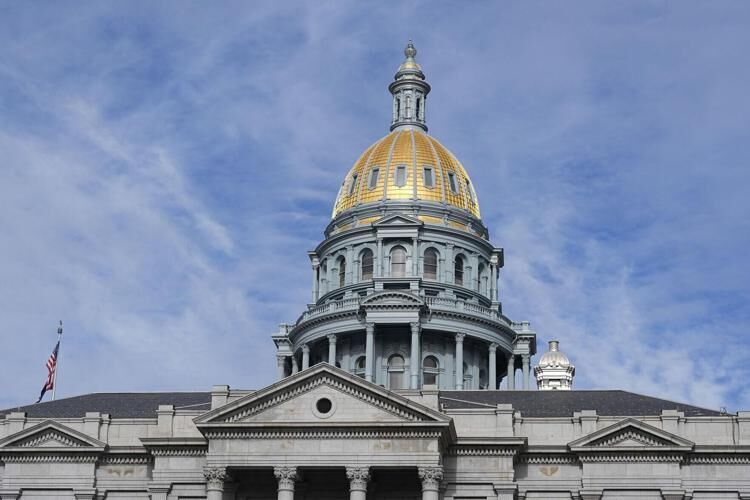
Colorado legislators propose $46.8 billion budget, driven by Medicaid costs
Marianne Goodland
marianne.goodland@coloradopolitics.com
Updated 11 hours ago
The six-member panel of legislators in charge of crafting the state budget has now turned over its plan to the Colorado legislature, proposing to spend $1.5 billion more for the Medicaid program. The increase is driven by Medicaid costs, which...

Governor signs bill expanding who can petition for weapons restrictions
Marissa Ventrelli
marissa.ventrelli@coloradopolitics.com
Updated 12 hours ago
Gov. Jared Polis on Monday signed a bill into law expanding who can ask a judge to temporarily restrict a person’s access to firearms. Established in 2019, 0Colorado’s extreme risk protection law (ERPO) initially allowed a family member or law...

Colorado justices restore RTD subcontractor’s award, reject ‘drastic’ view of public works law
Michael Karlik
michael.karlik@coloradopolitics.com
Updated 13 hours ago
The Colorado Supreme Court on Monday restored a $5.7 million award to a company that helped build a commuter rail line and, in doing so, rejected a view of state law that would nullify a subcontractor’s entitlement to any compensation...
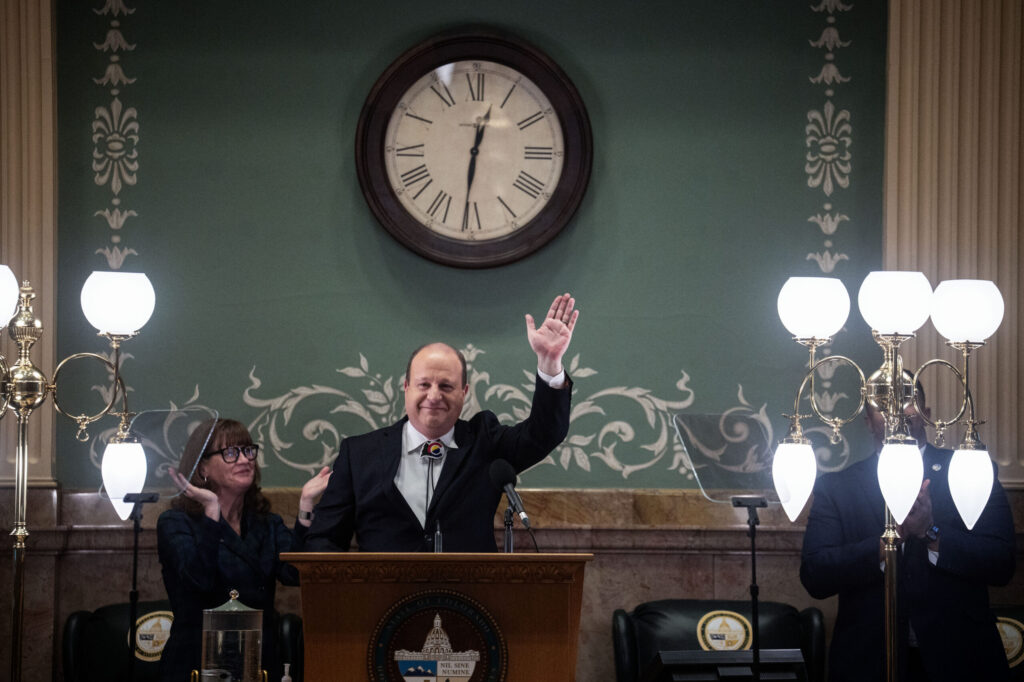
As Colorado passes 6 million residents, housing initiatives take center stage
Marianne Goodland
marianne.goodland@coloradopolitics.com
Updated 12 hours ago
New Census data confirming Colorado’s population has topped six million is fueling renewed debate over Gov. Jared Polis’ housing agenda, as he tied the population increases to home construction. The governor said the counties experiencing the largest increases in new...

Congress urged to open antitrust investigation into Apple and OpenAI over ‘left-leaning bias’
Kaelan Deese, Washington Examiner
kaelan.deese.washington.examiner@gazetteedit.wpenginepowered.com
Updated 14 hours ago
A conservative legal group founded by senior White House adviser Stephen Miller is urging Congress to investigate a partnership between Apple and OpenAI, arguing the companies have effectively locked millions of people into a single, politically biased artificial intelligence system....

Trump threatens jail time over downed US fighter jet ‘leak’
Christian Datoc and Mabinty Quarshie, Washington Examiner
christian.datoc.and.mabinty.quarshie.washington.examiner@gazetteedit.wpenginepowered.com
Updated 14 hours ago
President Donald Trump threatened jail time Monday for the journalist who first reported that an airman was still missing after a fighter jet went down in Iran last week. The high-risk and eventually successful attempt to rescue the weapons officer...

Bill to accelerate police access to online data clears Colorado committee
Marissa Ventrelli
marissa.ventrelli@coloradopolitics.com
Updated 10 hours ago
A proposal to speed up law enforcement’s access to social media data is advancing in the Colorado Legislature, drawing testimony from the residents of Evergreen, where a school shooting took place, and questions from opponents worried about privacy and constitutional...
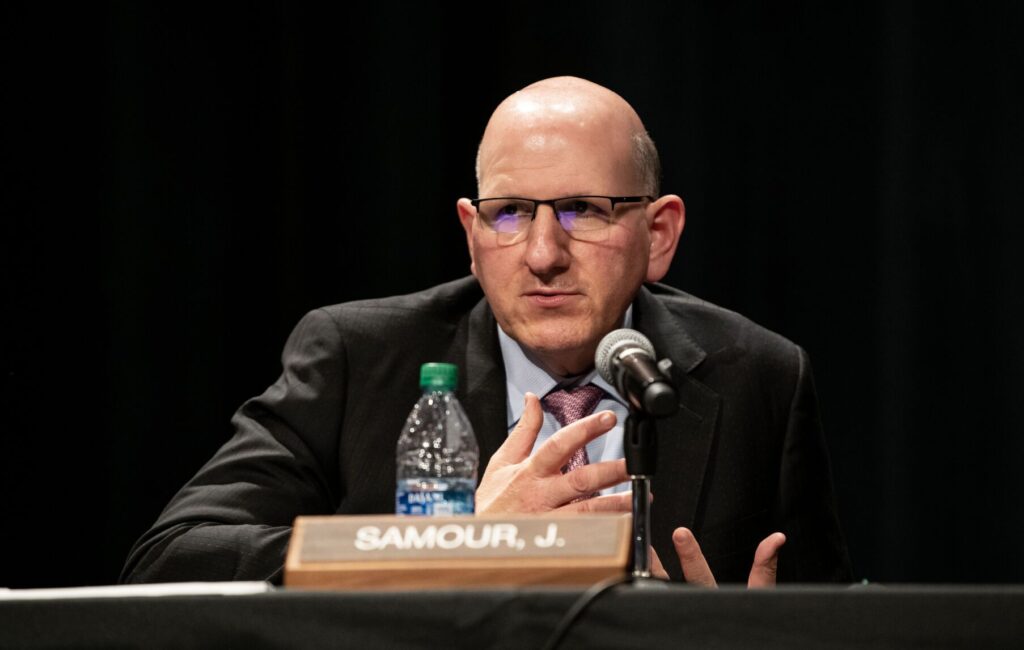
El Paso County defendant’s speedy trial rights violated, Colorado justices find in overturning convictions
Michael Karlik
michael.karlik@coloradopolitics.com
Updated 8 hours ago
The Colorado Supreme Court concluded on Monday that an El Paso County prosecutor made an unjustified decision to file a mid-case appeal, pushing the trial beyond the legal deadline and requiring that the defendant’s convictions be overturned. In Colorado, the...
PREV
PREVIOUS
Glenwood Springs Post Independent guest editorial: It’s our patriotic duty to protect national monuments
President Trump’s executive order that threatens the future of more than 50 national monuments directly challenges the worth of public lands around the country and especially here in the West. As a longtime resident of southwest Colorado, I care deeply about the economic success of our region and the protection of our public lands and […]

Boulder Daily Camera editorial: For the governor, a moment of truth
The best-known tale of redemption in popular literature might be that of Ebenezer Scrooge, Charles Dickens’ unhappy old miser turned generous and joyous by visits from spirits — or, possibly, a series of nightmares, depending on your views of Jungian dream analysis and the supernatural. But Scrooge is far from alone. Redemption is a common […]