

Point, Counterpoint: Is Trump’s proposed increase in military spending compatible with limited-government principles?

David K. WilliamsIs this a trick question? Of course an increase in government spending is not compatible with limited-government principles. Indeed, no one disputes that national defense is one of the primary responsibilities of the national government. But spending money this country does not have is irresponsible and against this country’s best interest.
Donald Trump has proposed a $54 billion increase in military spending. This is an unnecessary, big government and, yes, progressive idea. Conservative, limited-government proposals to assist the military, however, exist.
The R Street Institute and the National Taxpayers Union, conservative organizations, issued a report in 2013 with 100 specific recommendations for the military that would save $1.9 trillion over 10 years. The report notes that “Pentagon expenditures must not escape scrutiny as conservatives examine methods for reducing our staggering debt.”
The report is correct. Trump, however, ignores the reality of our nation’s debt. In his recent address to Congress, Trump declared that he is “sending the Congress a budget that rebuilds the military, eliminates the defense sequester and calls for one of the largest increases in national defense spending in American history.”
The phrase “largest increase in spending in American history” should never be uttered by anyone who pretends to believe in limited government. But, then again, Trump clearly does not so believe. R Street and the NTU, however, do. Their recommendations specifically “allow for compliance with so-called sequestration while maintaining the strongest and most capable military the world has ever known.” That, my friends, is limited government.
As to the progressive notion that military spending stimulates the economy, that is a Keynesian idea rejected by limited government believers and those who understand economics. As American Conservative magazine recently noted, the belief that money spent on defense is a benefit to the economy is exactly the same idea Barack Obama espoused in his stimulus package. Republicans somehow seem to grasp this concept only when a Democrat is in the White House.
When Republicans start espousing the economic policies of Paul Krugman and not Friedrich Hayek, the party has lost its way. Trump is so lost on economic policy he might want to spend some budget money on a compass. At least he should purchase a copy of Henry Hazlitt’s “Economics in One Lesson.”
Further, spending money on projects the military opposes is just absurd. Yet that is exactly what is happening. The upgrade to the Abrams tank from the M1A1 to the M1A2 is a clear example of such a program.
Fortunately, U.S. Rep. Mike Coffman, a former member of the Army and Marines, understands how the military works. He said, “Not every dollar spent on the defense budget is necessary for the defense of our nation. I believe in a strong national defense and have concluded that spending wisely on defense is the best way to achieve that end.”
If only the commander in chief understood as much.
Bentley RayburnLiberals, libertarians and conservatives could all agree that there are government policies that fit their individual political viewpoints but that are not backed up by government spending priorities. Often, for conservatives and libertarians the government spends too much and for liberals not enough. Without knowing the details of President Donald Trump’s plan for defense spending, including his proposed increase of $54 billion to the current defense budget, the answer for conservatives to the question whether his increase in defense spending is in line with limited-government principles is a squishy “Maybe.” Hopefully, after seeing the specifics, we’ll be able to answer with a solid “Yes.”
The general understanding of limited government is that the government should constrain itself to only those things authorized by the Constitution. We the people limit the government by giving only certain powers to the federal government – known as enumerated powers – leaving the other functions and powers of government to the states, local government or to the people. The framers of the Constitution clearly recognized that the power and authority to raise an Army and a Navy – and, by modern extension, an Air Force and Coast Guard – for the defense of the country was a power that should be exercised by the federal government, not by the states.
Conservatives would say that spending money within the proper and necessary roles granted to the federal government is within the understanding of what limited government should look like. So, in considering Trump’s proposed military spending increase, the real issue becomes, “How is the money going to be spent?” and “Will the proposed defense budget be compatible with the proper and necessary roles of government?” The problem in assessing the general defense budget proposals is that we don’t have many specifics to make a judgment.
How could the money be spent to be in line with limited-government principles? First, ensure there is a coherent national defense strategy that makes sense in our complex but dangerous world.
Second, given that strategy, make sure the military is organized and trained to best mitigate the wide spectrum of threats we face as a country.
Third, ensure the military has the equipment and personnel needed to carry out the mission – that of protecting us from foreign threats. This is probably the area where the most debate will occur. Having seen how the sausage is made when I was on active duty, it is clear that the much larger problem is Congress and its budget processes and decisions that reflect political interests rather than real national security needs, often causing the services to look to their own parochial interests rather than the good of the whole.
And fourth, the proposal to increase military spending could have a positive impact on limiting government by exerting real pressure to reduce spending in areas that are core to the idea of big government – education, the EPA, health care, other entitlement spending and so on.
With no specifics, we’ll just have to wait and see if Trump’s proposals for an increase in defense spending really fall in line with limited government principles. Hopefully, instead of a squishy “Maybe,” we’ll be able to answer with a resounding “Yes!”
–
David K. Williams is a former chairman of the Libertarian Party of Colorado and an attorney. He lives in Denver. Bentley Rayburn is a retired major general who served as the senior budget planner for the largest Air Force major command. He lives in Colorado Springs.


Colorado justices accept appeals on Netflix taxation, children pursuing neglect cases
Michael Karlik
michael.karlik@coloradopolitics.com
Updated 10 hours ago
The Colorado Supreme Court announced on Monday that it will decide whether Netflix subscriptions are subject to the state’s sales tax as “tangible personal property.” At least three of the court’s seven members must agree to hear an appeal. The...

Proposal outlines $300M deal separating Pinnacol from Colorado state government
Marianne Goodland
marianne.goodland@coloradopolitics.com
Updated 11 hours ago
Colorado lawmakers are weighing a proposal that would allow Pinnacol Assurance to sever its remaining ties to the state in exchange for a $300 million payment, a long‑debated shift that supporters say could stabilize the insurer’s future and help plug...
Bill requiring employers to grant unpaid leave to Colorado lawmakers heads to governor’s desk
Marissa Ventrelli
marissa.ventrelli@coloradopolitics.com
Updated 10 hours ago
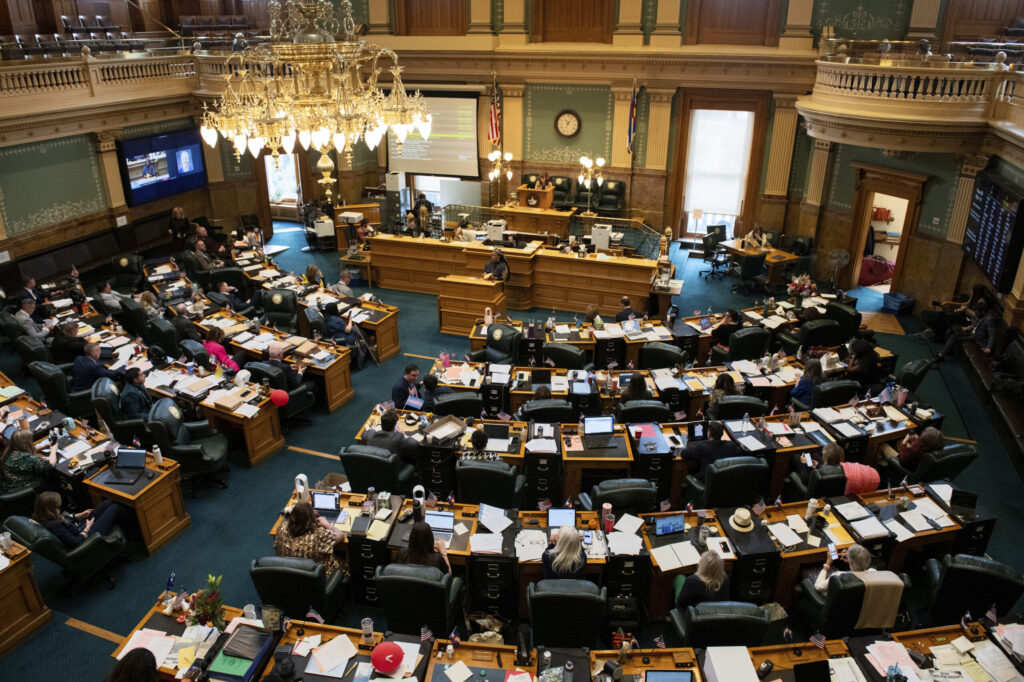
Colorado lawmakers are one step away from securing guaranteed unpaid leave from their day jobs during the legislative session after the House narrowly approved the proposal Thursday. Senate Bill 087 would require businesses to allow employees who are members of...

Redistricting fight escalates as Colorado Title Board clears competing ballot proposals
Marianne Goodland
marianne.goodland@coloradopolitics.com
Updated 10 hours ago
Colorado’s title board on Wednesday gave final approval to multiple ballot measures related to congressional redistricting, setting up a series of proposals that could alter how the state draws its U.S. House districts for the 2028 and 2030 elections. The...
Trump downplays major reform bill and says housing is ‘all about interest rates’
Zach Halaschak, Washington Examiner
zach.halaschak.washington.examiner@gazetteedit.wpenginepowered.com
Updated 13 hours ago
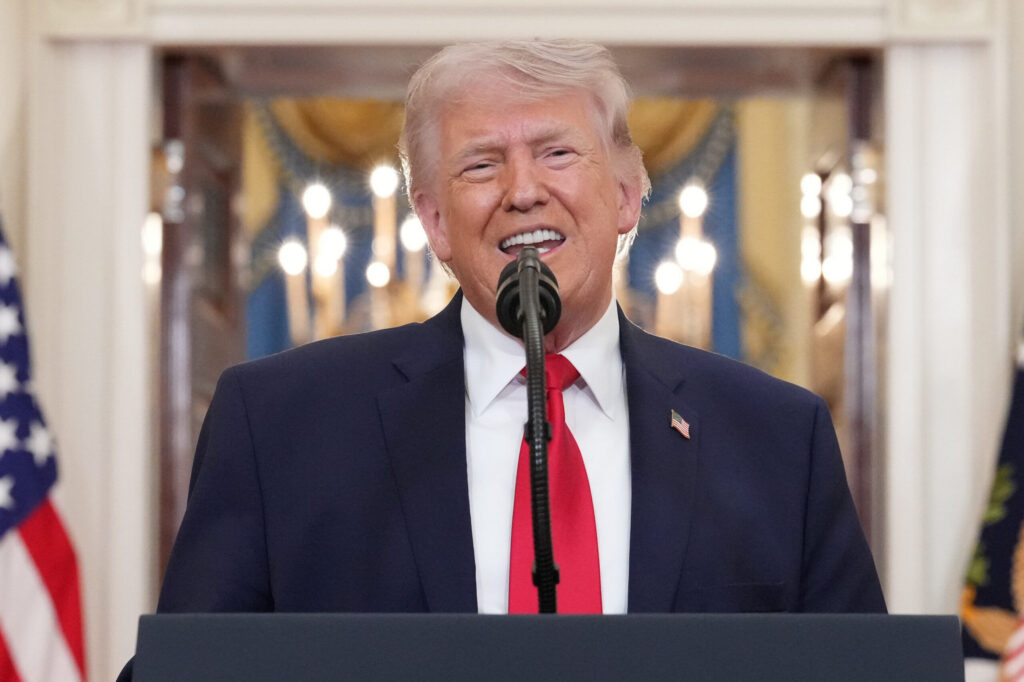
President Donald Trump downplayed the bipartisan housing legislation that many congressional allies hope will ease the affordability worries plaguing voters, saying instead in an exclusive Washington Examiner interview that housing is “all about interest rates.” Trump said on a phone call Thursday morning...

Colorado lawmakers propose deep cuts to close $1.2B budget gap
Marianne Goodland
marianne.goodland@coloradopolitics.com
Updated 9 hours ago
The panel of Colorado legislators in charge of crafting next year’s budget has finalized the 2026–27 spending plan built on deep cuts and one‑time cash transfers in an attempt to close a shortfall of more than $1.2 billion. The plan...

Denver judge denies Gov. Polis request to dismiss ICE-related records case
Marianne Goodland
marianne.goodland@coloradopolitics.com
Updated 13 hours ago
A year after blocking the release of state records to federal immigration agents, a Denver judge has now denied Gov. Jared Polis’ effort to end the lawsuit at the center of the dispute. The lawsuit filed against the governor in...

10th Circuit grants rare all-judges’ review of Colorado banking regulation
Michael Karlik
michael.karlik@coloradopolitics.com
Updated 15 hours ago
The Denver-based federal appeals court announced on Thursday that it will hold a rare all-judges review of a recent decision that permits Colorado to require out-of-state banks to abide by the state’s maximum interest rates when they lend to in-state...

Colorado appeals court orders new sentencing for Tina Peters, upholds convictions
Michael Karlik
michael.karlik@coloradopolitics.com
Updated 9 hours ago
Colorado’s second-highest court determined on Thursday that a trial judge improperly sentenced former Mesa County clerk Tina Peters based upon her exercise of protected speech, while at the same time upholding her convictions. The three-judge Court of Appeals panel also...

Denver promised every school funding from $1B bond — but campuses later closed received far less | Analysis
Nico Brambila
nico.brambila@denvergazette.com
Updated 14 hours ago
Denver voters overwhelmingly approved the largest bond measure in Denver Public Schools history on the promise that every school — including charter campuses — would receive something. And they did. But the nearly $1 billion bond was not distributed evenly....