

Hick’s shifting tack on pot: From reefer madness to reefer discomfort?
Marijuana advocates feel Gov. John Hickenlooper was a bit dramatic during his State of the State address Thursday when he spoke of consequences to legalization.
The governor – who has been no fan of legalization and opposed the Amendment 64 ballot effort in 2012 – again repeated a theme that the proliferation of marijuana has contributed to the state’s rising homeless population.
“There’s no question that marijuana and other drugs – in combination with mental illness or other disabling conditions – are essential contributors to chronic homelessness,” Hickenlooper said, as he addressed a joint session of the legislature.
“Tax revenue from marijuana sales can and should be used to help those who fall through the cracks … including hundreds of homeless vets … helping them find stable, supportive housing.”
The governor also said of legalization that “voters in Colorado asked us to be the nation’s laboratory for marijuana legalization.”
Mason Tvert, a leading proponent of Amendment 64 in 2012 and a spokesman for the Marijuana Policy Project, said it’s not quite as simple as voters “asking” to run the legalization “experiment.”
“I’d say it was more like they demanded an end to the failed experiment of marijuana prohibition,” Tvert said. “He has come around quite a bit, though, and he should be applauded for his administration’s work to get this system up, running and fine-tuned.”
The governor also spoke of the success legalization has been, thanks to thoughtful rules and regulations that have become a model for the rest of the nation.
“We rolled up our sleeves, and though it’s still in the experimental phase, we are trying to create a reasonable and efficient system for a new industry while responding to health and safety challenges,” Hickenlooper said.
He highlighted $7 million to educate youth, parents and adults about underage use. And efforts to curb the so-called “gray market,” in which people use loopholes to grow a large amount of plants legally, but then sell the finished product on the black market.
The governor’s office has requested $6 million in the upcoming budget to assist local law enforcement in cracking down on gray and black market activities.
Tvert wonders whether the governor – who co-founded Wynkoop Brewing Company in Denver in 1988 – might be too critical of marijuana.
“The governor still seems to hold marijuana to a much higher standard than alcohol, which he seems to embrace wholeheartedly, despite it being more dangerous than marijuana,” Tvert said.
“But he appears to be embracing a more realistic approach to marijuana in Colorado. You could say he has progressed from ‘Reefer Madness’ to reefer discomfort. Hopefully he will continue to evolve on the issue.”
Shawn Coleman, a well-known marijuana lobbyist in Colorado, said he was encouraged by the governor’s remarks this week.
“With status quo likely the best we can expect from the federal government in the near term, it is welcome to hear the governor speak of the successes of our system, and a renewed commitment to its integrity,” Coleman said. “State revenue for public benefit was the promise of Amendment 64.”
“As we continue this ‘experiment’ built on a seven-year foundation of the medical code, addressing consumer issues such as social consumption and product safety will have the double benefits of keeping federal faith in our program and continuing to provide revenue for important programs such as supporting the homeless and expanding drug abuse education, prevention and treatment to combat the opiate crisis.”

Appeals court rejects theory that existing tax revenue undermines need for new fees
Michael Karlik
michael.karlik@coloradopolitics.com
Updated 32 minutes ago
Colorado’s second-highest court rejected a plaintiff’s claim on Thursday that the tax revenue generated by an existing activity should prevent local governments from imposing new fees aimed at regulating the activity. The question stemmed from Colorado’s unique constraints on taxation...
Colorado ski resorts announce early closures amid historic snowpack lows, high temperatures
Kyla Pearce
kyla.pearce@gazette.com
Updated 43 minutes ago
As Colorado’s historically low snowpack year comes to a close and spring conditions take over the mountains, the state’s major ski resorts are announcing closing dates — some of which are weeks before historic closing dates. Most of Colorado’s ski...

Marco Rubio’s star power rises at CPAC 2026
Mabinty Quarshie and Samantha-Jo Roth, Washington Examiner
mabinty.quarshie.and.samantha-jo.roth.washington.examiner@gazetteedit.wpenginepowered.com
Updated 3 hours ago
GRAPEVINE, Texas — Secretary of State Marco Rubio’s popularity is growing and could possibly boost him to one of the top two spots in the 2028 GOP presidential race, if attendees at the Conservative Political Action Conference are to be believed. ...

Boulder police investigate sexual assault, ‘drugging’ at bar near CU
Matt Kyle
matt.kyle@denvergazette.com
Updated 4 hours ago
The Boulder Police Department is investigating reports of sexual assault and “suspected drugging” involving underage girls at a bar. There may be additional victims who have not yet come forward, the department said in a news release. The bar, Scrooge...
Appeals court finds no illegal sentence when defendants forfeit time-served credit
Michael Karlik
michael.karlik@coloradopolitics.com
Updated 6 hours ago
Colorado’s second-highest court ruled on Thursday that criminal defendants may agree to relinquish the credits they earned while incarcerated pending trial, despite a state law guaranteeing that such time “shall be deducted” from a person’s sentence. Kerry Ellis Endsley pleaded...
Appeals court reinstates Garfield County arson charge
Michael Karlik
michael.karlik@coloradopolitics.com
Updated 1 day ago
Colorado’s second-highest court reinstated a Garfield County defendant’s arson charge on Thursday, concluding a trial judge improperly credited a witness’s claim that she alone was responsible for starting the fire. A sheriff’s deputy responded to a brush fire near Parachute...

Democratic US Sen. John Hickenlooper qualifies for Colorado primary by petition, will skip assembly
Ernest Luning
ernest.luning@coloradopolitics.com
Updated 23 hours ago
U.S. Sen. John Hickenlooper has qualified for Colorado’s Democratic primary after the first-term incumbent submitted enough valid petition signatures to make the ballot, state officials said. Hickenlooper is facing primary challenges from state Sen. Julie Gonzales, D-Denver, and university professor...
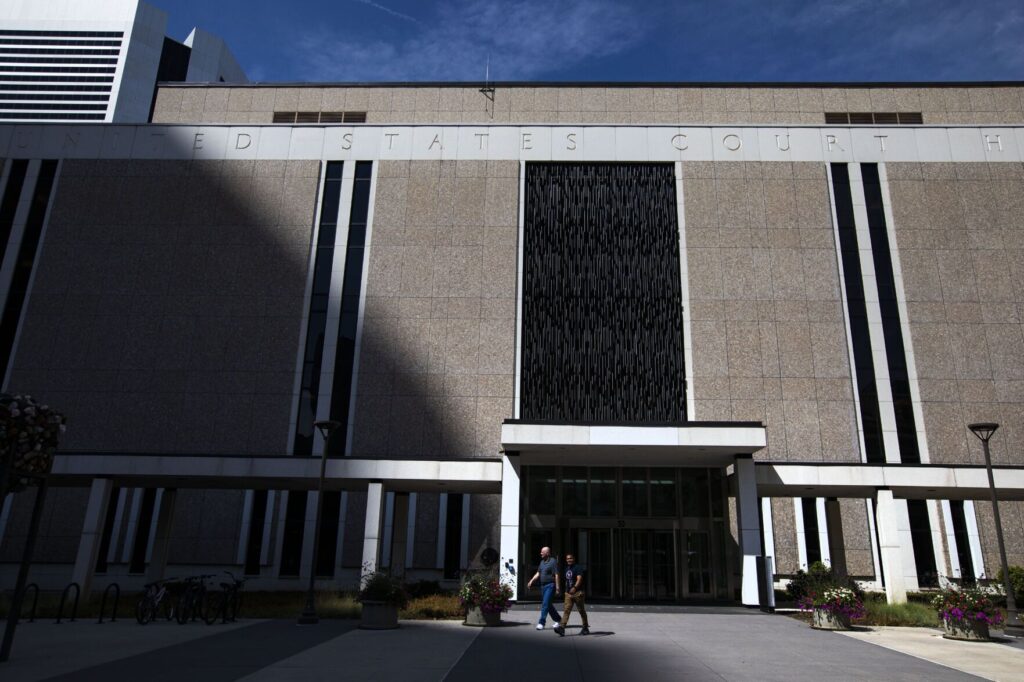
Federal judges rebuke ex-Colorado judicial discipline director for conduct in lawsuit
Michael Karlik
michael.karlik@coloradopolitics.com
Updated 1 day ago
A pair of federal judges expressed a desire on Thursday to break the logjam on a lawsuit by Colorado’s former judicial discipline director against the state Supreme Court and related entities, while simultaneously showing little tolerance for the plaintiff’s scorched-earth...

Democratic bill would let recipients of ‘conversion therapy’ sue Colorado providers with no statute of limitations
Marissa Ventrelli
marissa.ventrelli@coloradopolitics.com
Updated 23 hours ago
Colorado lawmakers have advanced a proposal that would allow people who underwent conversion therapy to sue licensed providers for damages, moving the measure forward on a party-line vote in the House Judiciary Committee. House Bill 1322, proposed by Democratic Reps....
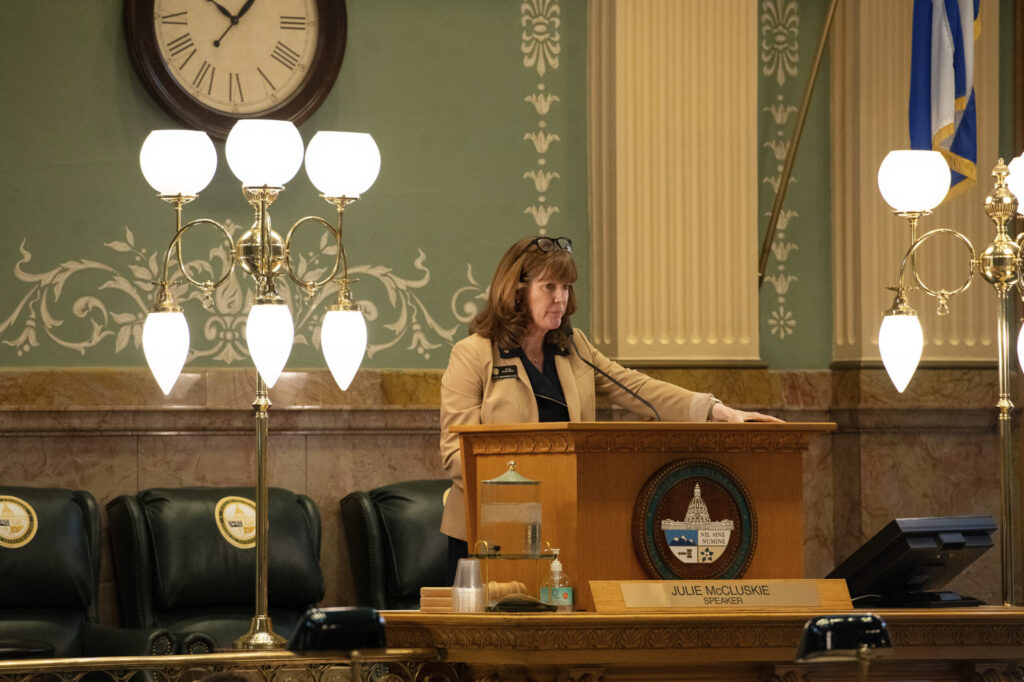
Pinnacol separation bill delayed as Colorado budget remains in flux due to $1.5B deficit
Marianne Goodland
marianne.goodland@coloradopolitics.com
Updated 22 hours ago
A bill that would allow Pinnacol Assurance to formally sever its remaining ties with the state appears unlikely to emerge anytime soon, as House leaders juggle a massive budget shortfall, unresolved negotiations with key stakeholders, and growing doubts about whether...