

Colorado River headwaters to get a needed boost from Uncle Sam
The largemouth bass should open up wider, because the federal government is tossing nearly $8 million into the Colorado River to improve water quality, soil conditions and habitat loss from the Front Range and plains sucking up the Western Slope’s water.
Trout Unlimited helped the Colorado River Headwaters Project get the $7.75 million grant from the Department of Agriculture’s Natural Resources Conservation Service. The money is culled from the $956 billion federal farm bill passed in 2014.
The Colorado River was one of 88 projects set to collectively receive $225 million in federal dollars matched by local partners kicking in $500 million, according to the USDA, to “improve the nation’s water quality, combat drought, enhance soil health, support wildlife habitat and protect agricultural viability.”
The USDA described the Colorado project this way:
The Colorado River Headwaters Project will address the consequences of trans-mountain diversions that supply agricultural and municipal water to Northern Colorado and the Denver Metro Area, which have had a significant impact on agriculture and aquatic resources in the headwaters of the Colorado River. Led by an array of partners representing local agriculture, local government, water providers, state agencies, conservation groups and landowners, the project will create a bypass channel to reconnect the Colorado River, make channel and habitat improvement downstream of the bypass to support healthy habitat, and improve irrigation, soil quality and water quality. When fully implemented, the Headwaters Project will directly benefit over 30 miles of the Colorado River and 4,500 acres of irrigated lands that provide sage grouse habitat and make up to 11,000 acre-feet of water available to improve the river during low flow conditions
“This is a huge win for the Colorado River,” Drew Peternell, director of Trout Unlimited’s Colorado Water Project, said in a statement. “We’re seeing an exciting and ambitious conservation vision for the upper Colorado become reality. With this funding, we’ll be able to put the ecosystem pieces of the upper Colorado River back together and restore the river and its trout fishery to health.”
Added Matt Rice, director of American River’s Colorado River Basin Program: The Colorado River Headwaters Project is a great example of how municipal water providers, ranchers, conservation organizations and others can work together to restore an important reach the Colorado River for both the environment and agricultural operations with benefits downstream, A collaboration like this would have been unheard of 10 years ago. It’s a win for everyone in Colorado.”
Trout Unlimited said transmountain diversions consume more than 60 percent of the upper Colorado River’s native flows across the Continental Divide.
“The resulting low flows in the river have seriously undermined the operations of irrigation systems and the health of the Colorado River in the project area,” the organization said in a statement Thursday. “Low flows make it difficult for irrigators to divert water, especially during drought, and also raise water temperatures and hamper the river’s ability to transport sediment, leading to sediment buildup on the riverbed that degrades aquatic habitat.”
The organization continued:
Local ranchers wanted to address these irrigation problems as well as river health, said Paul Bruchez, a Kremmling-area rancher who organized his neighboring landowners into the Irrigators of Land in Vicinity of Kremmling (ILVK) group, a key project partner. The project will install several innovative instream structures designed to provide adequate water levels for irrigation while also improving critical fish habitat. This will be the first project in the country to demonstrate these stream engineering practices on a significant scale.
“This news is life-changing for the headwaters of the Colorado River and those who rely on it,” said Bruchez. “Years ago, water stakeholders in this region were at battle. Now, it is a collaboration that will create resiliency and sustainability for the health of the river and its agricultural producers. Healthy ranches need healthy rivers, and the RCPP funding will help sustain both.”
The Windy Gap Reservoir bypass and the Kremmling area river improvements address several pieces of the puzzle in a long-term, regional effort to restore the upper Colorado River. Other pieces include agreements that TU helped negotiate with Denver Water and the Northern Colorado Water District that contained significant river protections as well as an innovative, long-term monitoring and adaptive management process (called “Learning by Doing”) that requires stakeholders to work together to ensure the future health of the river. That progress and collaboration is all the more remarkable coming after years of conflict between West Slope interests and conservation groups concerned about the health of the river, and Front Range water providers seeking to divert more water across the Divide.
“What’s happening on the upper Colorado shows that water users can work together to ensure river health while meeting diverse uses,” said TU’s Peternell. “This project is a model of what cooperation and collaboration can achieve in meeting our water challenges in Colorado and the Colorado River Basin.”
Other Headwaters Project partners who will provide assistance include the ILVK, Northern Water Conservation District, Denver Water, Colorado River Conservation District, Middle Park Soil Conservation District, Colorado Water Conservation Board, Grand County, and Colorado Parks and Wildlife.District, Middle Park Soil Conservation District, Colorado Water Conservation Board, Grand County, and Colorado Parks and Wildlife.


Army veterans Jessica Killin, Joe Reagan qualify for Democratic primary ballot in Colorado’s 5th CD
Ernest Luning
ernest.luning@coloradopolitics.com
Updated 11 hours ago
Democratic congressional candidates Jessica Killin and Joe Reagan secured spots Saturday in Colorado’s June primary to decide who will run against Republican U.S. Rep. Jeff Crank in a district that’s only ever sent GOP lawmakers to Congress. The two Democrats,...

Who has the power to declare war? | Cronin and Loevy
Tom Cronin Bob Loevy
tom-cronin-bob-loevy@coloradopolitics.com
Updated 15 hours ago
Our constitutional framers boldly and ambitiously granted Congress the power to declare war yet granted the executive the responsibility, after war is declared, to supervise war as the commander-in-chief. That worked well until the Cold War began. The U.S. has been...
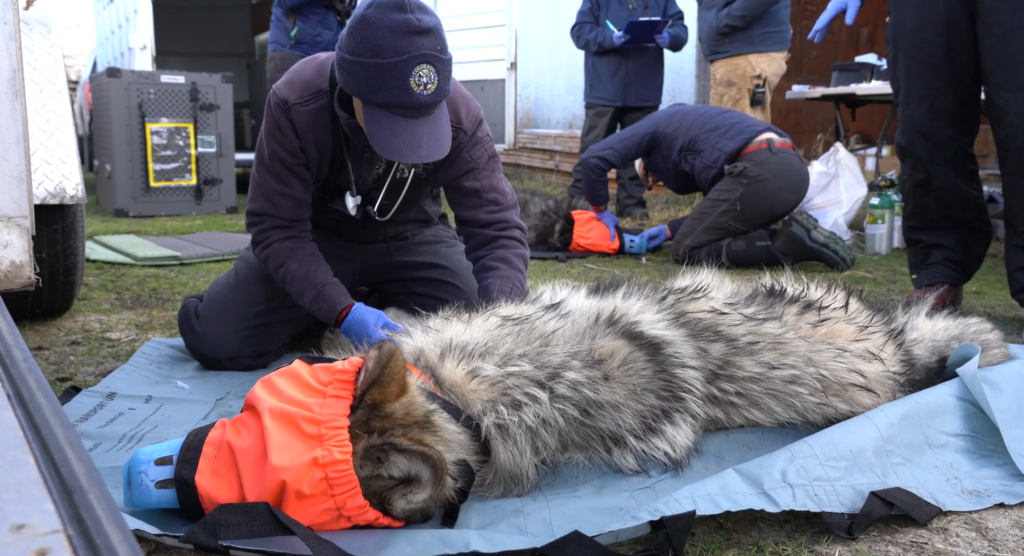
Latest death brings down wolves’ survival rate to 44% in Colorado
Marianne Goodland
marianne.goodland@coloradopolitics.com
Updated 19 hours ago
The female wolf of the mating pair for the King Mountain pack has died, bringing total fatalities to 14 out of the 25 animals reintroduced in Colorado. The wolf, identified as No. 2310, was among the 10 wolves brought to...

The delicate, ever-changing dance between politics and religion | SONDERMANN
By Eric Sondermann
by-eric-sondermann@coloradopolitics.com
Updated 17 hours ago
The dance, really a marathon that brings to mind the classic movie “They Shoot Horses, Don’t They?”, has been going on as long as there have been governments and organized religion. That is to say that this delicate tango has...
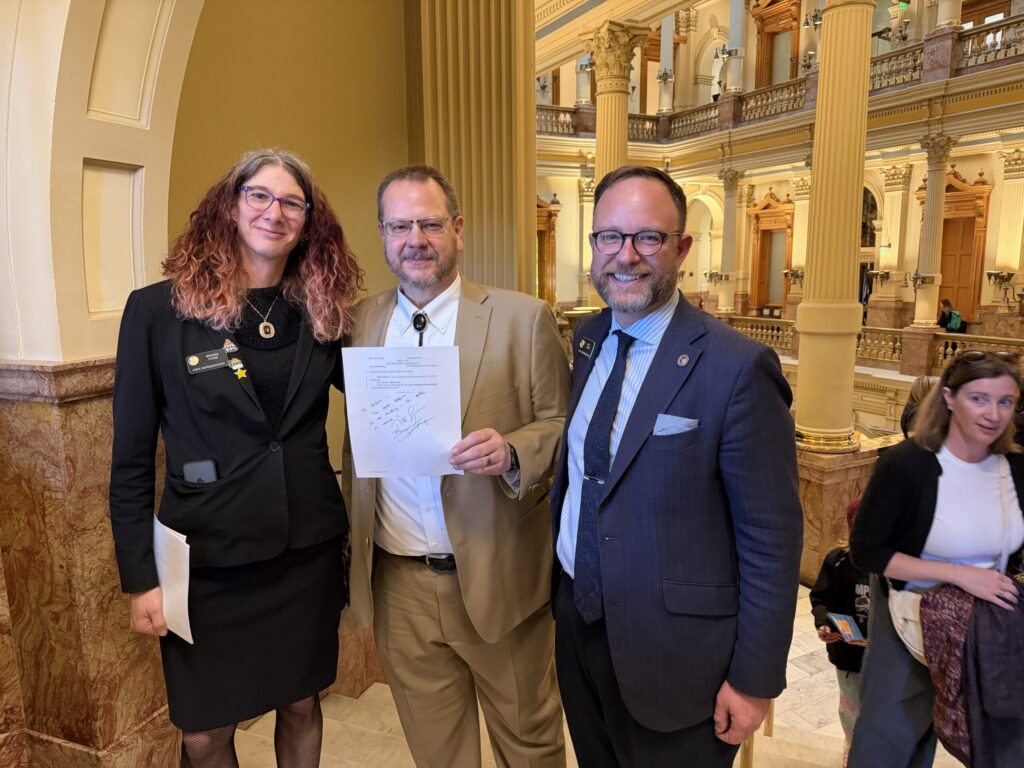
Roasts, get yer roasts, here: Capitol M | Week of March 14, 2026
Marianne Goodland
marianne.goodland@coloradopolitics.com
Updated 4 days ago
The lighter side of the Capitol, especially in the past week Apparently, the pending and eventual switch to daylight stupid time has put people in some pretty funny moods. And thank goodness! On March 4, the Senate approved the appointments...

Polly Baca elected to DNC | A LOOK BACK
Rachael Wright, Special to Colorado Politics
rachael.wright@coloradopolitics.com
Updated 4 days ago
Forty-Five Years Ago This Week: After her loss to Republican U.S. Rep. Hank Brown the previous year in the race for the 4th Congressional District, state. Sen Polly Baca-Barragan, D-Thortnon, was elected as one of the three vice-chairs of the...

Colorado Politics Calendar Mar. 16-22
Rachael Wright, Special to Colorado Politics
rachael.wright@coloradopolitics.com
Updated 4 days ago
CoPo’s weekly political calendar will help you find political and public-policy events throughout Colorado. It includes candidate and issue campaign events, public policy meetings, court hearings, state and local party conventions, assemblies, debates, rallies, parades, speaking engagements, traveling dignitary appearances,...

Boebert challenger Eileen Laubacher joins lawsuit aimed at blocking her from Democratic assembly
Ernest Luning
ernest.luning@coloradopolitics.com
Updated 1 day ago
A Denver District Court judge on Thursday permitted Democratic congressional candidate Eileen Laubacher to join a lawsuit filed by one of her primary opponents seeking to prevent Laubacher from participating in the party’s assembly process in a bid to qualify...
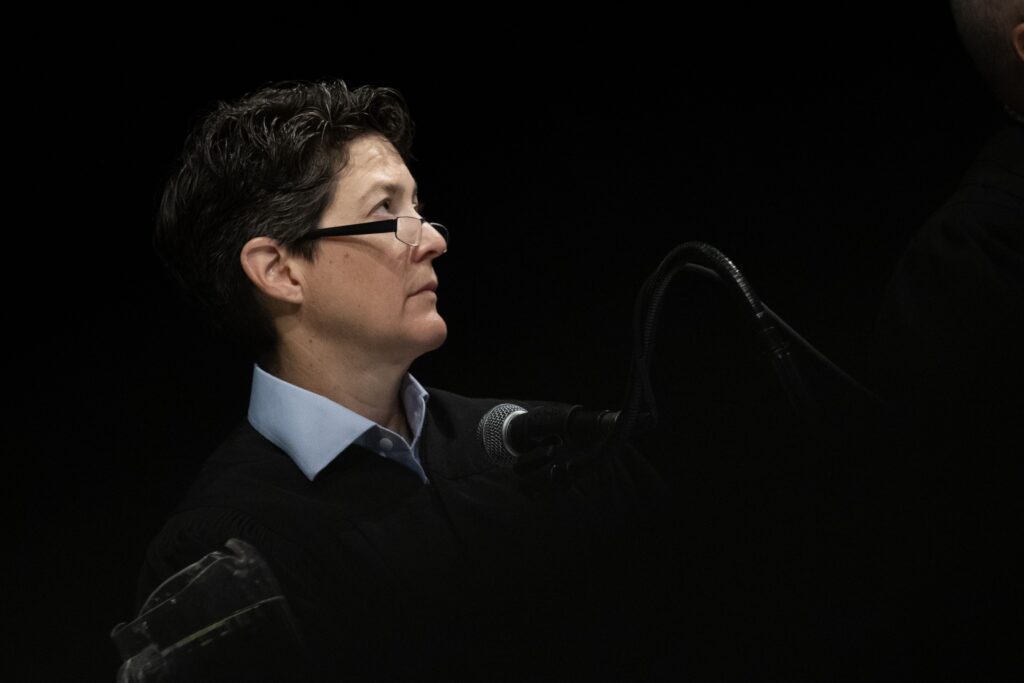
Colorado justices weigh fairness concerns after defendant prevailed despite ghosting case
Michael Karlik
michael.karlik@coloradopolitics.com
Updated 13 hours ago
Members of the Colorado Supreme Court struggled on Tuesday to balance the need for one defendant to shield itself against a plaintiff’s claim that its employee sexually assaulted her child, and the fact that the employee legally admitted the allegations...
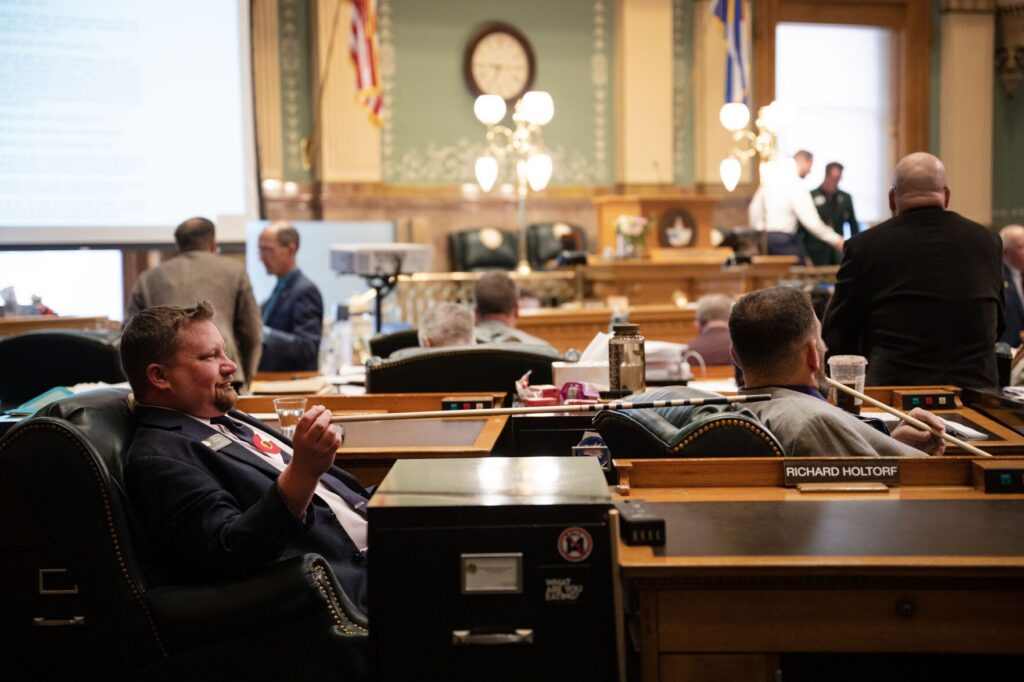
House Ethics Committee to begin hearing on Weinberg complaint
Marianne Goodland
marianne.goodland@coloradopolitics.com
Updated 2 days ago
The House Ethics Committee on Tuesday will begin a hearing requested by Rep. Ron Weinberg, R-Loveland, tied to an ethics complaint filed against him by Rep. Brandi Bradley, R-Roxborough Park. The ethics committee had found probable cause on two issues...