

Colorado GOP, Dems agree on transportation priority, but now to the funding
A potential new statewide sales tax being formulated in the Colorado Legislature is the most aggressive legislative proposal in recent memory to put billions of dollars into relieving Front Range and mountain traffic.
If legislators agree, voters in November could decide on a 0.62 sales tax on all purchases. That would be on top of the 2.9 percent the state assesses. In Colorado Springs, the sales tax is 8.25 percent, including state, city (3.12 percent), county (1.23 percent) and a special 1 percent tax.
The proposed sales tax increase would repay $3.5 billion in bonds for immediate “signature projects,” including expanding Interstate 25 from Monument Hill to Castle Rock and in stretches north of Denver, as well as improvements to Interstate 70 through the mountains.
Democrat Crisanta Duran, who is set to become House speaker in January, is one of the idea’s chief proponents. Top Republicans, though skeptical, say they’re listening.
Duran said Thursday that all the options are still on the table, but she and others are trying to find areas where both parties can agree. The amount of a sales tax, or any other idea that replaces it, is still subject to bipartisan negotiations, she cautioned.
“I think we need everybody at the table to do this effectively. There’s a real risk if we do nothing.”
Duran said that as Colorado Springs and other local governments across the state begin their transportation funding plans, they will become less likely to support statewide solutions. That could kill chances of solving some of the worst traffic issues in locations that can’t agree or can’t afford to solve their issues.
“The possibility there will be communities that fall farther behind if we don’t come up with a statewide transportation plan is real,” Duran said.
The sales tax idea isn’t novel. The Colorado Contractors Association, which wants more money to build roads and mass transit projects, this year considered trying to get on the ballot to ask for a bump of three-quarters of a cent. The alliance backed off because of a crowded ballot and an uncertain political climate for a tax hike.
Since 2012, 24 states have raised taxes to fund roads and bridges, and half have opted for a sales tax, according to the Transportation for America advocacy organization.
But Colorado’s sales tax could have a strong, capable champion in Duran, who could get the measure out of the Democrat-led House. Striking a bargain could serve as a signature political achievement for Duran, acknowledged by state and national Democrats as a rising star in the party.
Senate Republicans, who hold a one-seat majority in their chamber, despise taxes almost as much as they despise inaction on transportation.
GOP leaders have proposed a different funding method.
Agreed-upon needs
Just last week, the state highway department told the legislative Joint Budget Committee there are about $9 billion in needs for the state’s crowded roads and aging bridges, measured against a proposed $1.4 billion budget next year. The annual allotment is consumed by maintenance needs with little left for widening freeways.
Legislators from both parties agree on the great need, but they have disagreed deeply on how to pay for it.
Republicans want to borrow the money and repay it out of the state’s general operating budget, which Democrats said would fleece schools, public safety and vital social safety net programs.
Republicans believe budget discussions should revolve around first identifying spending cuts, especially when it comes to Medicaid.
Democrats have sought to reclassify a state hospital provider fee as an “enterprise fund” to move more than $750 million a year out from under a state constitutional spending cap that triggers refunds to taxpayers.
Republicans have fought the move, both because they believe it would undermine the revenue cap set by the Taxpayer’s Bill of Rights and because it would be insufficient to fund transportation after other budget requests for the money are subtracted.
That has left the sides at an impasse, as advocates float ideas that might enable the sides to meet in the middle.
The state general fund, technically, puts in nothing. A 2009 law passed by the Legislature, Senate Bill 228, carves out money for transportation, but the formula is so narrow that most years there’s nothing, and at best it still has a five-year limit.
Democratic Gov. John Hickenlooper has proposed a budget that slashes $79 million in the current fiscal year and $30.3 million in the upcoming year for roads and bridges to balance a difficult budget. That could put pressure on Republicans to reconsider the hospital provider fee change.
Roads and highways were expected to get about $158 million in the current year and $109 million next year.
Transportation funding depends heavily on the state’s 22-cent gas tax, which hasn’t been raised since 1991. The revenue tank isn’t nearly full from that pump. As cars get better gas mileage, they use less fuel, which means less money for Colorado roads and bridges.
“Although the vehicles that are electric put wear and tear on our roads, they pay less gas tax to do so, which puts constraints on our revenues,” said Maria Sobota, chief financial officer for the state highway department.
Although President-elect Donald Trump proposed a $550 billion national infrastructure program during the campaign, Colorado officials say it is too early to count on that money. There has been no indication of how such a massive infrastructure program would be financed or whether Trump can get it past the deficit-averse Republican budget hawks in Congress.
Getting real
Sen. Randy Baumgardner, a Republican from Hot Sulphur Springs, said he’s willing to listen to what Democrats propose, but he’s realistic on the chances of taxpayers ponying up more on every purchase.
He pointed out how voters rejected Amendment 66 three years ago to pour a billion dollars into the state’s ailing classrooms – by a 30 percent margin. Voters opposed several local school bond questions this year, including four out of six in El Paso County, as well as in Jefferson County, Greeley and Thompson school districts.
“Something you would think they would vote for, like education, that went down really hard,” Baumgardner said.
He and other Republicans maintain there is money in the state budget, without raising taxes, to repay the bonds, but Hickenlooper and House Democrats have to redirect revenue into transportation.
Republicans don’t cite which programs they would cut for the sake of roads, however.
Baumgardner is still pushing a piece of legislation that passed on a bipartisan vote out of the joint Transportation Legislation Review Committee to dedicate a larger portion of the state’s general fund to pay back the $3.5 billion in bonds without a tax increase.
Democrats on the Executive Legislative Committee killed the bill on a technicality in October, saying it was not the transportation committee’s role to make budget recommendations, which they said was the job of the Joint Budget Committee and the House and Senate finance committees.
“But the charge of the (Transportation Legislation Review Committee) is to find ways to fund transportation for the state of Colorado,” Baumgardner said.
He said he would personally sponsor a similar bill during the legislative session.
House Republican leader Patrick Neville of Castle Rock said the debate should be about priorities, not where to impose taxes.
“I keep hearing under this gold dome in all these meetings that transportation funding is the number one priority, but it’s not a priority in our only discretionary fund,” he said of the state’s general operating budget.
“If we are going to be honest with our citizens today that this is a priority, then we have to show we have some skin in the game and show that we can prioritize in our general fund.”
Since 2010, Neville said, the state budget had increased 45 percent, from about $7 billion to a projected $10.3 billion next year.
“This year alone we’re going to have another $1.5 billion more in the forecast for our budget. We just need to show citizens transportation is a priority, that we can prioritize our budget to actually do something with transportation funding.”
Sandra Solin of Fix Colorado Roads, a coalition of mostly northern Colorado and Vail Valley business interests, was pleased to hear there’s some agreement and momentum toward compromising.
The group has been key to keeping alive the $3.5 billion bond issue proposal.
“Everyone now agrees that bonding is essential to accelerate major projects statewide,” she said. “The debate shifts now to the combination of funding sources that we leverage to fund the bonds.
“The good news is that everyone is talking about transportation as a priority and there seems to be motivation to get something done. Now it becomes a question of what’s the right solution.”

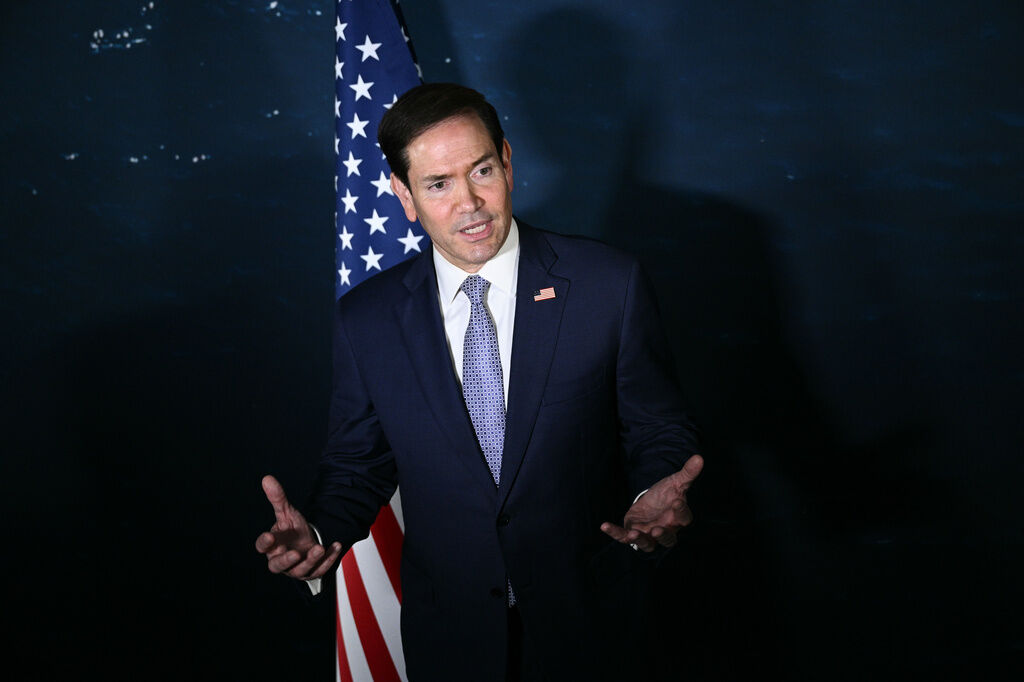
A youth movement is coming for the 2028 presidential election
Christian Datoc
christian-datoc@coloradopolitics.com
Updated 24 minutes ago
President Donald Trump’s first election in 2016 made him the oldest president ever elected at age 70. Joe Biden, at 78, took that record four years later. Four years after that, in 2024, Trump reclaimed his title at 78 years...
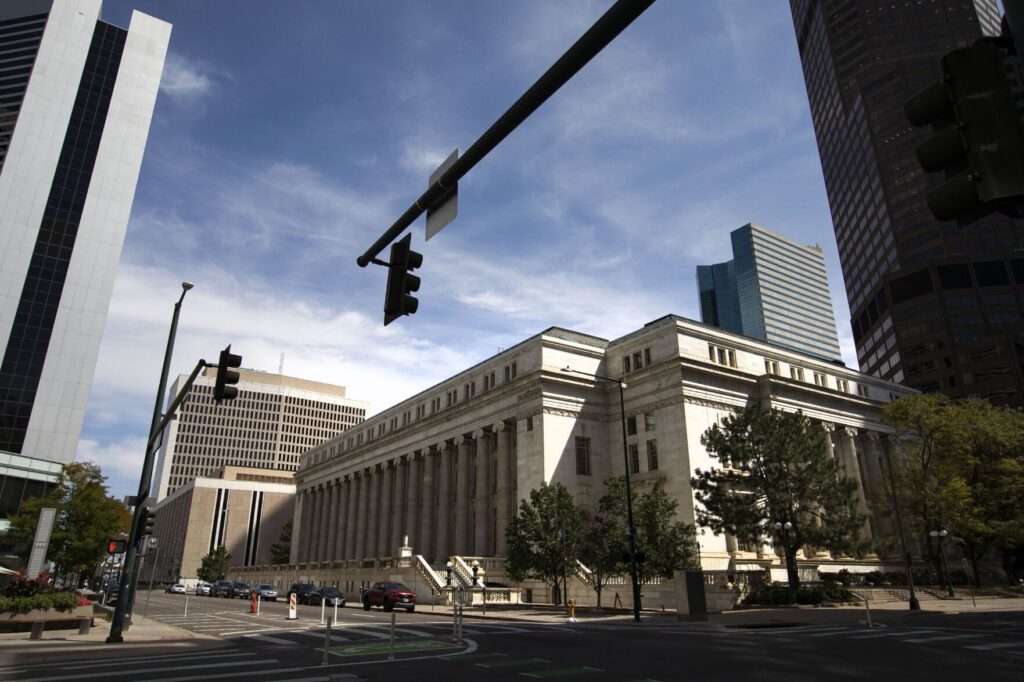
10th Circuit grants immunity to officers for fatal Manitou Springs shooting
Michael Karlik
michael.karlik@coloradopolitics.com
Updated 15 hours ago
The Denver-based federal appeals court ruled on Wednesday that responding officers from Manitou Springs and El Paso County cannot be held constitutionally liable for shooting and killing a man after a 20-minute standoff. Wilford Deweese allegedly pulled out a gun...
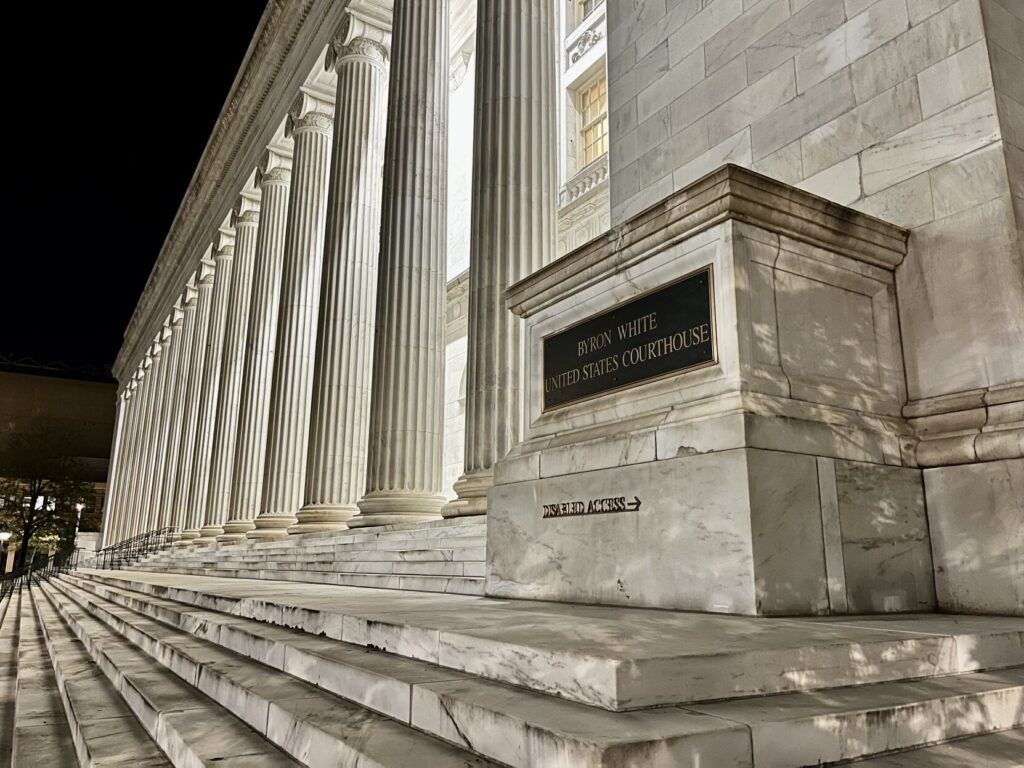
10th Circuit rejects invitation for full-court review of tax-avoidance case
Michael Karlik
michael.karlik@coloradopolitics.com
Updated 13 hours ago
The Denver-based federal appeals court declined to reconsider the standards for holding entities liable for their tax-avoidance schemes, with a majority of judges voting against full-court review on Monday. In April, a three-judge panel of the U.S. Court of Appeals...
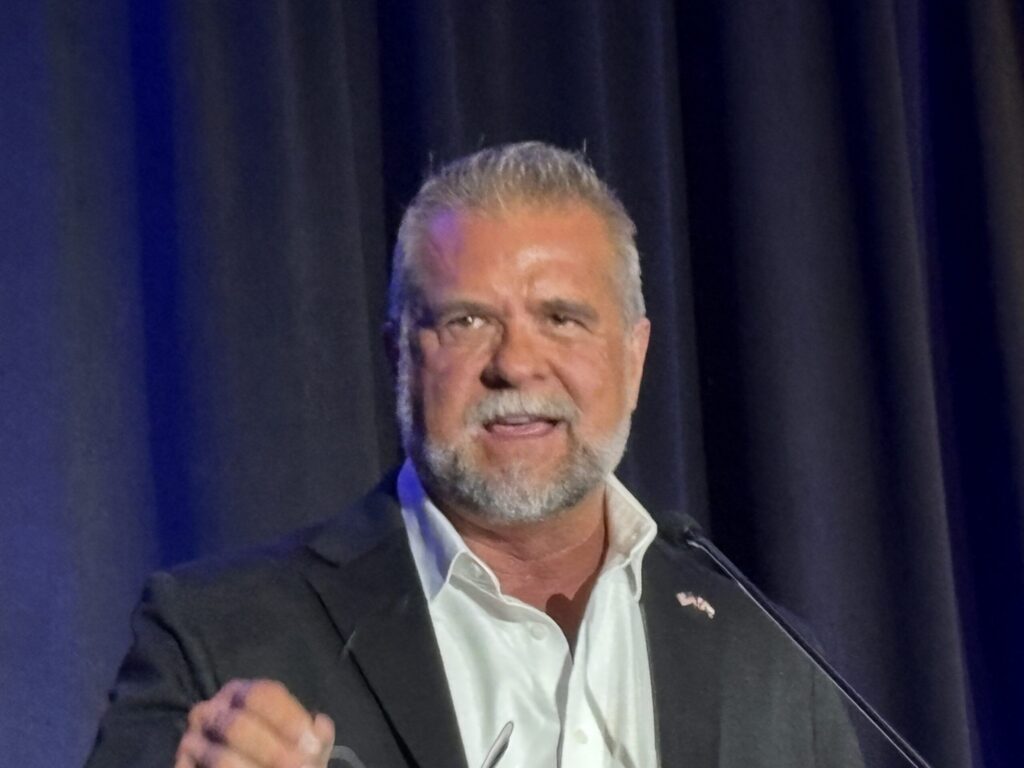
GOP gubernatorial candidate Victor Marx pushes aggressive water-storage expansion at Colorado Water Congress
Marianne Goodland
marianne.goodland@coloradopolitics.com
Updated 8 minutes ago
Victor Marx, the Republican nominee for governor, took the spotlight Wednesday during the opening day of the Colorado Water Congress, laying out how he says the state should approach its water future. Marx told the standing-room-only audience in Steamboat Springs...
Colorado AG sues GEO Group over noncompliance with tuberculosis investigation
Kyla Pearce
kyla.pearce@gazette.com
Updated 15 hours ago
The Colorado Attorney General’s Office on Wednesday filed a lawsuit against GEO Group, which operates the Aurora ICE Processing Center, alleging the company failed to comply with a state tuberculosis investigation. Weiser’s lawsuit demands that GEO provide “critical information” needed...
U.S. Rep. Lauren Boebert stresses storage, forest health and Upper Basin rights at Colorado Water Congress
Marianne Goodland
marianne.goodland@coloradopolitics.com
Updated 16 hours ago
Republican U.S. Rep. Lauren Boebert used her brief Wednesday appearance at Colorado Water Congress to tout her record on delivering water projects for the state and her district. Boebert, who is running for her second term representing Colorado’s 4th Congressional...
Trump has a 96% endorsement success rate. Here are the Republicans he’s backed who have lost
Mabinty Quarshie
mabinty-quarshie@coloradopolitics.com
Updated 19 hours ago
President Donald Trump’s 2026 primary endorsement success rate remains staggeringly high, but the president has seen a growing number of losses stack up in recent weeks. According to Ballotpedia, Trump has endorsed in 313 U.S. Senate, U.S. House, and state...
Colorado judge blasts state forensics lab in dismissing child sex case
Jenny Deam
jenny.deam@gazette.com
Updated 13 hours ago
In a potentially widely consequential action, a Weld County district judge dismissed a child sexual assault case, citing the ongoing scandal at the Colorado Bureau of Investigation’s forensic lab that “has left a dark mark on the history of Colorado...

Denver to form data-center regulation group ahead of 2027 moratorium deadline
Matt Kyle
matt.kyle@denvergazette.com
Updated 3 minutes ago
As Denver evaluates how to regulate data-center development, the city is launching a website and forming a resident-expert panel to guide the process. Denver currently has a moratorium on new data center construction through May 2027. The working group and...

Colorado officials urge stronger water safety after 8 drownings and multiple Front Range rescues
Elizabeth Pond
elizabeth.pond@denvergazette.com
Updated 2 hours ago
At least eight people have drowned in Front Range waters since mid-March, including two at Eleven Mile Reservoir, three at Cherry Creek Reservoir, one at Rockbridge Lake and two at Lake Pueblo State Park. In the wake of these deaths,...