

DIA audit finds airline revenue collection lacking
Denver International Airport is not ensuring prompt payments from airlines, promptly collecting delinquent airline payments and associated interest penalties or managing airline space changes, an audit report found.
Denver City Auditor Timothy O’Brien‘s staff presented those and other findings and recommendations about DIA‘s airline agreement management practices and lack of controls to the independent audit committee Thursday, Nov. 17.
Other findings and recommendations included a lack of effective practices for managing agreements and revenue collection, and succession planning for DIA finance staff.
“These weaknesses negatively impact DIA’s ability to properly manage the airline agreements,” O’Brien wrote in the report. “Through stronger controls for managing airline agreements, DIA can ensure that agreements are effectively managed and the proper revenue is collected.”
Not collecting revenue due
DIA is a significant economic benefit for the Denver metro region, the report noted, by providing more than $26 billion in annual economic activity. DIA operates as a business-type activity called an enterprise fund and does not use any taxpayer dollars for its operations.
DIA is the sixth-busiest airport in the nation, 19th busiest in the world and reported over $874 million in revenue in 2015. Revenue generated from the airlines operating at DIA through airport use and lease agreements support the operation, maintenance, planning and development of the airport.
Audit Supervisor Sonia Montana noted about half of DIA’s revenue is generated by airline rental payments, passenger facility charges and landing fees.
Lead Auditor Darrell Finke outlined several areas where DIA had fallen short in terms of fee, interest penalty and other revenue collection. Many of those cases were due to a lack of proper policies and procedures, inadequate staff cross-training and other employee factors, he told the committee.
For instance, Finke said the audit found six of 21 payments for airline landing fee invoices between March 2014 and March 2016 had not been received by their due dates. Interest penalties had been accruing in five of those six cases, but the penalties had never been collected in three of those cases. Two were reversed without proper support documents to prove such actions, Finke added.
“In the last case, the penalty remained outstanding for 89 days,” he noted.
DIA finance staff also reversed penalties for late gate fee payments that were written off because the airline had credits on their account to cover the invoiced amount, Finke said. However, the audit found a lack of documentation in that case as well.
Six passenger facility charge payments were made late, but interest penalties were not calculated or charged, Finke continued, with no process in place to do so.
DIA finance staff also had insufficient controls in place to manage airline space changes at the airport, which changes with each airline’s business needs. Finke said seven space change forms were not processed in a timely manner and the audit team was told a former financial manager who handled such arrangements had resigned and no one else was aware of the process for space change billing and collection.
That caused a $900,000 charge for Southwest Airlines to have to be absorbed into a $9 million credit memo as part of the airport’s year-end revenue settlement process, Finke added.
Senior Auditor Karin Doughty explained that DIA finance staff had not been consistently monitoring collections or sending past due letters to airlines, and was told that was because their time was taken up by concessionaire and rental car agency collections.
A high employee turnover rate was a result of a lack of adequate training in practices, policies and procedures and the loss of organizational knowledge due to a lack of succession plan for key areas, Doughty added.
“The cumulative effect of inadequate airline use and lease agreement enforcement can lead to DIA operations being adversely affected,” she warned.
Audit committee member Jack Blumenthal was sympathetic to the issues found in the report.
“I’m usually sensitive when someone says they disagree with our report, but in this case, the airport folks can not be lemmings,” Blumenthal said. “It’s hard for our audit staff to understand all the federal regulations airports work under in detail, too.”
Federal rules, change in financial system cited as factors
Of the nine recommendations from the audit report, two were disagreed with by DIA officials. Shanahan said one was assessing late penalties on passenger facility charges.
“It’s actually federal law that dictates when those payments are due,” she explained. “They’re through the (Federal Aviation Administration), which allows airports to collect those fees, not the contracts we have with the airlines.”
Shanahan added those fees can only be used for specific, FAA-approved airport projects.
“I’d say the vast majority of U.S. airports do not assess late fees on those charges for that reason,” she said. “It’s not a huge revenue source.”
While DIA is looking into the costs and benefits of instituting such charges, Shanahan said she is not aware of any airport with such charges getting those bills paid any sooner. She also said she was unaware of any recent case of an airline being sued for non-collection of the fees, unless bankruptcy was involved.
Shanahan said the second recommendation DIA disagreed with was to develop updated finance policies and procedures. She called it a time issue, since airport staff are working with the City and County of Denver to install and implement a new common financial system.
“For many years, DIA has been using a separate system than the one the city uses,” Shanahan said. “In truth, that’s what created a lot of the issues you see in this audit. There are multiple opportunities for employee error when you’re using different systems.”
Shanahan said the new common system is expected to be operating in July, but it requires much staff training time between now and then.
“Once we get it going, we can adopt all the city’s current policies and procedures, unless there are specific differences with the airline industry,” she added. “I think that will resolve just about all the control weaknesses.”

Colorado Politics Calendar Sept. 7-13
Rachael Wright, Special to Colorado Politics
rachael.wright@coloradopolitics.com
Updated 5 days ago
CoPo’s weekly political calendar will help you find political and public-policy events throughout Colorado. It includes candidate and issue campaign events, public policy meetings, court hearings, state and local party conventions, assemblies, debates, rallies, parades, speaking engagements, traveling dignitary appearances,...

Blue-collar support trends highlighted GOP gains among rank‑and‑file workers | A LOOK BACK
Rachael Wright, Special to Colorado Politics
rachael.wright@coloradopolitics.com
Updated 5 days ago
Forty-five years ago this week: Kathy Oatis of the Colorado AFL-CIO’s Committee on Political Education said that organized labor had a negative image with the American voter. “I don’t think the country is against us,” said Oatis. “I think the...

The dissonance of an American Jew thinking about Israel | SONDERMANN
Eric Sondermann
eric-sondermann@coloradopolitics.com
Updated 5 days ago
The Jewish High Holidays will soon be upon us. The third anniversary of Oct. 7 will then quickly follow. Three weeks later, Israeli voters will head to the polls to elect all 120 members of its parliament, the Knesset and...

Parenting from prison: Inmates hope to be present in their children’s lives, while physically absent
Marianne Goodland
marianne.goodland@coloradopolitics.com
Updated 4 hours ago
The room was decorated with balloons, the tables sparking bright with colors as the smell of pizza and cake wafted through the air. As did music. This was, after all, a father-daughter dance. Except this was not a typical father-daughter...

Colorado House ethics committee issues ‘stern letter’ to Democrat over caucus funds mismanagement
Marianne Goodland
marianne.goodland@coloradopolitics.com
Updated 1 day ago
The Colorado House ethics committee on Friday voted unanimously to issue a “stern letter” to Rep. Mandy Lindsay, D-Aurora, regarding her mismanagement of House Democratic caucus funds. The committee further voted to request that Lindsay resign as Democratic Caucus co-chair...
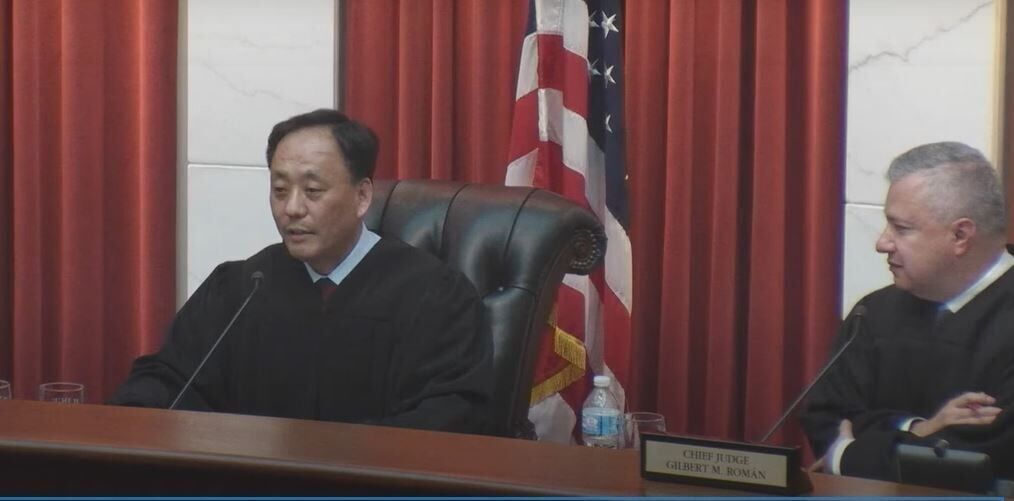
Appeals court confirms Colorado judges can compel electronic records from out of state
Michael Karlik
michael.karlik@coloradopolitics.com
Updated 1 day ago
Colorado’s second-highest court clarified on Thursday that judges are empowered to compel out-of-state companies to produce electronic records under state law. El Paso County jurors convicted Mischa Jargowsky on three counts of money laundering and one violation of Colorado’s organized...
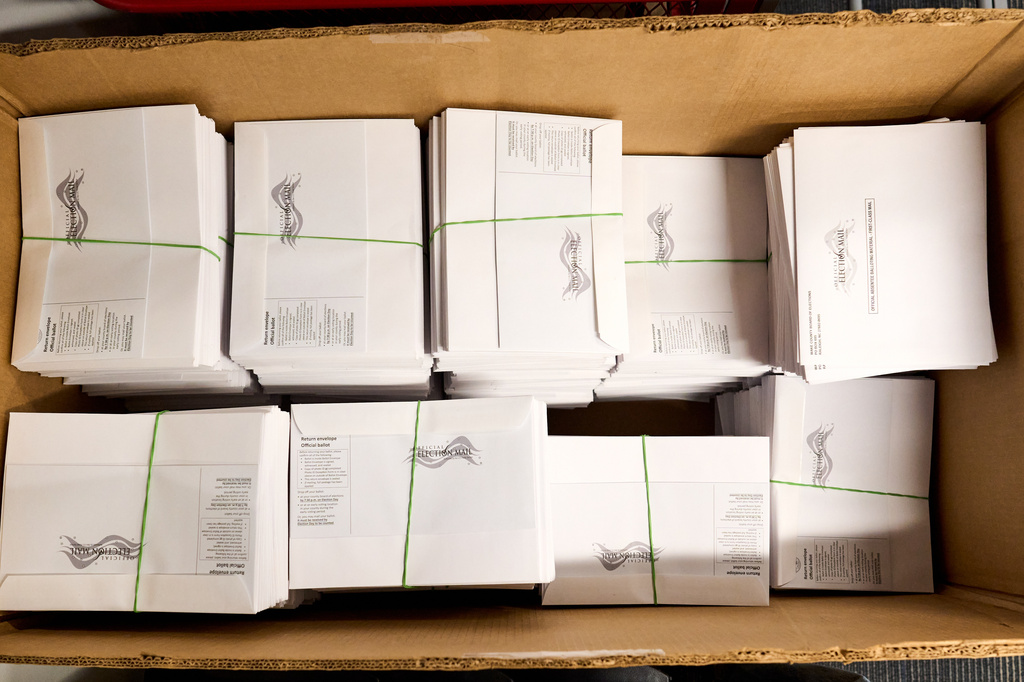
Federal judge extends block on Trump executive order seeking to limit mail voting in the midterms
The Associated Press
the-associated-press@coloradopolitics.com
Updated 3 days ago
A federal judge on Friday extended her prohibition against the U.S. Postal Service implementing President Donald Trump’s executive order seeking to limit mail voting during the midterms, putting another major obstacle in the way of the administration as the first...

Mullin asks DOJ to review voter data sharing tied to Zuckerberg-funded nonprofit group
The Washington Examiner
the-washington-examiner@coloradopolitics.com
Updated 1 day ago
Washington Examiner Homeland Security Secretary Markwayne Mullin asked the Justice Department this week to review whether election-related nonprofit groups, some with multimillion-dollar backing from a Mark Zuckerberg-linked nonprofit, improperly received sensitive state motor vehicle and voter-registration data. In a letter...

Colorado secures FEMA support for wildfire, flooding and mudslide recovery
Marissa Ventrelli
marissa.ventrelli@coloradopolitics.com
Updated 2 days ago
Federal authorities on Friday approved Colorado’s request for federal public assistance to help communities devastated by the Aspen Acres and Gold Mountain Fires. The Federal Emergency Management Agency did not announce how much the state would receive but confirmed that...

State seeks $50K penalty against GOP candidate Victor Marx over alleged campaign finance violations
Deborah Grigsby
deborah.smith@denvergazette.com
Updated 3 days ago
Republican gubernatorial candidate Victor Marx is looking at more than $50,000 in fines in what the Elections Division of the Office of the Secretary of State calls “unprecedented” campaign finance violations. The state has not imposed that fine yet, and...