

Crowder, Casias vie for Senate District 35 targeted seat
They’re practical men from a politically moderate district. But the Senate seat they’re battling for is a top partisan prize.
Larry Crowder and James Casias are locked in a tight contest for a Senate district seat that may determine the balance of power at the state Capitol. It’s a race charged with ideological power, even though Crowder and Casias line up very closely on the political spectrum.
Crowder is an older man with deep roots in southeast Colorado and dedicated to serving the public interest. Same with Casias. The men use interchangeable phrases when taking about the challenges today’s information and service economy poses to the residents of the hard-pressed western prairieland that makes up the district, where farming, mining and drilling have shaped life for generations.
“I tell voters they can count on me to be a strong voice for southern Colorado,” said Casias, who is serving his fourth-term as sheriff of Las Animas County and is president of the County Sheriffs of Colorado. He’s running to unseat Crowder, who’s defending his seat in hopes of serving a second term in the Senate.
“My campaign is not so much about the political parties,” Casias said. “It’s more about the politics of Denver. I say to the voters that I’ll battle the interests up there and I’ll be an advocate for the people down here.”
“In my district, you don’t really ask if someone is a Republican or Democrat,” Crowder said the day before, gesturing to a map of the district on the wall of his office. “You just say, ‘What’s your issue, how can I help you out?’ You got to realize that 15 of the 16 counties in the district are below the poverty level. We need broadband. We need to keep our hospitals open. We have to be creative about seeing opportunities to bring in revenue.”
Casias is the Democrat in the race. Crowder is the Republican. Casias has more liberal social views. Crowder famously voted in 2015 against a successful state-supported teen contraceptive program. But both officials cut across the grain.
Broadband and hospital beds
Casias perhaps is best known for opposing gun control laws passed by Democrats in 2013, which included joining an unsuccessful lawsuit against Democratic Gov. John Hickenlooper.
Crowder perhaps is best known for recently breaking from his caucus at the Capitol to support expanded Medicaid coverage and to endorse a failed effort to reclassify the state’s hospital provider fee, a move that would have shored up tax funding for rural hospitals.
In interviews, it’s difficult to prod either candidate to talk about partisan politics, even as – or maybe precisely because – Election Day fast approaches and the digital universe buzzes with the latest absurd news of the presidential contest.
“I couldn’t ever do caucus leadership, you know, pushing the party ideas,” Crowder said. “I would just see that as taking away time from doing my job. I don’t need to make a name for myself at the Capitol. I already have one with my constituents.”
Crowder is as ready to talk at length and in detail about a potential coal-car parking business or a growing wind farm or a local flood control project as he is reluctant to speak about ideology. He never uses the words “conservative” or “liberal” or “free-market” or “big government.” Crowder feels compelled on behalf of his district to press his colleagues to accept their obligation to the future of the state, he says. And he adds that’s tied directly to recognizing the particular history of the state.
“We’re all one, you see,” he said. He was talking about Colorado, about hipster metro residents, ski-bums, sheep farmers and out of work coal miners. “Our young people are leaving the district and it’s sad, because they can’t stay, because they’re looking for opportunities. But we’re fundamental to the state. You got to understand, I’m fifth-generation down there. We represent Colorado values. That’s something that’s, well – I’ll just say that we don’t have the numbers, but we deserve as much a say and investment as any other part of the state.”
Casias said district voters he has spoken to understand that the Senate race really matters on a sort of administrative level. They know that if he wins and the Democrats in January take control the Senate and they continue to control the House, which is very likely, then District 35, represented by a Democrat, would have more purchase power at the Capitol than it would being represented by a member of the minority party. Casias said that’s what the district needs.
“How do you get the state to expand broadband to rural Colorado? Crowder and his party opposed it. We need rural economic development. So we have to show up there in the Senate and stand up for the young people. They go to McDonald’s now to get Wi-Fi. Coal mines are closing. Water’s drying up. Gas fields are gone. Retirees are having to move to Pueblo, far from their homes and towns for health care.
“I’m not a partisan,” he said. “People down here know that. But we can’t privatize everything. We could piggyback our broadband on the utility power lines. I’ll tell you, I have deputies covering 5,000 square miles in the district. I know how important it is to be able to communicate across those miles. In Denver, they take our tax dollars, but what do we get? We’re being forgotten because we are a small population.”
Not so much door knocking
District 35 candidates don’t do the intense door-to-door campaigning you see in other districts because the population is so spread out. Instead, they attend town events, dinners, candidate forums, parades.
Casias said he spends three hours a night calling voters.
Crowder said, “you go around and you talk to whoever you meet.” He also told a joke about canvassing in the district. “I went to a town the other day and I got 50 percent voter contact. I talked to one guy and the other guy wasn’t home.”
Senate District 35 is the largest Senate district in the state as well as the least populated.
A little less than 36 percent of the district population is Latino, which is about 15 percent greater than the statewide Latino population.
Casias, whose family has deep roots in the region, has Mexican and Apache ancestors. It’s possible he will have an advantage with the key Latino voter bloc, especially in the year of the Trump candidacy.
Crowder said the political tensions between Latino and white Americans that have marked national politics aren’t part of the district’s history. He said revved-up immigration politics and the tensions brought by videotaped police shootings and the Black Lives Matter movement have bled into the district – but only temporarily.
“Our economy here was built on illegal immigration,” he said. “I’m talking about before mechanization, for hundreds of years, so it’s just part of the culture. We were all raised together and so we know each other. When I was young in the ’60s and before that, immigrant workers just filled the streets and the stores in the towns, people coming and going. They were just part of it. That’s what you understood.”
Crowder is one of the rare Republicans now who supports an extended path to citizenship that would begin with green cards and vetting over 10 years and perhaps would include some form of assimilation requirements.
Unaffiliated voters and a libertarian wild card
The number of active major party affiliated voters in District 35 is nearly equal. In September, the state reported 27,483 registered Democrats and 27,588 registered Republicans. That leaves the district’s 19,273 registered unaffiliated voters to decide the election, same as in so many crucial elections in Colorado.
In Obama re-election year 2012, Crowder defeated Democrat Crestina Martinez by 1,500 votes or a little more than 2 percentage points. Libertarian candidate William Bartley drew 2,461 votes that election. Altogether, the candidates spent $232,164.
Bartley is also running this year and may prove more of a spoiler in a year where the major party presidential candidates are historically unpopular, even though Bartley is not running much of a campaign.
His website was paid for and put together by the state’s Libertarian Party. It lists the general platform of the party and the party’s contact information, but it includes no biographical information, quotes, or policy positions taken by Bartley.
In papers filed with the secretary of state, Bartley reports taking in no donations and spending no money on his Senate bid.
Crowder so far has raised nearly $102,000 and has spent $70,000. He has pulled in mostly small contributions. In August, the largest amount Crowder received was a $3,000 contribution from a homebuilder group. At the end of September, a dental group gave him $4,000. He has seen fairly regular donations come in from health-industry groups.
Crowder has spent his campaign cash mostly on advertising, roughly $9,000 in September. He’s maintained a presence on the internet for months, popping up in the Facebook and Twitter feeds of Colorado politics readers.
Casias so far has raised nearly $50,000 and spent $30,000. His largest contributions in September came from an electrical workers union local chapter, which gave him $4,000, and gay-rights group One Colorado, which gave him $400. This month, Casias has spent about $2,600 on yard and road signs and sparingly on travel in the district. He also spent $15 on a robocall campaign.
The candidates said they haven’t yet seen any sign of outside political groups advertising or canvassing in the district.
“I’m approaching the election like I’m the underdog. It’s not fair to my constituents if I go in lackluster,” said Crowder.
“People know I’m good for my word and that I have been working hard to win their trust for years,” said Casias. “It’s time for change. We have to change. We can’t leave anybody behind.”

Trump administration plans to hold back grant money from Colorado, 3 other states
Thelma Grimes
thelma.grimes@coloradopolitics.com
Updated 13 hours ago
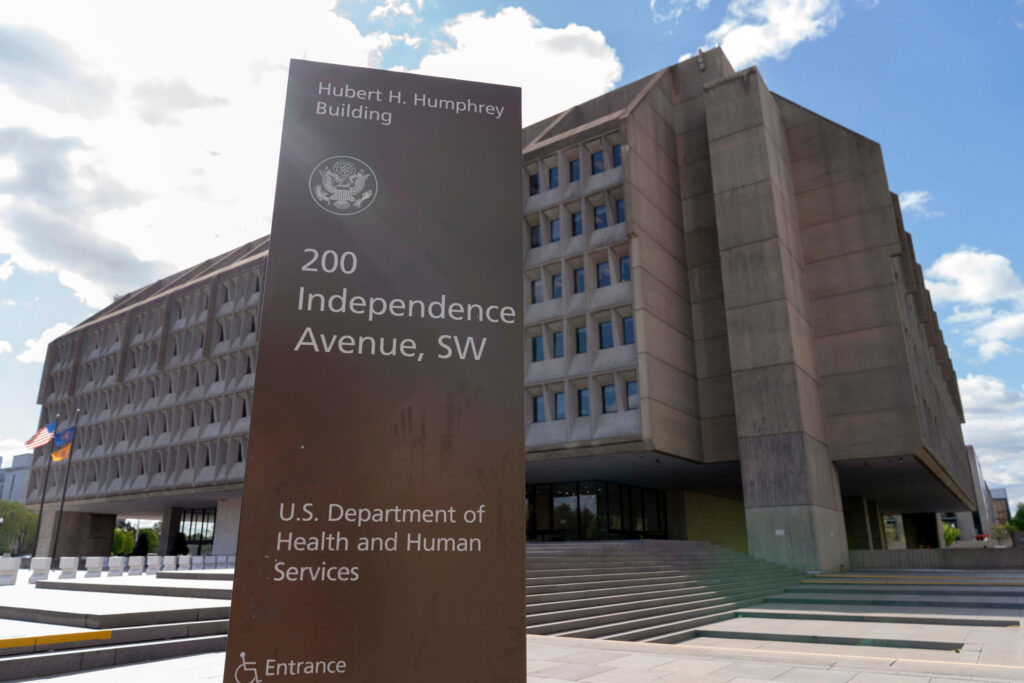
The Trump’s administration is planning to withhold some public health and transportation money from a group of Democratic-led states, including Colorado. The other states are California, Illinois and Minnesota. Full details have not been released, including whether the states could...
National Democrats add Republican Jeff Crank in Colorado’s 5th CD to list of targeted GOP-held seats
Ernest Luning
ernest.luning@coloradopolitics.com
Updated 14 hours ago
The House Democrats’ campaign arm on Tuesday added U.S. Rep. Jeff Crank in Colorado’s 5th Congressional District to its list of targeted seats held by Republicans as the party aims to flip control of the chamber in this year’s midterm...

Colorado lawmakers take aim at ‘imposter’ peaches, melons and chiles
Marissa Ventrelli
marissa.ventrelli@coloradopolitics.com
Updated 13 hours ago
Do you know where your Palisade peaches come from? What about your Rocky Ford melons? Your Pueblo chiles? You might think they were grown right here in the state, especially if they have the ‘Colorado Proud‘ logo — but that’s...
Colorado Title Board rejects challenges to graduated income tax ballot measure
Marianne Goodland
marianne.goodland@coloradopolitics.com
Updated 13 hours ago
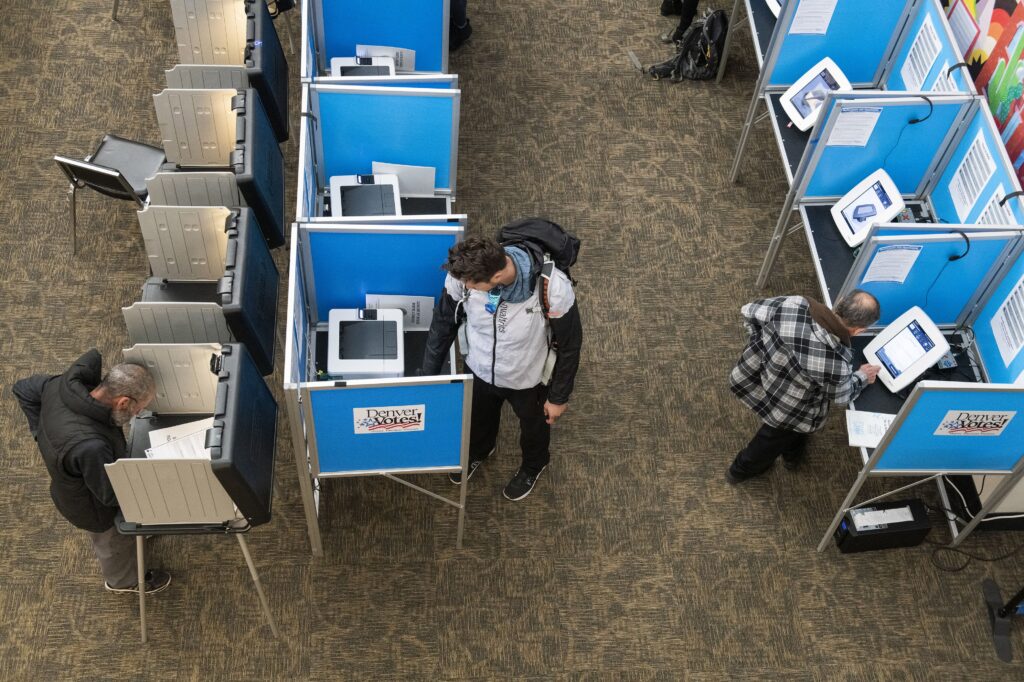
The state body that determines whether a ballot measure contains a single subject has rejected challenges to eight versions of the push to change Colorado’s flat rate to a graduated income tax, thereby increasing the taxes on higher income earners....

Federal judge sanctions Pueblo for destroying evidence in lawsuit
Michael Karlik
michael.karlik@coloradopolitics.com
Updated 14 hours ago
A federal judge imposed sanctions on the city of Pueblo last week after it disposed of a key piece of evidence shortly after the plaintiffs filed suit seeking damages for the destruction of their home. On June 25, 2022, a...
President Pro Tem Sen. Dafna Michaelson Jenet to resign from Colorado Senate
Marianne Goodland
marianne.goodland@coloradopolitics.com
Updated 13 hours ago
A top Democrat in the Colorado General Assembly is resigning to take a new job. President Pro Tem Sen. Dafna Michaelson Jenet of Commerce City, who has served in the General Assembly since 2017, will become the director of the...
House Democrats’ campaign arm adds five GOP seats to target list, including Colorado’s CD5
Rachel Schilke, Washington Examiner
rachel.schilke.washington.examiner@gazetteedit.wpenginepowered.com
Updated 20 hours ago
House Democrats‘ campaign arm is adding five new Republican seats to its target list for the 2026 midterm elections, bringing the total to 44 districts “in play” for the party as it seeks to turn public opinion in its favor...
Republicans look to usher through voter ID legislation for third time with SAVE America Act
Rachel Schilke, Washington Examiner
rachel.schilke.washington.examiner@gazetteedit.wpenginepowered.com
Updated 20 hours ago
A proof of citizenship and voter ID bill is hitting the floor for the third time in the House, granting Republicans another opportunity to push one of its strongest, election-tested messages as the party scrambles to recapture public opinion on...

JBS strike could trip up Greeley’s economic surge
Hap Fry, Special to The Gazette
hap-fry@gazette.com
Updated 14 hours ago
GREELEY – The upward trajectory of Greeley has been hard to match by other Colorado communities in the here and now. The city is on the verge of experiencing dramatic growth and change. Greeley is in the midst of developing a...
Governors won’t hold Trump meeting after White House only invited Republicans
Joey Cappelletti
joey.cappelletti@associatedpress.com
Updated 22 hours ago
WASHINGTON (AP) — The National Governors Association will no longer hold a formal meeting with President Donald Trump when the group of state leaders meet in Washington later this month after the White House planned to invite only Republicans. Colorado...