

Former brewer Hickenlooper weighs grocery store beer, wine sales
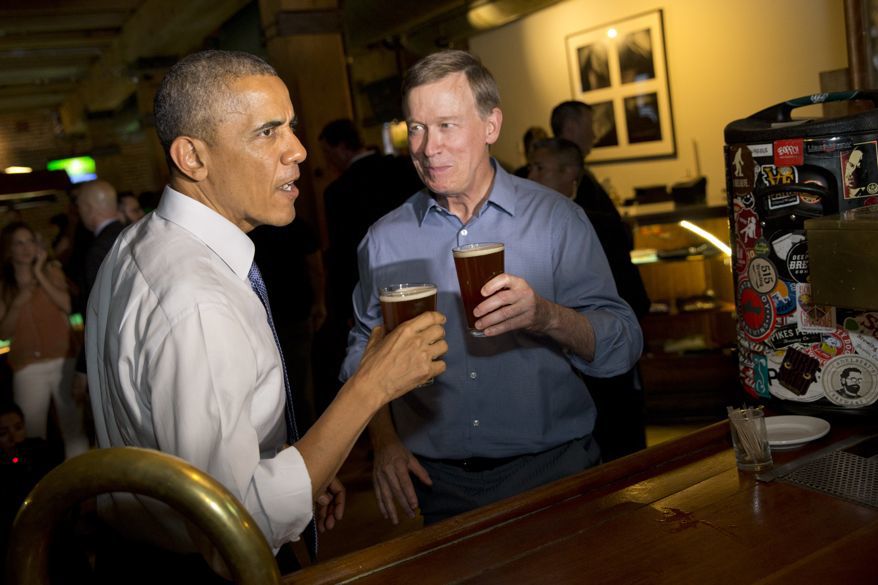
A co-founder of Colorado’s first brewpub, Gov. John Hickenlooper has a tough call to make in this year’s politically-charged alcohol debate. He must decide whether or not to give his executive approval to a bi-partisan bill passed by the legislature that proponents say would protect mom-and-pop liquor stores from having their businesses overrun by out-of-state grocery corporations. Bill proponents believe the legislation would prevent a ballot initiative from being run this year that, if passed by the voters, would allow grocery chain giants like Safeway and King Soopers to sell full-strength wine and beer in their stores.
The governor is meeting Thursday with backers of Senate Bill 197, and has to decide whether to sign the bill into law or veto it before a June 10 deadline. SB197 would allow large, chain grocery stores to each hold up to 20 liquor licenses over the next 20 years and an unlimited number after that, but it also requires grocery stores to buy licenses from any pre-existing, nearby liquor stores.
The bill’s main Senate sponsor, Sen. Pat Steadman, D-Denver, says that last requirement is necessary in order to protect the more than 1,600 liquor stores around the state that for nearly 90 years have been legislatively mandated to stay small, with just one retail liquor license and one store allowed per company or individual.
Your Choice Colorado, a group funded by Kroger (King Soopers, City Market) and Safeway, is gathering signatures for a ballot initiative that, if it passes in November, would allow the grocery chains to sell full-strength beer and wine at an unlimited number of locations next year. The stores can already sell beer with a 3.2-percent alcohol content as opposed to 6-percent-plus beer.
“You have whole families that invested for generations in these businesses and it seems really wrong to just change the rules of the road overnight,” Steadman told The Colorado Statesman. “Senate Bill 197 protects small business owners’ investments in their businesses and gives value to that license. They can sell it to a grocery store wanting to get a license rather than just be put out of business by competition from that grocery store.”
The Colorado Licensed Beverage Association spearheaded Steadman’s compromise bill that allows grocery chains five licenses in 2017, up to 20 by 2037 and an unlimited number after that. But the bill also requires a grocery store looking to acquire a liquor license to buy it from any liquor store within 1,500 feet of their store in the city or 3,000 feet in towns, and if there isn’t a liquor store within that boundary, the grocery store must buy out two other liquor stores.
“A grocery would have to buy out two liquor stores for an uncapped price, and that is simply a nonstarter – grocery stores can’t afford to do that,” Your Choice Colorado spokesman Matt Chandler said of SB197. “It’s actually worse than the status quo. It makes it even more onerous for people who might be looking to start small businesses or expand their small business – breweries, for example – in a whole lot of locations.”
But Steadman says his bill, which passed late in the session with overwhelming bipartisan support in both chambers, will allow plenty of transition time for mom-and-pop shops to either adjust their business models to include food or other specialty items or to simply sell their licenses to the big grocery chains and recoup their investments.
“We’ve legislated for these folks to always be small and vulnerable,” Steadman said, adding he believes the bill has the support of 90 to 95 percent of the state’s liquor stores. “It seems like the Legislature shouldn’t just throw them to the wolves and turn their backs on them now, and that’s what you saw with this legislation and that’s why it passed so handily.”
But Hickenlooper said late last week he’s hearing from many small liquor store owners who want to fight the big grocery chains at the ballot box. Steadman doesn’t see that as a wise move, because even though both he and the governor would prefer to maintain the state’s current liquor laws, Steadman feels change is inevitable.
“Even though most of us supporting this bill prefer to see the law left absolutely alone, there’s a realization that sooner or later something’s going to change in Colorado,” he said. “Grocery stores are going to win at the ballot or enough people will move here from other states that are used to different practices around liquor sales that there’s going to be a demand for change.”
Chandler said the worst thing SB197 does is subvert the will of the people.
“There’s a lot that is flawed with the bill, and one of the most disturbing parts of it is you have the will of the people whose voice is essentially being negated by this piece of legislation,” Chandler said. “We’re confident that we will prevail at the ballot box and feel that Colorado voters should have a voice.”
If SB197 is signed into law, Chandler said future legislatures will have to take corrective action if and when the Your Choice Colorado ballot initiative passes. Plus, he argues it should not be up to legislators and lobbyists to decide how Coloradans purchase their beer and wine.
“I don’t think it’s their right to be able to decide what Coloradans truly want,” Chandler said. “People want to have the convenience to one-stop shop and not have to take their kids in and out of the car twice. They should have the ability to do that if they so choose.”He said his group is rapidly closing in on the 98,000 signatures necessary to put the question on the ballot in November.
“As people learn what SB197 does, or more importantly doesn’t do, we’ve actually seen more people approaching us to sign the petition because they realize that [the bill] doesn’t give them the choices that they want, and it continues the protectionist culture that most other businesses don’t enjoy,” Chandler said.
Tom Mullen owns West Vail Liquor Mart, which is within 3,000 feet of both a City Market and a Safeway store in Vail. The 3,000-foot distance restriction applies to towns with populations of 10,000 or less.
“The reason we support SB197 is that it gives grocery stores an opportunity to enter the market in a scaled and tiered approach,” Mullen said. “Most Coloradans don’t realize that liquor store owners like us are limited to only one license, and the ballot initiative creates a new class of license that excludes us and gives [grocery stores] carte blanche to open as many as they desire, so it’s very lopsided.”
Dennis Leifheit, owner of Antlers Liquor and Wine Seller in Frisco, said the convenience argument is a smokescreen.
“This is a market-share gain ploy, an opportunity,” Leifheit said. “I don’t blame them. If I was running Safeway or City Market and I had to answer to stockholders, I’d be looking for vehicles for revenue growth as well. But it’s a camouflage thing that these guys are interested in consumer convenience, because they’re not.”
Chandler fires back that it really is all about convenience, and therefore Colorado voters ought to be able to decide in November and not be handcuffed by the Legislature.
“The biggest thing is [SB197] simply doesn’t accomplish what people want, and what they want is to be able to buy the Colorado beer and wine they love alongside food, and that’s not something this accomplishes in any real way,” Chandler said.


Colorado Springs mother Deborah Nicholls’ murder conviction overturned
Nick Smith
nick-smith@coloradopolitics.com
Updated 7 hours ago
A Colorado Springs mother convicted in 2008 of murdering her three children in a house fire might get a new trial after a judge ruled that prosecutors withheld key evidence that could have impacted the jury’s verdict. Deborah Nicholls, whose...
Colorado court overturns illegal $7,000 restitution order
Michael Karlik
michael.karlik@coloradopolitics.com
Updated 7 hours ago
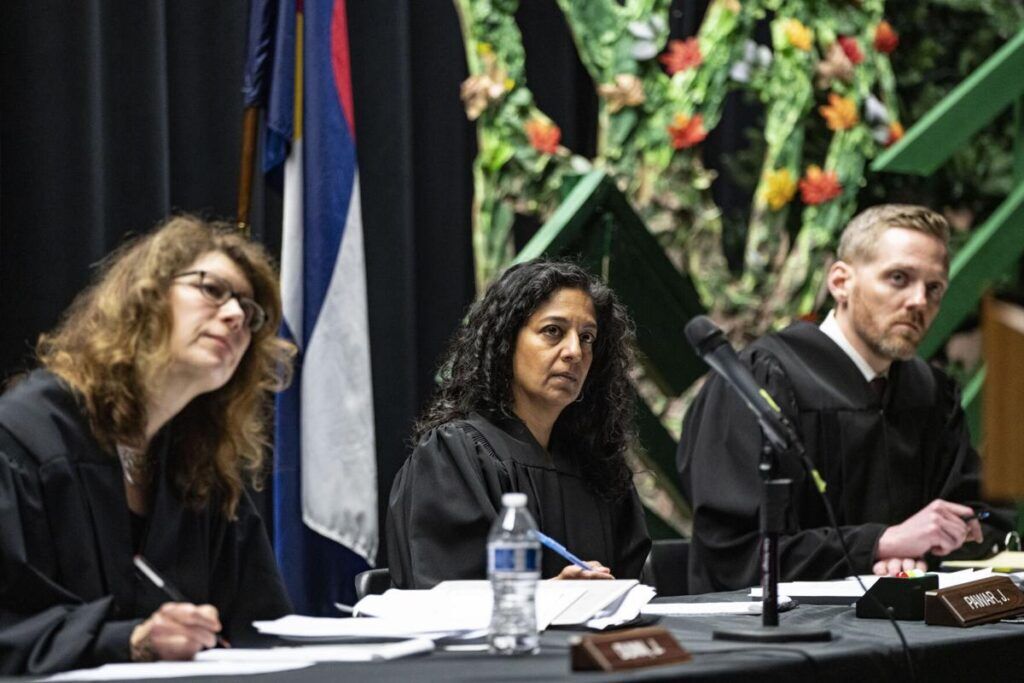
Colorado’s second-highest court overturned a Weld County defendant’s obligation to pay more than $7,000 in crime victim restitution on Thursday because a trial judge failed to issue a legally compliant restitution order at the time of sentencing. In Colorado, as...
Appeals court orders second look at Denver Water’s immunity for cyclist’s injury
Michael Karlik
michael.karlik@coloradopolitics.com
Updated 7 hours ago
Colorado’s second-highest court ordered another look at a bicyclist’s negligence lawsuit against Denver Water on Thursday, concluding that a trial judge needed to evaluate the utility’s potential immunity using the state Supreme Court’s new guidance. Joseph A. “Joey” Scott alleged...

Right-to-natural-gas proposal in Colorado qualifies for ballot
Marissa Ventrelli
marissa.ventrelli@coloradopolitics.com
Updated 9 hours ago
A citizen initiative that seeks to enshrine the right to natural gas has qualified for the November ballot, Colorado’s election office confirmed on Thursday. Petitions containing signatures for Initiative No. 177 were turned in to the Secretary of State’s Office for review...
Labels, duration not definitive proof of ‘intimate relationship,’ Colorado court rules in domestic violence case
Michael Karlik
michael.karlik@coloradopolitics.com
Updated 7 hours ago
Colorado’s second-highest court clarified on Thursday that the length of a couple’s relationship and the labels they attach to it are not conclusive evidence of whether it is an “intimate relationship” that can give rise to a domestic violence prosecution....
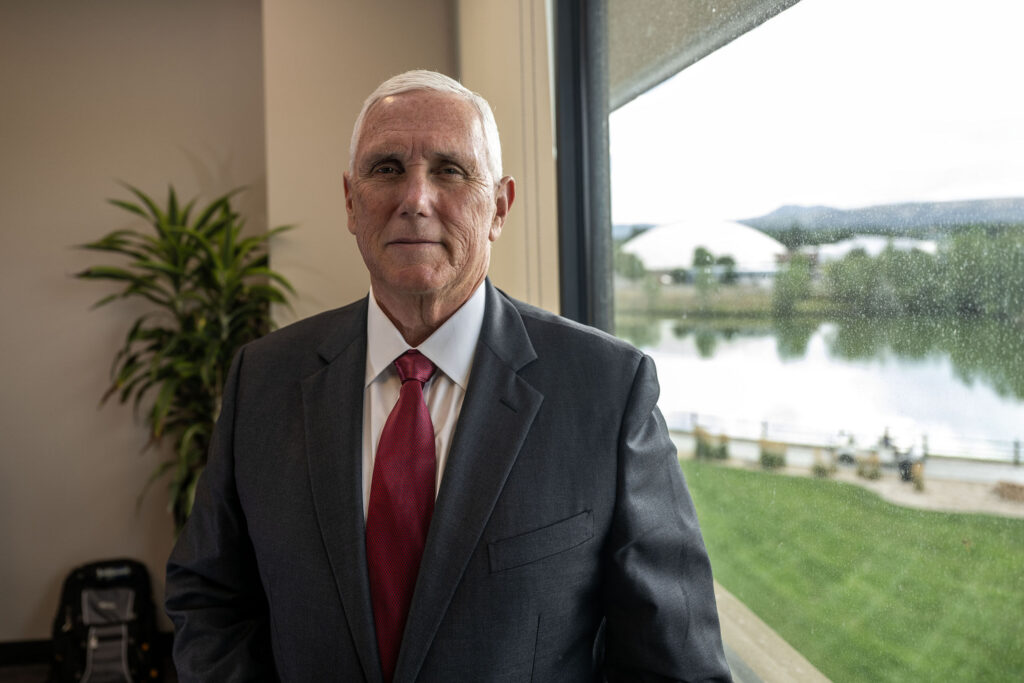
Former VP Mike Pence joining Colorado Christian University faculty
Marissa Ventrelli
marissa.ventrelli@coloradopolitics.com
Updated 9 hours ago
Former Vice President Mike Pence has been hired as a visiting faculty member at Colorado Christian University, the Lakewood-based private evangelical university announced Tuesday. Pence will be on campus about once a month during the 2026-2027 school year to give...
White House launches Fraud.gov to track fraud cases
Adisa Hargett-Robinson
adisa.hargett-robinson@washingtonexaminer.com
Updated 16 hours ago
The White House launched Fraud.gov on Thursday, a website tracking the administration’s crackdown on fraud across federal agencies. According to the White House, the website serves as a public dashboard that highlights investigations, criminal charges, funding suspensions, recoveries, and enforcement...

Democrats from opposite sides of the party all rally behind a ‘big tent’
Rena Rowe
rena.rowe@washingtonexaminer.com
Updated 16 hours ago
Since their losses in the 2024 election, Democrats have struggled to settle on a clear message ahead of the 2026 midterm elections. As the party fights to reclaim control of Congress, primaries in New York, Michigan, and Colorado have exposed...

Emerald ash borer confirmed in Colorado Springs, ‘pest is here to stay’
Brennen Kauffman
brennen-kauffman@coloradopolitics.com
Updated 18 hours ago
Colorado Springs is asking residents to be on the lookout for an invasive beetle species that has jumped down the Front Range and into local ash trees. City officials said Wednesday that a confirmed emerald ash borer infestation had been...
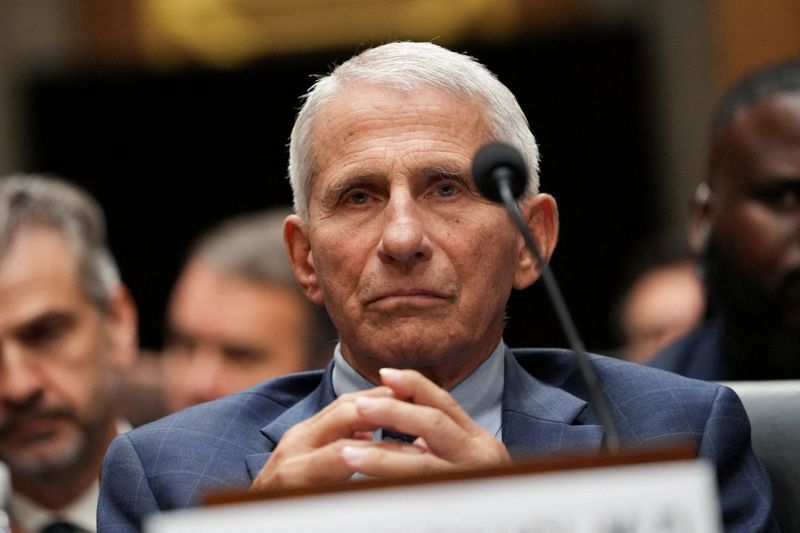
US Senate panel votes to hold Fauci in contempt of Congress
Reuters
reuters@gazette.com
Updated 12 hours ago
By Ahmed Aboulenein WASHINGTON, Aug 6 (Reuters) – A U.S. Senate committee voted on Thursday to hold Dr. Anthony Fauci in contempt of Congress after the former top U.S. infectious disease official refused to answer questions about his handling of...
PREV
PREVIOUS

Rivals rip Keyser over ‘lifelong Republican’ claim
Republican U.S. Senate candidate Jon Keyser’s primary opponents on Wednesday tore into the former state lawmaker – some more gently than others – after it emerged that Keyser had changed his voter registration to unaffiliated for two years despite boasting that he was “a lifelong Republican” at a recent debate. Keyser made the claim in […]

John Hickenlooper comes of age
In his new autobiography, the bumbler, wanderer, pub owner, mayor and governor has delivered an only incidentally political ‘call to action for nerds’ John Hickenlooper’s autobiography is optimistic, sincere and uplifting. It is also only incidentally about politics, which seems to capture something essential about its subject. Hickenlooper is the former Mayor of Denver […]