

Keyser turns in petitions for GOP Senate primary

Former state Rep. Jon Keyser, R-Morrison, on Thursday afternoon became the second Republican U.S. Senate candidate to submit petitions to the secretary of state’s office in hopes of winning a spot on the June primary ballot.
“Our campaign is dedicated to uniting a new generation of conservative activists with those who have been fighting on behalf of conservative causes for decades, and that’s exactly what we’ve done through the petition process,” said Keyser in a statement.
Keyser is one of 13 Republican candidates vying for the chance to run against incumbent Michael Bennet, the only Senate Democrat up for reelection in a swing state this fall.
Fort Collins businessman Jack Graham, a former athletic director for Colorado State University, submitted his petitions on Monday, a week ahead of the April 4 deadline.
Two other GOP candidates — Colorado Springs businessman Robert Blaha and former Aurora Councilman Ryan Frazier — are seeking the primary ballot by petition.
In order to make the June 28 primary ballot, GOP candidates for statewide office have to gather at least 1,500 valid signatures from Republicans in each of the state’s seven congressional districts, or 10,500 signatures total.
Another nine announced GOP candidates are pursing the ballot at the April 9 Republican state assembly in Colorado Springs, where it’ll take the votes of more than 30 percent of delegates to advance to the primary. They include: state Sen. Tim Neville, R-Littleton, El Paso County Commissioners Darryl Glenn and Peg Littleton, Lakewood businessman Jerry Natividad, Jefferson County Commissioner Don Rosier, Air Force veteran Charlie Ehler, and activists Jerry Eller, Tom Janich and Michael Kinlaw.
A spokeswoman for the Blaha campaign declined to comment on the Keyser petitions, and the Frazier campaign didn’t immediately respond to a request for comment.
It could be weeks before state election officials rule whether Keyser or Graham’s petition signatures are sufficient, but turning petitions in ahead of other candidates for the same office can make a big difference whether a candidate makes the ballot, officials point out.
A voter’s signature can only count for one candidate for the same office. If a voter has signed more than one petition for a particular office, the secretary of state’s office determines which candidate gets to count that voter’s signature based on who turned in petitions first. Effectively, in the case of the GOP Senate candidates, any Republican who has signed Graham’s petition can’t be counted on a Keyser petition, and all the Republicans who have signed Graham and Keyser’s petitions won’t be able to be counted for Blaha or Frazier’s. To make it more vexing, candidates who turn in their petitions later don’t know which of their signatures won’t count because they’ve already been used by a candidate whose petitions made it to the office earlier.

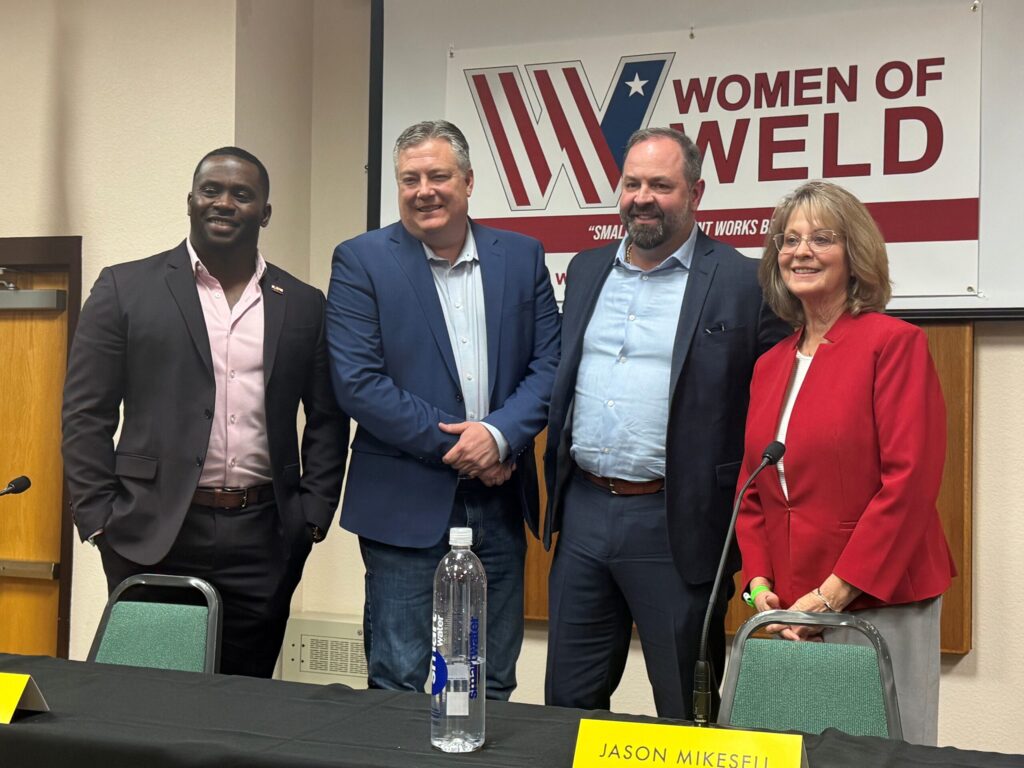
Republican candidates debate how to win the governor’s seat in Colorado — a position the GOP last secured in 2002
Thelma Grimes
thelma.grimes@coloradopolitics.com
Updated 7 hours ago
Colorado has not elected a Republican governor since 2002. On Thursday night, four candidates offered competing visions for how the party can reverse its 20-plus years of failing to secure the seat. The discussion hosted by the Women of Weld...

Colorado’s charitable gaming board to study Denver Gazette’s findings
David Migoya
david.migoya@gazette.com
Updated 8 hours ago
Colorado’s freshman board overseeing the state’s $110 million charitable gaming industry on Friday created a committee to tackle issues raised in a Denver Gazette investigation that exposed, among other issues, poor supervision and illegal operators. The Colorado Charitable Gaming Board,...
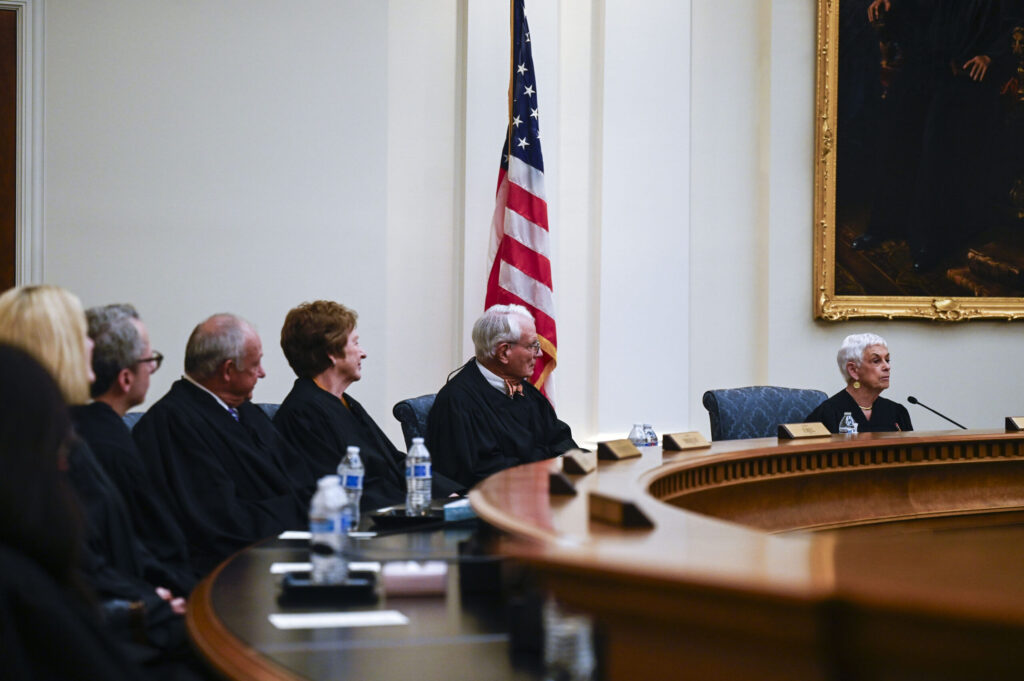
10th Circuit to address resentencing of probation violators in rare all-judges hearing
Michael Karlik
michael.karlik@coloradopolitics.com
Updated 11 hours ago
The Denver-based federal appeals court agreed on Thursday to hold a rare all-judges hearing to determine the proper procedure for resentencing a criminal defendant who has violated the terms of his probation. In the federal appellate courts, the vast majority...

Vape shops challenge Denver’s flavored tobacco ban in court
Deborah Grigsby
deborah.smith@denvergazette.com
Updated 9 hours ago
The smoke has yet to settle in the battle over the city’s flavored tobacco ban as local vape shop owners have sued the City and County of Denver, asking the court to declare the ordinance unconstitutional and stop its enforcement....

US officially leaves the World Health Organization
Washington Examiner Staff, Washington Examiner
washington.examiner.staff.washington.examiner@gazetteedit.wpenginepowered.com
Updated 14 hours ago
The United States officially withdrew from the World Health Organization on Thursday, slightly over a year after President Donald Trump announced his intention to withdraw the U.S. from the WHO via an executive order on the first day of his...

Report: Colorado government has grown beyond TABOR’s limits
Marissa Ventrelli
marissa.ventrelli@coloradopolitics.com
Updated 6 hours ago
Colorado’s government has grown substantially over the past three decades beyond the limits that voters approved to restrain that expansion, according to a new report from a think tank. The analysis from the Independence Institute, which examines state spending, revenue...
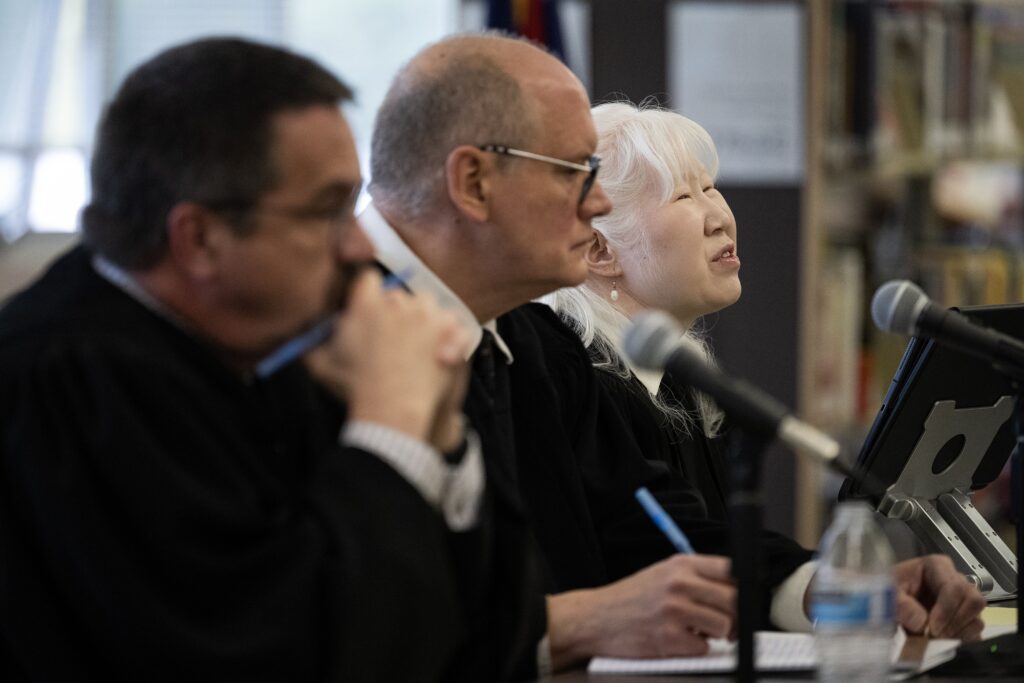
Appeals court overturns Adams County sex offense convictions due to prosecutor’s misconduct
Michael Karlik
michael.karlik@coloradopolitics.com
Updated 15 hours ago
Colorado’s second-highest court reversed multiple child sex assault convictions on Thursday after concluding an Adams County prosecutor committed misconduct while cross-examining the defendant. A three-judge Court of Appeals panel observed the charges against Daniel Michael Boerner depended on the jury...

ACA enrollment in Colorado sees slight dip amid rising costs
Nico Brambila
nico.brambila@denvergazette.com
Updated 8 hours ago
Despite handwringing over enhanced federal subsidies going away for many Coloradans enrolled in health insurance on the state’s marketplace, officials reported Friday just a 2% enrollment dip. More than 277,000 Coloradans enrolled in health insurance through the Affordable Care Act...
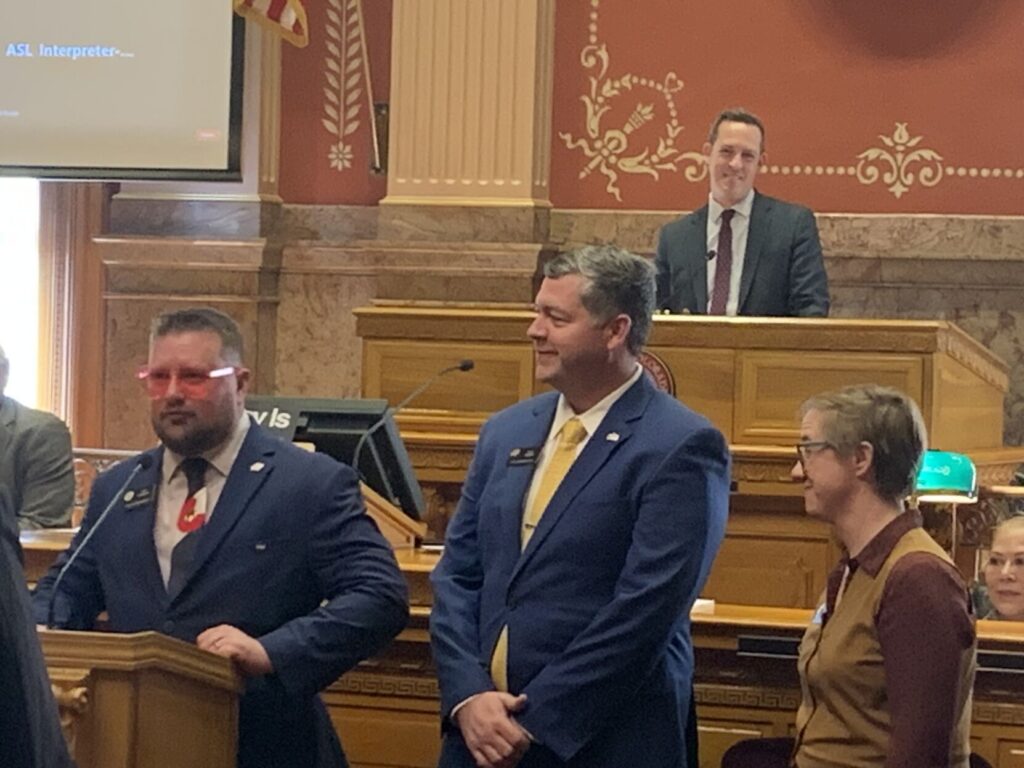
Rep. Ron Weinberg won’t seek reelection
Marianne Goodland
marianne.goodland@coloradopolitics.com
Updated 1 day ago
Republican Rep. Ron Weinberg of Loveland announced on Thursday evening that he will not seek another term in the Colorado House. “Serving this community has been one of the greatest honors of my life,” the two-term state representative said on...

Colorado title board OKs ballot measures to eliminate flat income tax in favor of graduated brackets
Marianne Goodland
marianne.goodland@coloradopolitics.com
Updated 7 hours ago
Proponents hoping to change Colorado’s income tax structure from a flat rate to graduated tiers — thereby raising taxes for some brackets — walked away from a Wednesday meeting with eight ballot measures approved by the title board. The coalition...
PREV
PREVIOUS

Battle to 'defund' Clean Power Plan launches House budget debate
The first skirmish in the war over the state’s budget Thursday centered on coal and clean air and featured the “defund” politics conservatives have embraced in the Obama era. Rep. Bob Rankin, R-Carbondale, a member of the Joint Budget Committee, proposed two amendments that would cut funding for the state’s Department of Public Health and […]

First draft: House debate on state budget ‘long bill’
House Dems with Republican support pass state budget The House passed the state budget Friday morning. The $27 billion spending bill written over the course of months by the bipartisan Joint Budget Committee survived House debate mostly intact. House Bill 1405 passed on a 39-26 vote. Five Republicans — Reps. J. Paul Brown, R-Ignacio, Don […]