

First draft: House debate on state budget ‘long bill’

House Dems with Republican support pass state budget
The House passed the state budget Friday morning. The $27 billion spending bill written over the course of months by the bipartisan Joint Budget Committee survived House debate mostly intact.
House Bill 1405 passed on a 39-26 vote. Five Republicans — Reps. J. Paul Brown, R-Ignacio, Don Coram, R-Montrose, Kit Roupe, R-Colorado Springs, and Dan Thurlow, R-Grand Junction, joined Joint Budget Committee member Bob Rankin, R-Carbondale — in voting to send the budget on to the Senate for consideration.
Minority Leader Brian DelGrosso, R-Loveland, thanked the members of the budget committee for their work, but then explained why he would be voting against the bill.
“There’s a lot of good stuff in this budget, and I think they did a lot better job than I thought they were ever going to do. … Overall some good things in this budget — but still think there’s some things we could have done better,” DelGrosso said. “I think this budget allows for the expansion and starting of new projects before taking care of our current obligations.”
Rankin rallied his Republican colleagues to vote for the budget.
“I’ll be in Grand Junction at 8:30 in the morning,” he said. “And I’m already thinking about what I want to tell them. And I want you to think about what you want to tell your voters — the people who voted for you and the people who didn’t. Do you want to say we got together and balanced our priorities and came up with a darn good budget for the year?
“We pulled off some miracles, really, to keep that $150 million in new funding in transportation, $159 million in new funding for education,” he continued. “Do you want to tell them we’re able to work together? Or do you want to tell them you’re grumbling because you couldn’t move $300 million in new programs to transportation. What do you want to say when you stand up in front of the people in Colorado and tell them about this budget?”
— john@coloradostatesman.com— ramsey@coloradostatesman.com
House overturns Salazar amendment that would have forced the governor’s office to pay for more oil and gas inspectors
It was a bold proposal punctuated with an entertaining victory shuffle but, in the end, it was only a short-lived victory.
During debate on the state budget long bill Thursday, Rep Joe Salazar, D-Thornton, introduced an amendment that would have moved $370,231 out of the Governor’s Office budget and transferred it to the state Oil and Gas Conservation Commission to pay for 4.4 full-time new drill-site inspectors.
The amendment drew great opposition, but it passed on a voice vote — at least according to Rep. Mike Foote, D-Lafayette, who was acting as House Chair at the time. That Foote called the amendment passed shocked lawmakers and spurred Salazar to do what he referred to as a “north side sashay” past the press table.
Gov. John Hickenlooper, a former oil-industry geologist, has drawn heat from his fellow Democrats in the state for what they see as his outsized support for the oil and gas industry.
“I’m not trying to pick a fight with the governor’s office,” Salazar said. “But I am trying to get the governor’s attention. In my district, my constituents are upset that every time we try to do something related to protecting the environment and protecting their homes from drilling, we have the governor’s office undercutting us — that’s what (my constituents) are feeling.”
Late in the day, Reps. Paul Rosenthal, D-Denver, and Lori Saine, R-Firestone, proposed an amendment to overturn Salazar’s amendment and it passed on a 62 to 3 vote.
— john@coloradostatesman.com— ramsey@coloradostatesman.com
State youth sex and drugs lifestyle survey survives first-round budget debate
Conservative lawmakers have long opposed what they say is the overreaching and intrusive Healthy Kids Colorado Survey, a state sex-and-drugs questionnaire that supporters say provides invaluable anonymous data. Republicans tried and failed to cut funding for the survey during budget debate Thursday.
It’s a battle sure to be taken up by Republican senators when the budget long bill moves to the upper chamber in the coming days.
Reps. Patrick Neville, R-Castle Rock, and Kim Ransom, R-Lone Tree, introduced an amendment to strip the $745,124 in funding from the Marijuana Tax Cash Fund that pays for the survey. The lawmakers said they saw the questionnaire as an invasion into the private lives of students and they lamented the fact that the survey is administered without parental consent.
“(Look at the survey) and see if you would be comfortable answering these questions,” Ransom said. “I would not and I hope that all of you have a sense of privacy that you wouldn’t want to answer those questions either. And if you wouldn’t, then why should we expect students (to answer the questions)?”
The survey includes questions on sex and contraception, on firearm ownership , on drug use. The data is submitted anonymously and used to identify youth lifestyle trends across the state.
“If we don’t know what drugs kids are using, what drugs kids are preferring to use, how can we create better drug programs?” said Rep. Jonathan Singer, D-Longmont. “How do we direct the proper money to the proper place?”
“There are our kids,” said Rep. JoAnn Windholz, R-Commerce City, arguing against the survey. “These are the children we’ve raised in a good home and we believe that privacy is very important.”
— john@coloradostatesman.com— ramsey@coloradostatesman.com
Lauded teen contraceptive program survives attempted GOP budget cut
Republicans tried and failed to cut $2.5 million from the state budget for family planning in the state’s Public Health and Environment budget. Majority party Democrats voted it down.
The amendment to the budget “long bill,” House Bill 1405, offered by Reps. Patrick Neville, R-Castle Rock, and Kim Ransom, R-Lone Tree, effectively sought to eliminate a birth control program touted by supporters for successfully reducing the teen pregnancy rate in the state. Opponents of the program who supported the amendment to eliminate it said the services it provides are duplicated by other programs and that it removes parents from the decision-making process on vital questions tied to sex and reproduction.
“This is obviously another layer of duplication, and there’s a lot of money there, $2.5 million, and we ask that it be reduced or pulled out,” Ransom said, listing off alternative avenues through which teens can gain access to birth control, including insurance policies provided through the Affordable Care Act that now mandatorily include birth control .
“The thing I find most egregious with this program is there is no requirement for parental consent,” Neville said. “I just don’t think we should be funding programs that … take away parental consent.”
Reps. Faith Winter, D-Westminster, and Daneya Esgar, D-Pueblo, argued against the cut, pointing to the way teen pregnancy rates have dropped in places like Pueblo.
“This program showed tremendous success in Pueblo County. We saw a reduction of 40 percent for teenage pregnancies,” Esgar said. “It changed the cycle of teenage pregnancy and it changed the cycle of poverty.”
— john@coloradostatesman.com— ramsey@coloradostatesman.com
Dems dispatch Neville fetal tissue amendment House clerks read out sections of the long bill aloud during debate on March 31. (Photo by Ramsey Scott/The Colorado Statesman) Games? You want to play games? At the Legislature, nothing says “take that” like rolling out a request to force the chamber clerk to read aloud a 581-page bill in its entirety. Rep. Patrick Neville, R-Castle Rock, moved to insert a footnote into the budget for the state’s Department of Higher Education Boards that would ban any funding for activities related to the sale of fetal tissue. Neville was taking up the fight being waged by Republican lawmakers across the country against Planned Parenthood after sting video released last summer suggested the organization was engaged in illegal tissue sales. The video has been discredited by many investigators and dismissed by the mainstream media, but pro-life conservatives are convinced wrongdoing has been covered up. And in Colorado, research being done at Colorado State University has been implicated in the story. House Democratic leaders objected to the Neville amendment. They called for review and the amendment was ruled outside the subject of the bill. Neville reddened and approached the dais to exact revenge. He requested that the “long bill” be read in full. “The previous amendment (that passed) didn’t have the magic language they’re requesting in mine,” he told reporters. “If they’re going to play games, I’m going to play games. I’m not going to let them get away with taking too much authority over the chair. It’s unprecedented.” Majority Leader Crisanta Duran, D-Denver, said Democrats weren’t playing games. She said Neville’s footnote was trying to make a substantial change to law and, to do that, you have to run a bill and put it through all the usual legislative hoops. “There is clear-case law,” Duran said. “We’re not playing games, we’re here to do the people’s business. We’re here to try and pass a budget that makes the needed investments.” The House reading clerk, Kory Kolar, launched into the bill, letting out a stream of words, holding the bill like a phone book in his hand and turning pages. Lawmakers were aghast, revising estimates of how late debate would run into the night. But Kolar got help. The whole team of House clerks lined up behind him, divvied up sections of the bill between them and began reading them all aloud at once. After about 15 minutes, Neville pulled his request. — john@coloradostatesman.com — ramsey@coloradostatesman.com Dems join Republicans in vote to force Colorado Correctional Industries to pay rent for office space in prisons
**Update:Late Thursday, Rep. Daniel Kagan, D-Cherry Hills Village, proposed an amendment to the Committee of the Whole, passed on a 36 to 29 vote, that overturned an earlier vote to force Colorado Correctional Industries to pay rent for office space in prisons.**
Only four amendments into the all-day-and-into-the-night budget debate, the Democratic majority split, giving Republicans a win.
Rep. Jon Becker, R-Fort Morgan, proposed an amendment to collect rent from Colorado Correctional Industries for space in state prisons. Eight Democrats backed the proposal.
“These are the state’s taxpayer dollars, no matter how they slice it,” Becker argued. “Should (those dollars) not go to help fund things inside the state?”
Reps. Joe Salazar, D-Thornton, and Jovan Melton, D-Denver, urged their Democratic colleagues to support the amendment. They argued that the state is subsidizing a private industry, giving it an advantage in the markets for the goods it produces — products such as office furniture, flags, signs. “Why are we giving them free rent?” Salazar said.
“(CCI)’s website has a business model. They are very clearly a business organization and they’re there for profit,” Salazar continued. “Well, I own an law firm and I don’t get free rent. If you own a business, I’m sure you’re not getting free mortgage or rent, and you’re still trying to make a profit.”
Rep. Daniel Kagan, D-Cherry Hills Village, made no secret of the fact he thought the amendment was absurd.
“We’re talking about asking a private business to rent for office space in a prison,” he said.
Rep. Paul Rosenthal, D-Denver, said lawmakers supporting the amendment were looking all wrong at the service provided by CCI. He said the company was helping rehabilitate the prisoners and prepare for life in the workforce beyond prison walls.
But others saw it partly as a labor issue.
Melton shook his head at one point. “They pay the prisoners 29 cents an hour,” he said.
“Yeah, they should pay them more,” Rosenthal called out.
— john@coloradostatesman.com— ramsey@coloradostatesman.com
Republicans seek to move workforce development funds to education
Rep. J. Paul Brown, R-Ignacio, submited two amendments to the “long bill” (HB 1405) that would shift funding from workforce development — a bipartisan priority that has given rise to a suit of bipartisan bills this year — to pay down the so-called negative factor that represents funding cut from schools above the constitutional base amount per pupil that must be paid.
The proposal failed but it gave Republicans an opening to call Democratic leadership budget priorities into question.
Minority Leader Brian DelGrosso, R-Loveland, said Democrats should declare their priorities and that they could start by deciding to fund education by supporting the Brown amendment.
“What Rep. Brown is saying is your earmarks are not more important than education. We need to make a clear decision, the earmarks in the budget are a higher priority than kids,” DelGrosso said. “I hate to throw my Senate (Republican) colleagues under bus, but just because they are on the (workforce) bill, doesn’t mean it’s a good bill. … These (workforce) programs haven’t started, so we don’t know if they even work.”
Rep. Max Tyler, D-Lakewood, said it didn’t make sense to cut workforce development programs, especially when lawmakers have been voicing concern over job loss in rural parts of the state, including in Western Slope coal mining, a topic of the lengthy back-and-forth that launched budget debate this morning.

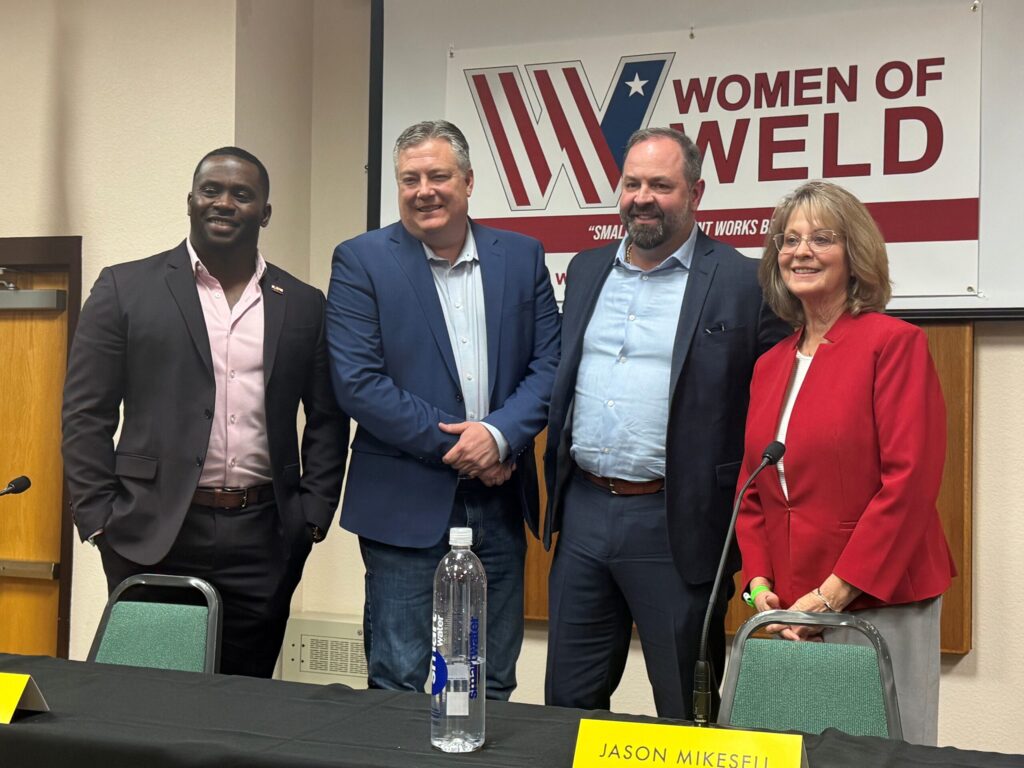
Republican candidates debate how to win the governor’s seat in Colorado — a position the GOP last secured in 2002
Thelma Grimes
thelma.grimes@coloradopolitics.com
Updated 9 hours ago
Colorado has not elected a Republican governor since 2002. On Thursday night, four candidates offered competing visions for how the party can reverse its 20-plus years of failing to secure the seat. The discussion hosted by the Women of Weld...

Colorado’s charitable gaming board to study Denver Gazette’s findings
David Migoya
david.migoya@gazette.com
Updated 10 hours ago
Colorado’s freshman board overseeing the state’s $110 million charitable gaming industry on Friday created a committee to tackle issues raised in a Denver Gazette investigation that exposed, among other issues, poor supervision and illegal operators. The Colorado Charitable Gaming Board,...
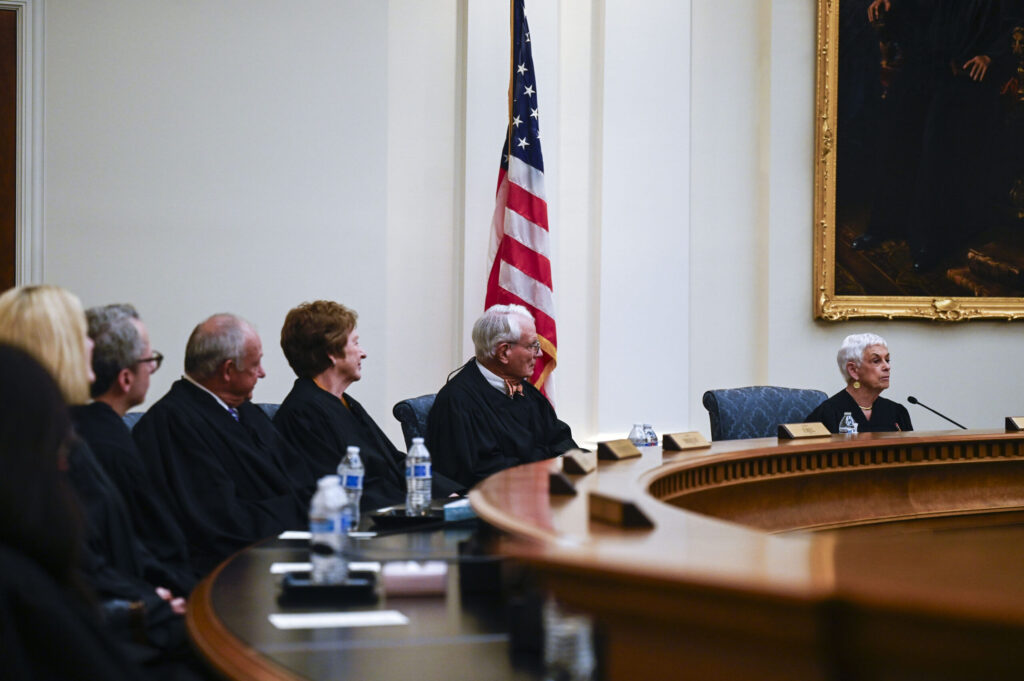
10th Circuit to address resentencing of probation violators in rare all-judges hearing
Michael Karlik
michael.karlik@coloradopolitics.com
Updated 13 hours ago
The Denver-based federal appeals court agreed on Thursday to hold a rare all-judges hearing to determine the proper procedure for resentencing a criminal defendant who has violated the terms of his probation. In the federal appellate courts, the vast majority...

Vape shops challenge Denver’s flavored tobacco ban in court
Deborah Grigsby
deborah.smith@denvergazette.com
Updated 10 hours ago
The smoke has yet to settle in the battle over the city’s flavored tobacco ban as local vape shop owners have sued the City and County of Denver, asking the court to declare the ordinance unconstitutional and stop its enforcement....

US officially leaves the World Health Organization
Washington Examiner Staff, Washington Examiner
washington.examiner.staff.washington.examiner@gazetteedit.wpenginepowered.com
Updated 16 hours ago
The United States officially withdrew from the World Health Organization on Thursday, slightly over a year after President Donald Trump announced his intention to withdraw the U.S. from the WHO via an executive order on the first day of his...

Report: Colorado government has grown beyond TABOR’s limits
Marissa Ventrelli
marissa.ventrelli@coloradopolitics.com
Updated 8 hours ago
Colorado’s government has grown substantially over the past three decades beyond the limits that voters approved to restrain that expansion, according to a new report from a think tank. The analysis from the Independence Institute, which examines state spending, revenue...
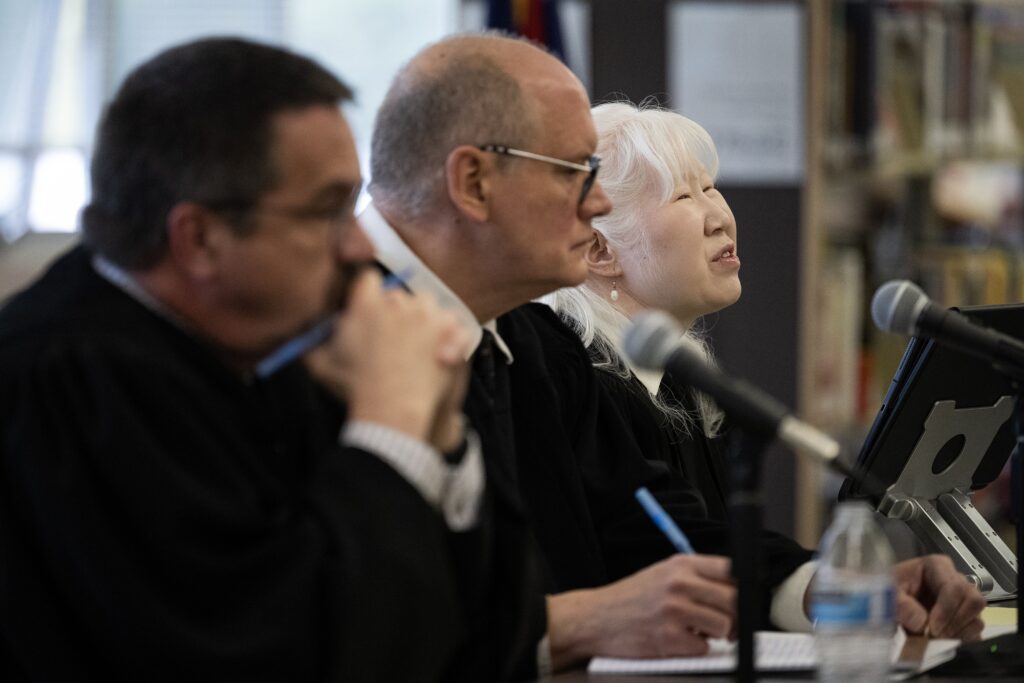
Appeals court overturns Adams County sex offense convictions due to prosecutor’s misconduct
Michael Karlik
michael.karlik@coloradopolitics.com
Updated 17 hours ago
Colorado’s second-highest court reversed multiple child sex assault convictions on Thursday after concluding an Adams County prosecutor committed misconduct while cross-examining the defendant. A three-judge Court of Appeals panel observed the charges against Daniel Michael Boerner depended on the jury...

ACA enrollment in Colorado sees slight dip amid rising costs
Nico Brambila
nico.brambila@denvergazette.com
Updated 9 hours ago
Despite handwringing over enhanced federal subsidies going away for many Coloradans enrolled in health insurance on the state’s marketplace, officials reported Friday just a 2% enrollment dip. More than 277,000 Coloradans enrolled in health insurance through the Affordable Care Act...
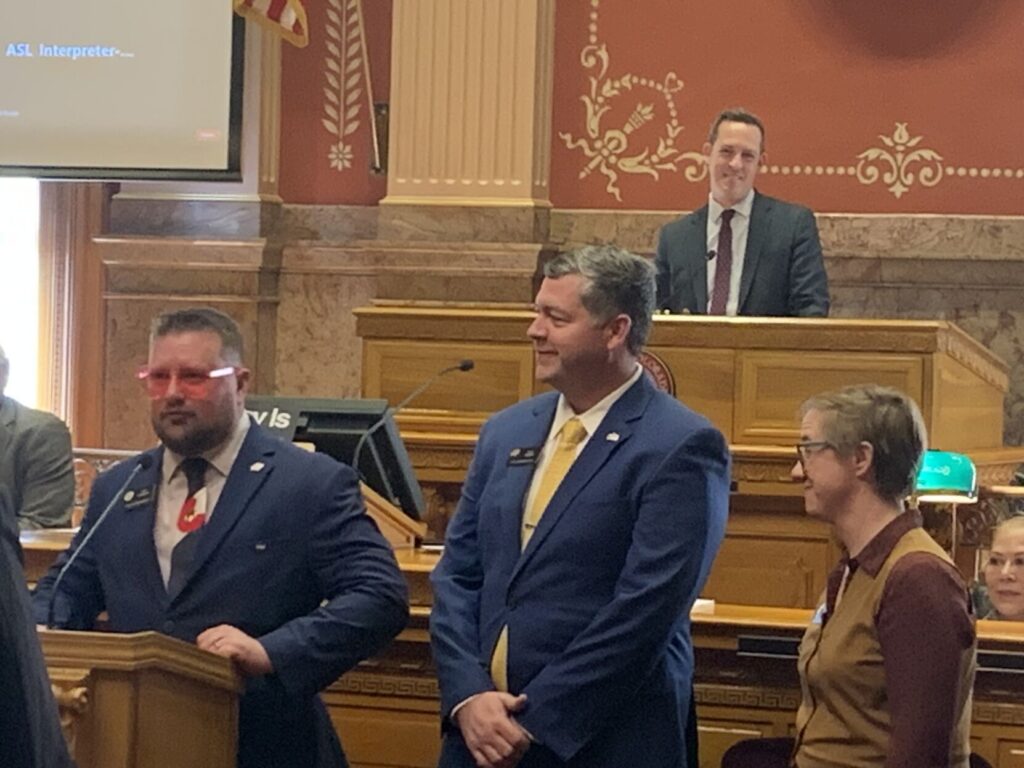
Rep. Ron Weinberg won’t seek reelection
Marianne Goodland
marianne.goodland@coloradopolitics.com
Updated 1 day ago
Republican Rep. Ron Weinberg of Loveland announced on Thursday evening that he will not seek another term in the Colorado House. “Serving this community has been one of the greatest honors of my life,” the two-term state representative said on...

Colorado title board OKs ballot measures to eliminate flat income tax in favor of graduated brackets
Marianne Goodland
marianne.goodland@coloradopolitics.com
Updated 9 hours ago
Proponents hoping to change Colorado’s income tax structure from a flat rate to graduated tiers — thereby raising taxes for some brackets — walked away from a Wednesday meeting with eight ballot measures approved by the title board. The coalition...
PREV
PREVIOUS

Keyser turns in petitions for GOP Senate primary
Former state Rep. Jon Keyser, R-Morrison, on Thursday afternoon became the second Republican U.S. Senate candidate to submit petitions to the secretary of state’s office in hopes of winning a spot on the June primary ballot. “Our campaign is dedicated to uniting a new generation of conservative activists with those who have been fighting on […]

Two Democrats help kill House oil and gas bill
Democrats at the Legislature who represent some of the Front Range suburban communities at the center of the war over oil and gas drilling in Colorado are continuing to push proposals that would grant local authorities more power over drilling operations. Their efforts are winning headlines and generating social media fireworks even as they are […]