

He said, she said, they said: At legislative session halfway mark, gridlock reigns on big issues
The sound and fury about gridlock that has marked news-release language and news-conference presentations over the last two weeks may come to nothing at the Capitol — which isn’t to say it won’t make for effective election-campaign fodder this fall.
Colorado lawmakers now well into the second half of this year’s legislative session are expressing exasperation over the stalemates that have stymied efforts on both sides of the aisle to strengthen big-ticket education and transportation programs.
Republicans and Democrats are pointing fingers and throwing up hands. They see different problems and they’re pushing different solutions.
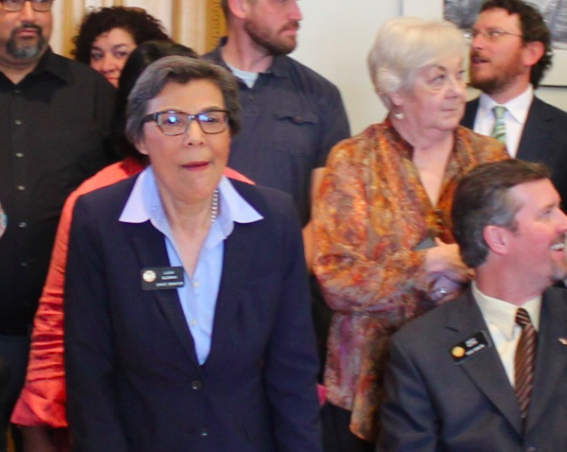
“We’re the minority party. We have a voice but not the vote,” said Senate Minority Leader Lucia Guzman, D-Denver. She was speaking Tuesday at a meeting with reporters that seemed more like a campaign event. Her office was filled with a small crowd of Coloradans who have testified in support of Democratic bills that have been defeated this year in Republican-controlled Senate committees.
Guzman said Republicans have voted against bills designed to protect and further “the Colorado way of life.” She mentioned bills that would have advanced environmental safeguards, secured gender-based equal pay for equal work, established full-day kindergarten and shored up crumbling roads and bridges.
“Senate Republicans are on the clock,” she said. “We’re not going to give up. These people here today with us care about making a level playing field.”
To help make the point, the Democratic caucus posted a Senate Republicans countdown clock on the Web. At press time, it reads 50 days, 5 hours, 50 minutes and 41 seconds.
Senate Democrats assembled for the event lamented an estimated budget shortfall this year of $190 million and again pushed a proposal to reclassify the state’s hospital provider fee, a move that would allow the state to keep hundreds of millions of dollars in new revenue and spend it on state programs starved of funds during the recession.
Senate Republicans reading Twitter reports from the press conference dismissed the arguments as politically motivated hyperbole.
In a press conference last week, Senate President Bill Cadman, R-Colorado Springs, said state budget writers have already come close to matching this year’s spending to the projected revenue shortfall.
“The sky isn’t falling,” he said. “The numbers actually look pretty good. The reality is, now that we’ve had some adjustments, we’re in a place where we’re within $64 million of being budget neutral. That’s pretty close to on the mark.”
Cadman has strongly opposed the hospital provider fee change as a stop-gap move that doesn’t address larger budget problems. He says the state is spending way too much money on health care in general and Medicaid in particular.
“There is $141 million more than ever before going into health and human services,” he said, adding that he believes that’s the reason there is so little money for roads and schools and it’s why the hospital provider fee change will not fix the problem. “The money will go to a program (Medicaid) that’s bankrupting every state. We know that,” he said.
Republicans on Tuesday said they have yet to see any compromise from Democrats that would make the hospital provider fee proposal more attractive.
Earlier this month, House Speaker Dickey Lee Hullinghorst, D-Gunbarrel, said she was still hopeful some agreement could be reached on the hospital fee — but the areas of potential give-and-take she mentioned at the time seem now to have all but vanished.
She said that a hospital fee bill could, in effect, earmark any retained revenue for education and transportation projects. Republicans don’t believe it’s possible to earmark the money. They say that, in effect, any extra revenue has already been spent in Medicaid payments.
Hullinghorst mentioned that she was “open to talking about partial refunds” for taxpayers. But, with new budget numbers coming in, it looks as though there will be no refunds for taxpayers at all.
Indeed, Senate Democrats on Tuesday said they came to the press conference with no compromise offer with which to win over Republicans. They said only that they hoped President Cadman would allow a hospital fee bill to be debated on the floor of the Senate, where the amendment process and full debate could run its course.
“That’s how we do things,” said Guzman. She meant that’s how they should do things, theoretically. But that’s not how things often go.
What the leaders of the party in power do — the Democrats in the state House and the Republicans in the state Senate — is send bills they oppose to a kill committee to disappear so that lawmakers don’t have to debate them on the chamber floors and so are relieved of worry about video of unflattering debate performances appearing in election campaign commercials.

Colorado House advances bill to ban pet stores from selling dogs as cats, as opponents warn of black market surge
Marissa Ventrelli
marissa.ventrelli@coloradopolitics.com
Updated 2 hours ago
Colorado lawmakers advanced legislation Monday that would prohibit pet stores from selling dogs and cats sourced from large-scale commercial breeders, a move sponsors say will shut down the “puppy mill pipeline.” Critics, however, warn that the bill will instead push...
Judge declines to remove prosecutors from Tyler Robinson murder trial
Jack Birle, Washington Examiner
jack.birle.washington.examiner@gazetteedit.wpenginepowered.com
Updated 3 hours ago
A Utah judge denied efforts by the lawyers of Tyler Robinson, the alleged killer of Turning Point USA co-founder Charlie Kirk, to disqualify prosecutors over allegations of a conflict of interest related to Robinson’s upcoming trial on murder charges. Judge...

Newsom office tells reporter to ‘f*** off’ for question on dyslexia diagnosis as governor under fire for allegedly racist comments
Claire Carter, Washington Examiner
claire.carter.washington.examiner@gazetteedit.wpenginepowered.com
Updated 3 hours ago
Gov. Gavin Newsom‘s (D-CA) office gave an expletive-laced response on Monday to a reporter who asked about the governor’s dyslexia diagnosis and backlash over allegedly racist comments. During the press interaction, a reporter asked the governor’s communications team a follow-up...
Judge Timothy Tymkovich to step aside, create Colorado-based vacancy on 10th Circuit
Michael Karlik
michael.karlik@coloradopolitics.com
Updated 29 minutes ago
Judge Timothy M. Tymkovich of Colorado has announced his intent to step aside as an active member of the Denver-based federal appeals court, creating the first vacancy for President Donald Trump to fill in his second term. In a Feb....
Laura Clellan officially named director of Colorado Parks and Wildlife
Marianne Goodland
marianne.goodland@coloradopolitics.com
Updated 5 hours ago
Laura Clellan, who has been acting director of Colorado Parks and Wildlife since Nov. 25, was named the agency’s permanent director Monday by the Colorado Parks and Wildlife Commission. She replaces Jeff Davis, who was terminated weeks after failing to...
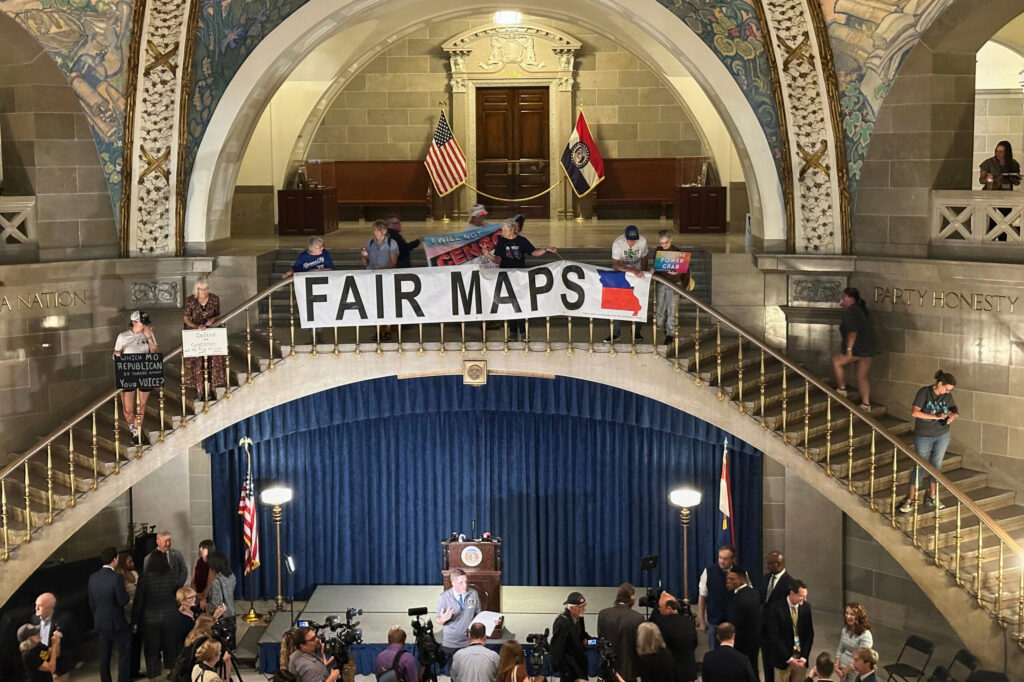
Advance Colorado files 6 redistricting measures to counter Democratic proposals
Marianne Goodland
marianne.goodland@coloradopolitics.com
Updated 5 hours ago
A half-dozen congressional redistricting ballot measures were filed Friday by Advance Colorado, a conservative advocacy group, in response to proposals filed last week by the Democratic-backed group Coloradans for a Level Playing Field. Of the six measures filed by Advance...

Secretary Hegseth promises to unleash small defense companies during Colorado visit
Mary Shinn
mary-shinn@coloradopolitics.com
Updated 3 hours ago
Secretary of Defense Pete Hegseth visited Colorado space companies Monday and promised to cut bureaucracy within the Pentagon to ensure smaller defense businesses have a chance to compete for contracts. “If we are going to have space dominance and deterrence,...

Colorado senators hold heated debate on latest immigration bill
Marianne Goodland
marianne.goodland@coloradopolitics.com
Updated 10 hours ago
A bill that would allow individuals who get injured during an immigration action to sue federal agents in state court won preliminary approval from the Colorado Senate on Monday. The bill would permit a “cause of action” by such individuals...

Trump pulls endorsement from Jeff Hurd over tariffs, backs Colorado Republican’s primary challenger
Ernest Luning
ernest.luning@coloradopolitics.com
Updated 10 hours ago
President Donald Trump on Saturday rescinded his endorsement of U.S. Rep. Jeff Hurd and threw his support behind the Colorado Republican’s primary challenger, Hope Scheppelman, citing the first-term incumbent’s “lack of support” for the administration’s tariff policy. The move comes...
Judge: CBI ordered to provide access to thousands of DNA cases
Jenny Deam
jenny-deam@coloradopolitics.com
Updated 5 hours ago
Boulder County District Judge Nancy W. Salomone on Monday ordered the Colorado Bureau of Investigation to provide access to thousands of cases where past DNA analysis could be in question or show a pattern. The ruling came in a pre-trial...
PREV
PREVIOUS

In latest battle over drilling, House Dems advance bill to boost local control
After hours of testimony Monday, the House State Affairs committee moved forward legislation aimed at expanding local control over oil and gas operations. Majority Democrats on the committee voted for the bill. Minority Republicans voted against it. It was just the latest battle in the long war being fought nearly every week now in the […]

Sources: Hickenlooper will pick Kaiser exec Donna Lynne as lieutenant governor
Gov. John Hickenlooper will nominate Kaiser Foundation Health Plan executive Donna Lynne to replace Joe Garcia as Colorado’s lieutenant governor, sources close to the governor confirm. Hickenlooper plans to introduce Lynne at a news conference at 11:30 a.m. Friday at the state Capitol. Lynne is executive vice president of the Kaiser Foundation Health Plan and […]