

Steamboat Institute speakers see gathering international storm clouds
It was a crisp seven below zero Friday morning as the sun rose behind Mount Werner at the Steamboat Institute’s Summit on Foreign Policy & Global Security. The conservative counterweight to Colorado’s Aspen Institute marked its 10th anniversary with a first try at hosting the winter summit.
The Institute’s CEO, Jennifer Schubert-Akin, enforced an early start in hopes that the morning’s keynote speaker, former United Nations Ambassador John Bolton, could still fly home to Washington before the approaching East Coast blizzard closed the capital’s airports. Ambassador Bolton’s opening address was titled, “Why National Security Should Be the Central Political Issue in 2016.” A recess appointee to the U.N. by George W. Bush in 2005, Bolton only served 16 months, unable to secure Senate confirmation. Bolton, who earned a mention in John Maxwell’s business best-seller, “The No Asshole Rule,” was on his best behavior in Steamboat Springs. Having compared the incoming President in 2009 with the Anglo-Saxon King, Ethelred the Unready, and authoring an essay titled “How Barack Obama is Endangering our National Sovereignty,” Bolton toyed with the notion of jumping into the 2016 Republican presidential race before nixing the idea in May.
A foreign policy stalwart in Republican administrations dating back to Ronald Reagan, Bolton perceives an increasingly dangerous world that he claims is “… threatening to our very existence.” He suggested these circumstances should make 2016 primarily a national security election. “Voters have a common sense understanding that our position in the world affects their safety,” he noted. “The absence of American assertiveness creates global instability.” He also suggested that Putin’s successful land grabs in Georgia and Crimea — where Russia flouted the international understanding that boundaries should not be changed by force — has likely encouraged imminent incursions into the Baltic states of Latvia, Lithuania and Estonia. He was equally alarmed by China’s rapidly expanding “blue water” navy and joked about the Middle Kingdom’s apparent hacking of 20 million federal personnel files, presumably including his own. “Peking has a better idea of what’s in that file than I do,” he chuckled. Bolton pointed out that in the Middle East, “the entire region is sliding into chaos. Egypt has lost control of the Sinai, while Syria and Iraq have effectively ceased to exist and Iran is emerging as the central banker for international terrorism.” He characterized the Iranian nuclear agreement as “appeasement.” Despite these uniformly gloomy assessments, he closed by noting that Obama’s missteps “can all be rolled back, although with significant difficulty.”
During a subsequent interview with Wall Street Journal writer Mary Kissel, Bolton highlighted King Abdullah of Jordan’s assessment that the raging turmoil in the Middle East reflects “a Civil War within Islam.” He added, “A solution will require American boots on the ground.” When queried regarding the apparent hesitancy of several Republican candidates to support such involvement, Bolton asserted, “there is no isolationist wing in the Republican Party today. Rand Paul is finished.” Pressed about Trump and Cruz, who have expressed reservations, he said, “Any Republican candidate would be better than Hillary Clinton or Bernie Sanders.” It wasn’t clear that his overwhelmingly conservative audience necessarily agreed. Asked what it would take to “wake up our allies,” Bolton replied that, “our pullback jeopardizes them as well. Unfortunately, the European Union is less than the sum of its parts at a time when its free ride on the back of American taxpayers is coming to an end.”
Perhaps the star of the Summit was luncheon speaker Victor Davis Hanson, the columnist and military historian with the Hoover Institute at Stanford. In explaining deterrence as a policy choice, Hanson quoted an unnamed 17th century British jurist. “Why do we hang horse thieves? It isn’t because of the horses they steal. We hang them to discourage others who may be thinking about stealing horses.” Hanson used this tale to contrast deterrence with appeasement. “Obama has undermined the power of American deterrence by opting for appeasement,” he charged. Pairing Obama with Carter, Hanson alleged that both Presidents hoped to make international friends by being nice to other nations and their leaders. To the contrary, Hanson noted that aggressors usually despise their appeasers, viewing them as weak and unreliable. “Appeasement is ultimately suicidal,” Hanson declared. The problem, as he sees it, is that appeasers are generally beloved in a democracy. Appeasement makes for good politics, but proves to be poor policy. The value of a Churchill or a Reagan, in the case of the Cold War, often becomes evident only in retrospect. “The integration of pre-modern societies into a post-modern world will never be easy,” Hanson suggests. “We face an emergency today and we will have to lead the fight.”
Hanson speculated that a Russian incursion into Estonia could lead to the collapse of NATO in the very near future. He further hypothesized the possibility of a Saudi purchase of a Sunni bomb from Pakistan. Hanson theorizes the year ahead will prove particularly dangerous since bad actors will feel confident that the Obama administration is unlikely to react to their misbehavior and, consequently, they can establish forces on the ground before a new sheriff reports to the White House. He reminded his audience of the Iranian capture of American diplomats during Jimmy Carter’s final year in office. Hanson believes there will always be regional thugs, like Noriega and Milosevich (and perhaps Putin), who require discipline. He sees this tutoring as the necessary responsibility of the world’s leading power. “We need to remember to mow the lawn occasionally,” he quipped.
U.S. Rep. Ryan Zinke, a career Navy Seal and freshman congressman from Montana, provided “A View from Capitol Hill.” Emphasizing that 60 percent of members have served three or fewer terms, and following the election of a Speaker still in his 40s, Zinke feels there is room for optimism in regards to Congress. Echoing Hanson, he worries that the U. S. has created vacuums by retreating from its obligations as the world’s premier power. “We are no longer trusted by our allies,” he charged. “But, I’ve seen no problems we can’t solve. We have the strongest military in the world, by far.” Nonetheless, Zinke suggested Iran is likely to acquire a nuclear weapon, perhaps purchased from North Korea, before the end of the year.

Colorado Title Board advances competing redistricting proposals and revised Pinnacol measure as April ballot deadline nears
Marianne Goodland
marianne.goodland@coloradopolitics.com
Updated 7 hours ago
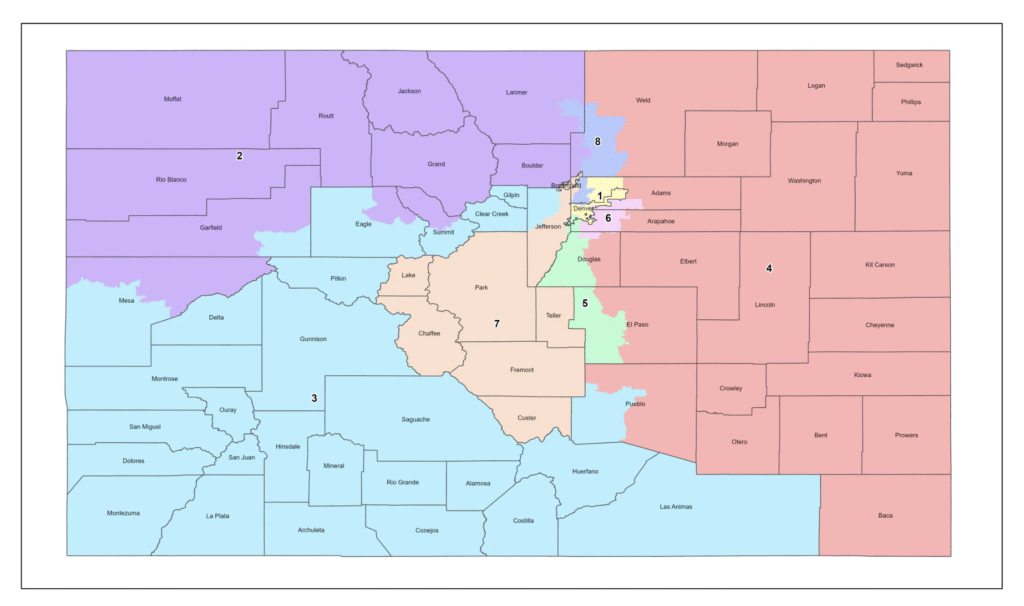
With just two meetings left before an April 15 deadline, the state’s Title Board on Wednesday pushed through a slate of ballot measures — including a revised proposal to privatize Pinnacol Assurance and dueling plans to redraw Colorado’s congressional map...
SAVE America Act showdown relished by GOP and Democrats alike
Ramsey Touchberry, Washington Examiner
ramsey.touchberry.washington.examiner@gazetteedit.wpenginepowered.com
Updated 8 hours ago
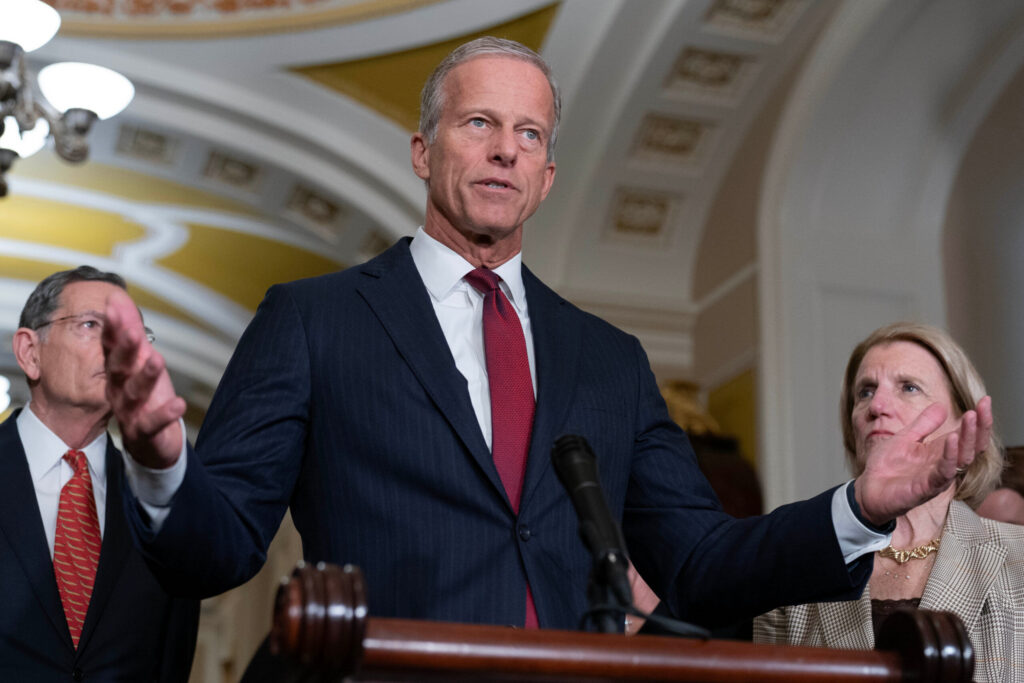
Both political parties have found rare agreement in a divided Washington, convinced that the GOP’s federal voter ID and election bill is a slam-dunk messaging opportunity. But that’s where the bipartisanship quickly ends. The two sides are diametrically opposed over...

Senate panel advances bill to tighten Colorado sports betting rules amid youth addiction concerns
Marissa Ventrelli
marissa.ventrelli@coloradopolitics.com
Updated 7 hours ago
A divided Senate Finance Committee on Tuesday narrowly advanced a bill to impose new restrictions on Colorado’s booming sports betting industry, as lawmakers cited rising concerns about youth gambling and addiction while operators warned the changes could drive bettors to...

Federal judge green-lights trial against Denver officer over race-based enforcement
Michael Karlik
michael.karlik@coloradopolitics.com
Updated 9 hours ago
A federal judge green-lit a jury trial last week on a man’s claim that a Denver police officer engaged in racially selective enforcement of the law by arresting him for video recording at a police station, while not arresting a...
Federal judge says 8 years in solitary confinement not grounds to reduce man’s sentence
Michael Karlik
michael.karlik@coloradopolitics.com
Updated 9 hours ago
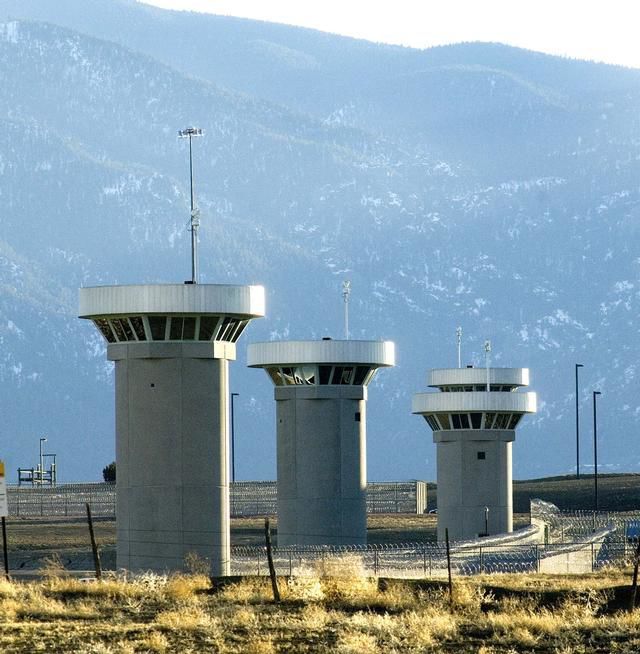
A federal judge concluded earlier this month that a man’s eight years allegedly spent in solitary confinement did not justify granting his request for a sentence reduction. However, U.S. District Court Senior Judge William J. Martínez signaled his willingness to...
Democrat Matt Cavanaugh ends campaign in Colorado’s 5th CD, says petition firm came up short
Ernest Luning
ernest.luning@coloradopolitics.com
Updated 6 hours ago
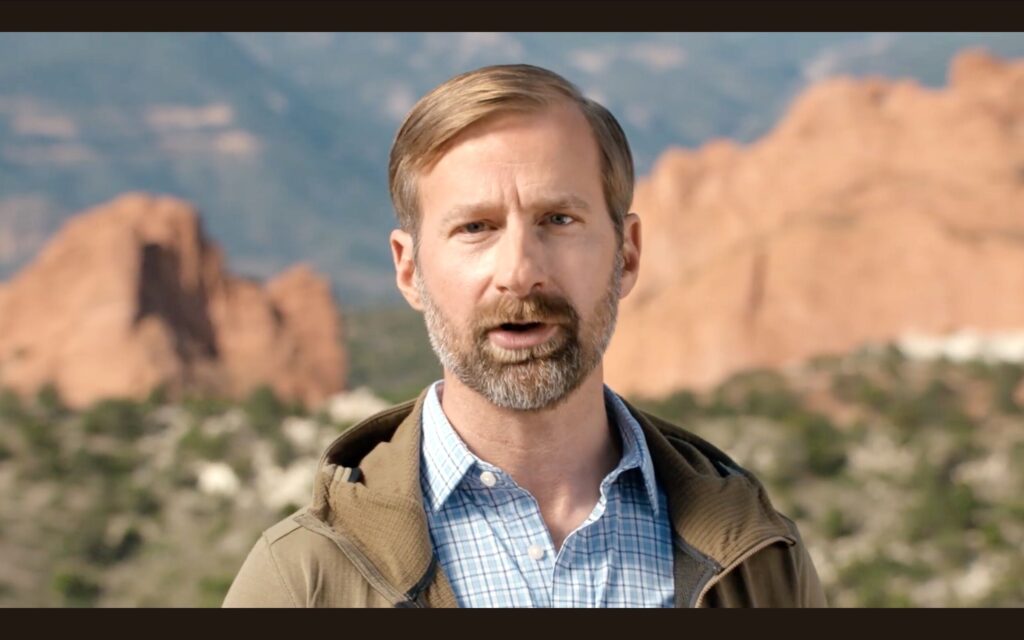
Democratic congressional candidate Matt Cavanaugh said Wednesday that he was ending his bid to challenge Republican U.S. Rep. Jeff Crank in Colorado’s 5th District because the firm his campaign hired to gather petition signatures failed to deliver. Cavanaugh, an Army...
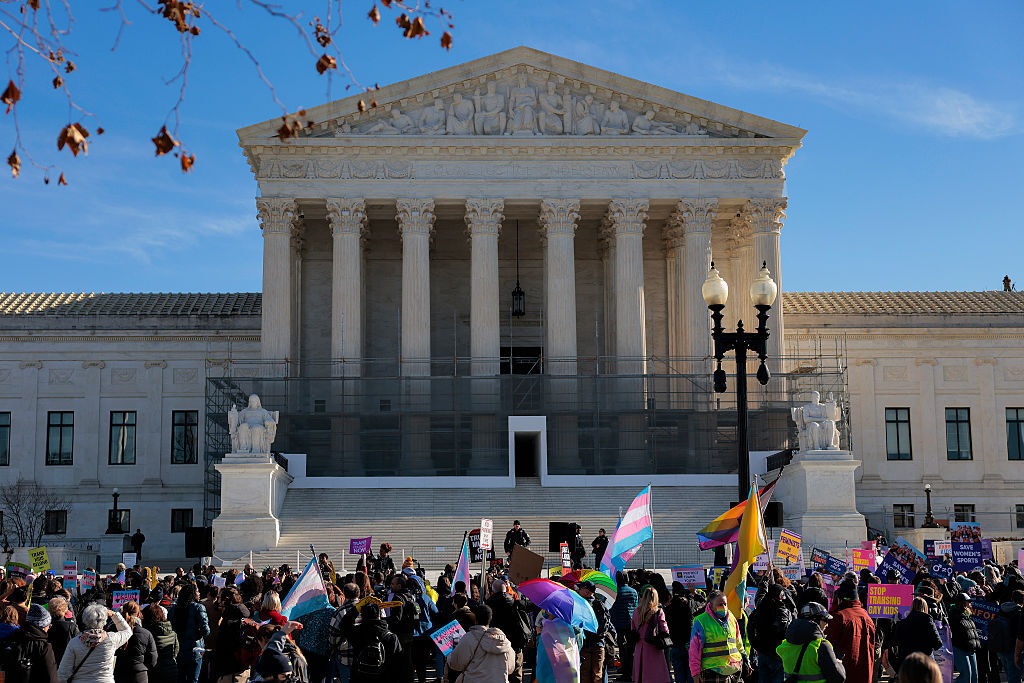
Colorado voters to decide whether to ban gender surgeries for minors
Marissa Ventrelli
marissa.ventrelli@coloradopolitics.com
Updated 5 hours ago
Colorado voters will decide this November whether to prohibit gender surgeries for minors and bar public funding or insurance coverage for procedures that alter children’s biological sex characteristics. The measure qualified for the ballot amid a push by the federal...

Democrats want to bar use of consumer data to set Colorado prices, employee wages
Marissa Ventrelli
marissa.ventrelli@coloradopolitics.com
Updated 7 hours ago
A closely divided House committee advanced a bill aimed at curbing the use of personal data to set individualized prices and wages, reviving a proposal that failed last year and setting up a broader debate over how far the state...

10th Circuit rejects ‘potential for violence’ when police arrest vehicle occupant’s romantic partner
Michael Karlik
michael.karlik@coloradopolitics.com
Updated 12 hours ago
The Denver-based federal appeals court rejected the idea on Tuesday that a vehicle occupant poses a danger to police solely because they are romantically involved with another occupant who officers are arresting. By 2-1, a three-judge panel of the U.S....

Colorado justices grill debt collector about compliance with law
Michael Karlik
michael.karlik@coloradopolitics.com
Updated 6 hours ago
The Colorado Supreme Court repeatedly pressed a debt collection company last week to explain how its lawsuit against a Boulder woman for an unpaid credit card balance complied with the specific requirements that state lawmakers have created. Portfolio Recovery Associates,...
PREV
PREVIOUS
Neville concealed carry bill advances, launches annual Capitol gun politics debates
A bill that would allow Colorado residents to carry a concealed handgun without a permit took its first step Wednesday through the Republican-controlled Senate Finance committee on its way toward the Democratic-controlled House, where it will face stiff opposition. The “constitutional carry” bill, as Senate Bill 17 is referred to, sponsored by father and son […]
Blaha pulls Senate petitions, welcomes seventh grandchild
Republican U.S. Senate candidate Robert Blaha’s nominating petitions have been approved by the secretary of state’s office. The Colorado Springs consultant and author is the second GOP Senate candidate to pull petitions this week, joining former Aurora City Councilman Ryan Frazier. “I’m a bureaucracy-buster,” Blaha told a meeting of the Jefferson County GOP central committee […]