

Joint committee hears testimony on school safety in wake of Davis reports
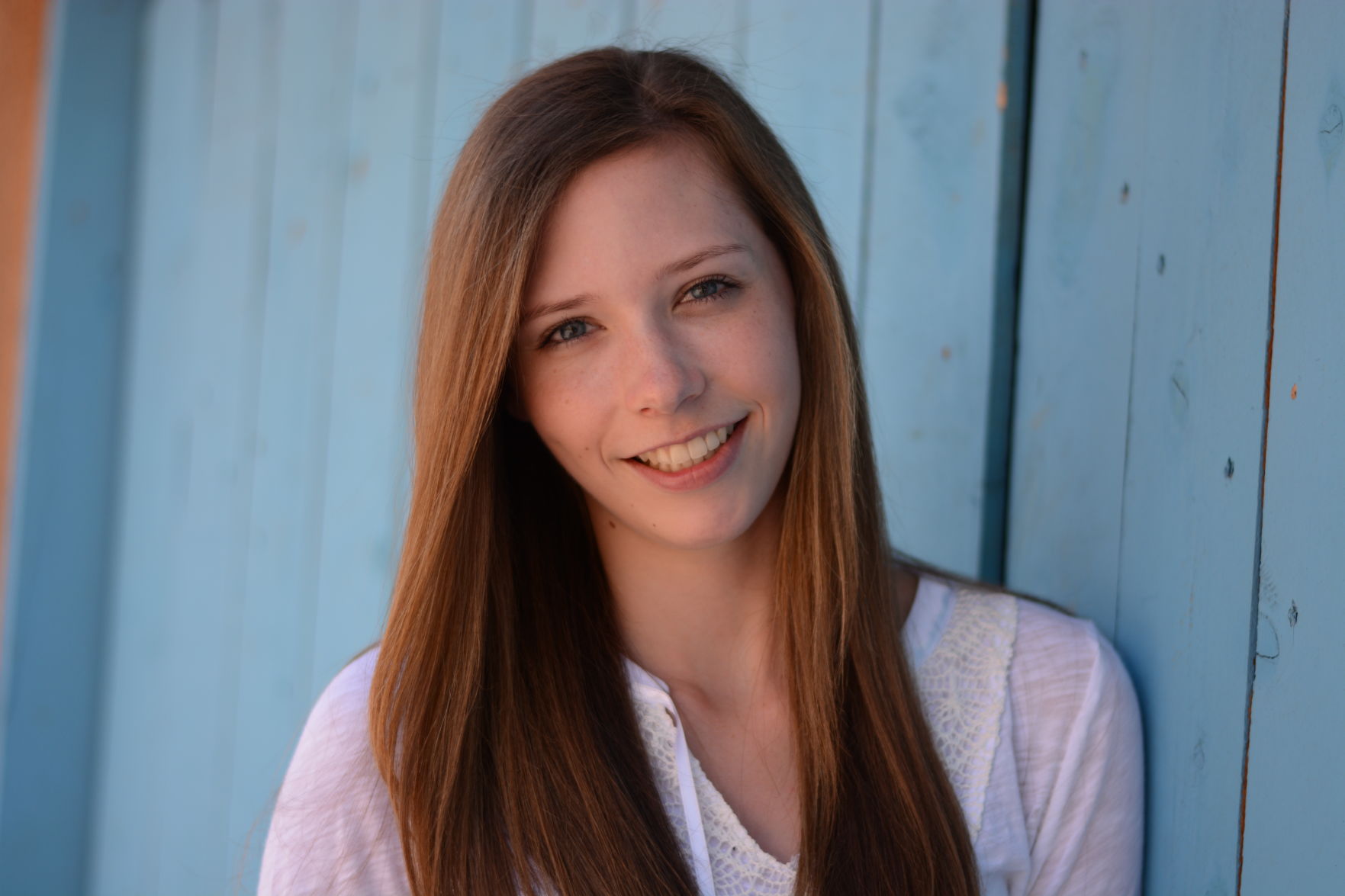
In the wake of a scathing report released earlier this week outlining the safety-system failures highlighted by the tragic school-shooting death of 17-year-old Claire Davis in 2013 at Arapahoe High School, a special joint legislative committee convened Friday to review the report and two others on the incident and to hear testimony on how to improve school safety.
The bipartisan Joint School Safety and Youth in Crisis Committee heard testimony from the victim’s father, Michael Davis, the family’s attorney and the principle authors of the three reports.
The reports were generated in response to legal action initiated by the parents of Davis, who forwent any claim to monetary damages in exchange for a full review and analysis of the events that led to the shooting. The shooter, Karl Pierson, was a fellow student at the school. He killed himself the same day.
State Sen. Majority Leader and committee chairman Mark Scheffel, R-Parker, thanked the Davis family for their efforts and the “tremendous amount of information they have allowed us to have.
“They could have just recoiled and walked away,” Scheffel said in his opening remarks.
“A Report on the Arapahoe High School Shooting,” prepared by the University of Northern Colorado and the University of Colorado Boulder, garnered the most attention at the hearing. Also reviewed Friday were a “Post-Incident Review,” prepared by Safe Havens, a nonprofit school-safety center, and “A Review of Psychological Safety and Threat Assessment Issues Related to the Shooting at Arapahoe High School,” presented to the Littleton Public School District and Board of Education by Linda Kanan, Ph.D. of the University of Denver.
The reports found numerous shortfalls and lapses, particularly in the areas of information sharing and threat assessment. Several experts testified that, although policies were often in place, they were not followed because they were not statutorily mandated and therefore treated as merely guidelines that lacked any real authority. In other cases, policies were unclear or appeared to conflict with other policies, such as those dealing with the protection of student privacy.
Recommendations included proposals to improve information sharing among teachers, principals, counselors, school resource officers and others; increased promotion of and training in the Safe2Tell system; and measures to improve threat assessment.
Scheffel said that the interim committee had delayed recommending any legislation until the reports were released and the members had sufficient time to review them. “We are actively working on digesting these reports with the idea of pursuing legislation.”
State Sen. President Bill Cadman, R-Colorado Springs, said that holding off on legislative proposals was worth the wait. He praised the Davis family and the process that resulted in the day’s hearings
“We were terrified, we were compelled and we were enlightened,” Cadman said, addressing the committee at the conclusion of the hearing. “Having these reports gives us power” he added, saying they are a “call to action.”
“This is not the end of work on school safety, it is just the beginning” he continued. “I have never seen anything like this in my time here.”
Addressing the parents of Claire Davis directly, an emotional Cadman said, “As you learn what should have been done, and what could have been done, it must have seemed surreal. As parents, we are not built to attend the funerals of our children … As a parent of one of those children in our schools, I am eternally grateful for what you have done.”
Following the hearing, Rep. Dominick Moreno, D-Commerce City, said that he believed there could be multiple legislative fixes available to state lawmakers.
“We have a blueprint of how to move forward,” Moreno said. “It is now incumbent on us to implement it.”
Moreno said he was particularly interested in a recommendation to remove the words “if possible” from legislation developed after the Columbine High School shooting that prescribed schools to coordinate safety programs. “All schools should have coordination, not just ‘if it is possible,’” he said.
State Sen. Linda Newell, D-Littleton, said that while she believed there were potential legislative solutions, she didn’t yet know what exactly they might be. “We are still processing and analyzing,” she said. “The biggest constraint is the budget,” she added, saying that “we have to look at the best solutions that make sense when we don’t have money.”
Newell also suggested that at least some of the solutions may fall outside the purview of government. “All three reports talked about school problems, social problems, cultural problems and community problems,” she said. “We need to be conscious of what we can and can’t legislate here.”
Newell suggested that in many cases a community-centered approach may be the best solution. “We need to be more conscious of supporting each other as community members,” she said. “We are one human family and should be taking care of one another as Coloradans.”
One thing Newell did suggest the legislature could do was to try to get mental health training where it is most needed. “If we can work with nonprofits to facilitate that training, we can accomplish something with less cost.”
Scheffel told The Colorado Statesman that the hearing constituted a “content rich day,” and that everyone was still digesting what they had heard and read, adding that he believed it was important to get the information out to the public.
“We will look at a broad range of possible legislation to address these deficiencies,” he said. He added that one of the main questions was how to incentivize appropriate behavior and action.
“Among other things, we heard that the basics were there, they just weren’t properly implemented,” Scheffel said. “So we need to look at what role the heavy hand of government may properly have in incentivizing the proper behaviors.”
“The work never stops,” he concluded. “We have the opportunity and time to do the right thing this session.”

Judge rules that Colorado law makes it too hard for parties to bar unaffiliated voters from primaries
Ernest Luning
ernest.luning@coloradopolitics.com
Updated 7 hours ago
A federal judge ruled in favor of the Colorado Republican Party late Tuesday, saying that a portion of the state law that allows unaffiliated voters to cast ballots in party primaries is unconstitutional because it imposes an unrealistic burden on...
10th Circuit upholds regulator’s methodology for Tri-State exit fees
Michael Karlik
michael.karlik@coloradopolitics.com
Updated 9 hours ago
The Denver-based federal appeals court upheld a regulatory agency’s methodology for calculating the fee owed by entities seeking to withdraw from Tri-State Generation and Transmission Association last week. Tri-State is a Westminster-based cooperative that provides and transmits electricity to member...
Federal judge proposes sanctions against Mike Lindell’s lawyers for continued fake citations
Michael Karlik
michael.karlik@coloradopolitics.com
Updated 10 hours ago
A federal judge is once again pursuing sanctions against lawyers for MyPillow CEO Mike Lindell for continuing to cite to court cases that do not exist, likely based on the faulty output of artificial intelligence tools. Last year, a jury...
Front Range cities oppose Democratic proposal to permit lot‑splitting as a path to affordable housing
Marianne Goodland
marianne.goodland@coloradopolitics.com
Updated 10 hours ago
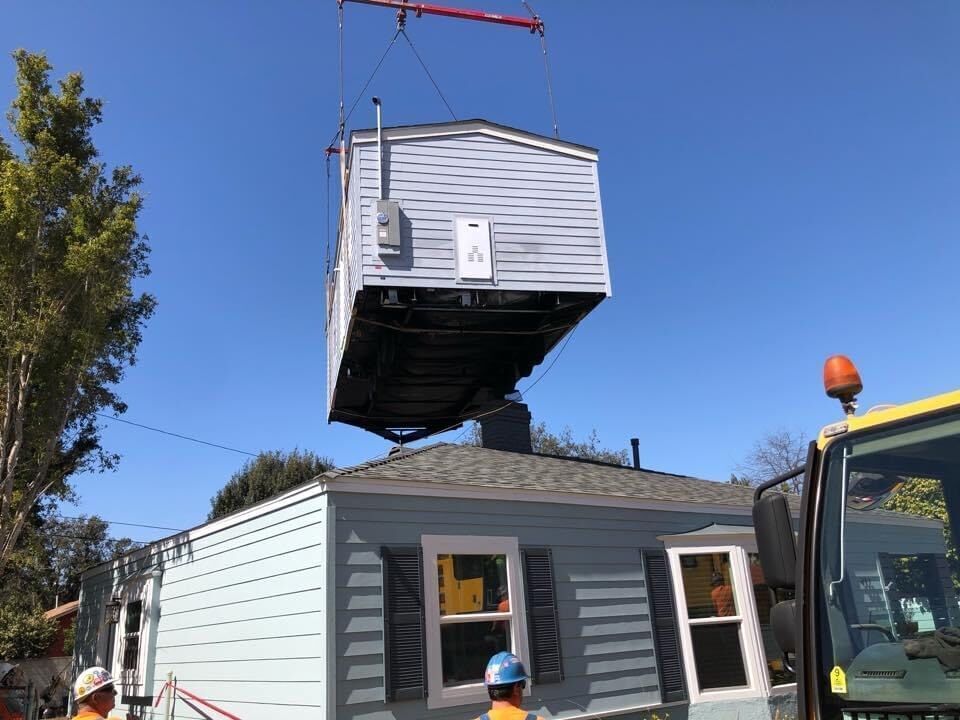
Colorado lawmakers are pressing ahead with a plan to let homeowners split their lots to make room for smaller, more affordable houses. The proposal has drawn sharp opposition from Aurora, Colorado Springs, Denver and other Front Range cities that argue...
Susan Blanco signals views on role of appellate courts in first opinion as Colorado justice
Michael Karlik
michael.karlik@coloradopolitics.com
Updated 14 hours ago
Justice Susan Blanco’s first solo opinion as a new member of the Colorado Supreme Court made clear her view of the guardrails that keep the state’s highest court tethered to the issues it is asked to decide. On Monday, the...

Hegseth features Fort Carson soldiers after returning from Middle East, gives warning on Iran war
Reuters
reuters@gazette.com
Updated 14 hours ago
Defense Secretary Pete Hegseth said on Tuesday the next few days in the war against Iran would be decisive and warned Tehran that the conflict would intensify if it did not make a deal. Hegseth also highlighted his trip to the Middle...

Denver Council narrowly approves deal with Axon
Deborah Grigsby
deborah.smith@denvergazette.com
Updated 18 hours ago
After weeks of delay, the Denver City Council narrowly approved a one-year $150,000 contract with Axon for 50 automated license plate-reading cameras and the necessary system hardware, replacing the city’s former vendor, Flock. The 7-6 vote came during Tuesday’s regular...
Colorado leaders weigh next steps after Supreme Court rejects state ban on ‘conversion therapy’
Marissa Ventrelli
marissa.ventrelli@coloradopolitics.com
Updated 1 day ago
Colorado leaders said they are weighing next steps after the U.S. Supreme Court on Tuesday rejected the state’s ban on “conversion therapy” for children, as critics and supporters cheered or lambasted the ruling. The court’s near-unanimous decision called the Colorado...
Aurora homeless shelter opened too early, CEO says, as mold and plumbing issues emerge
Kyla Pearce
kyla.pearce@gazette.com
Updated 18 hours ago
Aurora’s largest homeless services project launched “way too early,” its CEO told city leaders Tuesday, saying the rushed opening left residents living amid mold, plumbing failures, and other issues inside the former hotel. During Tuesday’s Housing, Neighborhood Services and Redevelopment...
Gov. Polis declares April ‘dig safely month’ to mark 40th anniversary of Colorado 811
Scott Weiser
scott.weiser@gazette.com
Updated 17 hours ago
Gov. Jared Polis declared April 2026 as “Dig Safely Month” in Colorado, an annual observance that this year highlights the 40th anniversary of Colorado 811, the state’s One-Call Notification System. “Before everyone starts their warm weather projects around the house,...
PREV
PREVIOUS

Eight House Republicans back Leonard for Keyser vacancy
Eight of “the most conservative members of the Colorado State House” are endorsing Tim Leonard, an Evergreen real estate developer and former state Senate candidate, in Saturday’s Republican Party vacancy election to fill the House District 25 seat. “Your choice will determine whether our shared conservative values, our liberties, our freedoms will be defended here […]

FEATURE PHOTO: Ambassador Dennis Ross visits Denver
In this feature photo, special to The Colorado Statesman, former Ambassador Dennis Ross being introduced by event chairwoman Jennifer Dechtman at Date with the State inside the Old Supreme Court Chamber at the Colorado state Capitol Jan. 20. The event was hosted by Jewish Community Relations Council, JEWISHcolorado. JCRC is a coalition of 40 Jewish […]