

Lawmakers applaud high-ground Hickenlooper speech, settle in for tough work on details
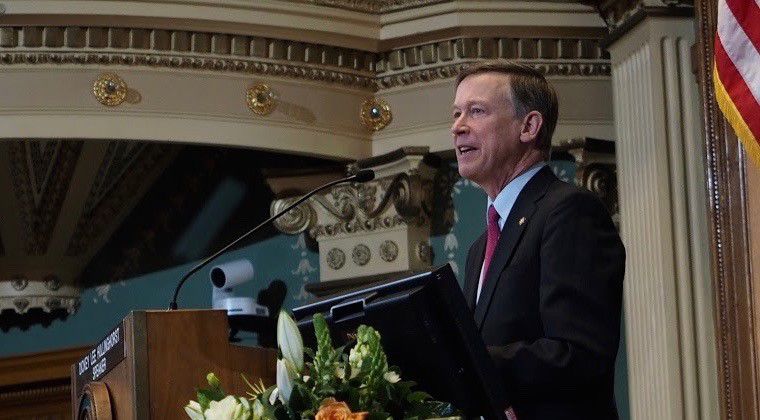
Lawmakers packed into the state House chambers Thursday said they appreciated the positive tone struck by Gov. John Hickenlooper in his State of the State address.
But it’s clear that the good feelings won’t keep this legislative session from becoming a dogfight over issues like construction defects laws and the plan to free the state’s hospital provider fee from spending restrictions put in place by the Taxpayer Bill of Rights.
Hickenlooper talked at length about achievements notched by the state, touting its booming escape from the recession and enviable job growth, and he pointed to collaboration among state leaders as the secret to success. He insisted lawmakers dedicate themselves to working across the aisle productively this election year.
He asked Democrats to give ground in the running debate over a proposal to ease liability laws for housing developers and he asked Republicans to try to view the hospital provider fee proposal in practical terms.
“Our budget request calls for a $20 million cut to higher education, and no increase for financial aid,” he said, making his case to Republicans. “This is not the direction we want to be moving, but it’s a direct result of conflicting budget mandates that are forcing painful choices like this one.”
The hospital provider fee proposal would reclassify the fee by reworking it into an enterprise fund. It’s a bureaucratic shift that would mean hundreds of millions of dollars per year would no longer be considered tax money and so wouldn’t count toward the TABOR revenue caps that trigger the state to issue tax refunds to residents.
“If we make this fix, the TABOR limit won’t be one penny higher than what voters gave us in Referendum C,” Hickenlooper said. “We have enterprises that run lotteries, and build bridges and manage state parks. The one we propose provides services to our health care system that it can’t provide on its own and they want to pay us for them.”
House Speaker Dickey Lee Hullinghorst, D-Gunbarrel, said Democrats were willing to work with Republicans on a new version of the construction defect proposal, but she added that reworking defects liability was only a small step on the long road to bringing more affordable housing to the state. And she tied compromise on a construction defects bill to compromise on the hospital provider fee.“The main thing the governor said on construction defects, or at least the way I heard it, is this is a very complex issue and construction defects may play a role in (affordable housing). I’m agreeing to talk on this issue because I believe it can play a small roll,” she said.
“We’re working with (Republicans) on construction defects and reaching some agreement on that and we have agreed to do that in good faith. I hope they will continue to do what they agreed to earlier this year to continue to talk to us on the hospital provider fee.”
Rep. Joe Salazar, D-Thornton, said he was willing to talk about a construction defect bill but he echoed Hullinghorst’s concerns that any new bill must sufficiently protect homeowners.
“Sure, we can compromise, as long as we don’t end up hanging the consumers out to dry,” he said. “It’s a complicated issue. We’re taking bits and pieces here and there from much bigger machinery. We have to take care of homeowners.”
Whatever bill the Legislature might pass, he said, “should not be about protecting the right to build crappy housing.”
Senate President Bill Cadman, R-Colorado Springs, said he appreciated the positive message Hickenlooper delivered, but he disagreed with the governor’s assessment of the problem facing state budget makers.
“The budget crisis is just a term being used to fulfill a political desire on a specific issue,” he said. “The reality is, we’re about to spend more money than we have ever spent. We’re growing at a minimum of around 3 percent, and that’s not a crisis.”
Cadman said the problem had to do with spending priorities.
“What we really need to look at is prioritizing the structure of our budget, so that, when you’re spending $26 billion, you’re not only focused on an issue that might free up a tiny portion of that. It’s really easy to have everyone focused on the tiny portion (the hospital provider fee) and not about the real issue, which is how you’re currently spending the money.”
Sen. Andy Kerr, D-Lakewood, said he thought Hickenlooper made a strong effort to foster constructive interactions at the Legislature in a potentially highly fractious election year.
“We’re going into what could very potentially be a contentious session for the next 119 days. It’s good to show leadership like that,” Kerr said. “He struck a positive tone and pointed out places where he’s willing to give and take and places where he stands strong.
“We’ve heard some people in this building say that some of these issues are nonstarters. You can’t say such an important issue like those mentioned are nonstarters.”
Sen. Larry Crowder, R-Alamosa, said he is determined to protect the integrity of the Taxpayer Bill of Rights, but he appreciated Hickenlooper’s pitch for collaboration.
In Crowder’s district, which includes Costilla, five of nine hard-pressed area hospitals have been teetering on the brink of shutdown. Crowder was the only Republican in past years to vote for Medicaid expansions. He says those expansions and the provider fee have stabilized his area hospitals.
“I really liked that the governor talked about compromise,” Crowder said. “But there’s really no choice but to play it by ear.”
Republicans in general seemed cautiously optimistic in the wake of the speech, but they signaled that their view of compromise probably wouldn’t match the view held by the governor.
Rep. Perry Buck, R-Windsor, said that the government has grown 43 percent since 2009. She said Democrats are selling the hospital provider fee move as a way to dedicate more money to education and transportation but that over the last half decade education and transportation have been deprived of $3 billion spent on other programs. She thinks posing the question to voters would be a better solution.
“I enjoy working with the governor,” Buck said. “(But) the only compromise I see is taking it to the people.”
Joint Budget Committee Chairwoman Rep. Millie Hamner, D-Dillon, said she thought that perhaps the big decision on the hospital provider fee issue will come as a result of discussion over nitty gritty budget details.
“The governor reminded us that in the past we got enormous things done, and this is just another challenge for us to take on and tackle,” she said. “I’m hoping that what will move us to put on a more collaborative face will be looking at looming cuts. I don’t think any of the cuts on the table are going to be popular, so looking at those, that could get us to a place where maybe we can get this done… I mean, if not these cuts, then what cuts, which cuts?
“There has been talk about cutting Medicaid. Well, if we should reduce Medicaid services, which ones? And who will that impact?” said Hamner. “I think when we get down to those kinds of realities, that’s where we’ll find solutions.
“I think issuing these taxpayer refunds this year, the logic isn’t there,” she added. “It’s $17 per resident, but collectively, we could put that toward critical maintenance and manage the roads and keep the state moving forward. Do we issue these relatively small refunds or do we keep those revenues — without increasing taxes — to address these critical needs?”
With contributions from reporter Kara Mason and editor John Tomasic
—Ramsey@Coloradostatesman.com

It’s time to let unaffiliated voters caucus | Vince Bzdek
Vince Bzdek
vince.bzdek@gazette.com
Updated 2 days ago
There’s no getting around it: Colorado’s 3,000 county caucuses, which just wrapped up recently, left half the electorate out in the cold. Since unaffiliated voters now make up 51% of all Colorado voters, a majority of Colorado electors are barred...

With new medical school set to open, Feinstein will step down as UNC president
Hap Fry, Special to The Gazette
hap-fry@gazette.com
Updated 11 hours ago
GREELEY • Dr. Andrew “Andy” Feinstein, the charismatic president of the University of Northern Colorado, has announced that he will step down from his leadership role just on the cusp of what is perhaps his signature accomplishment being realized. He’ll...
Governor warns energy development both a boon and a risk to Colorado | A LOOK BACK
Rachael Wright, Special to Colorado Politics
rachael.wright@coloradopolitics.com
Updated 5 days ago
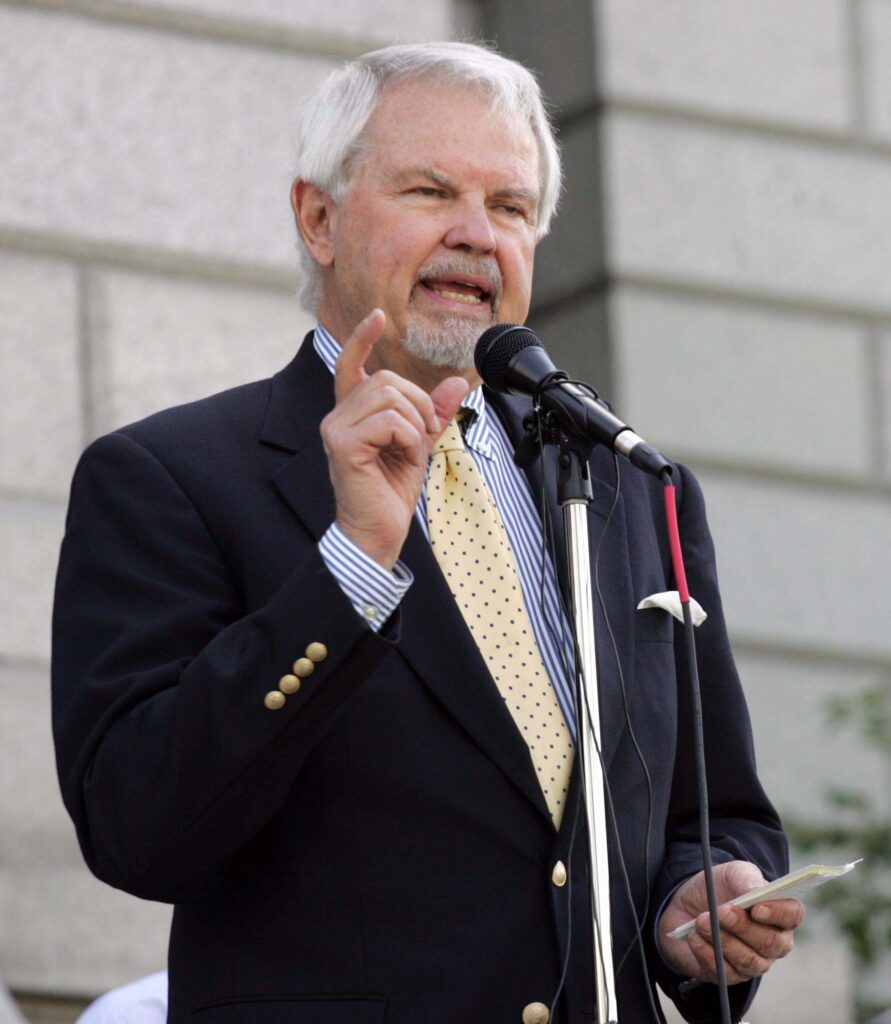
Forty-Five Years Ago This Week: “The real opportunity and the dangers before us are both real,” said Gov. Dick Lamm in his January state of the state address before the Colorado General Assembly. Lamm argued that energy development would continue...
A Mile High, again: Capitol M | Week of March 21, 2026
Marianne Goodland
marianne.goodland@coloradopolitics.com
Updated 4 days ago
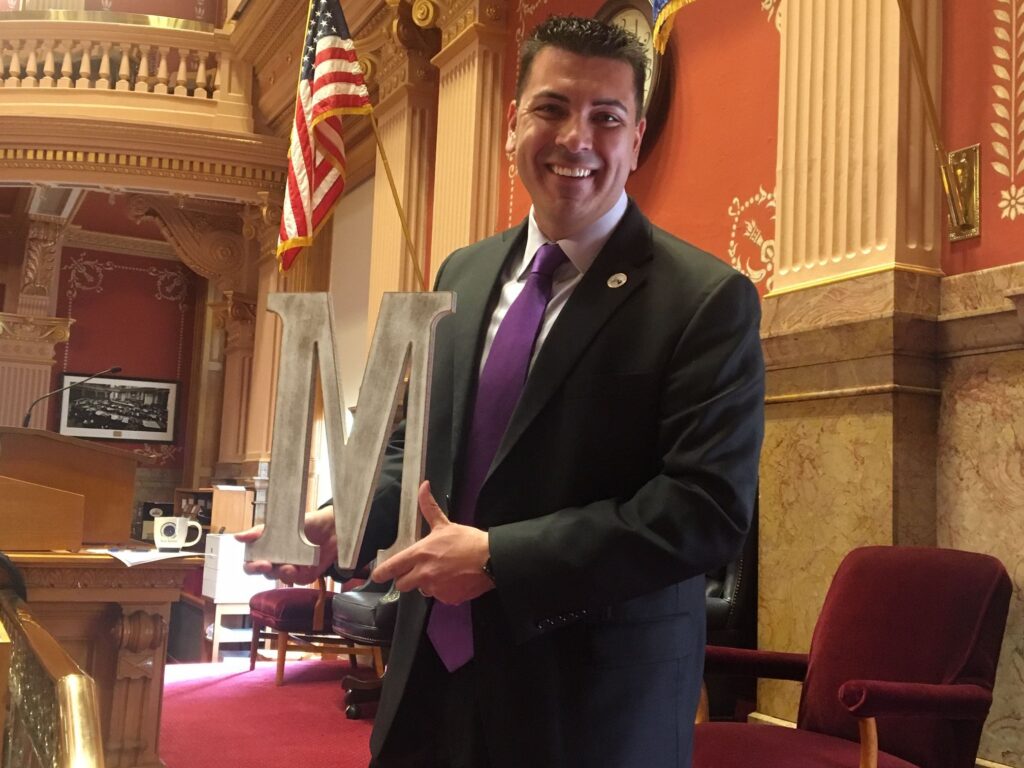
The lighter side of the Capitol, usually…. Local Journalism Day, except they forgot their very own local journalists. The state Senate on Thursday, March 19, passed a resolution recognizing Local Journalism Day. Everyone voted for it, which is good, because...

Colorado Politics Calendar Mar. 23-29
Rachael Wright, Special to Colorado Politics
rachael.wright@coloradopolitics.com
Updated 3 days ago
CoPo’s weekly political calendar will help you find political and public-policy events throughout Colorado. It includes candidate and issue campaign events, public policy meetings, court hearings, state and local party conventions, assemblies, debates, rallies, parades, speaking engagements, traveling dignitary appearances,...

The insular bubble of caucuses and assemblies | SONDERMANN
Eric Sondermann
eric-sondermann@coloradopolitics.com
Updated 3 days ago
Nearly 30 years ago, then-Federal Reserve Chairman Alan Greenspan coined the term “irrational exuberance” to describe the overheated stock market. That descriptive phrase could also apply to much of the political realm. The hype in politics often grossly exceeds the...

Lauren Boebert’s hard ‘no’ on Pentagon Iran funding request puts Mike Johnson in tough spot
Emily Hallas, Washington Examiner
emily.hallas.washington.examiner@gazetteedit.wpenginepowered.com
Updated 2 days ago
Colorado U.S. Rep. Lauren Boebert announced on Thursday that she will not support further funding for the United States’s war in Iran, marking an uphill battle for the Trump administration’s effort to secure additional financing from Congress. “I’ve already told...
Rubio gains ground in 2028 jockeying as Iran war elevates his profile
Samantha-Jo Roth, Washington Examiner
samantha-jo.roth.washington.examiner@gazetteedit.wpenginepowered.com
Updated 2 days ago
Secretary of State Marco Rubio’s high-profile role in the Trump administration’s response to the Iran war is boosting his standing in the early jockeying for the 2028 Republican presidential nomination — and positioning him as a possible rival to Vice...
Federal judge dismisses claims against medical contractor for Eagle County jail suicide
Michael Karlik
michael.karlik@coloradopolitics.com
Updated 2 days ago
A federal judge dismissed the claims against a medical contractor for the Eagle County jail and its employees earlier this month, concluding there were insufficient allegations that they violated the constitutional rights of a man who died by suicide in...

Colorado Senate committee advances bill increasing overtime threshold for farmworkers
Marianne Goodland
marianne.goodland@coloradopolitics.com
Updated 1 day ago
The struggle to balance farmworker protections with the survival of Colorado’s family farms took center stage Thursday as senators debated two competing overtime bills. The Senate Business, Labor and Technology Committee held a rare double-bill hearing that led to a...
PREV
PREVIOUS
Text of State of the State address
Below is the prepared text of Governor Hickenlooper’s annual State of the State address, delivered Thursday, Jan. 14, in its entirety: Good morning. The rosy glow and spring in my step you may have noticed as I entered this Chamber today isn’t just due to my recent engagement. Thank you. I’m a very lucky man. […]

Interior Department timeout on coal leases blasted, cheered in Colorado
The U.S. Department of the Interior announced Friday a three-year halt to new coal-mining leases on federal lands while it reviews its royalty and leasing program, a move that drew quick condemnation from the U.S. congressman whose district includes the most mines in Colorado. “This decision reeks of contempt for rural America and for the […]