

Hudson: Designed to fail: Only the members of Colorado’s Obamacare co-op cared about its survival

Most Coloradans continue to obtain medical insurance through health plans managed by their employers, thereby avoiding direct interaction with Connect for Health, Colorado’s Obamacare health insurance exchange. They also know next to nothing about Colorado HealthOP, the nonprofit, consumer-driven co-op created under provisions of the Affordable Care Act, which was just forced to close its doors by the state insurance commissioner. In fact there has been considerable public confusion between the exchange and the co-op.
When Congress drafted the ACA, there was support for a “public option” plan that would provide a low-cost option for those seeking coverage, probably through the purchase of a Medicare-like insurance plan. Once it was clear the votes weren’t there for this alternative, Democratic Sens. Kent Conrad of North Dakota and Max Baucus of Montana cobbled together a state co-op program. It offered substantial start-up grants, together with access to federal funds intended to cover claims until each state plan could get on its feet.
This was deemed necessary because of the large market-entry costs associated with organizing a new medical insurance company. Applicants from across the country applied to serve local markets. HealthOP, the successful applicant in Colorado, was organized and sponsored by the Rocky Mountain Farmers Union, itself a co-op. Julia Hutchins was hired from Colorado Access, where she managed its Medicare programs, to serve as CEO. Hutchins had barely a year to assemble a proprietary provider network, create HealthOP’s online application process, price its plans and staff her start-up. In several respects, HealthOP exceeded most expectations. Many of its plans were the low-cost alternative in the bronze, silver and gold coverage tiers.
With its emphasis on wellness and preventive medicine, HealthOP clients loved their company. As one HR manager noted at a recent annual membership meeting, “Most employees don’t like to talk about health insurance. They just want to know they can avoid a bankruptcy if someone in the family gets really sick. They’ve actually warmed up to a company that appears genuinely concerned about keeping them healthy.”
Aside from start-up funding, several other fail-safe mechanisms were designed to help stabilize co-ops. The mechanism that led to the collapse of nearly a third of the co-ops across the country, including Colorado’s, was an evaluation of so-called risk corridors. This procedure was not new to the ACA. It involves appraising the loss ratios for each insuror selling on the exchanges to determine whether they are burdened with a disproportionate share of high-risk clients. A similar procedure was implemented in 2006 for the rollout of the Bush administration’s Medicare prescription drug program.
It was expected that the risk adjustments would require $7 billion in 2015 and another $5 billion next year, after which the subsidies would be phased out. As recently as August, HealthOP was assured it would receive the $16 million it had requested. Then, early in October, the Centers for Medicare and Medicaid informed Colorado’s HealthOP it would only receive 12.6 percent of the funds it had been promised. This meant that the co-op would not possess the reserves required by state rules in order to sell insurance in 2016.
Consequently the Colorado Division of Insurance denied HealthOP access to sell its plans through the Connect for Colorado exchange during the 2016 open-enrollment period beginning Nov. 1. Even though the state co-ops and several smaller insurance companies only requested $2.9 billion in risk-corridor payments, the congressional budget agreement of 2014 denied additional funding for the program. Whether this was intentional, inadvertent or an oversight is a matter of dispute. Certainly there are Obamacare critics who are gleeful about the result and likely more than a few competitors just as delighted to cheer the demise of the co-ops.
In an editorial titled “A New Attack on Health-Care Reality,” the Wall Street Journal observed, “As for the … alibi that the public option would have been stronger than the co-ops, this is the Obamacare version of the line that communism can’t be judged because its never been tried.” The New York Times countered, “Republicans and other critics have been trying for four years to destroy health care reform … now they are after smaller game, the co-ops.” This war will continue to be waged into 2017 when a new president will have to either fix the glitches in the ACA or replace it entirely. In the meantime, Coloradans can expect an average of 9.5-percent rate hikes, larger deductibles and fewer choices on the exchange.
Whether current HealthOP members replace their insurance through the exchange may well determine the exchange’s continued viability. Nearly 40 percent of all exchange policies were sold by the co-op in 2015. Without these 80,000 lives as customers, it seems doubtful the exchange can persevere. Just as in the case of the co-op, there are no visible white knights waiting to ride to the rescue of the exchange.
Chuck Holum, HealthOP board president, summarized the co-op’s dilemma in a letter to members. “Here’s the score: four huge insurance companies are merging into two, in order to become more ‘efficient,’” he wrote. “Drug companies have significantly raised their prices and last week we learned that many for-profit Colorado hospitals enjoy profit margins of more than 40 percent. Your consumer-governed, nonprofit insurance company, which offered the lowest rates in the marketplace, has been shut down by our government. Colorado HealthOP, as its core principle, placed people before profits and put consumers’ best interests before politics.”
Nonetheless, the hard work, dedication and vision of the HealthOP staff have all been kicked to the curb. Single payer, anyone?
Miller Hudson is a public affairs consultant and a former state legislator. He can be reached at mnhwriter@msn.com

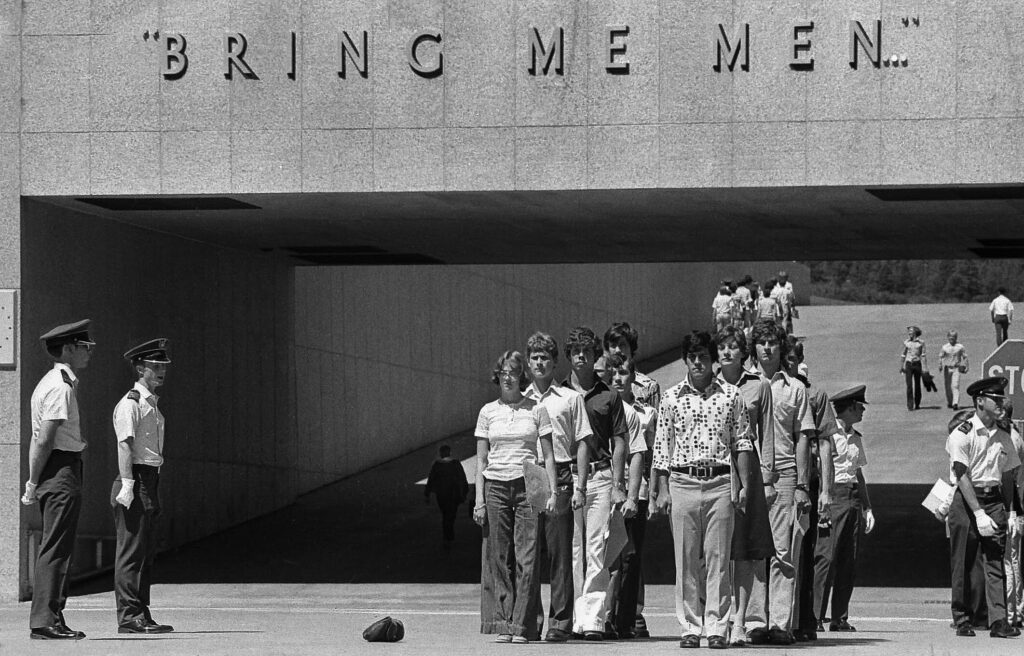
Fifty years later, women reflect on first coed class at the Air Force Academy, struggle for equality
Mary Shinn
mary-shinn@coloradopolitics.com
Updated 2 days ago
When the first female Air Force Academy cadets arrived 50 years ago this summer, they stood in front of an enormous sign on campus that read “Bring me men.” In the shadow of that sign, Kathleen Utley Kornahrens, one of...

As Lake Powell shrinks, marinas are having to adapt to dwindling water levels | OUT WEST ROUNDUP
The Associated Press
the-associated-press@coloradopolitics.com
Updated 5 days ago
ARIZONA Reservoirs near record lows PAGE — The Colorado River’s Lake Powell, the second largest reservoir in the U.S., is shrinking. A record-dry winter and extreme heat — as well as decades of overuse, chronic drought and climate change —...

A new day? Colorado’s troubled guardianship office pursues ‘cultural reset’
Marianne Goodland
marianne.goodland@coloradopolitics.com
Updated 4 days ago
Colorado’s guardianship program, long criticized for mismanagement and high staff attrition, is undergoing a “cultural reset,” as its new director works to repair partnerships and prepare for a major expansion under recent legislation. Created by lawmakers in 2017, the Office...
U.S. Senate OKs funding bill to avoid government shutdown
Wire Services
wire-services@coloradopolitics.com
Updated 2 days ago
Hemp provision became point of contention WASHINGTON • The U.S. Senate in an overnight vote Saturday approved a short-term measure to fund federal agencies into early December and avoid a government shutdown during the middle of campaign season. The late-summer...

The relevance of Watergate more than a half-century later | SONDERMANN
By Eric Sondermann
by-eric-sondermann@coloradopolitics.com
Updated 5 days ago
It was the scandal for which all other scandals are now named. In June 1972, a small group of Cuban burglars with high-level connections broke into the headquarters of the Democratic National Committee. Those headquarters were located in the Watergate...

Wirth downplays Social Security disaster talk | A LOOK BACK
Rachael Wright, Special to Colorado Politics
rachael.wright@coloradopolitics.com
Updated 4 days ago
Forty-five years ago this week: “As time goes on,” said Democratic U.S. Rep. Tim Wirth, of the 2nd Congressional District, “we are finding that the safety net, which was proposed earlier this year, has some very large holes in it,”...
Colorado Politics Calendar Aug. 10-16
Rachael Wright, Special to Colorado Politics
rachael.wright@coloradopolitics.com
Updated 4 days ago
CoPo’s weekly political calendar will help you find political and public-policy events throughout Colorado. It includes candidate and issue campaign events, public policy meetings, court hearings, state and local party conventions, assemblies, debates, rallies, parades, speaking engagements, traveling dignitary appearances,...

Democratic group aims Spanish-language TV ad at Gabe Evans in Colorado’s battleground 8th CD
Ernest Luning
ernest.luning@coloradopolitics.com
Updated 2 days ago
A national group tied to House Democratic leadership launched a six-figure Spanish-language TV ad in Colorado this week targeting Republican U.S. Rep. Gabe Evans and the GOP’s signature budget legislation. The 30-second spot is part of $15 million in new...

Colorado School of Mines lands major share in Trump’s $100M mining-education plan
Thelma Grimes
thelma.grimes@coloradopolitics.com
Updated 2 days ago
President Donald Trump on Friday named the Colorado School of Mines among roughly a dozen institutions that will share in a $100 million commitment “to train the next generation of American miners.” Paul Johnson, the university’s president, said he is...

Local party leaders, incoming judge among members of judicial performance commission that violated law
Michael Karlik
michael.karlik@coloradopolitics.com
Updated 2 days ago
A local Democratic leader and 2024 presidential elector. A legislative aide and leader in the Young Republicans. An incoming county court judge freshly appointed by the governor. They are among the eight members of the northeastern Colorado judicial performance commission...
PREV
PREVIOUS

Noonan: PARCC test results a no-show before school board elections
Heads up, teachers and citizens of Colorado! You may get the results of the state’s standardized CMAS/PARCC tests, the annual tests taken in winter and spring of last school year, as soon as early ski season of this school year. PARCC, the standardized testing consortium to which Colorado belongs, didn’t even set its “cut scores” […]

Questions answered on Jeffco school board recall elections
Why is this Jefferson County school board election such a thing? School boards positions have long been relatively high-profile local elected spots. Board members control a lot of local and state tax money. They are subject to the scrutiny of all of the voters related to anyone who has ever been a district student. Small-bore […]