

Gardner, array of presidential candidates search for gridlock cure at NH conference

MANCHESTER, N.H. — U.S. Sen. Cory Gardner joined a bipartisan parade of eight presidential candidates who heeded the cattle call of the nonprofit organization No Labels on Monday to take part in a day-long retreat devoted to “problem-solving” in a hotel in this New England town.
Facing a crowd of about 1,500 undecided voters in the first-in-the-nation presidential primary state, candidates from Donald Trump to Bernie Sanders mashed their campaign stump speeches with calls to overcome gridlock.
Gardner, who joined a list of speakers not currently running for office, doubled down on his 2014 campaign promise to shake up the Beltway modus operandi, a punch-line that helped him ride a Republican anti-status quo wave in last year’s midterm election.
“Congress is paralyzed, and it left its constituents in despair,” Gardner said in his remarks. “At the end of my Senate race in 2014, I said this: The people of Colorado had their voices heard. They are not red. They are not blue. But they are crystal clear — ‘Washington, get the heck out of the way and get your job done.’”
No Labels, a nonprofit, nonpartisan organization established in 2010 and committed to creating a productive governing environment, enraged Democrats last fall when it endorsed Gardner in his run against Democratic U.S. Sen. Mark Udall. No Labels awarded Gardner its “Problem Solver Seal of Approval” for committing to its four guiding strategic goals — create 25 million jobs over the next 10 years, secure Social Security and Medicare for another 75 years, balance the federal budget by 2030 and make America energy secure by 2024.
Critics immediately pointed to Gardner’s conservative voting record in the House of Representatives, which includes a 2013 vote to shut down the federal government, and smelled partisan motivations to ensure a Republican Senate takeover. But Team Gardner and No Labels repeatedly brushed off such accusations, arguing that the seal would have been readily available for Udall as well — had his campaign just publicly committed to No Labels and its four principles.
After his remarks on Monday, Gardner told The Colorado Statesman he believes he has earned the problem-solver seal, pointing to his work with Colorado’s senior senator, Democrat Michael Bennet.
“Last Friday, I did a tour with Sen. Bennet of Denver Public Schools,” Gardner said. “A couple of months ago, he was with me in Eastern Colorado doing a farm tour. I take this seriously. Our problems aren’t Democratic or Republican problems. They are problems that, together, we have to solve.”
With Bennet up for re-election next year, does Gardner consider his Democratic counterpart a problem-solver?
The Yuma Republican cordially ducks.
“It is up to him as he moves forward and whether or not he joins the organization,” Gardner said. “I know they’d love to have him.”
Gardner did offer some insight into his new job as a U.S. senator, though.
“In the Senate, you get a lot more time to work with people and to understand the personalities involved — because one senator can stop the whole process from going forward. You are forced to get to know people, which is a good thing; to have relationships where, if someone has a problem with your bill, you can go to them, talk to them and make it work. Whether it is the VA bill — we spent a lot of time with a lot of members answering a lot of questions both on the Democratic and the Republican side — or whether it is a bill dealing with Colorado energy needs.”
Presidential candidates take center stage
Amid the No Labels convention’s preoccupation with next year’s presidential election, Gardner’s appearance didn’t amount to much more than a side note, however.
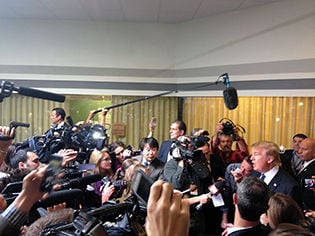
Reporters crowd Republican presidential candidate Donald Trump at a No Labels conference on Oct. 12 in Manchester, N.H.Photo by Lars Gesing/The Colorado Statesman

Altogether, six presidential candidates took the stage — Democrat Jim Webb and Republicans Donald Trump, Chris Christie, Lindsey Graham, George Pataki and John Kasich. Two more Democrats, Bernie Sanders and Martin O’Malley, addressed the forum via satellite ahead of their party’s first primary debate on Tuesday in Las Vegas.
Republican low-tier candidates such as South Carolina Sen. Graham and former New York Gov. Pataki made a virtue out of necessity and struck conciliatory notes, particularly on climate change (Pataki: “Republicans need to embrace science”).
Donald Trump, on the other hand, didn’t come to compromise. He mostly used the stage to remind his audience once again that he is the GOP frontrunner — his usual braggadocio over the polls included.
Trump’s fiery rhetoric registers well with belly-aching Republican primary voters. But on Monday, his familiar tirades against his low-polling opponents (lousy, they’ll drop out soon enough), President Obama (bombed his CBS 60 Minutes interview) and the upcoming Democratic debate (boring — I’m not in it) stroke a nerve with the decidedly more moderate New Hampshire voters in the room.
It so happened that one of the day’s biggest applause lines didn’t belong to Trump or any one politician, but to an audience member who rose to ask Trump whether he believed some of his divisive language on the campaign trail undermined his ability to solve problems.
The real estate mogul argued that as a successful businessman he had to cut deals on a daily basis but that you shouldn’t expect him to abide by political correctness any time soon — a message at odds with the across-the-aisle, bear-hugging theme du jour.
One of Trump’s Republican rivals, New Jersey Gov. Chris Christie, skipped prepared remarks altogether and instead turned the convention into an impromptu town hall meeting.
Thrown a curve ball, he jumped right onto the first question that came his way — whether he would be willing, in the spirit of bipartisanship, to meet states halfway legalizing recreational marijuana. In the past, the New Jersey governor has condemned Colorado’s experiment with legalized pot
“In the spirit of bipartisanship, no!” Christie said. “We have a situation in this country where people can pick and choose which laws they like and which they don’t. I say to folks who want to legalize recreational marijuana: Go to Congress, get a president who is going to legalize and sign it. That’s the way we do things, and not having individual states say, ‘We don’t follow the laws here.’”
The No Labels confab also featured plenty of clowning around, from its own theme song (as intoned by R&B singer Akon) and a green-spandex-wearing mascot called “Problem Solver Man” to the continuously fruitless cheerleading efforts of No Labels vice chair and Coca Cola vice president Lisa Borders (“When I say ‘problem,’ you say ‘solver’!”).
But the message of the day was clear: We need to do something.
A 2014 survey on partisanship by the Pew Research Center showed just how deeply gridlock is rooted, not only in Washington but also in the electorate’s DNA. The study found that one-third of Republicans and 27 percent of Democrats think the other side “is a threat to our nation’s well-being.”
Bottom line: Problem Solver Man might actually need some real superpowers to turn this partisan tide.
[Ed. Note: Lars Gesing, a contributor to The Colorado Statesman and a former intern at the paper, is assistant director of CU News Corps, an explanatory journalism project at the University of Colorado Boulder. Gesing is traveling the country, visiting every presidential battleground state for his project “States in Play.”]


U.S. Rep. Lauren Boebert calls Trump’s 90-day wolf-delisting review ‘real progress’
Marianne Goodland
marianne.goodland@coloradopolitics.com
Updated 13 minutes ago
President Donald Trump last week directed Interior Secretary Doug Burgum to launch a 90-day review on whether gray wolves and Mexican wolves should be removed from Endangered Species Act protections. The order drew mixed reactions for Colorado’s wolf-reintroduction effort, with...
Arapahoe County judge’s frustration with defense lawyer not grounds for new trial
Michael Karlik
michael.karlik@coloradopolitics.com
Updated 3 hours ago
Colorado’s second-highest court decided last week that an Arapahoe County judge’s repeated rebukes of a defense attorney and orders to “be quiet” did not rise to the level of bias or a violation of the defendant’s due process rights. A...
Divided appeals court upholds vehicle theft conviction despite unclear origin of car’s value
Michael Karlik
michael.karlik@coloradopolitics.com
Updated 4 hours ago
Colorado’s second-highest court upheld a defendant’s conviction for aggravated motor vehicle theft last week, even though it was unclear how the Thorton Police Department estimated the value of the stolen car. Officer Marc Faivre encountered Ashley Shelee Gibbens-Martinez in a...
Disgraced ex CBI analyst Missy Woods sentenced to prison in DNA scandal
Jenny Deam
jenny.deam@gazette.com
Updated 14 minutes ago
A Jefferson County district court judge on Tuesday sentenced a disgraced former Colorado Bureau of Investigation DNA analyst to a decade in prison for altering and deleting data in scores of criminal cases for years. Jefferson County District Judge Andrew...
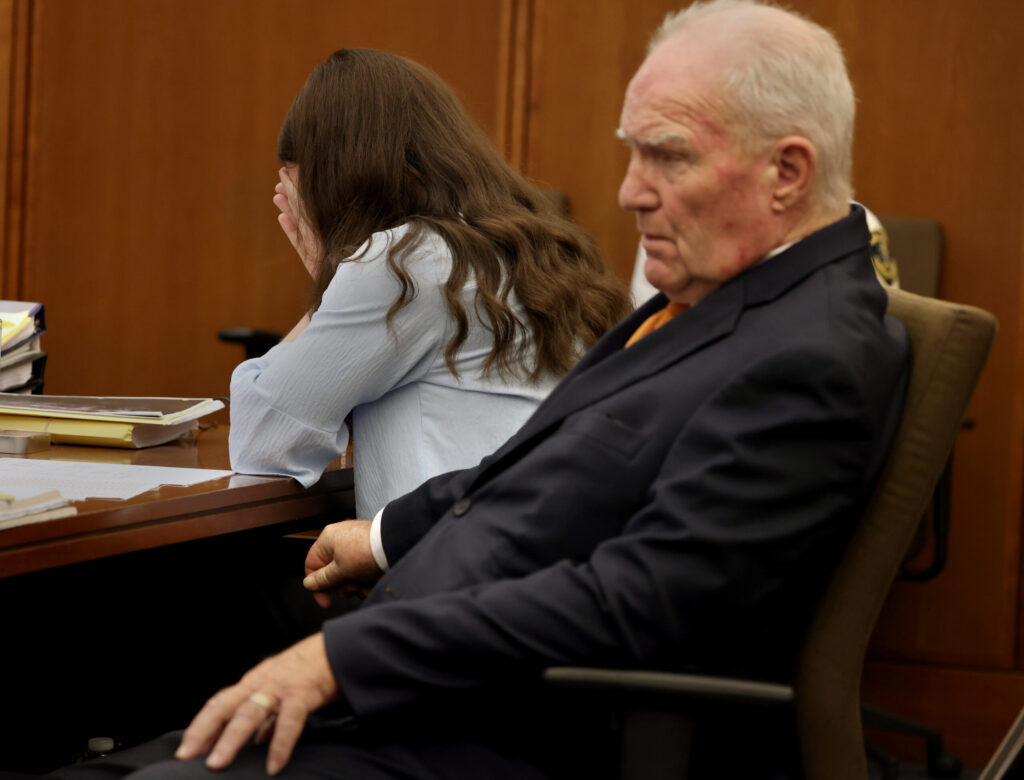
Lindsay Clancy’s attorney makes plea for pardon from Trump
Emily Hallas
emily-hallas@coloradopolitics.com
Updated 6 hours ago
Lindsay Clancy’s attorney urged President Donald Trump on Tuesday to give her a pardon before her murder case could head for another trial. Clancy is a Massachusetts woman who admitted to strangling her three young children in 2023 but argued...
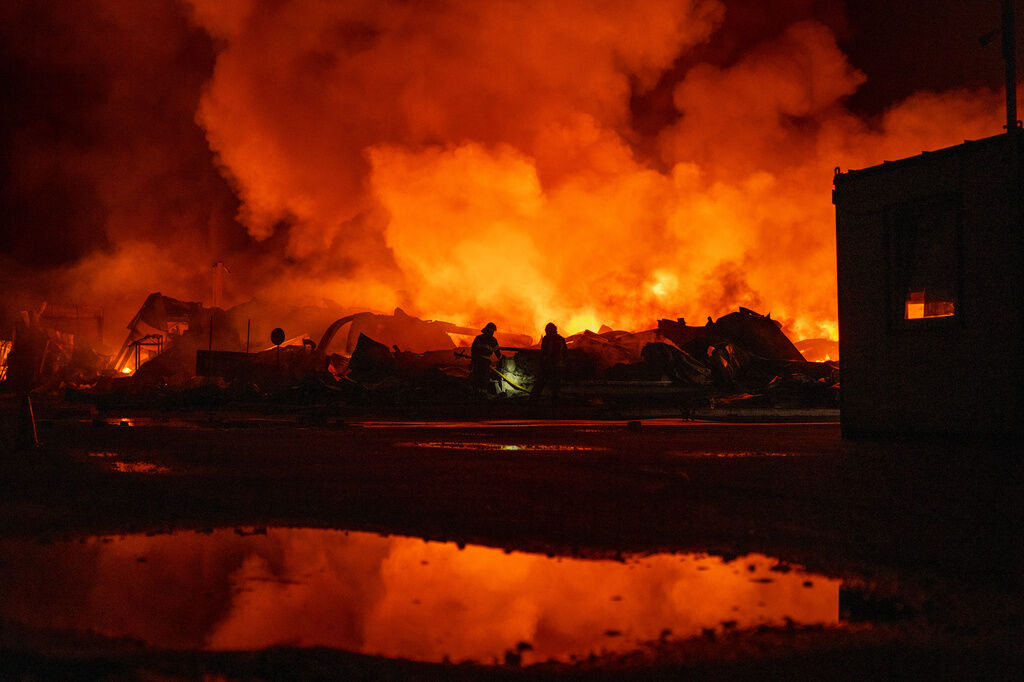
Russia launches massive, deadly, and ‘complex’ attack against Ukraine
Washington Examiner Staff
washington-examiner-staff@coloradopolitics.com
Updated 6 hours ago
Fighting between Ukraine and Russia commenced after a 72-hour pause for diplomatic visits to both countries by U.S. officials. Russia launched a massive attack on Ukraine on Tuesday, firing dozens of cruise missiles and over 140 drones as the war...
Jason Crow endorses Democrats up and down Colorado’s ballot, chips in $100K for campaign efforts
Ernest Luning
ernest.luning@coloradopolitics.com
Updated 7 hours ago
Democratic U.S. Rep. Jason Crow on Tuesday formally endorsed more than 60 Democrats running up and down Colorado’s ballot and said he’s putting $100,000 into statewide and county campaigns and organizing programs to drive turnout in the fall election. Crow,...
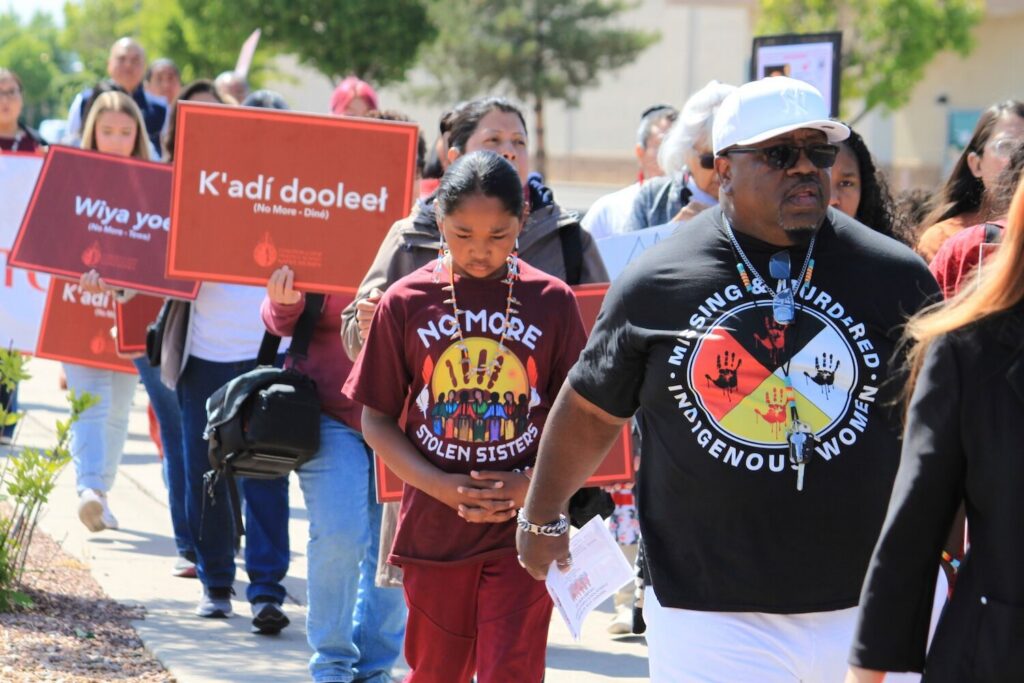
FBI sets $25,000 minimum reward for dozens of unsolved Indian Country cases | OUT WEST ROUNDUP
The Associated Press
the-associated-press@coloradopolitics.com
Updated 8 hours ago
SOUTH DAKOTA Indian Country rewards set SIOUX FALLS — The Federal Bureau of Investigation has established a minimum reward of $25,000 in cases where people went missing or were killed in Indian Country, part of a broader effort to address...
What to know about Canada’s escalating trade war with the US as Carney retaliates with tariffs
The Associated Press
the-associated-press@coloradopolitics.com
Updated 7 hours ago
TORONTO (AP) — Canada struck back at U.S. President Donald Trump on Tuesday with tariffs on about $20 billion worth of U.S. goods, in response to the latest round of tariffs on Canada. The outcome could resonate far beyond Canada,...

With its water source dry, a southeast Colorado town’s clock is ticking
Savannah Eller
savannah-eller@coloradopolitics.com
Updated 7 hours ago
The Cucharas is not a mighty river, but the people of La Veta knew they had a problem brewing when it ran dry at the beginning of June. “We’re getting by,” said La Veta Mayor Doug Brgoch. “It’s not great.”...
PREV
PREVIOUS
Letter: Fields has his facts all wrong: Jeffco has long led on choice
Editor: This is in response to the guest commentary by Michael Fields in the Oct. 2 edition of The Colorado Statesman. Supporters of the current Jeffco school board majority continually talk about “school choice.” Mr. Fields suggests that Jeffco schools, prior to the election of our current school board members, believed in a “one-size-fits-all system […]
Dudley Brown targets squishy Republicans; Holly Coors leads star-studded D.C. excursion
Twenty Years Ago this week in The Colorado Statesman … Colorado Conservative Union chairman Dudley Brown issued “Wanted” notices for the two Republican legislators scoring lowest on the group’s ratings from the 1995 session. State Rep. Russell George, R-Rifle, didn’t vote the way CCU wanted on any of 13 bills, and state Sen. Dave Watenberg, […]