

Denver college assistance measure passes first hurdle
The Denver City Council on Monday gave initial approval to a measure that would seek voter approval for a sales tax hike to support college scholarships for local students.
But if concerns expressed by dissenting councilors are shared by their constituents, backers will have some convincing to do if the proposal makes the November ballot.
The initiative would ask voters to approve a 0.08-percent sales tax hike to create the College Affordability Fund. The first-of-its-kind program would reimburse nonprofits that provide scholarships and other financial assistance for college students.
The tax hike, which would amount to a bit less than a penny on a $10 purchase, would generate about $10 million annually.
Supporters say the proposal would provide relief for young people inclined to go to college but who might be deterred by skyrocketing higher-education costs.
“Resources should not be the reason why somebody does not go to college,” said Council President Chris Herndon, who is sponsoring the measure.
The council voted 9-2 to move the bill to a final vote, scheduled for Aug. 24. Two members abstained from casting votes but there appears to be enough support on the council to let voters determine the measure’s fate.
“We are not voting tonight to pass a tax increase,” said Councilman Paul Kashmann. “We are voting to allow Denver residents a chance to debate this critical issue.”
“I’m not ready to say, ‘Bring on the tax,’ but I’m more than ready to say, ‘Bring on the debate.’”
‘Pay for performance’ program
The management structure of the fund will operate the same as the Denver Preschool Program, the 2006 voter-approved initiative that provides sales tax dollars for preschool tuition assistance. A city-backed, seven-member board will manage the funds.
Nonprofit organizations that provide scholarships and debt relief for students will apply to the board for reimbursement of financial awards.
Students 25 and under who have lived in Denver for at least three years would be eligible to benefit from the fund.
The fund aims to help lower-income students attend college. In order to be eligible, a student’s expected family contribution can be no greater than two and a half times the federal Pell Grant limit. Bill drafters estimate as many as 4,000 students could be served in the program’s first year.
Organizations that provide financial assistance would be eligible for reimbursement costs up to $4,000 per student each year.
The financial assistance provided by the city would be contingent on student success. In a recent interview with The Colorado Statesman, former City Councilwoman Allegra “Happy” Haynes, currently Denver Public Schools Board president and a key backer of the initiative, described the fund as a “pay-for-performance program.”
This means organizations that provide the scholarships will only receive reimbursement if a student is performing well in school. Haynes said this will give nonprofits incentive to track student success and to provide counseling.
“Instead of giving scholarships up front, we are really focusing on the idea of successful completion,” Haynes said. “We want to make sure our kids are getting through college.”
And finishing college has perhaps become more important than ever in Colorado. By 2020, 74 percent of jobs in Colorado will require some kind of higher education, according to a 2014 report by the Colorado Department of Higher Education.
“Yet out of 100 ninth-graders in Colorado today, only 50 go to college and only 22 earn a degree,” the report reads.
The rising cost of tuition is a big reason why students drop out of college, proposal supporters say. And it doesn’t help that the state’s share of cost-burden relief has dropped significantly over the last 15 years.
A separate CDHE report released in January shows that, in 2000, the state contributed 68 percent of higher education funding for a resident student. This meant the student was responsible for 32 percent of college costs. Since then, those percentages have flipped. For the 2014-2015 fiscal year, students bore 66 percent of tuition costs, while the state contributed just 34 percent.
The report does indicate that recent investments by the state have started to reverse that trend. And the 2015-2016 fiscal year budget provides more than $100 million in new general-fund appropriations for higher education funding. Tuition increases will be below 6 percent under this year’s budget.
Still, supporters of the initiative say the state should be doing more to cut college costs.
“What people have failed to realize is, this isn’t our higher education institutions in Colorado just continuing to gouge the students who come there,” Haynes said. “Rising tuitions are almost a direct relationship to the decrease in state funding. Tuition has risen as state support has dropped. It’s almost a direct correlation.”
Council members raise concerns
There was little debate among council members as to the merits of the proposal — everyone agreed that college needs to be more affordable.
But whether it’s the role of city taxpayers to fill funding gaps — especially at the expense of other city needs — is another question.
“The only thing that I do not like about it is I believe it’s pulling up to the wrong fuel pump,” said Councilman Kevin Flynn. A DPS bond measure might provide a more appropriate funding mechanism than a city sales tax, he added.
Flynn, who voted against moving the measure forward, also thinks the money can be better spent elsewhere.
“If I could put a 0.08-percent sales tax on the ballot right now, I’d have sidewalks and streets (maintained) in my district,” he said. “And I have other needs in my district. We have long police response times in my district that need to be brought down.”
Councilwoman Robin Kniech, who abstained from voting Monday, worries passing the initiative might curb the appetite of voters facing future tax hikes for infrastructure needs.
“No one can tell me that our voters are going to be OK with the next thing that we need to bring them that may be an immediate and direct priority in the city,” she said.
Councilwoman Mary Beth Susman, who also voted no, has perhaps been the most vocal critic of the proposal.
“I understand the very serious needs for our citizens to have access to college,” she said. “That’s a very worthy goal. But city council governing is quite removed from education governing in our state. City council has no jurisdiction over any educational institution. It’s the state’s jurisdiction.”
Susman — who once served as vice president of the state’s community college system — said the city council has no purview over how higher education institutions operate. Therefore, colleges and universities would have no accountability to the Denver taxpayers who are helping send students to their schools.
And Susman takes issue with the proposal’s eligibility cut-off age of 25, seeing as how most students enrolled in higher education are 22 or older.
“If we pay tuition rates without any accountability on the part of the colleges for their performance and pay only for the younger student, we’re tackling the wrong end of the problem with the wrong resources,” she said.
While Susman’s mind is made up, others with concerns admitted they were struggling over their vote.
“I can honestly say I still don’t know how I’m going to vote on this,” said Councilman Rafael Espinoza, who abstained from voting. “I’m torn whether to advance this for a ballot measure and let everybody decide on something that has the potential to tax everybody and only support a few.”
But Councilman Paul Lopez provided a passionate and personal narrative to explain his strong support for the measure.
Lopez recalled his early struggles while attending the University of Colorado Denver. He worked multiple jobs and was placed on financial aid probation “almost every semester.”
“I barely made it into college,” he said. “I walked into a room bigger than this — 500 people who don’t look nothing like me, don’t understand where I come from. I felt completely alienated. I couldn’t afford to go.”
Five and a half years later, Lopez earned his degree.
“I’d like to think that (my) diploma has helped not just me, but my neighborhood, and taught me some lessons in how to give back,” he said.
— Twitter: @VicVela1


Unsustainable: How Colorado’s Medicaid spending exploded
Nico Brambila
nico.brambila@denvergazette.com
Updated 14 hours ago
The state’s Medicaid program — which covers about one in four Coloradans — is poised for its largest single-year jump in at least two decades, with officials proposing a $2.3 billion increase, even as lawmakers face a $1.5 billion budget...
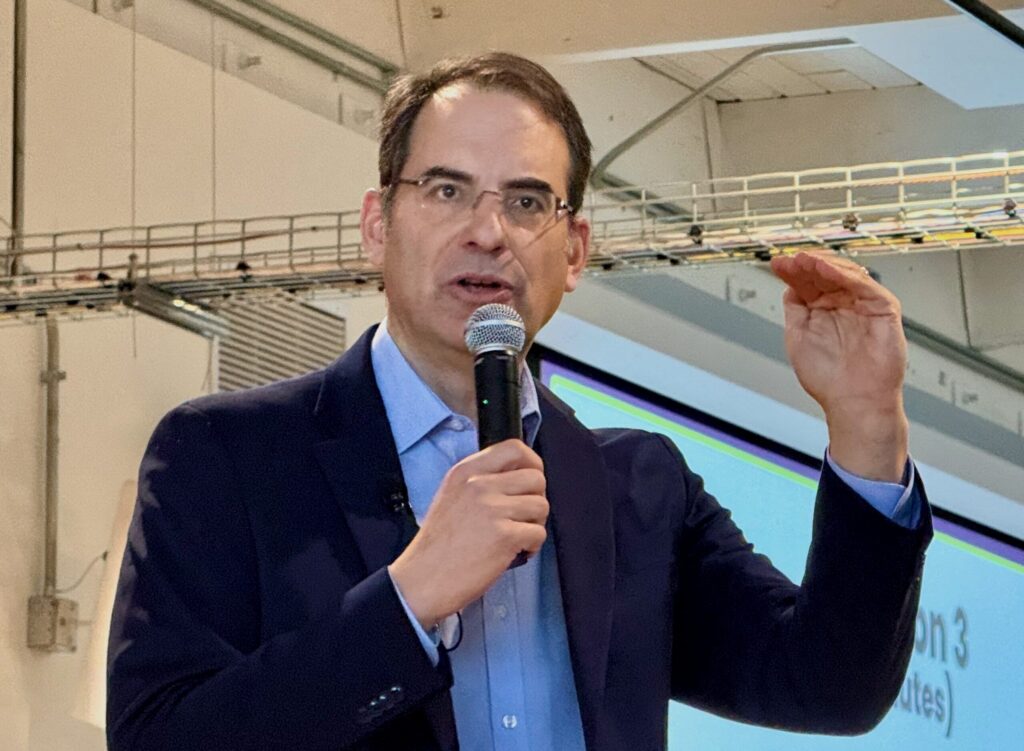
Phil Weiser wins top spot in Colorado’s Democratic gubernatorial primary at party’s state assembly
Ernest Luning
ernest.luning@coloradopolitics.com
Updated 2 days ago
Attorney General Phil Weiser’s name will appear first on Colorado’s Democratic gubernatorial primary ballot after his overwhelming win Saturday at the party’s state assembly in Pueblo. Weiser joins U.S. Sen. Michael Bennet in the June 30 primary for the office...
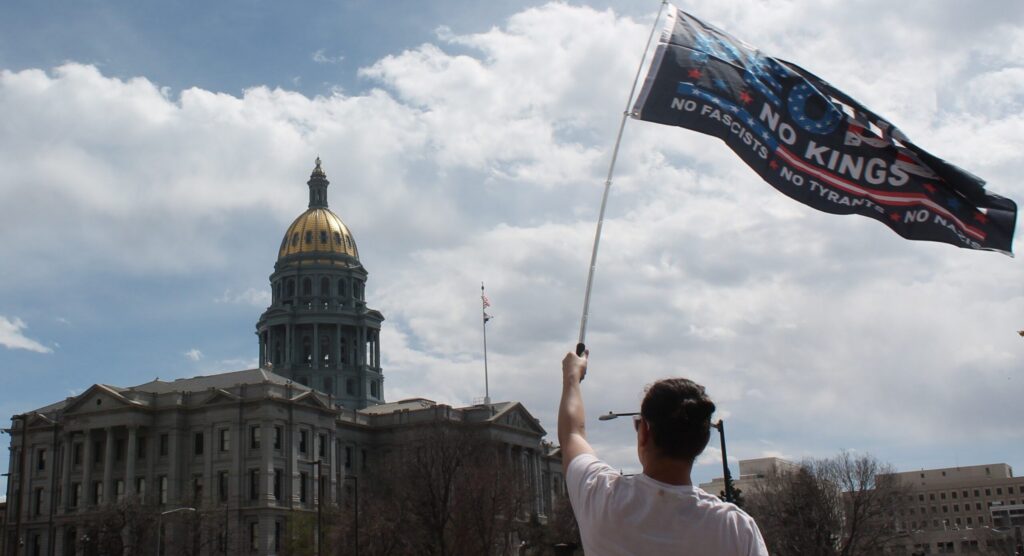
‘No Kings’ protest draws tens of thousands to Colorado state Capitol
Matt Kyle
matt.kyle@denvergazette.com
Updated 2 days ago
The third round of the national No Kings Day protests hit Denver Saturday, when tens of thousands gathered near the Colorado state Capitol to criticize the Trump administration. Organizers addressing the crowd estimated there were 30,000 present for the Saturday...
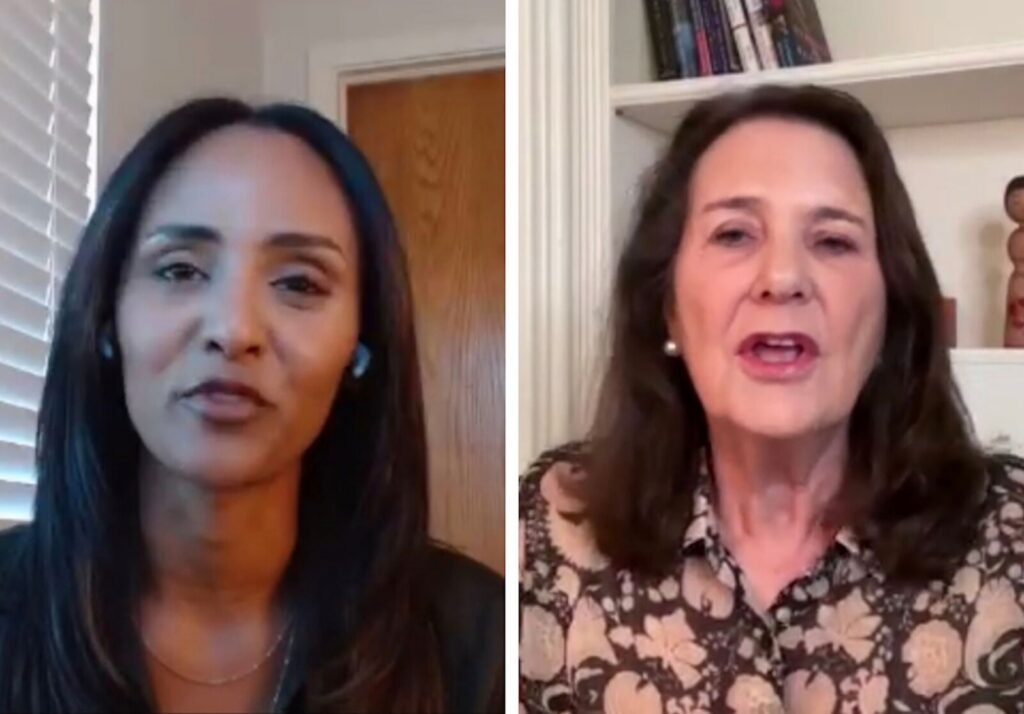
Denver Democrat Diana DeGette trails challenger Melat Kiros at assembly as both qualify for primary
Ernest Luning
ernest.luning@coloradopolitics.com
Updated 2 days ago
U.S. Rep Diana DeGette, a Denver Democrat, qualified for Colorado’s June primary by the skin of her teeth Friday at the party’s district assembly, where the 15-term incumbent received fewer than half as many delegate votes as her challenger, 28-year-old...
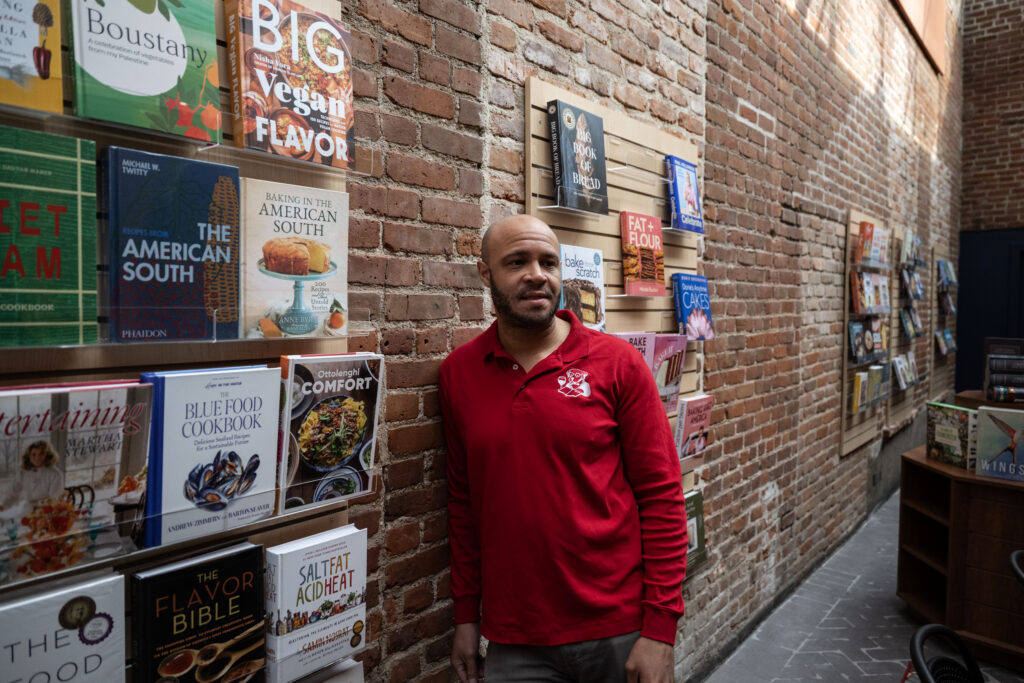
Kwame Spearman warrants plenty of criticism, not cancellation | SONDERMANN
By Eric Sondermann
by-eric-sondermann@coloradopolitics.com
Updated 4 days ago
All of us are flawed humans, some more so than others. This is the tale of Kwame Spearman who burst onto Denver’s business and political scene a handful of years back. His ride has taken a downhill trajectory. Within the...

Colorado Politics Calendar Mar. 30-Apr. 5
Rachael Wright, Special to Colorado Politics
rachael.wright@coloradopolitics.com
Updated 3 days ago
CoPo’s weekly political calendar will help you find political and public-policy events throughout Colorado. It includes candidate and issue campaign events, public policy meetings, court hearings, state and local party conventions, assemblies, debates, rallies, parades, speaking engagements, traveling dignitary appearances,...
Federal judge upholds constitutionality of Colorado campaign contribution limits
Michael Karlik
michael.karlik@coloradopolitics.com
Updated 2 days ago
A federal judge upheld Colorado’s individual campaign contribution limits as constitutional on Thursday, finding that three Republican plaintiffs failed to prove the campaign finance framework violates their First Amendment rights. U.S. District Court Senior Judge John L. Kane recognized that...

Appeals court rejects theory that existing tax revenue undermines need for new fees
Michael Karlik
michael.karlik@coloradopolitics.com
Updated 3 days ago
Colorado’s second-highest court rejected a plaintiff’s claim on Thursday that the tax revenue generated by an existing activity should prevent local governments from imposing new fees aimed at regulating the activity. The question stemmed from Colorado’s unique constraints on taxation...

Colorado ski resorts announce early closures amid historic snowpack lows, high temperatures
Kyla Pearce
kyla.pearce@gazette.com
Updated 3 days ago
As Colorado’s historically low snowpack year comes to a close and spring conditions take over the mountains, the state’s major ski resorts are announcing closing dates — some of which are weeks before historic closing dates. Most of Colorado’s ski...

Marco Rubio’s star power rises at CPAC 2026
Mabinty Quarshie and Samantha-Jo Roth, Washington Examiner
mabinty.quarshie.and.samantha-jo.roth.washington.examiner@gazetteedit.wpenginepowered.com
Updated 3 days ago
GRAPEVINE, Texas — Secretary of State Marco Rubio’s popularity is growing and could possibly boost him to one of the top two spots in the 2028 GOP presidential race, if attendees at the Conservative Political Action Conference are to be believed. ...
PREV
PREVIOUS
Dems pick Larimer County for ’16 state convention
The Colorado Democratic Party’s Executive Committee approved the selection of the Budweiser Events Center in Larimer County for next year’s state convention at the committee’s meeting in Salida on Saturday. As part of an effort to reach out to Democrats across the state, the party has been attempting to schedule more meetings outside the Denver […]

Williams: New election rules protect overseas voters
Earlier this month I adopted several amendments to the Secretary of State elections rules. In large part, these amendments are “cleanup” in nature; that is, they reword certain rules for grammar and clarity, they repeal some unnecessary or overly burdensome rules, and they reflect recent legislative changes in election law. In addition to those more-technical […]