

Coloradans split over EPA’s Clean Power plan
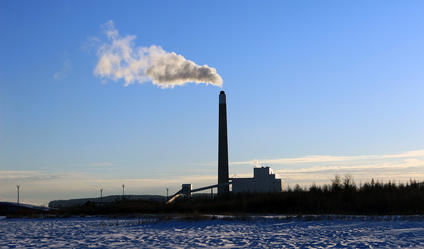
It is either the greatest thing since sliced bread or a drastic action that will lead to breadlines.
The debate over President Obama’s Clean Power Plan left little room for middle ground this week, as environmentalists hailed the Environmental Protection Agency’s tough new climate rules, while others geared up for what could be a lengthy court battle.
The plan, announced Monday, aims to slash climate-warming carbon dioxide emissions produced by U.S. power plants.
The President, in a Facebook announcement over the weekend, called the plan “the biggest, most important step we’ve ever taken to combat climate change.”
The Clean Power Plan is one of several recent moves by Obama to battle climate change, which has become a key focus of his legacy.
The CO2 released by power plants — particularly coal-burning plants — is a major source of greenhouse gases that contribute to climate change.
The new rules, which will be carried out by the EPA, will put the nation on a path toward an energy future that will benefit renewable energy industries, such as wind and solar, proponents say.
“The transition to clean energy is happening, and it’s happening faster than we anticipated,” Janet McCabe, acting assistant administrator for the EPA’s Office of Air and Radiation, said in conference call with reporters the day the rules were released.
The plan aims to cut 2005 power plant emissions levels by 32 percent nationwide within the next 15 years.
Each state has its own goal and can craft its own plan to meet it. Colorado must reduce its 2012 carbon emissions levels by 40 percent by 2030. State officials have until 2018 to submit a plan that satisfies the federal government.
But local environmental groups say the state is already well on its way toward meeting its goal.
“Given clean-energy policies the state has already enacted and the clean-energy policies the state has and is planning to make, Colorado remains very well positioned to comply with the final rule,” John Nielson, clean energy program director for Western Resource Advocates, said during a conference call with reporters on Tuesday.
Those policies include a 2010 law that mandates the state get 30 percent of its electricity from renewable-energy sources by 2020. And last year, the state enacted sweeping air-pollution rules designed to detect and reduce emissions of methane, another greenhouse gas.
Given the rules already in place here, Nielson said Colorado is 75 percent of the way toward meeting the 2030 goal.
“To go the rest of the distance, we have to continue to transition away from the most highly carbon-polluting plants,” Nielson said. “We’re going to have to continue the transition we’ve begun away from some of our high-emitting coal power plants toward cleaner renewables and energy efficiency and natural gas, as well.”
Coal economies could be affected
Coal-burning power plants are the largest source of carbon dioxide emissions in the country, according the EPA. A third of all CO2 emissions come from burning coal.
In 2012, 65 percent of Colorado’s energy sources came from coal-burning plants, Nielson said.
The federal plan could lead to the shuttering of coal plants across the country. And some fear the impact will be felt in Moffat County, which has an economy that depends on coal and where mining provides a significant number of jobs.
Conservative environmental groups blasted Obama’s plan as a job-killer for communities that rely on coal production.
“Obama must really hate coal miners and coal-fired power plant workers, because he’s doing everything he can to put them out of work and in the food line,” said H. Sterling Burnett, a research fellow for environment and energy policy for the Heartland Institute.
“The plan will require closing a substantial number of reliable, cheap-electricity-producing coal-fired power plants,” said James H. Rust, a policy advisor for the Heartland Institute and a retired professor of nuclear engineering at Georgia Tech University.
But Nielson said coal will continue to be “the single largest energy resource of the state” even when the Clean Power Plan is fully implemented. By 2030, he said, coal will provide 40 percent of the state’s overall energy-resource mix.
Economic factors have contributed to the overall shift away from coal, including drops in natural gas and renewable energy costs, he said.
Still, Nielson said he understands the concerns of those in communities like Moffat County.
“I think we want to be aware that the transition is underway and I think we want to be sensitive to the issues of those communities and do all that we can to help with that transition,” he said.
State could join lawsuit
In order for the plan to be realized, it must first withstand a legal challenge.
As of Aug. 5, a dozen coal-reliant states have joined in a lawsuit against the EPA for what they argue is overreach by the federal government.
Colorado could join those states.
That’s after Republican state Attorney General Cynthia Coffman expressed “significant concerns” over the federal plan.
In an emailed statement, Coffman’s office said the plan “gives the states unrealistic emissions requirements and timeliness” and expressed concerns the plan could threaten 74,000 Colorado jobs.
“I will carefully review the EPA’s plan and evaluate its long term consequences for our state,” Coffman said. “But as I put the best interests of Colorado first, it may become necessary to join other states in challenging President Obama’s authority under the Clean Air Act.”
Supporters of the plan feel they are on strong legal footing. In the meantime, they plan to continue educating the public on the benefits of lower carbon emissions.
Dr. Stanley Szefler, the director of Children’s Hospital’s Pediatric Asthma Research Program, said air pollutants create tremendous health risks and that the new federal plan will go a long way toward reducing those risks.
Szefler said the plan will prevent 90,000 asthma attacks from occurring each year and up to 3,600 premature deaths by 2030.
“Even before we see the climate benefits from reduced climate emissions, the Clean Power Plan will immediately reduce other air pollutants that cause asthma attacks, heart attacks and premature death,” Szefler said.
Graham McCahan, senior attorney for the Environmental Defense Fund, said the plan marks a milestone in the effort to address global warming.
“The Clean Power Plan, thankfully, will end the era of unlimited carbon pollution from fossil-fuel-powered plants and is a major turning point in the effort to combat climate change,” he said.
— Twitter: @VicVela1


Secret Service confirms awareness of Iranian state media video threatening Barron Trump’s life
The Associated Press
the-associated-press@coloradopolitics.com
Updated 31 minutes ago
WASHINGTON (AP) — The U.S. Secret Service has confirmed it is aware that Iranian state media has aired a video that appears to threaten the life of Barron Trump, President Donald Trump’s youngest son. “The U.S. Secret Service is aware...

Federal judge hears arguments about Colorado’s 3-day gun purchase waiting period
Michael Karlik
michael.karlik@coloradopolitics.com
Updated 30 minutes ago
A federal judge heard arguments on Monday about the constitutionality of a 2023 Colorado law that generally imposes a three-day waiting period on firearm purchases after the initiation of a background check. The test that the U.S. Supreme Court created...

US set for largest mass visa revocation in history targeting up to 200,000 foreigners, officials say
The Associated Press
the-associated-press@coloradopolitics.com
Updated 34 minutes ago
WASHINGTON (AP) — The Trump administration is preparing to revoke the business and tourism visas of up to 200,000 foreigners who have applied for or are currently seeking asylum status in the United States. If it happens, the move would...

U.S. Supreme Court clears way for Trump mail voting order in advance of midterms
Wire Services
wire-services@coloradopolitics.com
Updated 16 hours ago
WASHINGTON • The U.S. Supreme Court on Monday cleared the way for President Donald Trump to move ahead with an executive order that seeks to restrict the mailing of ballots to American citizens in an eligible voters list. The executive...
Colorado Supreme Court intervenes in Weld County prosecution dismissed due to Missy Woods misconduct
Michael Karlik
michael.karlik@coloradopolitics.com
Updated 16 hours ago
The Colorado Supreme Court ordered a Weld County trial judge last week to respond to the district attorney’s claim that he improperly dismissed a criminal case because of “outrageous” conduct by the Colorado Bureau of Investigation. Daniel Lee Eatinger stood...

Trump opens ‘economic D-Day’ offensive against Iran as war nears six-month mark
Christian Datoc
christian-datoc@coloradopolitics.com
Updated 21 hours ago
President Donald Trump is seeking to increase the financial pressure on Iran with new secondary sanctions on nations and foreign actors propping up the regime’s economy as the war between the United States and Tehran nears the six-month mark. Treasury...

Trump announces 50% tariffs on Canadian cars, auto parts, and steel
Naomi Lim
naomi-lim@coloradopolitics.com
Updated 21 hours ago
President Donald Trump escalated the trade war with Canada after talks collapsed last week, announcing Monday that the United States would impose 50% tariffs on cars, trucks, automotive components, and steel starting Jan. 1, 2027. “Canada has been ripping off...

Iran puts out propaganda video tracking Barron Trump’s location, offering $10 million for his assassination
Timothy Nerozzi
timothy-nerozzi@coloradopolitics.com
Updated 22 hours ago
The Islamic Revolutionary Guard Corps is putting a hit out on President Donald Trump’s son, Barron Trump, with an inflammatory video claiming to track his location. State-run television in Iran is broadcasting a propaganda video claiming to show the locations...
Nevada sues Trump administration over Colorado River cuts
Marianne Goodland
marianne.goodland@coloradopolitics.com
Updated 14 hours ago
On Monday, the state of Nevada filed a lawsuit against the Trump administration and Interior Secretary Doug Burgum, seeking to block the Colorado River management plan. On Friday, Burgum released a “record of decision” that would reduce water allocations to...

Healthcare Freefall: Longer drives, fewer options for maternity care in Colorado
Thelma Grimes
thelma.grimes@coloradopolitics.com
Updated 1 day ago
Editor’s Note: Colorado’s healthcare system is entering a period of accelerating instability — a “tsunami,” as multiple leaders describe it — driven by collapsing hospital finances, shrinking Medicaid reimbursements, disappearing services and a political fight over who is responsible for...
PREV
PREVIOUS

Colorado crowdfunding law goes into effect
Colorado this week becomes the newest state to allow start-up businesses and entrepreneurs an opportunity to “crowdfund” for in-state investors. With new rules put in place, the state’s Division of Securities also hopes to avoid some of the problems that intrastate equity crowdfunding has run into elsewhere. Crowdfunding, which has been around for about 15 […]

Strode: Oral Health Colorado says it’s crucial Denver Water sticks with fluoridation
Promoting policies that support oral health for all Coloradans, on the federal, state, and local levels, is the work of Oral Health Colorado. Currently, the eight-year-old advocacy organization is focused on retaining Denver Water’s policy of water fluoridation. In an interview with Catherine Strode, executive director Deborah Foote says the Denver Water Board Commissioners’ Aug. […]