

Denver city council turnover marks end of an era
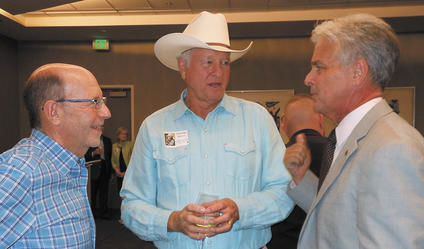
It was certainly a shock to me when Michael Hancock, who graduated from Manual High School with my son, was elected Mayor four years ago. Pundits like to dwell on the theory of generational change following each election. Jeanne Faatz and Charlie Brown, who left the Denver City Council this past week, were first elected to the Legislature a few years either side of 1980. They were part of the first wave of Colorado politicians who were children of the ’60s; veterans of Viet Nam and candidates who could claim John Kennedy’s call to public service had resonated in their lives. This doesn’t mean most were Democrats. To the contrary, the newcomers included Republicans Tom Tancredo, Ann Gorsuch, Steve Durham (recently elected to the State Board of Education), and Cliff Dodge, collectively known as the House Crazies, along with Scott McInnis, Hank Brown, Paul Schauer and Faatz. Democratic legislators included Federico Peña, David Skaggs, Wellington Webb, and yours truly.
Both Faatz and Brown proved exceptionally effective members of City Council, arriving with battle-tested experience and a discerning eye for where they could effectively apply pressure, together with an understanding that fights aren’t often worth the trouble. Many of Jeanne’s constituents had either forgotten, or perhaps they never realized, the critical role she played in placing charter school provisions into state law. It took nearly a decade before she got her legislation just right, affording parents and students more educational choices because of her persistence and strength of character. A moderate, rather than a conservative zealot, Faatz has always pursued results before ideology. Brown, with twenty years outside government, was quick to recognize when bureaucracy was getting in the way of a business start-up, a neighborhood real estate project or community job creation. Also a political moderate, although a Democrat, Charlie rode to the rescue of worthy projects anywhere in the city much to the consternation of several of his colleagues. He was also crucial in making sure the National Western Stock Show remained in Denver once Aurora cast its covetous eyes on its revenue stream.
While this pair is departing public service, their generation won two surprise elections. Political newcomers Tim O’Brien and Wayne New, both approaching 70, had never run for office before, but still captured the auditor’s office and a city council seat. Councilmen Rafael Espinoza and Jolon Clark represent a new generation, but are each only barely younger than the incumbents they replaced. Voters seem to have a knack for selecting candidates that reflect the zeitgeist of the times, while birthdates prove nearly irrelevant. Mayor Hancock wasn’t re-elected because he was young, although he is. His critics have argued that almost anyone could have steered the city through the improving economy and expanding revenues of a national recovery. Tell that to Bill McNichols, who discovered that failing to plow the snow could prove fatal despite 14 relatively error-free years in the mayor’s office. There’s always room for failure.
One of the strengths of democracy is that there are no indispensable leaders. Last year’s officeholders might have departed, but this year brings with it a fresh crop for voters to watch, judge and eventually endorse or replace.
– Miller Hudson is a public affairs consultant and a former state legislator. He can be reached at mnhwriter@msn.com

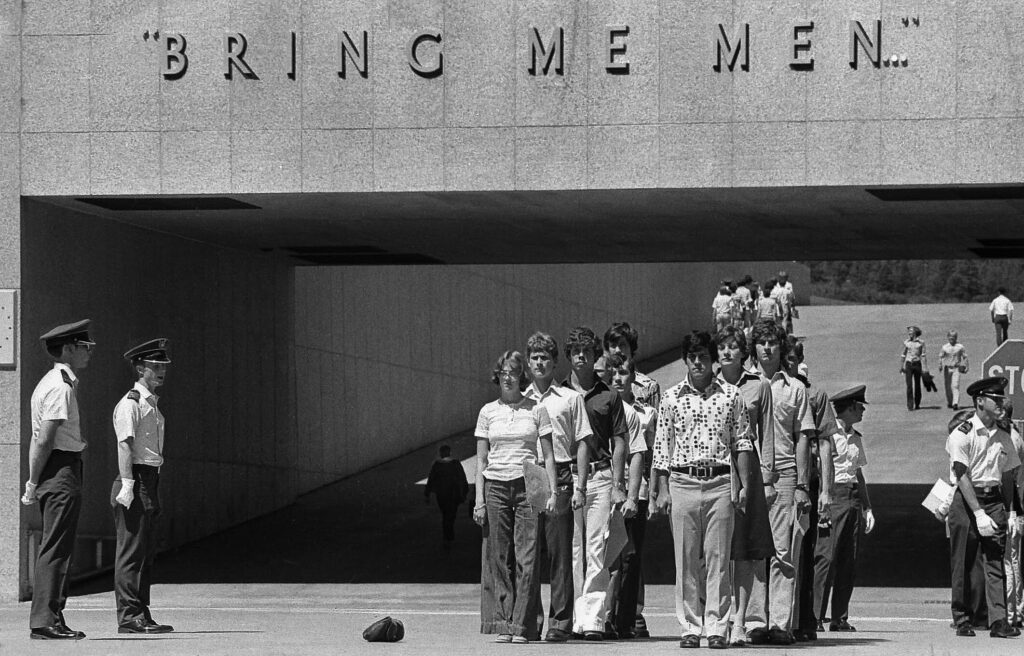
Fifty years later, women reflect on first coed class at the Air Force Academy, struggle for equality
Mary Shinn
mary-shinn@coloradopolitics.com
Updated 22 hours ago
When the first female Air Force Academy cadets arrived 50 years ago this summer, they stood in front of an enormous sign on campus that read “Bring me men.” In the shadow of that sign, Kathleen Utley Kornahrens, one of...

As Lake Powell shrinks, marinas are having to adapt to dwindling water levels | OUT WEST ROUNDUP
The Associated Press
the-associated-press@coloradopolitics.com
Updated 4 days ago
ARIZONA Reservoirs near record lows PAGE — The Colorado River’s Lake Powell, the second largest reservoir in the U.S., is shrinking. A record-dry winter and extreme heat — as well as decades of overuse, chronic drought and climate change —...

A new day? Colorado’s troubled guardianship office pursues ‘cultural reset’
Marianne Goodland
marianne.goodland@coloradopolitics.com
Updated 3 days ago
Colorado’s guardianship program, long criticized for mismanagement and high staff attrition, is undergoing a “cultural reset,” as its new director works to repair partnerships and prepare for a major expansion under recent legislation. Created by lawmakers in 2017, the Office...

U.S. Senate OKs funding bill to avoid government shutdown
Wire Services
wire-services@coloradopolitics.com
Updated 1 day ago
Hemp provision became point of contention WASHINGTON • The U.S. Senate in an overnight vote Saturday approved a short-term measure to fund federal agencies into early December and avoid a government shutdown during the middle of campaign season. The late-summer...
The relevance of Watergate more than a half-century later | SONDERMANN
By Eric Sondermann
by-eric-sondermann@coloradopolitics.com
Updated 4 days ago
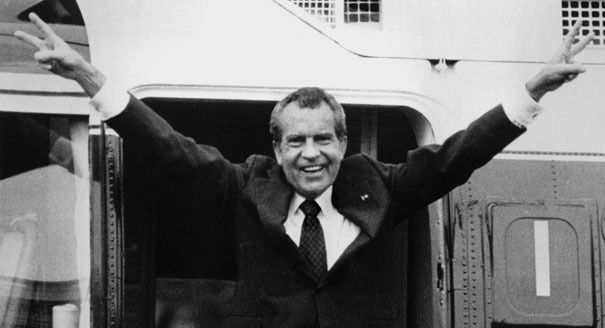
It was the scandal for which all other scandals are now named. In June 1972, a small group of Cuban burglars with high-level connections broke into the headquarters of the Democratic National Committee. Those headquarters were located in the Watergate...
Wirth downplays Social Security disaster talk | A LOOK BACK
Rachael Wright, Special to Colorado Politics
rachael.wright@coloradopolitics.com
Updated 3 days ago
Forty-five years ago this week: “As time goes on,” said Democratic U.S. Rep. Tim Wirth, of the 2nd Congressional District, “we are finding that the safety net, which was proposed earlier this year, has some very large holes in it,”...

Colorado Politics Calendar Aug. 10-16
Rachael Wright, Special to Colorado Politics
rachael.wright@coloradopolitics.com
Updated 3 days ago
CoPo’s weekly political calendar will help you find political and public-policy events throughout Colorado. It includes candidate and issue campaign events, public policy meetings, court hearings, state and local party conventions, assemblies, debates, rallies, parades, speaking engagements, traveling dignitary appearances,...

Democratic group aims Spanish-language TV ad at Gabe Evans in Colorado’s battleground 8th CD
Ernest Luning
ernest.luning@coloradopolitics.com
Updated 2 days ago
A national group tied to House Democratic leadership launched a six-figure Spanish-language TV ad in Colorado this week targeting Republican U.S. Rep. Gabe Evans and the GOP’s signature budget legislation. The 30-second spot is part of $15 million in new...

Colorado School of Mines lands major share in Trump’s $100M mining-education plan
Thelma Grimes
thelma.grimes@coloradopolitics.com
Updated 2 days ago
President Donald Trump on Friday named the Colorado School of Mines among roughly a dozen institutions that will share in a $100 million commitment “to train the next generation of American miners.” Paul Johnson, the university’s president, said he is...
Local party leaders, incoming judge among members of judicial performance commission that violated law
Michael Karlik
michael.karlik@coloradopolitics.com
Updated 21 hours ago
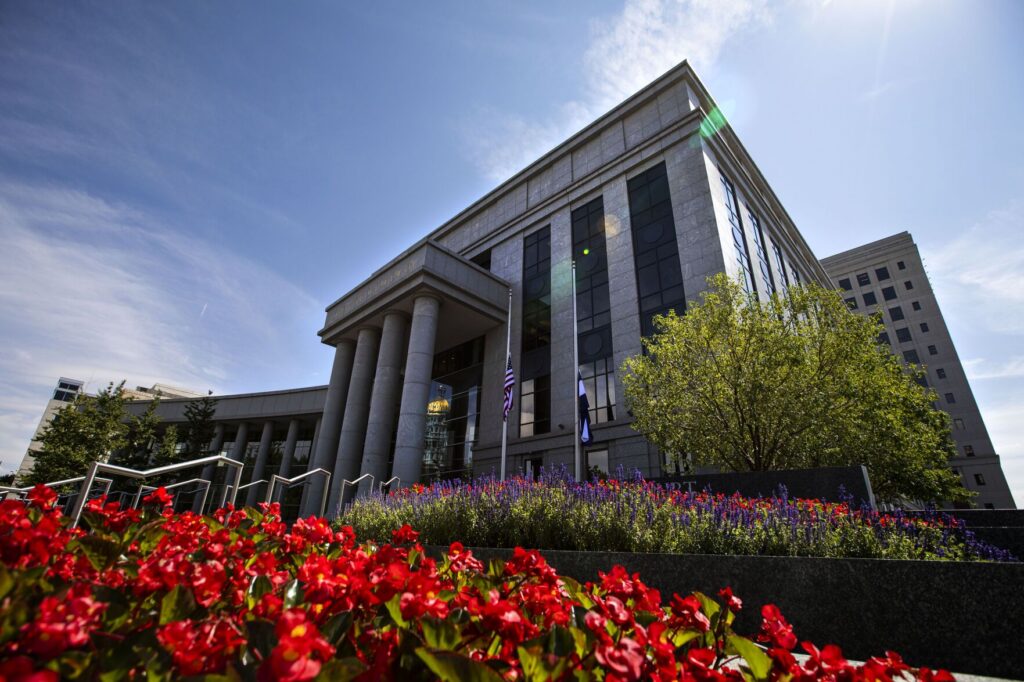
A local Democratic leader and 2024 presidential elector. A legislative aide and leader in the Young Republicans. An incoming county court judge freshly appointed by the governor. They are among the eight members of the northeastern Colorado judicial performance commission...
PREV
PREVIOUS
Hancock sworn in for 2nd term as Denver mayor
Denver Mayor Michael B. Hancock was sworn in for a second term standing alongside his wife, Mary Louise Lee, on Monday before a cheering crowd of roughly 1,000 at the city’s downtown Ellie Caulkins Opera House. “I cannot wait to experience what the future has in store for this place we are all lucky enough […]

Littwin: After the Lafayette shooting, the jury is still out on us
The shooter, we’re told, was a drifter, a word you rarely hear outside Hollywood westerns. But this couldn’t be a western, because in the West, they took your guns at the town limits. Or at least that’s how they did it in the movies. Anyway, the drifter, a 59-year-old man named John Russell Houser, had […]