

Eastern Plains farmers, ranchers grapple with drought, falling egg prices, massive downpour

Fifty Years Ago this week in The Colorado Statesman … U.S. Rep. Frank Evans, a Democrat, labeled some of the engineering and building under way at the Air Force Academy “a debacle,” charging that the architects didn’t have “the vaguest idea of the dramatic changes which take place in temperature in this area.” …

A Mountain States Telephone ad from June 1965 describes the “Pure Joy” found in calling mom.

… Speaking of dramatic changes in the area, Evans convened a conference to discuss how to aid drought-stricken farmers and ranchers in Eastern Colorado at Lamar Junior College. In attendance were state and federal officials and representatives of the Colorado wool, cattle and feed associations, along with the Farmers Union, Colorado Farm Bureau, Colorado State Grange and bankers from the area. The plains farmers concluded that the Farmers Home Administration was doing a good job providing support during the tough times, but there wasn’t enough money to do the job. Crop insurance, which had been discontinued in some Eastern Colorado counties, needed to be restored. The program should be subsidized if losses were too high at the federal agency, conference attendees decided. “We should have a 365-day-a-year conservation program,” said Dick Parrish of Walsh. Farmers Home Administration Deputy Administrator Floyd F. Higbee told a Baca County farmer that he understood difficulties the farmer was encountering selling eggs the way he used to. The poultry industry, Higbee said, is completely integrated, with feed businesses owning or controlling almost all poultry and egg production these days. He said he hoped that integration could be halted before it took over the hog and cattle businesses as well. Drought conditions were worse than they had been during the 1930s, Commissioner of Agriculture Paul Swisher said, but damage has been reduced due to strip cropping, listing, chiseling and retention of stubble to reduce blowing. …
… Noting the irony, the Statesman editorial board wondered if it was a coincidence that on the same day Evans held his conference in Lamar to discuss the drought problems “it started to rain. And it rained … and rained .. and rained. That’s what we call getting results!”
… State Sen. Roy Romer had a thing or two to say about the state’s U.S. senator. “The present representation from Colorado in the U.S. Senate is not only inadequate but does not represent the majority view of the people of the state,” he said. “Senator (Gordon) Allott, who so enthusiastically supported Goldwater’s policies, was clearly rejected by the voters in 1964, and it is my prediction he will be rejected again in 1966.” …
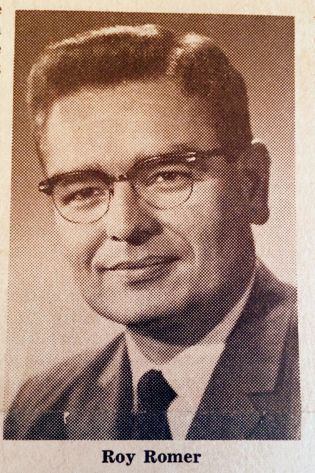
State Sen. Roy Romer in a 1965 photo from the Statesman archives

… The Washington correspondent for the Pueblo Star Journal took note of a looming battle between Allott and Evans over a proposed “permanent pool” for the John Martin Reservoir, with Evans supporting it with legislation and Allot opposed. Except that Allott “has always said he is for a permanent pool, if he can be persuaded the rights of irrigators below the dam won’t be harmed,” a Bent County official wrote. “The only joker is that it is going to be impossible to convince Allott the irrigators won’t be hurt, even though others who have studied the situation feel the Evans bill would provide more than adequate protection.” Allott, a former attorney for the Amity Canal, the chief opponent of the permanent pool, has “ties of friendship and long acquaintance with these people” and, rumor had it, plans to work on their behalf “to thwart a permanent pool” …
…. Nevada Gov. Grant Sawyer and 35 business leaders from Las Vegas invited Denver business and financial executives to a luncheon at the Brown Palace Hotel to inform them about the benefits in Nevada for Colorado industries planning on expanding into the growing state’s consumer markets. The Nevada Foundation was last in Denver making a similar pitch four years earlier. …
… Air Force Academy officials announced that instructors at the school were instituting plans to keep examinations in locked safes until administering tests to cadets. U.S. Rep. Roy McVicker introduced a bill to bring Civil War pensions up to date in terms of purchasing power….
… Secretary of the Treasury Henry Fowler, a Democrat, made a case to enact a five-stage, $4.8 billion excise tax cuts on telephones, automobiles, jewelry and cosmetics in a guest commentary. “This reduction will spur the continued growth of our economy, which is now in the 51st month of unbroken expansion. It will lower prices. It will raise business profits. It will create new jobs. It will end an unfair burden on many businesses and many workers. It will cut the government’s cost of tax collection and enforcements. It will reduce the burden of regressive taxation on low and moderate income families.” He pointed out that many excise taxes were enacted during the Depression and World War II “for sound reasons,” but argued that “it is now time to re-examine them to make sure they do not hold back our growing peacetime economy. We must move forward.” …
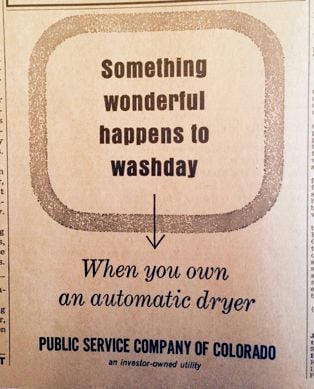
A Public Service Company of Colorado ad from a June 1965 Statesman promotes the wonderful results of owning an automatic clothes dryer.

… State Rep. Betty Kirk West, a Pueblo Democrat, was reported home recuperating from “an attack of internal hemorrhaging, which struck the veteran legislator at her home” the previous Friday, the newspaper reported. She was accepting visitors and welcomed “get well” cards at her room at St. Mary Corwin Hospital in Pueblo.


Immigration reporting measure fuels debate over Colorado’s role with ICE
Marissa Ventrelli
marissa.ventrelli@coloradopolitics.com
Updated 2 hours ago
A coalition of advocacy groups and several district attorneys rallied outside the Colorado Capitol on Thursday to oppose a ballot measure that, if approved by voters in November, would require state and local law enforcement to cooperate with federal immigration...

Colorado Politics Calendar Sept. 14-20
Rachael Wright, Special to Colorado Politics
rachael.wright@coloradopolitics.com
Updated 3 days ago
CoPo’s weekly political calendar will help you find political and public-policy events throughout Colorado. It includes candidate and issue campaign events, public policy meetings, court hearings, state and local party conventions, assemblies, debates, rallies, parades, speaking engagements, traveling dignitary appearances,...
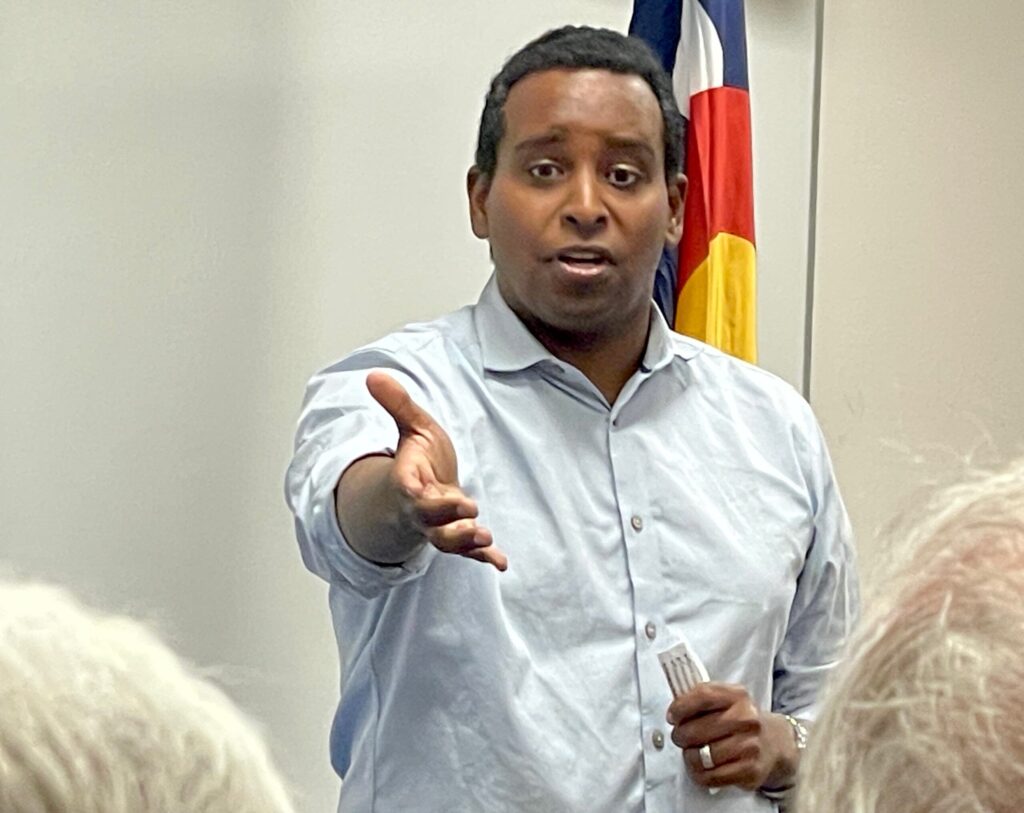
The African roots of three Colorado leaders | SONDERMANN
Eric Sondermann
eric-sondermann@coloradopolitics.com
Updated 2 days ago
Colorado’s political transformation is measured in many ways. A once reliably red state (with asterisks) became purple and is now a rather deep blue. For better or worse, probably the latter, power is ever more consolidated along the Front Range...
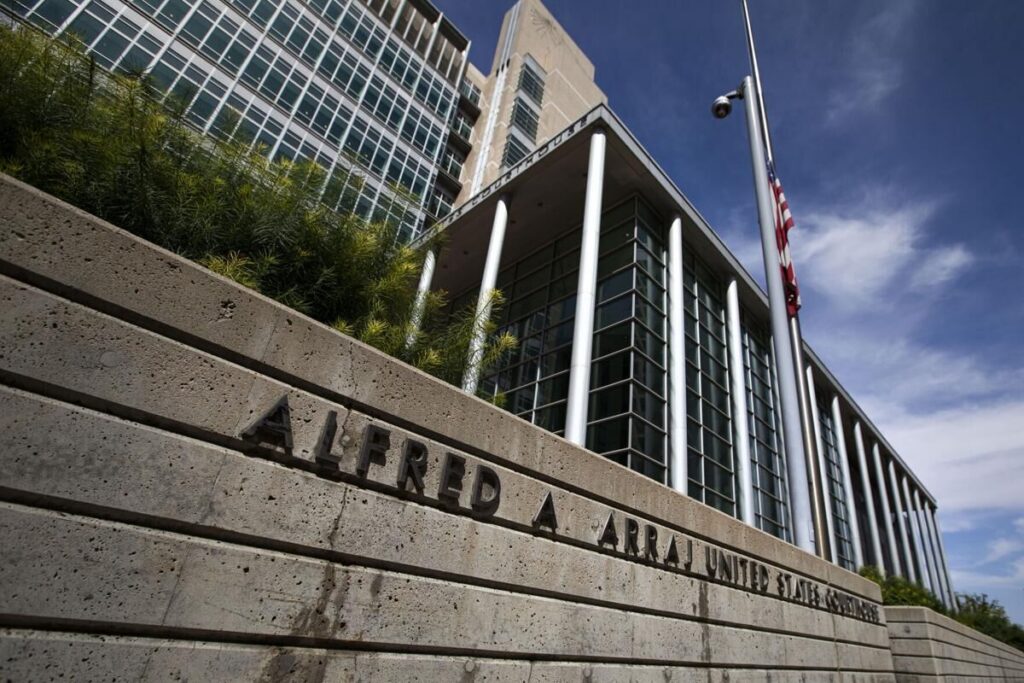
Federal judge green-lights civil trial against ex-Fort Collins DUI officer
Michael Karlik
michael.karlik@coloradopolitics.com
Updated 1 day ago
A federal judge ruled on Thursday that Fort Collins’ former “DUI officer” will face a civil trial for allegedly investigating a motorist for impaired driving without any reasonable suspicion to do so. In recent years, several people arrested by Officer...

Denver police reopen 13 sex assault cases after retesting Missy Woods’ CBI work
Jenny Deam
jenny.deam@gazette.com
Updated 1 day ago
Thirteen previously closed Denver sexual assault cases have been reopened after the city’s crime lab retested DNA evidence once analyzed by former Colorado Bureau of Investigation forensic analyst Yvonne Woods. A police spokesperson told The Denver Gazette the once-closed cases...

Ballot measure aims to shift Colorado sporting goods tax revenue to land, water and wildfire projects
Marissa Ventrelli
marissa.ventrelli@coloradopolitics.com
Updated 2 hours ago
Colorado voters this November will decide whether to direct a share of sales tax revenue from sporting goods — including bicycles and skiing equipment — toward land and water conservation, wildfire prevention and expanding outdoor recreation. Supporters say the measure...

Colorado Supreme Court suspends Mesa County judge pending misconduct investigation
Michael Karlik
michael.karlik@coloradopolitics.com
Updated 4 hours ago
The Colorado Supreme Court suspended Mesa County Court Judge Michael J. Grattan on Thursday amid a misconduct investigation. The court’s Sept. 10 order gave Grattan 21 days to explain why his paid suspension should not continue through the end of...

Trump honors the fallen of the 9/11 terrorist attacks during Pentagon speech
Mabinty Quarshie
mabinty-quarshie@coloradopolitics.com
Updated 1 day ago
President Donald Trump and first lady Melania Trump honored the roughly 3,000 Americans killed during the Sept. 11, 2001, terrorist attacks during a ceremony at the Pentagon. The event marking the 25th anniversary of the deadliest attack on American soil...
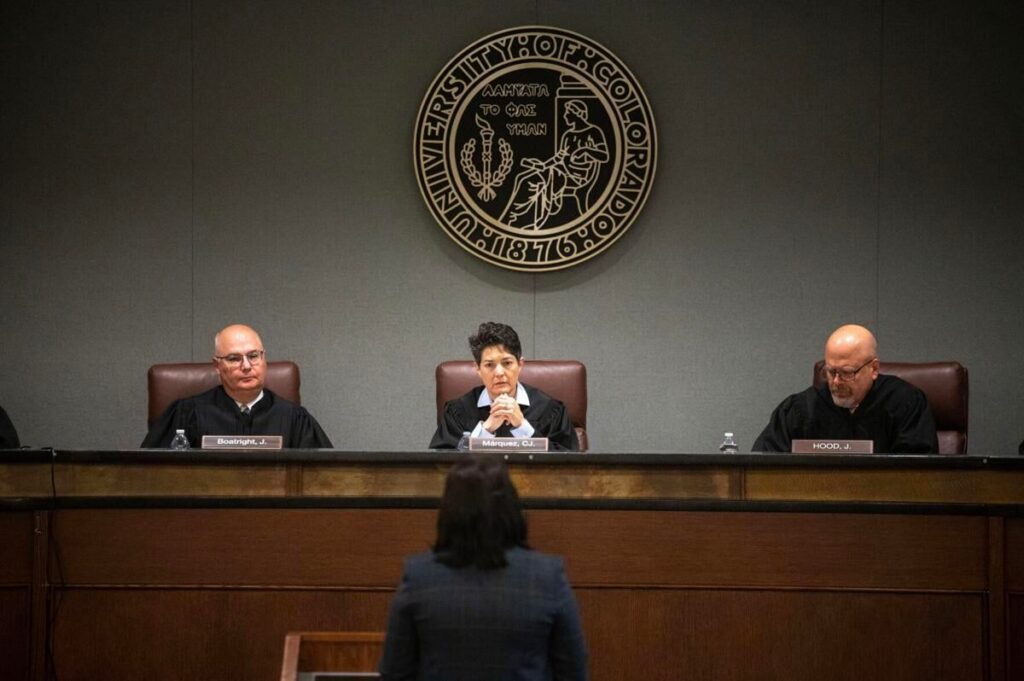
Colorado Supreme Court changes course, dismisses case about special district bonds
Michael Karlik
michael.karlik@coloradopolitics.com
Updated 4 hours ago
The Colorado Supreme Court declined on Friday to decide a dispute between a large-scale Commerce City development and the various districts financing it, after initially showing interest in the ongoing case. Colorado has roughly 2,800 special districts, which are local...

Colorado leaders express outrage and pain following 9/11 attacks | A LOOK BACK
Rachael Wright, Special to Colorado Politics
rachael.wright@coloradopolitics.com
Updated 1 day ago
Twenty-Five Years Ago This Week: “Responding to the 9/11 terrorist attacks, Colorado Gov. Bill Owens told reporters in a statement, “I join all Coloradans in expressing outrage and horror at the senseless terrorist bombings in New York and Washington D.C....
PREV
PREVIOUS
Mountain climber Benitez faces hurdles to grow state’s outdoor industry
Luis Benitez has encountered all sorts of hardships as an elite mountaineer. He’s scaled the highest points on all seven continents 32 times and helped to rebuild a climbing company devastated by the 1996 Into Thin Air Mount Everest disaster. But some of his most daunting challenges could come in his new role as director […]

Hickenlooper declares first steps in ‘Colorado Beautiful’ initiative
Gov. John Hickenlooper this week outlined the first steps in a conservation and outdoors recreation initiative that ultimately aims to enable every Coloradan to live within a 10-minute walk of a “vibrant, green space.” “Our goal would be to get the majority of Coloradans to, on a regular basis, appreciate that space,” Hickenlooper told reporters. […]