

Tense debate precedes re-up of consumer watchdog office

The final day of the legislative session featured a fierce debate over the reauthorization of a consumer watchdog agency, one that resulted in most Senate Democrats refusing to vote on a Republican-backed measure for its continuance.
“This will be one of the things we’ve done that I’m not proud of this session,” Senate Minority Leader Morgan Carroll, D-Aurora, said of a Republican bill that would strip a key component from the purview of the Office of the Consumer Counsel.
The OCC is an agency that advocates on behalf of homeowners, small businesses and agricultural consumers when companies seek gas, electric and telephone rate increases. The agency was at risk of shuttering on July 1 without legislative reauthorization.
Once signed into law, the Republican-sponsored Senate Bill 271 will keep the agency up and running for another six years.
But Democrats were irate that the bill stripped telecommunications advocacy from the OCC’s role. Democrats and consumer advocates worry that its removal will result in higher telephone rates and will adversely impact 911 services.


“There is no good reason to do this and it will hurt people,” a stern Carroll said during a May 6 floor debate. “And when their services go down, and their rates go up, it will be a stain on this chamber and this session — and one with serious consequences.”
Senate Democrats were frustrated that Republicans refused to concur with a House amendment that would have continued OCC telecom advocacy. And they were just as upset that Republicans refused their request to send the bill to a special conference committee, where differences between the parties might have been worked out.
At one point, Democrats stormed out of the Senate in protest over Republicans’ handling of the process. In the end, all but one Democratic senator refused to vote on the bill. In the House, where members begrudgingly accepted the Senate’s bill, several Democratic lawmakers removed their names from bill sponsorship.
But Republicans and those in the telecom industry say the OCC’s role in advocating on behalf of consumers over telephone matters is no longer necessary because the Public Utilities Commission will no longer regulate phone rates as of July 1.
Besides, they argued, other important telecommunications functions like 911 services will continue to be regulated in spite of the OCC’s reduced role.
“We do know the PUC has 100 percent authority on telecom and 911 and they’re growing their staff to deal with it,” said Sen. Jerry Sonnenberg, R-Sterling.
Agency has saved millions
When utility companies seek rate increases, OCC staffers often provide expert testimony and analysis on behalf of consumers. And the agency has been effective in that role since it was created by the Legislature in 1984.
The office has saved consumers $1.7 billion over the last 30 years. Since its last reauthorization five years ago, the OCC has saved consumers $45 million, according to agency statistics.
Supporters of continued telecom advocacy point to $23 million that the agency has saved consumers for its intervention in nine telephone utility cases over the last five years. Consumer advocates worry that the loss of OCC intervention could result in poor telephone service and higher rates.
Those same advocates also insist that the OCC is needed to ensure consumers have a voice when telephone companies apply for money that is a part of the Colorado High Cost Support Mechanism. This is a pool of about $54 million that is set up to provide phone service in rural areas.
And consumer advocates warn that 911 services could suffer without the OCC there to review fees, especially for those in rural parts of the state, where 911 service fees are higher than in metro areas.
Bill Levis, a former director of the OCC, said during a recent House Transportation and Energy Committee hearing that telecom consumers will now have to argue on behalf of themselves on complex issues at PUC hearings.
“Most consumers, even if they’ve watched Law & Order, don’t know the rules of evidence,” Levis said.
But supporters of SB 271 argue that because of telecom deregulation legislation from last year, the OCC’s advocacy in that area is no longer necessary.
“A lot has changed in telecom since 1984,” Peter Kirchoff, executive director of the Colorado Telecommunications Association, told the House Transportation and Energy Committee in April. “The regulation hasn’t caught up with technology.”
The PUC will have the option of resuming telecommunications regulations in 2018, if it finds there is a continued need for the oversight. If it doesn’t, the OCC’s role in the telecom regulatory process will be diminished.
The Democrat-majority House had its own OCC reauthorization bill in House Bill 1381, which would have kept the agency’s telecom role intact. However, that bill died in the Senate.
The Senate reauthorization bill is now on its way to Gov. John Hickenlooper’s desk.
— Twitter: @VicVela1


Registered voters on the eve of the 2026 primaries | Cronin & Loevy
Tom Cronin Bob Loevy
tom-cronin-bob-loevy@coloradopolitics.com
Updated 1 day ago
The Colorado Secretary of State’s Office has published the latest voter registration figures for the state and its counties as of June. Colorado ranks among the highest states for independent, or unaffiliated, voters. Only Alaska and Massachusetts have more. New Hampshire, New Jersey, Maine and Oregon also rank highly. So here...
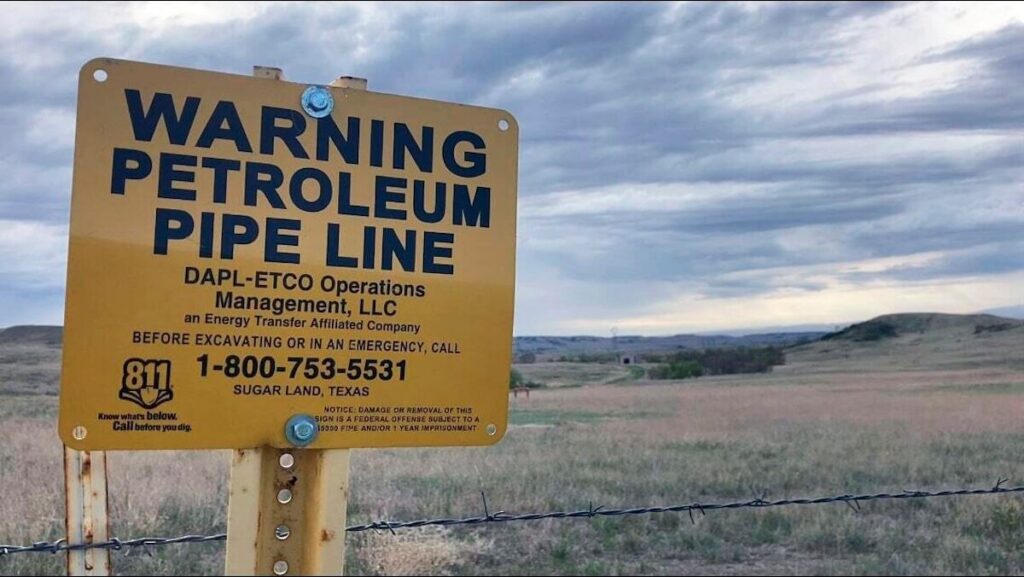
A decade after Standing Rock protests, Dakota Access oil pipeline segment gets OK | OUT WEST ROUNDUP
The Associated Press
the-associated-press@coloradopolitics.com
Updated 4 days ago
NORTH DAKOTA Pipeline segment OK’d BISMARCK — Federal officials on May 21 gave final approval for the Dakota Access oil pipeline to continue operating its contentious Missouri River crossing, an outcome that comes nearly a decade after boisterous protests against...
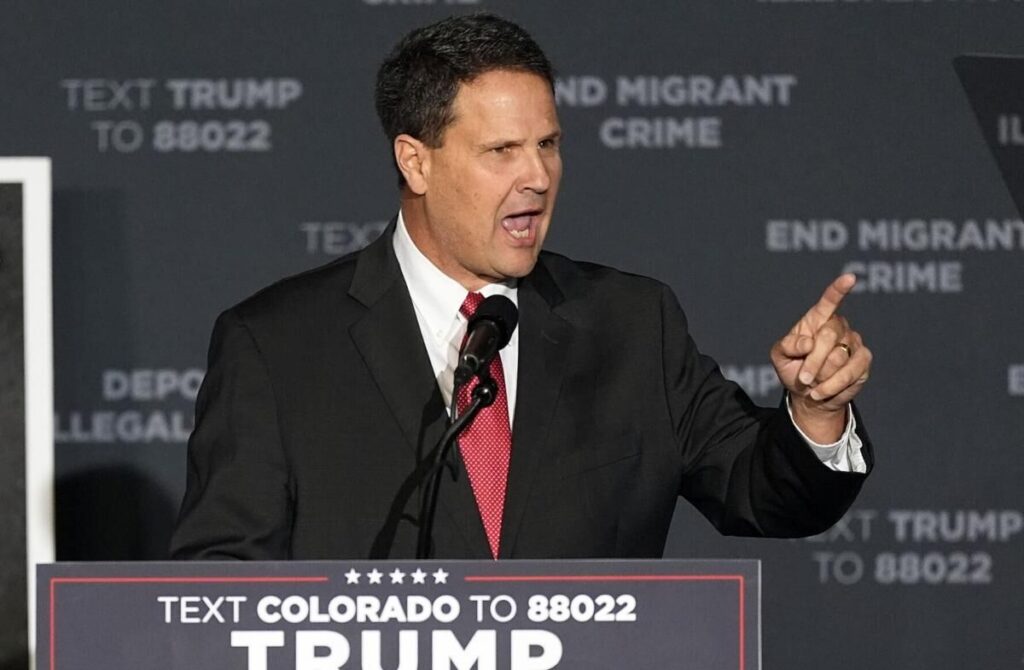
Rep. Jeff Crank thinks Democrats are too focused on Trump, not enough on Colorado Springs | Vince Bzdek
Vince Bzdek
vince.bzdek@gazette.com
Updated 8 hours ago
For U.S. Rep. Jeff Crank, who’s unopposed in the Republican primary for the 5th Congressional District but the main target of both candidates in the lively Democratic primary, the big question in the midterms is not who will stand up...

Colorado Politics Calendar June 22-28
Rachael Wright, Special to Colorado Politics
rachael.wright@coloradopolitics.com
Updated 5 days ago
CoPo’s weekly political calendar will help you find political and public-policy events throughout Colorado. It includes candidate and issue campaign events, public policy meetings, court hearings, state and local party conventions, assemblies, debates, rallies, parades, speaking engagements, traveling dignitary appearances,...

Vice president attends Denver event to support energy freedom; more news from the past | A LOOK BACK
Rachael Wright, Special to Colorado Politics
rachael.wright@coloradopolitics.com
Updated 5 days ago
Forty-Five Years Ago This Week: Vice President George H.W. Bush flew to Denver to address the annual meeting of the American Association of Petroleum Landmen, where he assured the audience that the Reagan administration’s strong belief was that the private...
Does character matter anymore? | SONDERMANN
By Eric Sondermann
by-eric-sondermann@coloradopolitics.com
Updated 4 days ago
The last few weeks have been illuminating in the manner of a headlamp pointing the way to some deep, dark, murky netherworld. Graham Platner, a hero to the populist set on the Democratic side, became his party’s Senate nominee in...

A special edition of Capitol M: In remembrance of the outrageous Lynn Bartels
Marianne Goodland
marianne.goodland@coloradopolitics.com
Updated 2 days ago
I had Lynn Bartels envy. For almost longer than I can remember. There, I said it. And it’s true. Lynn died Friday, age 69, after a short battle with glioblastoma. I was just heartsick when that news of her diagnosis...

Bernie Sanders endorses DeGette challenger Melat Kiros in Colorado’s 1st CD Democratic primary
Ernest Luning
ernest.luning@coloradopolitics.com
Updated 2 days ago
U.S. Sen. Bernie Sanders on Friday endorsed congressional candidate Melat Kiros, one of two Democrats challenging 15-term U.S. Rep. Diana DeGette in Colorado’s June primary. Sanders, a Vermont independent who caucuses with the Democrats, called the 29-year-old Kiros “exactly the...
Trump’s 10th Circuit nominee recuses from cases against federal government without explanation
Michael Karlik
michael.karlik@coloradopolitics.com
Updated 10 hours ago
President Donald Trump’s nominee to fill a vacancy on the Denver-based federal appeals court recused himself without a clear explanation from nine cases against the executive branch while he was undergoing vetting by the White House this spring. U.S. District...

Trump’s low approval unchanged as Iran war perceptions continue to plague him
Rena Rowe, Washington Examiner
rena.rowe.washington.examiner@gazetteedit.wpenginepowered.com
Updated 2 days ago
A new poll shows most Americans disapprove of President Donald Trump’s handling of Iran, with views on the issue closely mirroring his overall job approval rating. Just 37% of U.S. adults approve of the way Trump is handling his presidency,...
PREV
PREVIOUS
Legislators to get pay raise
While the General Assembly spent much of their last three days killing bills right and left, they did decide to give a pay hike to future legislators, and state and county elected officials. Currently, Colorado’s lawmakers make $30,000 per year. According to the National Conference of State Legislatures, Colorado’s pay ranks at about the mid-point […]

Denver municipal elections: More of the same, but different
Denver Mayor Michael Hancock strolled to a second term on Tuesday against a handful of mostly unknown challengers, but voters stunned two city council veterans, sending one packing by a wide margin and denying another his bid for election as city auditor. The message in the low turnout, nonpartisan election was clear: More of the […]