

Felony DUI bill gets nod in Senate Judiciary committee, moves on to Finance

The Senate Judiciary committee Tuesday morning unanimously passed a bipartisan bill that would make repeated drunk driving a felony offense in the state of Colorado.
House Bill 15-1043, with Senate sponsors John Cooke, R-Greeley, a member of the Judiciary committee, and Mike Johnston, D-Denver, got a 5-0 nod after several victims of accidents involving drunk driving and their family members had delivered emotional testimony.
Under current law, a DUI is a misdemeanor offense. HB 1043 amends that and makes a fourth such offense a class 4 felony – which could lead to two to six years in prison. Under the proposed language, a repeated DUI also becomes a class 4 felony if the violation occurred within seven years of two prior convictions if either a minor was in the car, the violation caused damage or injury, the defendant fled the scene or if the violator had a blood alcohol content of 0.15 or higher within two hours of the offense.
After a similar bill failed last year over cost concerns, a series of recent deadly accidents involving drunk drivers helps HB 1043’s chances to make its way to the governor’s desk and into law this time around.

In his State of the State address in January, Gov. Hickenlooper had pronounced the passage of a felony DUI bill a key priority of the ensuing session, and he has continued to voice his support for its passage – including via Dave Hall, a lobbyist for the Colorado State Patrol who testified on behalf of the administration at Tuesday’s hearing. Colorado is one of only four states in the union without a felony DUI law.
Opponents of the bill, who include the Colorado Criminal Defense Bar, urged lawmakers to vote no on the bill Tuesday. Their argument was one that had helped doom last year’s similar proposal: It would do nothing to cure the problem of alcoholism at the root of repeated DUIs.
But Sen. Cooke, who was involved in an accident with a drunk driver himself in November, but suffered only minor injuries, opposed such claims. He pointed to a section in the bill that urges the courts to consider incarceration only as the last resort. “[The court] must determine that incarceration is the most suitable option given the facts and circumstances of the case, including the defendant’s willingness to participate in treatment,” the bills language reads. “Additionally, the court shall consider whether all other reasonable and appropriate sanctions and responses to the violation (…) have been exhausted, do not appear likely to be successful if tried, or present an unacceptable risk to public safety.”
Nonetheless, Sen. Johnston said at the hearing, “when you have the case of someone who is a serial drunk driver with 6, 7, 8, 9 or 10 DUIs, who is putting people’s lives at risk, there is the opportunity for this person to serve time in prison” – before a deadly accident happens.
The felony DUI bill passed the House on a 64-1 vote April 15, with Rep. Justin Everett, R-Littleton, forming the sole opposition. It had stalled for weeks amid recurring concerns over the price tag. The original bill was expected to cost $17.5 million by fiscal year 2018. As amended, the cost would now be $8 million by 2018.
After Tuesday’s vote in the Judiciary committee, the bill now heads to Finance before it will also have to clear the Appropriations committee hurdle.
– lars@coloradostatesman.com & @LarsGesing


Greeley voters halt landmark development project
Hap Fry, Special to The Gazette
hap-fry@gazette.com
Updated 3 hours ago
GREELEY – The landscape-altering Cascadia development project has been put on ice, according to unofficial results of a city referendum on the project Tuesday. The proposed development would have included an 8,600-seat multiuse arena and ice center that would be home to the Colorado Eagles,...
State audit: Rape kit backlog reduced but more work needed to hit goal
Jenny Deam
jenny-deam@coloradopolitics.com
Updated 5 hours ago
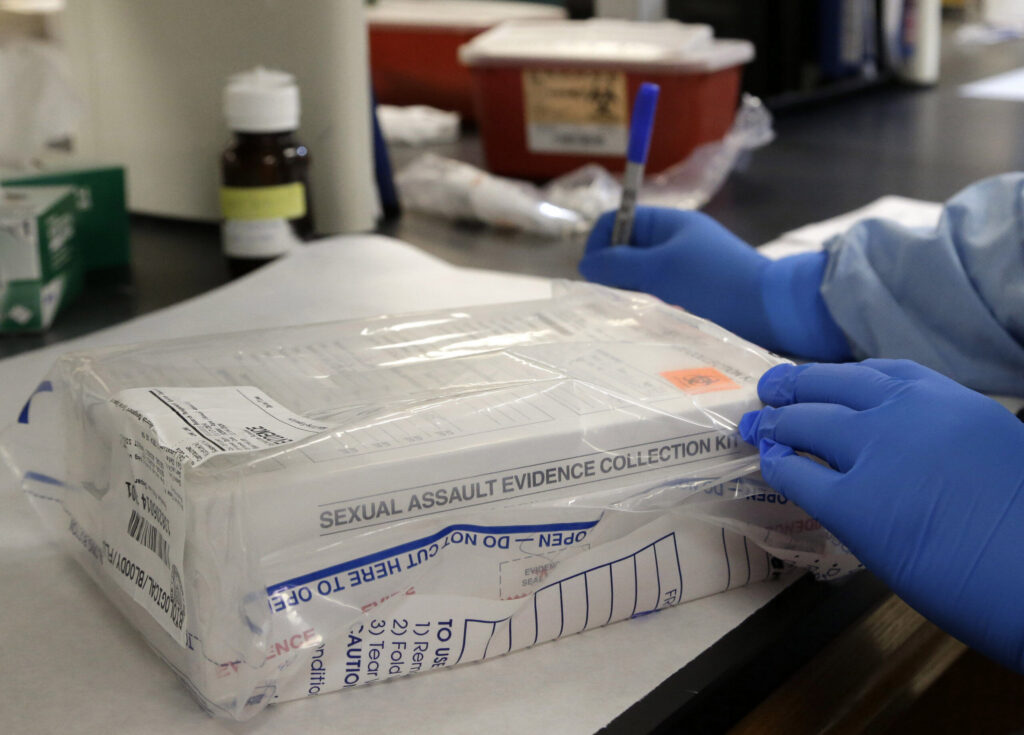
In the past year, the Colorado Bureau of Investigation has slashed the time it takes to process DNA collected in sexual assault cases, but the agency still is far short of its turnaround goal, the state auditor reported on Wednesday....
Daniel Domenico to take over as Colorado’s chief federal judge
Michael Karlik
michael.karlik@coloradopolitics.com
Updated 9 hours ago
Daniel D. Domenico will become the new chief judge of Colorado’s federal trial court next week, a role that encompasses the administration of the court as well as a judicial caseload. Under federal law, the chief judge of a U.S....
10th Circuit upholds violations, sanctions against Colorado Springs mental health hospital
Michael Karlik
michael.karlik@coloradopolitics.com
Updated 10 hours ago
The Denver-based federal appeals court agreed earlier this month that the government properly cited and penalized a Colorado Springs psychiatric hospital for failing to protect its staff from known risks posed by patients. The Occupational Safety and Health Administration inspected...
Vance working with DOJ and Treasury after Trump announces ‘war on fraud’
David Zimmermann Washington Examiner
davidzimmermannwashingtonexaminer@wpstage.coloradopolitics.com
Updated 11 hours ago
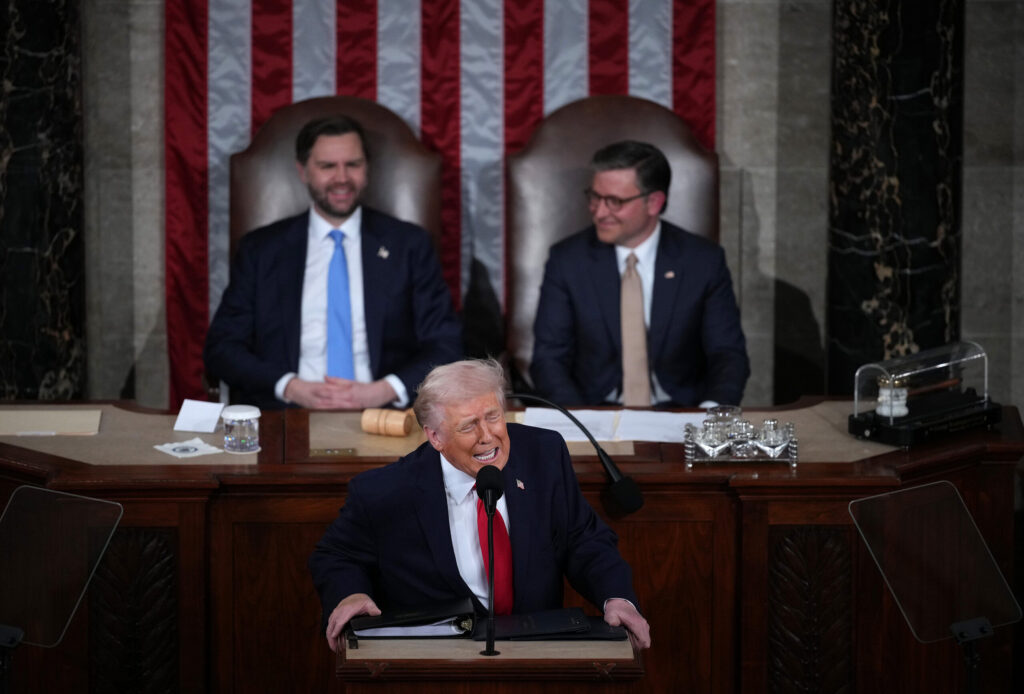
Vice President JD Vance confirmed on Wednesday that he is working with the Justice and Treasury Departments to root out fraud nationwide. During the State of the Union address Tuesday night, President Donald Trump announced Vance would lead the administration’s “war on...
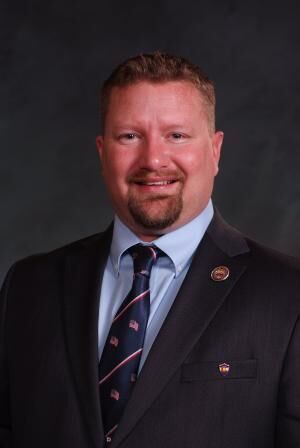
House Ethics Committee dismisses some claims, advances others against Rep. Ron Weinberg
Marianne Goodland
marianne.goodland@coloradopolitics.com
Updated 9 hours ago
The House Ethics Committee voted on Wednesday to accept three allegations filed against Rep. Ron Weinberg, R-Loveland, but combined two into one subject area. The two issues involve inappropriate comments made to female lawmakers in two separate incidents and the...
Bipartisan opposition sinks eviction bill in Colorado
Marissa Ventrelli
marissa.ventrelli@coloradopolitics.com
Updated 6 hours ago
Two Democrats sided with Republicans on a legislative panel to reject a proposal that would have made several changes to eviction filings and proceedings, including requiring judges to suppress court records. Sponsored by Rep. Junie Joseph, D-Boulder, House Bill 1047...
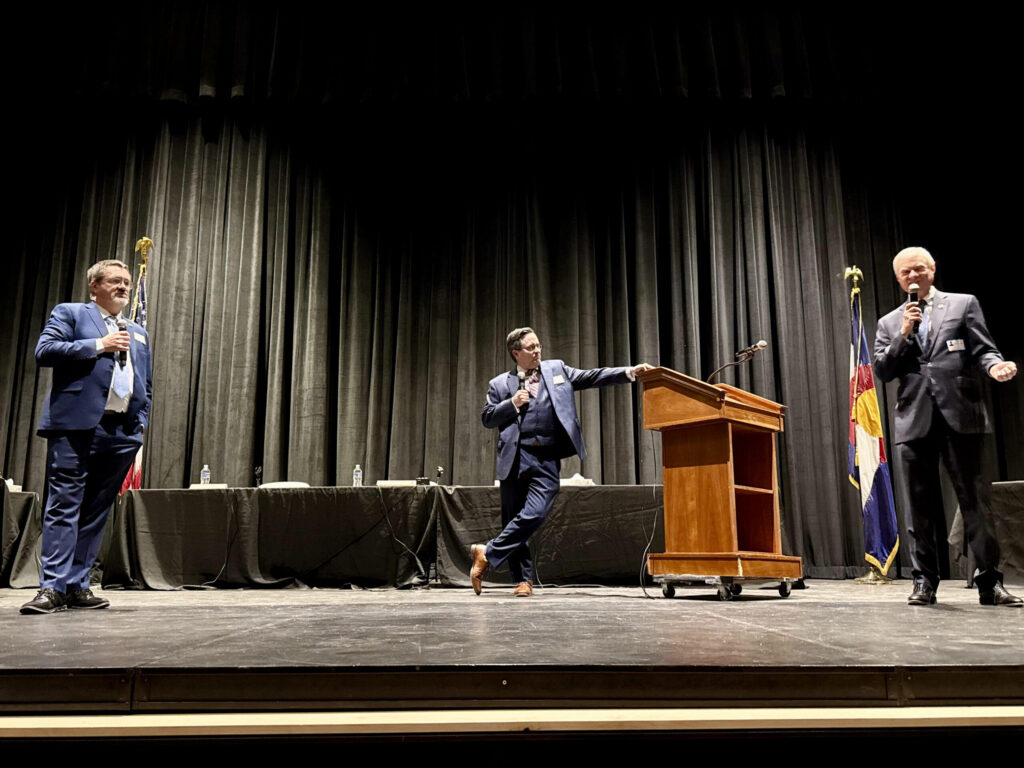
Appeals judges tell Boulder students about workload, ‘attack mode’ during school visit
Michael Karlik
michael.karlik@coloradopolitics.com
Updated 11 hours ago
Three judges on Colorado’s second-highest court traveled to Boulder on Tuesday to hear oral arguments in real cases and field questions from students about their professional paths, their workload on the Court of Appeals, and their approach to interacting with...
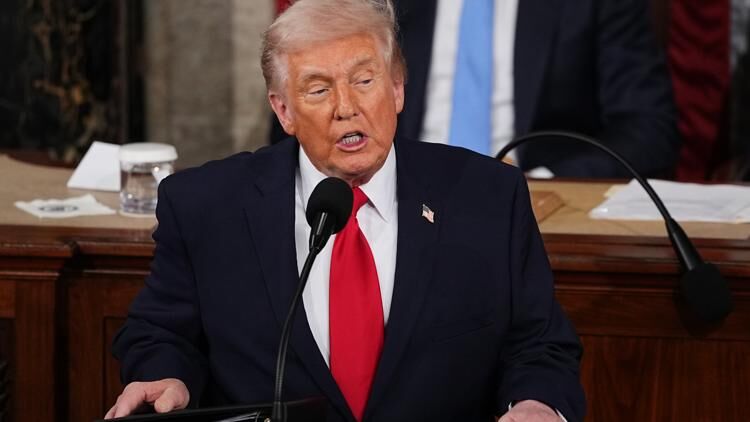
State of the Union: Here’s what Trump didn’t say
W. James Antle III Washington Examiner
wjamesantleiiiwashingtonexaminer@wpstage.coloradopolitics.com
Updated 12 hours ago
President Donald Trump made the case that happy days are here again in the first State of the Union of his second term, but there was little talk of transition or pain. “The state of our union is strong,” he...
Ex-Cherry Creek superintendent must repay one month’s salary after abrupt resignation
Nico Brambila
nico.brambila@denvergazette.com
Updated 8 hours ago
Former Cherry Creek School District Superintendent Chris Smith must repay one month’s salary for failing to provide the board of education with three-month’s notice of his resignation, The Denver Gazette has learned. The board of education has not waived the...
PREV
PREVIOUS
Letter: Another reason to oppose TPP
Thank you for reporting on the Trans Pacific Partnership (TPP) trade agreement in your recent article, Trans-Pacific trade agreement supporters, opponents spar. I would like to make an important clarification to that article, which references the ability for foreign countries — through state-owned enterprises — and foreign companies “to sue the U.S. government”. That lawsuit […]

Third red-light camera bill to be introduced
There will be a traffic jam of bills related to red-light camera technology as a third bill is now expected to be introduced on the controversial issue. That bill, which could be introduced in the House as early as today, would create a study to measure the public safety impact of the use of red-light […]