

Rankin: Budget process this year a success
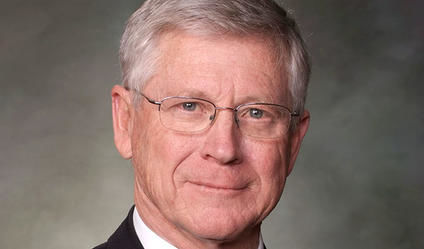
Last week the House of Representatives debated and ultimately passed Senate Bill 234, the annual budget bill, also known as the Long Bill. As one of six members on the Joint Budget Committee (JBC), I wanted to take this opportunity to talk about the Long Bill process and Colorado’s fiscal year 2015-16 budget.
The budget process begins well before the legislative session starts in January and involves a great deal of research and preparation. During the interim, all of the state departments present their budget request to the JBC and provide substantive evidence to support their funding needs. Our JBC staff spends countless hours analyzing these departments’ operations and budgets, and then provides specific recommendations based on their findings. As we approach the session, the governor and our fellow legislators make requests to prioritize our available resources for state programs and functions. In December, which is the mid-point of a fiscal year, we re-evaluate the departments’ budgets and assess any supplemental needs. Budget supplementals bills are then considered during the first half of the legislative session to address legitimate shortfalls. Then following the March budget forecast, one of four forecasts that come out quarterly, the legislature balances the budget and submits the Long Bill for the following fiscal year, which begins in July.

So how did we come out? The fiscal year 2015-16 budget topped $26 billion dollars. Many urban regions of our state saw continued growth and the subsequent tax revenue increased our general fund by more than 6 percent. The General Fund, which could be considered our discretionary spending account, grew by $573 million bringing the total to approximately $9.6 billion dollars. This increase allowed us to direct an additional $102.6 million dollars into transportation and $210 million into K-12 education.
In addition to increasing funds to transportation and education, we will be able to refund $70 million dollars back to Colorado taxpayers. TABOR, the Taxpayer Bill of Rights, establishes a revenue threshold that triggers a refund back to taxpayers if tax revenue exceeds a set limit. In other words, TABOR requires the $70 million in overpayments, or excess taxes, be refunded back to the individual taxpayer. Taxpayers can expect to see these refunds applied to their 2015 tax returns.
The JBC members and staff worked very hard this year and put together a balanced budget that addresses a number of issues around the state. As a freshman on the JBC, I give tremendous credit to both JBC veteran Sens. Kent Lambert, R- Colorado Springs, and Pat Steadman, D-Denver, who helped mentor four new members of the committee, myself, Sen. Kevin Grantham, R-Canon City, and Reps. Dave Young, D-Greeley, and Millie Hamner, D-Dillon, through this process.
Rep. Bob Rankin is a Republican from Carbondale

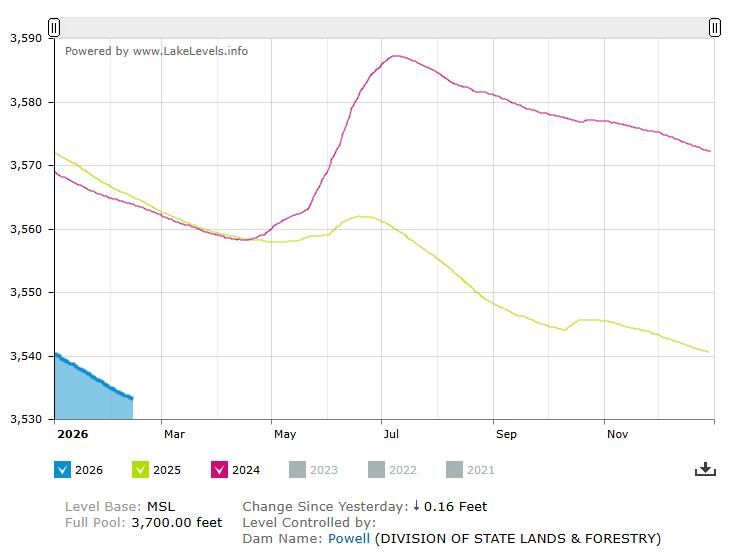
With the deadline missed, Bureau of Reclamation plans to move forward on Colorado River operations
Marianne Goodland
marianne.goodland@coloradopolitics.com
Updated 3 hours ago
Feb. 14 was no Valentine for the seven states of the Colorado River, which failed to come up with an agreement by that deadline on how to manage the river beginning Oct. 1. The Department of the Interior and the...

Record snow drought in Western states raises concern for water shortages, wildfires | OUT WEST ROUNDUP
The Associated Press
the-associated-press@coloradopolitics.com
Updated 3 days ago
MONTANA Record snow drought raises concerns A record snow drought with unprecedented heat is hitting most of the American West, depleting future water supplies, making it more vulnerable to wildfires and hurting winter tourism and recreation. Scientists say snow cover...
Democrat Shannon Bird qualifies by petition for primary ballot in Colorado’s toss-up 8th CD
Ernest Luning
ernest.luning@coloradopolitics.com
Updated 22 hours ago
Former state Rep. Shannon Bird has qualified for the Democratic primary ballot in Colorado’s hotly contested 8th Congressional District by submitting a sufficient number of petition signatures, state election officials said this week. The winner of the Democrats’ June 30...
Colorado Supreme Court accepts cases about reliability of gun-to-bullet matching
Michael Karlik
michael.karlik@coloradopolitics.com
Updated 1 day ago
The Colorado Supreme Court announced on Monday that it will hear two cases questioning the reliability of expert testimony that purports to identify whether a specific bullet was fired from a specific gun. At least three of the court’s seven...

State Rep. Peña outlines significant inequalities in Colorado’s school finance law | A LOOK BACK
Rachael Wright, Special to Colorado Politics
rachael.wright@coloradopolitics.com
Updated 4 days ago
Forty-Five Years Ago This Week: In a guest column published in The Colorado Statesman, House Minority Leader Rep. Federico Peña, D-Denver, wrote that his greatest disappointment with the legislative process was “the inability, or unwillingness, of the General Assembly to...
Colorado Politics Calendar Feb. 16-22
Rachael Wright, Special to Colorado Politics
rachael.wright@coloradopolitics.com
Updated 3 days ago
CoPo’s weekly political calendar will help you find political and public-policy events throughout Colorado. It includes candidate and issue campaign events, public policy meetings, court hearings, state and local party conventions, assemblies, debates, rallies, parades, speaking engagements, traveling dignitary appearances,...

Michael Bennet and ‘the question’ | SONDERMANN
Eric Sondermann
eric-sondermann@coloradopolitics.com
Updated 20 hours ago
The train usually runs only one way. The route goes from the state Capitol to Washington, D.C. State legislators become members of Congress; governors become senators. See Hickenlooper, John. Including our junior senator, no matter his years, a total of...
Colorado District Attorneys unveil 2026 legislative priorities | WHAT’S YOUR AGENDA?
Marissa Ventrelli
marissa.ventrelli@coloradopolitics.com
Updated 3 days ago
Welcome to What’s Your Agenda?: The Colorado Politics’ weekly publication of trade association priorities for the state’s 2026 legislative session. The Colorado District Attorneys’ Council provides training, resources, and legislative support to every prosecutor in the state. In order to...
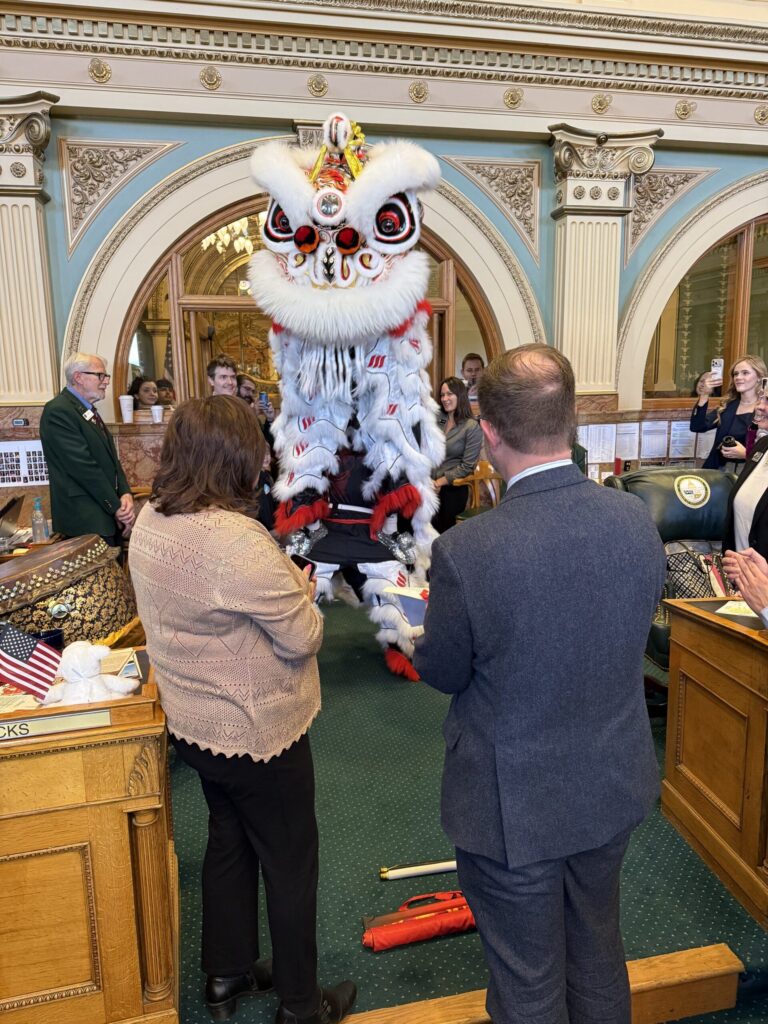
A day in the life of the Capitol: Capitol M | Week of Feb. 14, 2026
Marianne Goodland
marianne.goodland@coloradopolitics.com
Updated 3 days ago
The lighter side of the Capitol, usually. If you were walking around the Capitol on Feb. 12, there was plenty to see and to be amused (or delighted) by. Let’s start with the high school kids from Greeley’s District 6....
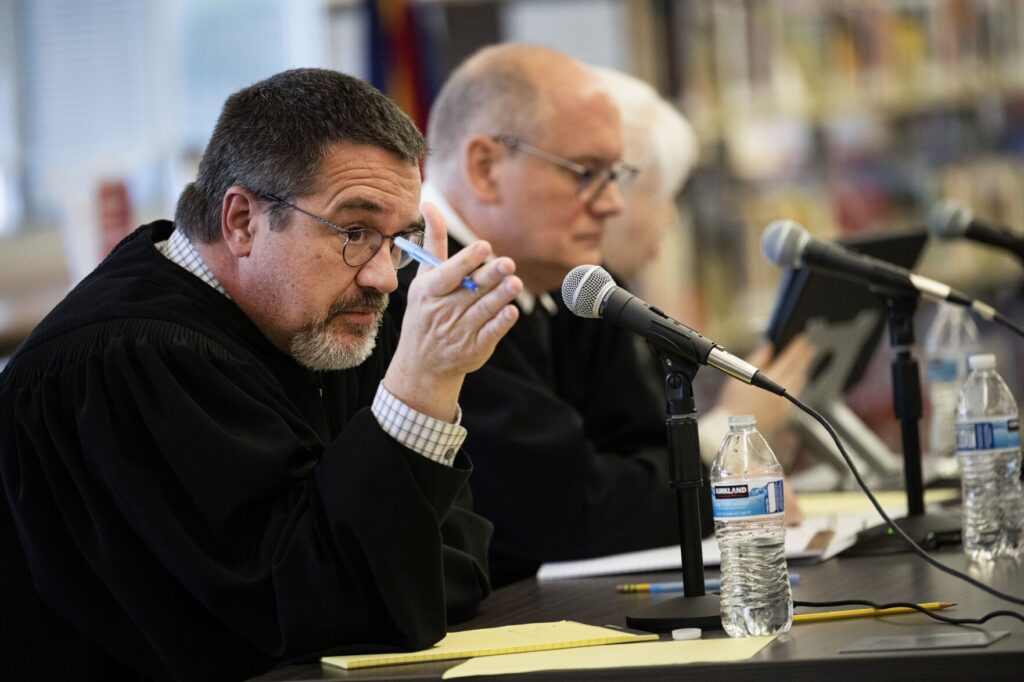
Appeals court clarifies what materials judges may rely on for postconviction decisions
Michael Karlik
michael.karlik@coloradopolitics.com
Updated 2 days ago
Colorado’s second-highest court clarified on Thursday that trial judges who are deciding whether to grant relief to convicted defendants may rely on the materials attached to, or referenced in, the parties’ arguments. In contrast to direct appeals of criminal convictions,...
PREV
PREVIOUS

Steadman: Bill will provide marijuana, TABOR fix
State Sen. Pat Steadman, D-Denver, readily admits that he is not a fan of Colorado’s Taxpayer’s Bill of Rights (TABOR), a constitutional amendment restricting the spending of state tax revenues. In these last few weeks of the session’s duration, he will be introducing a bill in the Senate to allow the state to retain the […]

Hullinghorst threatens remodel of defects bill
With the major construction defects reform legislation now in the House, the heat is on the speaker of the House to put the bill into something other than the “kill committee.” And that pressure is mounting from both sides of the aisle. But the House may turn the whole discussion on its head, by introducing […]