

Gardner: Iran deal ‘a dance of porcupines’
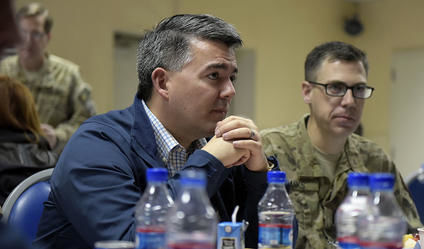
Fresh from a congressional trip to the Middle East and Afghanistan, U.S. Sen. Cory Gardner said on Monday that he has “great concerns” about a nuclear deal announced last week with Iran and wants to see Congress vote on the agreement.
“My concern is that it maintains the Iranian nuclear infrastructure, the centrifuges that would continue to turn and advance nuclear research,” Gardner said in a conference call with reporters, adding that he’s not convinced that the deal answers questions about the Iranian nuclear program’s military dimensions. “This is a regime that has violated agreements throughout the last decade.”
In addition, Gardner said he isn’t comfortable that the outlines of the deal don’t address the Iranian regime’s backing of extremist groups throughout the region.
“We know that once sanctions are lifted, the Iranians are going to fund with those resources their continued efforts to support Hezbollah and their continued efforts to foment unrest across the Middle East,” Gardner said.
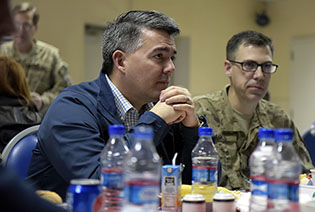
The freshman Republican senator accompanied Senate Majority Leader Mitch McConnell and four other GOP lawmakers on an eight-day tour that included stops in Israel, Jordan, Kuwait, Iraq and Afghanistan.
The purpose of the trip, which spanned the previous week, was to conduct oversight of U.S. programs in the region, examine the relationships with the countries they visited and review ongoing efforts to “disrupt, dismantle and destroy” the insurgency known as ISIS, Gardner said. In addition, the delegation met with U.S. forces stationed in Afghanistan and talked about the mission going forward in that country.
The tour began in Israel, where the senators met with Prime Minister Benjamin Netanyahu, Israeli military commanders and opposition leadership. Stressing that the meeting with Netanyahu took place before the Iranian nuclear deal was announced, Gardner nonetheless said that the conservative prime minister’s take on a possible deal struck a chord.
Paraphrasing Netanyahu, Gardner said what he heard from the Israeli leader was that “Iran needs this deal more than the United States does. A deal just for the sake of a deal is not a good deal. We are in a superior position now to demand the best deal possible because of economic consequences of continued sanctions in Iran.” The deal was likely to leave “vast amounts of nuclear infrastructure in place,” Gardner suggested, which worries Israel and every other country in the Middle East.
“In his words, ‘This is a dance of porcupines,'” Gardner said.
Gardner said that one of his conclusions from the trip was that ignoring the fact that Iran is a state sponsor of terrorism – in Yemen, Lebanon and Syria, as well as elsewhere around the globe – then the Iranians will see the West as weak.
“They need this deal,” he said. “The people of Iran have suffered under these sanctions, and it’s the sanctions that have brought them to the negotiating table.”
Allowing the Iranian nuclear program to continue with “centrifuges that are still spinning” creates a “nuclear trip-wire,” Gardner said, calling that a consequence that’s both unacceptable and “entirely avoidable.”
“There is no sense in making a bad deal for the sake of a deal,” he said. “This needs congressional approval so that we can safeguard the American people from a bad deal. That’s why, when we return, I will continue to push for the Corker-Menendez bipartisan legislation and give Congress the important say that it needs to prevent a bad deal.”
Legislation introduced by Senate Foreign Relations Committee Chairman Bob Corker, a Tennessee Republican, would establish a process for congressional approval before sealing a final agreement with Iran. Democratic Sen. Bob Menendez is also a sponsor of the legislation and Gardner’s Democratic colleague, U.S. Sen. Michael Bennet, has signed on as a co-sponsor. It’s expected to move through the Foreign Relations Committee next week.
Gardner also said that Iraqi leaders were unanimous expressing that the drawdown of U.S. forces from the country had been handled poorly and that having to send troops back to the region to battle ISIS underlined the mistakes made in the withdrawal. There’s a lesson to be learned, he added, when considering how American military and intelligence operatives ease their way out of Afghanistan.
During discussions with U.S. troops and Afghani government officials, Gardner said, the questions were inescapable: “What happens if the drawdown in Afghanistan occurs the same way as it did in Iraq and what that would do to the security of Afghanistan as that nation takes its future into its hands? It became clear that there’s a concern that if it’s done like Iraq, it could end up with a situation like in Iraq, where we could lose our intel networks and the ability of the Afghanistan people to protect themselves.”
The visit also included talks with Israeli and Jordanian officials about trade prospects that could involve Colorado companies, Gardner said.In Israel, he noted, there’s a chance to open up natural gas production off the country’s shore in a move that could benefit Jordan as well, providing energy security and establishing an economic partnership that could ease tensions throughout the Middle East. Colorado-based Noble Energy could be involved in the project, Gardner said, adding that there are some regulatory issues to resolve first.
In addition, Colorado ranchers might benefit if Israeli beef tariffs are relaxed, Gardner said, adding that he had pressed Israeli officials to make a deal.
Ernest@coloradostatesman.com

Fifty years later, women reflect on first coed class at the Air Force Academy, struggle for equality
Mary Shinn
mary-shinn@coloradopolitics.com
Updated 1 day ago
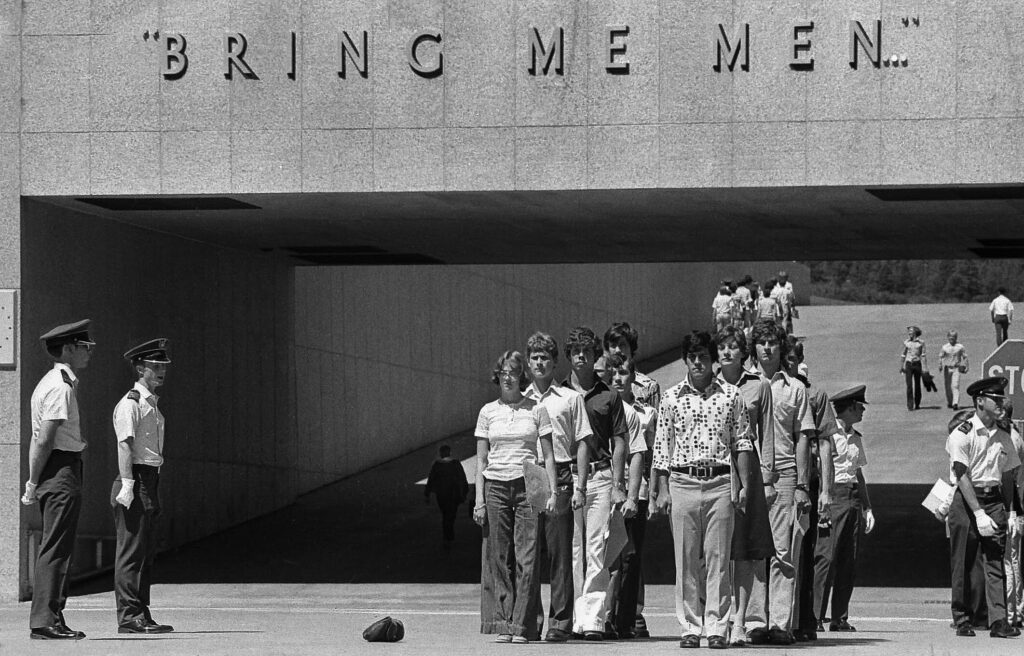
When the first female Air Force Academy cadets arrived 50 years ago this summer, they stood in front of an enormous sign on campus that read “Bring me men.” In the shadow of that sign, Kathleen Utley Kornahrens, one of...
As Lake Powell shrinks, marinas are having to adapt to dwindling water levels | OUT WEST ROUNDUP
The Associated Press
the-associated-press@coloradopolitics.com
Updated 4 days ago
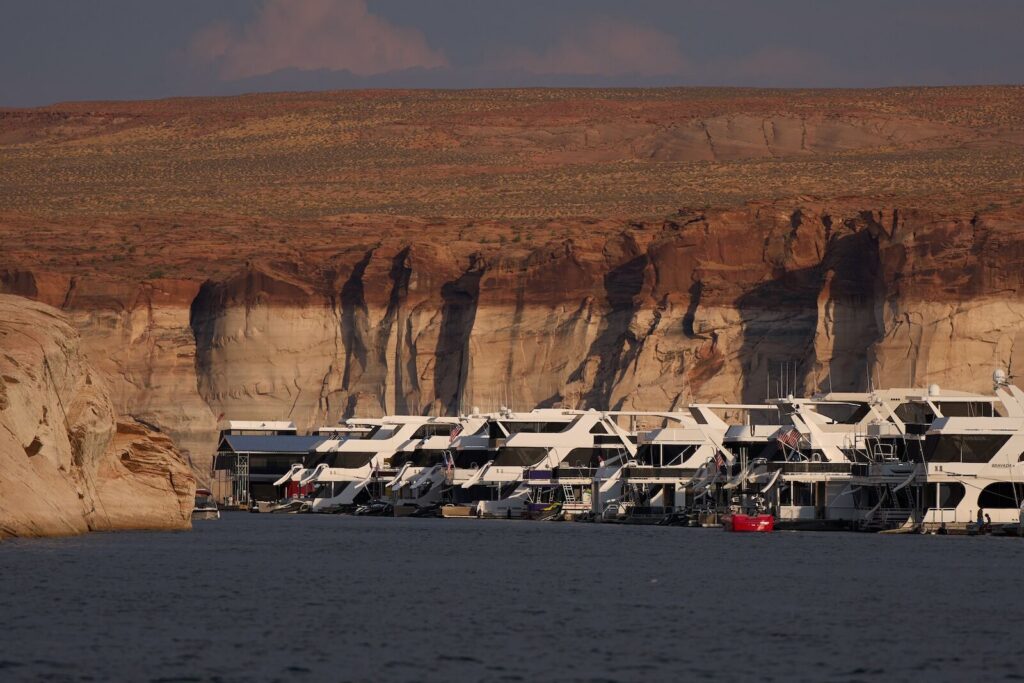
ARIZONA Reservoirs near record lows PAGE — The Colorado River’s Lake Powell, the second largest reservoir in the U.S., is shrinking. A record-dry winter and extreme heat — as well as decades of overuse, chronic drought and climate change —...

A new day? Colorado’s troubled guardianship office pursues ‘cultural reset’
Marianne Goodland
marianne.goodland@coloradopolitics.com
Updated 3 days ago
Colorado’s guardianship program, long criticized for mismanagement and high staff attrition, is undergoing a “cultural reset,” as its new director works to repair partnerships and prepare for a major expansion under recent legislation. Created by lawmakers in 2017, the Office...
U.S. Senate OKs funding bill to avoid government shutdown
Wire Services
wire-services@coloradopolitics.com
Updated 1 day ago
Hemp provision became point of contention WASHINGTON • The U.S. Senate in an overnight vote Saturday approved a short-term measure to fund federal agencies into early December and avoid a government shutdown during the middle of campaign season. The late-summer...
The relevance of Watergate more than a half-century later | SONDERMANN
By Eric Sondermann
by-eric-sondermann@coloradopolitics.com
Updated 4 days ago
It was the scandal for which all other scandals are now named. In June 1972, a small group of Cuban burglars with high-level connections broke into the headquarters of the Democratic National Committee. Those headquarters were located in the Watergate...

Wirth downplays Social Security disaster talk | A LOOK BACK
Rachael Wright, Special to Colorado Politics
rachael.wright@coloradopolitics.com
Updated 4 days ago
Forty-five years ago this week: “As time goes on,” said Democratic U.S. Rep. Tim Wirth, of the 2nd Congressional District, “we are finding that the safety net, which was proposed earlier this year, has some very large holes in it,”...
Colorado Politics Calendar Aug. 10-16
Rachael Wright, Special to Colorado Politics
rachael.wright@coloradopolitics.com
Updated 4 days ago
CoPo’s weekly political calendar will help you find political and public-policy events throughout Colorado. It includes candidate and issue campaign events, public policy meetings, court hearings, state and local party conventions, assemblies, debates, rallies, parades, speaking engagements, traveling dignitary appearances,...

Democratic group aims Spanish-language TV ad at Gabe Evans in Colorado’s battleground 8th CD
Ernest Luning
ernest.luning@coloradopolitics.com
Updated 2 days ago
A national group tied to House Democratic leadership launched a six-figure Spanish-language TV ad in Colorado this week targeting Republican U.S. Rep. Gabe Evans and the GOP’s signature budget legislation. The 30-second spot is part of $15 million in new...
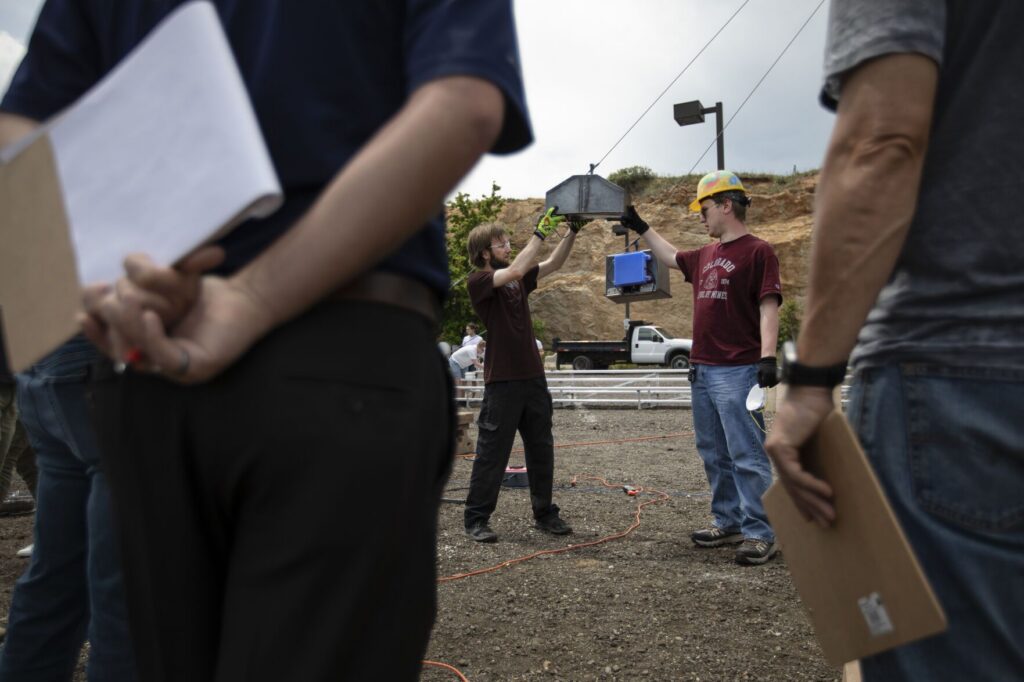
Colorado School of Mines lands major share in Trump’s $100M mining-education plan
Thelma Grimes
thelma.grimes@coloradopolitics.com
Updated 2 days ago
President Donald Trump on Friday named the Colorado School of Mines among roughly a dozen institutions that will share in a $100 million commitment “to train the next generation of American miners.” Paul Johnson, the university’s president, said he is...
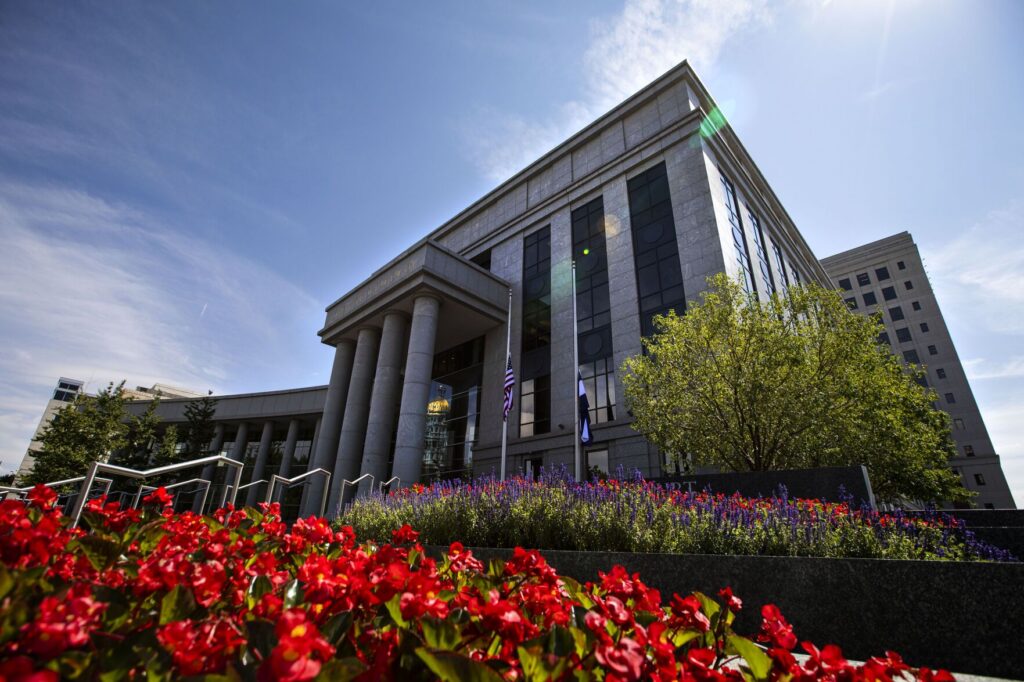
Local party leaders, incoming judge among members of judicial performance commission that violated law
Michael Karlik
michael.karlik@coloradopolitics.com
Updated 1 day ago
A local Democratic leader and 2024 presidential elector. A legislative aide and leader in the Young Republicans. An incoming county court judge freshly appointed by the governor. They are among the eight members of the northeastern Colorado judicial performance commission...
PREV
PREVIOUS

Wayposts
Davidson leaving Clerks Assoc. Former Secretary of State Donetta Davidson announced this week that she is stepping down as executive director of the Colorado County Clerks Association on June 30. Davidson has headed the organization for four years but has been working with county clerks for more than four decades. She began as a part-time […]
GJ, Glenwood Springs elect new council members
A businessman and a planner won the Glenwood Springs city council at-large seats in Tuesday’s municipal election, and in Grand Junction the victors were a self-proclaimed forward-thinking progressive and a former corporate executive. In Glenwood Springs, businessman and homebuilder Steve Davis won the Ward 1 election with 59.38 percent of the vote and Planning and […]