

Construction defects clears first hurdle
After some delay, Senate committees this week finally debated two bills that seek to make the state’s construction defects law more industry-friendly. The Senate State, Veterans and Military Affairs Committee, on a 3-2 party-line vote, approved Senate Bill 15-091 on Monday. The Senate Business, Labor and Technology Committee, on a 6-2 vote, passed SB 177 on Wednesday.
SB 91 would cut in half the amount of time a homeowner or homeowners’ association (HOA) would be granted to file lawsuits against builders, developers or other contractors for construction defects. Current law grants an eight-year statute of limitations; under SB 91 that would drop to four years. The bill was amended in the state affairs committee to remove multi-family housing, leaving in both commercial and single family housing.
The main legislative event of the week at the Capitol, however, was the Senate business committee hearing on SB 177 — the major construction defects bill of the session, — and the one with bipartisan support.
The bill’s Senate co-sponsors are Senate Majority Leader Mark Scheffel, R-Parker; and Sen. Jessie Ulibarri, D-Westminster. Ulibarri led the fight three years ago against a construction defects bill sponsored by Scheffel, so SB 177 has been a collaboration with Scheffel and is different from what was done three years ago, Ulibarri said on Wednesday. “The status quo neither serves the interests of homeowners or builders,” he explained. Today’s process is lengthy and costly and causes “immense emotional stress and harm.” The bill “gives a remedy to homeowners” when they are fully informed, he said.
Ulibarri said the bill will inform prospective homeowners on how construction defect disputes are resolved, with a “full and fair notice” on the consequences of ignoring or repairing those defects, and requires homeowners and builders to engage in neutral mediation.
The bill would modify the construction defects laws, first passed in 2001 and amended in 2003, 2007 and 2010. The bill requires homeowners’ associations to go to mediation prior to filing a class-action construction defects claim. The HOA board also must notify all unit owners that a lawsuit is being contemplated, along with a disclosure of the projected costs, duration and financial impact of the lawsuit. The board must obtain written consent from a majority of the unit owners prior to filing the claim.
In the more than four weeks since the bill was rolled out, sponsors have worked on amendments that they hope would make the legislation more amenable to its opponents. The amendments adopted on Wednesday, all offered by the bill’s sponsors, include a change to the general description of the notice offered to homeowners before they enter into a construction defects claim. Another amendment would allow the homeowners’ association (HOA) attorney to prepare the notice, with a description of the benefits and risks in moving forward with a construction defects claim. If the homeowners enter a claim with an attorney that is contingency-free, that notice would inform them of the potential costs if they do not win.
In addition, if a unit has a defect under a claim, the value may be impacted and the homeowner may not be able to refinance. Ulibarri told The Colorado Statesman on Thursday that if the defect affects common areas, such as roofs or exteriors, it becomes a defect impacting all units, not just the unit that has the defect.
The seven-hour hearing packed the Capitol’s largest hearing room, and about five dozen people signed up to testify, slightly more against the bill than in favor of it.
The legislation is backed by a variety of developers, lending institutions, and realtors, as well as non-profit affordable housing advocates and government leaders, including Denver Mayor Michael Hancock and Lakewood Mayor Bob Murphy. It also is backed by the Downtown Denver Partnership and several chambers of commerce.
“Any vibrant, successful city relies on a true mix of housing,” Mayor Hancock told the committee, including affordable housing for first-time homebuyers and older residents who want to downsize. Condo development is still dramatically below pre-recession levels, with for-sale multi-family homes almost non-existent in Denver, including downtown Denver, he said. This also affects the buildout of FastTracks, which will eventually have 41 stations in Denver, and which anticipates affordable housing and commercial development adjacent to many of those stations. Hancock said SB 177 will provide options for homeowners and builders that allow them to resolve their issues before resorting to lengthy legal action.
Sens. Irene Aguilar, D-Denver, and Rollie Heath, D-Boulder; led the opposition to the bill in the committee hearing. Aguilar pointed out that the amendments would not fix what she viewed as one of the bill’s biggest problems: that homeowners and HOAs must hire an attorney and provide notice of claim before they’ve had an opportunity hire experts who can evaluate the defects.
The committee also heard some horror stories from homeowners who have had to deal with construction defects. Jan Harris of Denver showed pictures of the problems he had with his home. In response to a question from the committee, Harris noted that building inspectors only spot check the work and that the builders have to police themselves. Harris said he wanted to work with the builder and developer, but when he got no results, he had to take legal action as the statute of limitations neared. They eventually reached a settlement with the builder, architect and engineering firm, but could not include the developer in the lawsuit or the settlement because the developer still owned 51 percent of the units. Ulibarri noted that his bill would exclude the developer from the homeowner’s decision-making process.
Pat Pacey of Pacey Economics briefly presented the results of a study, commissioned by a law firm that represents homeowners, which showed that condo market problems are the result of long-term housing market cycles rather than the construction defects law. She stated the drop in the market is the result of the recession, which produced a corresponding drop in wages, a tighter lending market, unemployment and changing demographics. “The key issue is that relaxing the construction defect law won’t eliminate construction defects,” she said.
Ulibarri questioned whether Pacey had looked at other comparable cities (she hadn’t) and he pointed out that cities with construction defects laws similar to SB 177 are seeing much improved condo development. In San Francisco, 34 percent of housing starts are condos, San Diego, 38 percent; and Denver, 3 percent, Ulibarri said.
In contrast to the Pacey study, Tom Clark of the Metro Denver Chamber of Commerce pointed to a Denver Regional Council of Governments (DRCOG) study that cited construction defects as a major factor in the lack of affordable multi-family housing.
The DRCOG study looked at five factors affecting housing diversity: lending conditions, foreclosures, demographics, construction defects, and economic and market factors. Since the construction defects law was modified in 2010, costs attributed to construction defects liability have increased. Developers, the study said, are paying an additional $15,000 per unit to cover that liability, and that has “a large impact on the profitability of entry-priced housing.” National builders won’t build condos in Colorado, citing the potential for construction defects lawsuits and insurance costs.
Molly Foley-Healy, an attorney who deals with HOAs and who also represents Community Associations Institute (CAI), joined with those testifying against the bill. She told the committee that the arbitration provisions in SB 177 stack the deck in favor of the builders. Arbitration is fine as long as the parties mutually agree to go to arbitration, she said, and that they agree on the selection of the arbitrator and those costs.
Foley-Healy said the coalition (the Homeowner Opportunity Alliance) that helped craft the bill repeatedly denied the CAI an opportunity to discuss some of the solutions they wanted to present. “We just want a fair and balanced approach, but we’ve been shut out.”
Ulibarri told The Statesman that he has had multiple discussions with CAI and other groups, but the provisions they wanted in the bill were deal-breakers for the non-profit affordable housing advocates and the affordable housing builders.
One option, as explained by Foley-Healy during Wednesday’s hearing, involves the notice of claims process. During that process, she explained, there should be a mandatory mediation that requires the builder to put a bona fide offer on the table. If the HOA doesn’t accept it and goes to arbitration or litigation, and the HOA does not fair better in that process than the original offer from the builder, the HOA would be responsible to pay the reasonable costs and attorney fees of the builder. The opposite would be true for the builder; if the HOA does better in arbitration or in litigation, the builder would pay the costs and fees.
“It makes everyone get really real, really fast, about settling construction defects disputes,” she said. It also gets the builder’s insurance involved, which will also add pressure to settle. “It’s in everyone’s best interest to get this resolved as early as possible in the notice of claims process.”
But Joy Grenesko of Littleton gave what committee chair Sen. David Balmer, R-Centennial, cited as the most compelling testimony of the day. Grenesko told the committee she takes home $1,015 every two weeks. Her rent has climbed from $850 per month in 2013 to $1,300 per month now. She is telling people not to move to Colorado because “you can’t afford to live here.” She supports the bill to get construction and builders back to Colorado, and to the homeowners with difficulties, she said, “it’s not just about you.”
Sen. Cheri Jahn, D-Wheat Ridge, joined the committee’s Republicans in voting SB 177 out of committee Wednesday. The bill now moves to the Senate floor, but if it passes there, it is still considered unlikely to clear the House where Speaker Dickey Lee Hullinghorst has said the bill is a nonstarter.

Top officials in Arizona’s Maricopa County agree on how to oversee elections | OUT WEST ROUNDUP
The Associated Press
the-associated-press@coloradopolitics.com
Updated 5 days ago
ARIZONA Officials agree on election oversight PHOENIX — Election officials in Arizona’s most populous county reached an agreement a week before the state’s July 21 primary on how to jointly oversee the vote, ending a prolonged legal battle. Republican Maricopa...

Colorado Politics Calendar Aug. 3-9
Rachael Wright, Special to Colorado Politics
rachael.wright@coloradopolitics.com
Updated 5 days ago
CoPo’s weekly political calendar will help you find political and public-policy events throughout Colorado. It includes candidate and issue campaign events, public policy meetings, court hearings, state and local party conventions, assemblies, debates, rallies, parades, speaking engagements, traveling dignitary appearances,...

The primary political reform and precondition for all others | SONDERMANN
Eric Sondermann
eric-sondermann@coloradopolitics.com
Updated 5 days ago
In its current state, the American political system has no end of ailments. Far too many factors accelerate polarization and work against moderation and narrowing the differences. Media, and the way so many citizens limit themselves to agreeable, reinforcing sources,...
Susemihl wins surprise victory to replace Steve Durham as Colorado Springs state senator | A LOOK BACK
Rachael Wright, Special to Colorado Politics
rachael.wright@coloradopolitics.com
Updated 5 days ago
Forty-five years ago this week: In a closed session, the vacancy committee for Colorado’s Senate District 12 selected attorney Peter Susemihl to complete Sen. Steve Durham’s, R-Colorado Springs, term. Durham resigned his seat to become Region 8 Director of the...

10th Circuit partially revives lawsuit over 2020 Denver protest injuries
Michael Karlik
michael.karlik@coloradopolitics.com
Updated 18 hours ago
The Colorado-based federal appeals court revived a man’s claims against Denver on Friday after concluding a trial judge resolved the case in the city’s favor without analyzing two of the three instances of alleged excessive force and other constitutional violations....

At conservative summit, Colorado Republican leaders concede Democrats’ election edge
Marissa Ventrelli
marissa.ventrelli@coloradopolitics.com
Updated 2 days ago
Four Republican state lawmakers told attendees at a gathering of conservative leaders on Friday they doubt their party can win statewide races, noting that Colorado’s electorate has been shifting toward Democrats but adding they see an opening in several pockets....
Federal judges find Colorado immigration judge violated several orders
Michael Karlik
michael.karlik@coloradopolitics.com
Updated 2 days ago
Multiple federal judges in Colorado have freed people from immigration custody after determining that one immigration judge violated their directives for properly conducting bond hearings. For nearly a year, Colorado’s U.S. District Court has faced a flood of habeas corpus petitions...
Q&A with Mike Pence | Former vice president says GOP’s populist turn from conservatism isn’t permanent
Ernest Luning
ernest.luning@coloradopolitics.com
Updated 2 days ago
Former Vice President Mike Pence says he’s concerned that the Republican Party has taken a populist turn away from bedrock conservative principles during President Donald Trump’s second term, but he believes the party will return to its roots when Trump...

New federal plan sets short-term rules for Colorado River management
Marianne Goodland
marianne.goodland@coloradopolitics.com
Updated 3 days ago
Interior Department’s plan spares Colorado from mandatory cuts for now After years of stalled negotiations among the seven states that rely on the Colorado River, the federal government on Friday released its own plan for managing the drought-strained system. Calling...
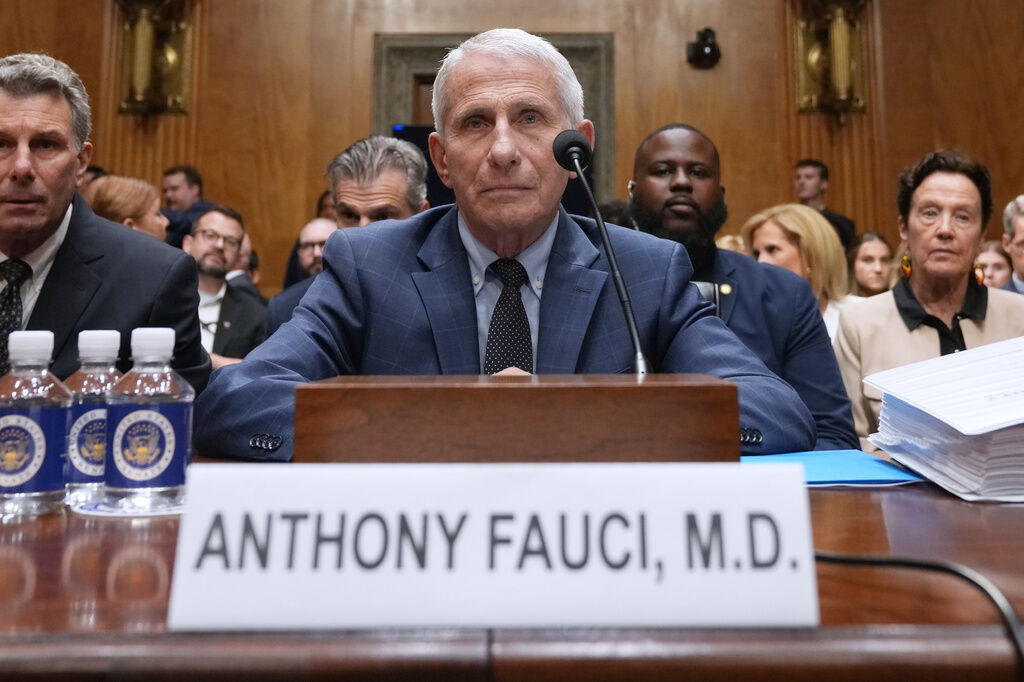
Fauci’s diary details blooming outrage toward ‘far right,’ softness toward Biden and China
Hudson Crozier
hudson.crozier@washingtonexaminer.com
Updated 3 days ago
Dr. Anthony Fauci increasingly railed against “far right” critics of his approach to COVID-19 issues while describing strong support from the Biden White House in his pandemic-era diary, which was recently released by Congress. The former National Institute of Allergy...
PREV
PREVIOUS

Two Grand Junction city council races in full swing
GRAND JUNCTION – There are two contested races in this year’s Grand Junction City Council election, which concludes April 7; ballots were mailed on March 16. Running for a four-year term are Dennis J. Simpson, a certified public accountant who describes himself as “a fiscal conservative and lifetime Republican,” and Chris Kennedy, a telecommunications executive […]
Lawmakers cut deal cut on illegal immigrant drivers license funding
The Joint Budget Committee on Wednesday reached a compromise on a 2014-15 spending bill that would allow the state Division of Motor Vehicles (DMV) to clear off a backlog of requests for driver’s licenses from people in the country illegally.The supplemental bill has been on the legislative docket for more than six weeks, an unusually […]