

Should $5 million in state general fund dollars be appropriated under House Bill 1194 to distribute long-acting reversible contraceptives (LARCs) to low-income women across the state?
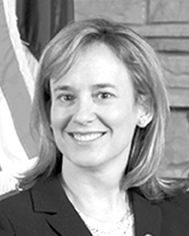
An interview with Rep. KC Becker, D-Boulder
Birth control, in the opinion of state Rep. KC Becker, D-Boulder, is an economic issue that impacts the health and social wellbeing of women, children and families statewide. That’s why she is sponsoring House Bill 1194, which would appropriate $5 million in state general fund dollars to distribute long-acting reversible contraceptives (LARCs) to low-income women across the state. The funds would allow for the continuation of a four-year, grant-funded pilot project, implemented by the Colorado Department of Public Health and Environment in 2009, to family planning clinics in 37 counties throughout the state. In an interview with Catherine Strode, policy outreach specialist with Advocacy Denver, Becker explains that the long-term impact of funding reversible contraception can result in cost savings for the state and better educational and financial futures for Colorado’s young women.
Following this interview is a second one conducted by Strode with state Rep. Lori Saine, R-Dacono, who opposes such a bill.
What is reversible contraception?
“The mechanism for preventing pregnancies can be different, but basically, it’s contraception that is inserted as an implant either vaginally or under the skin. It can go in for three to nine years. When it’s removed, you’re immediately fertile again. It’s been shown to be really effective in reducing birthrates and abortion rates because there’s no human element in terms of remembering to take a pill or doing something on a daily basis. There are hormonal and nonhormonal IUDs. Hormonal IUDs are much like birth control pills in that they can prevent ovulation. The nonhormonal or the copper IUD changes the chemistry in the uterus, which impairs sperm function and doesn’t allow fertilization to occur. They do not interrupt an implanted pregnancy. That’s important because there’s a misconception that they do. Contraceptive implants work much like birth control pills in that they prevent ovulation.
“LARCs are considered very highly effective in preventing unintended births because they require little or no effort after the initial implant or insertion. Fertility returns to normal immediately upon removal.”
What was the purpose of the pilot project?
“There’s a high initial price (for LARCs) and that’s one of the reasons that we typically see lower use, especially among low-income women. That’s why this pilot project was done from 2009 to 2013 to expand distribution of LARCs such as IUDs and hormonal implants. We saw incredible results. Between 2009 and 2011, when the Colorado Family Planning Initiative was successful in making LARCs more widely available, the birth rate among low-income women ages 15 to 19 dropped 40 percent; and for women ages 20 to 24, it dropped 18 percent. Colorado saw a 38-percent reduction in births to unmarried women under age 25 who had not finished high school. Between 2009 and 2013, when LARCs were more readily available to all women, the abortion rate among women ages 15 to 19 fell by 42 percent and dropped 18 percent among women 20 to 24.”
What does the bill do?
“The bill authorizes a general fund appropriation to fund the Colorado Department of Public Health and Environment to continue to provide these services at Title X and other clinics. It is $5 million for fiscal year 2015 to 2016. We do hope in future years there will be an appropriation but that will have to be revisited at that time. We think we can decrease the amount because as more women end up on this, it decreases the number of people who actually need it. This bill will provide training for providers and staff regarding LARC methods and counseling strategies and managing side effects. It will provide funding for technical assistance to the clinics and general support to expand capacity for the family planning clinics to provide LARCs to low-income women.”
Why do you think this bill is important?
“Unintended pregnancies are really associated with many poor health and social outcomes.
“By reducing unintended pregnancies, you’re strengthening and stabilizing women’s health. We know that IUDs and implants are highly effective but they are quite expensive. Once the cost barrier is removed, women have greater access to it. It leads to more opportunity for them to plan their futures, plan their pregnancies, and plan the number and spacing of their children. That means there is less need for Medicaid, WIC (Women, Infant and Children), TANF (Temporary Assistance to Needy Families), and other programs. It means better health and social outcomes for women – more stable families, girls staying in schools longer, people accessing state programs less. It saves money for the state and it leads to better social outcomes for the families who use this.”
An interview with Rep. Lori Saine, R-Dacono
State Rep. Lori Saine, R-Dacono, says birth control is not the state’s business, nor is subsidizing contraceptives, either for women or men. That’s why she is against House Bill 1194. Citing the economic theories of incentives and moral hazards, Saine explains her opposition to appropriating state funds to provide birth control to Coloradans.
In addition to her lack of support for providing funds for LARCs, she questions the accuracy of claims that HB 1194 will save the state money and prevent health risks for women.
Why are you opposing House Bill 1194, which would appropriate state general funds for long-acting reversible contraceptives?
“While the sponsors are well-meaning, I would be against a bill that provided reduced cost or free condoms to men for the same reason: this is not the role of government.”

Proponents of the bill claim that providing contraception to women across the state has substantially reduced the state’s teen pregnancy rate. Would that not be a good result of this bill’s passage?
“Let’s refer to some very old laws in economics regarding incentives and moral hazards. With incentives, we know that if you subsidize something, you get more of it; and moral hazards refers to the propensity of people engaging in riskier behavior when shielded or insured against risk. Blending these two together, when subsidizing a commodity, you also reward the behavior surrounding the commodity. So in this scenario, the government is subsidizing sex… because a woman typically doesn’t get birth control to hold hands and watch re-runs of “Gilligan’s Island.” Also, I have seen no longitudinal-type study with a control group for this program.
“But based on the aforementioned economic tenets, the groups receiving these benefits will probably engage in more risky behaviors. And, I’ve seen no long-term data from experimenters regarding the increased costs to society with the psychological and medical risks and costs that come with more risk-taking behaviors like frequent sexual encounters.
“In addition, devices like IUDs are wedded to well-documented medical risks like uterine perforation, which can lead to pelvic abscesses and increased instances of PID (Pelvic Inflammatory Disease). According to past research, women with IUDs for three or more years have twice the rate of tubal pregnancy even after the IUD is removed – a contributing factor to pregnancy-related deaths which have been rising since 1987. Are any of these long-term costs considered? According to the Center of Disease Control, the rate of teen pregnancies has been declining since 1940 and every year is a new record low nationally. And somehow this happened without the government contraceptive fairy.”
Proponents maintain that funding contraception at these clinics has saved the state money in Medicaid dollars. Does that change your position on the bill?
“Proponents also seem to be saying ‘I’m the government and I am here to help in your bedroom,’ so I’m also skeptical when I see reports that the government is saving money in one area by spending money in another area because bureaucracy solves bureaucracy.”
Supporters of the bill also say it is good legislation because supplying contraceptives reduces abortions. Your thoughts?
“I believe that any society that regards a child as a curse or a burden instead of a blessing will not long endure. It is possible that in the near future, we will look upon abortion clinics with the same horror we regard Auschwitz. Some of the groups behind this bill think it is the role of government to shield men and women from their actions by seeking to separate sexual intercourse from its fruit: children. So I am dubious of the sudden concern for abortions because it seems these are the same groups that won’t recognize a child in the womb at any stage of his or her development anyway. And, the proponents seem to be claiming credit for a national trend: according to the CDC, abortion rates have also been declining to historic lows nationally.”


Colorado open records reform bill dies in Senate committee
Marianne Goodland
marianne.goodland@coloradopolitics.com
Updated 2 hours ago
Efforts to overhaul Colorado’s open records law have stalled again. Senate Bill 107, which would have extended response times for public records requests and added accountability measures for late responses, failed to advance out of its first committee and will...
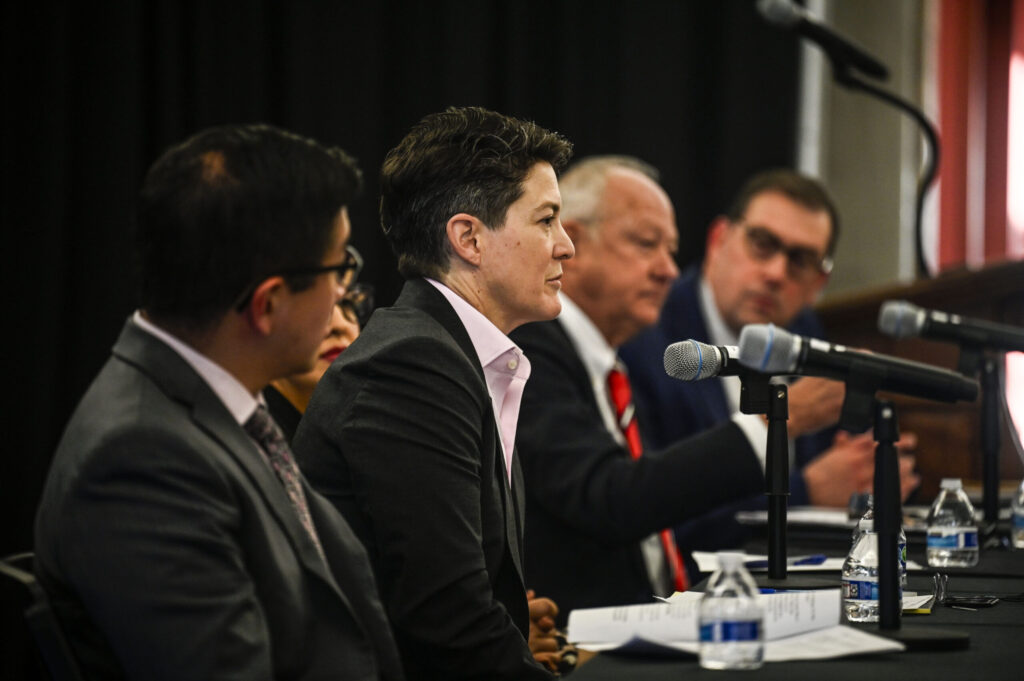
Colorado Supreme Court blocks ballot initiative defining ‘fees’
Michael Karlik
michael.karlik@coloradopolitics.com
Updated 2 hours ago
The Colorado Supreme Court blocked a proposed ballot initiative on Monday that would have required voter approval for new fees above a certain threshold, while also enshrining a definition of “fee” into the state constitution for the first time. Chief...

Colorado joins multi-state call to keep ICE away from polling locations
Jacob Mauk
jacob.mauk@denvergazette.com
Updated 2 hours ago
Colorado Secretary of State Jena Griswold announced Monday that the state has formally requested written confirmation from the Department of Homeland Security that ICE agents will not be stationed at polling locations during the 2026 election cycle, according to a...
Colorado prostitution decriminalization bill shelved after sponsor says it lacks votes
Marianne Goodland
marianne.goodland@coloradopolitics.com
Updated 19 minutes ago
A bill that would have decriminalized prostitution in Colorado will not move forward this year after its sponsor said it lacks the votes to pass its first committee. Sen. Nick Hinrichsen, a Pueblo Democrat, said he will ask to postpone...
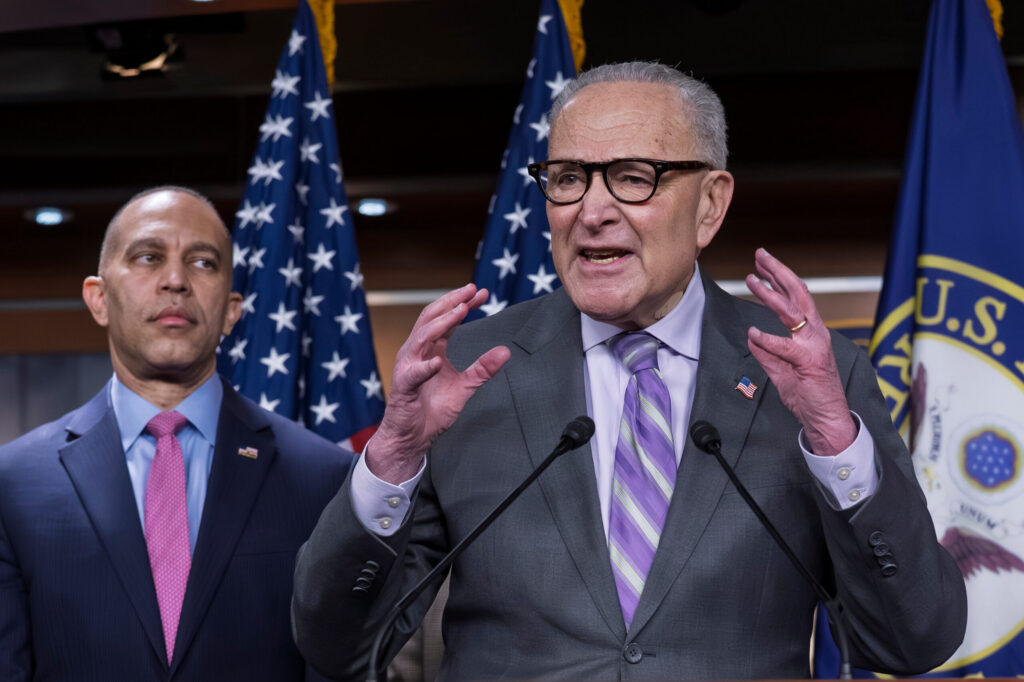
GOP senators push back against Schumer’s ‘Jim Crow 2.0’ description of SAVE Act
Asher Notheis, Washington Examiner
asher.notheis.washington.examiner@gazetteedit.wpenginepowered.com
Updated 2 hours ago
Sens. Rick Scott (R-FL) and Mike Lee (R-UT) pushed back on Senate Minority Leader Chuck Schumer’s (D-NY) framing of the SAVE America Act as “Jim Crow 2.0” on Sunday. President Donald Trump announced Sunday that he will not sign any...

Rubio warns US will no longer tolerate ‘hostage diplomacy,’ claims Iranian military is ‘being eviscerated’
Timothy Nerozzi, Washington Examiner
timothy.nerozzi.washington.examiner@gazetteedit.wpenginepowered.com
Updated 3 hours ago
Secretary of State Marco Rubio is warning hostile state actors, Iran in particular, that the United States will no longer engage in “hostage diplomacy.” Rubio made the remarks ahead of a flag-raising ceremony at the State Department to mark U.S....
Colorado justices, by 5-2, say Longmont detective did not violate suspect’s Miranda rights
Michael Karlik
michael.karlik@coloradopolitics.com
Updated 4 hours ago
The Colorado Supreme Court’s majority ruled on Monday that a Longmont detective did not coerce a suspect into talking by making references to how a judge would look at his character, and by suggesting he may get out of prison...

Colorado justices find Fort Collins police lacked probable cause to arrest suspect in park
Michael Karlik
michael.karlik@coloradopolitics.com
Updated 6 hours ago
The Colorado Supreme Court agreed on Monday that Fort Collins police lacked probable cause to arrest a man for a child sex offense based on his presence in a public park around the time they intended to meet with their...

Colorado board delays vote on banning soda purchases with SNAP benefits
Marissa Ventrelli
marissa.ventrelli@coloradopolitics.com
Updated 5 hours ago
The Colorado Board of Human Services voted to delay its decision on whether to allow Supplemental Nutrition Assistance Program recipients to use benefits to buy soft drinks. Under the “Healthy Choice Waiver,” SNAP recipients would be prohibited from using benefits...

Supreme Court to hold oral arguments, discipline commission releases report | COURT CRAWL
Michael Karlik
michael.karlik@coloradopolitics.com
Updated 7 hours ago
Welcome to Court Crawl, Colorado Politics’ roundup of news from the third branch of government. The state Supreme Court is holding oral arguments this week, plus Colorado’s judicial discipline commission released its annual report. Colorado Supreme Court news • The Supreme...
PREV
PREVIOUS

Updated: Race heats up for state GOP chair; challenger House blasts Call for ‘missed opportunity’
Note: This story has been updated with breaking news on new candidate endorsements for Friday, February 13. The race to head the Colorado Republican Party is heating up this week as county parties pick officers and bonus members to the state central committee, which will cast its votes for state chair and other positions next […]

GOP consultant's guilty plea riles some Colorado Republicans
The political consultant appointed last year by the Colorado Republican Party to run its independent expenditure committee pleaded guilty last week to illegally coordinating contributions between a political action committee he ran and a campaign he managed in a 2012 congressional race in Virginia. While the Virginia-based consultant, Tyler Harber, is no longer at the […]