

Community leaders discuss aftermath of shootings by police
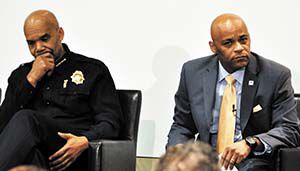
It was standing room only on Friday afternoon when Denver Mayor Michael Hancock led what he termed a “very frank” discussion about race relations and law enforcement at the History Colorado Center.
“Sometimes in our life, we don’t have an option whether we have tough conversations,” Hancock said, pointing out that the crowd of more than 200 had shown up on one of the busiest days of the holiday season.
The 90-minute discussion among community members, elected officials and city administrators was intended, Hancock said, to “follow up on some of the angst, the frustration, the opportunities” in the wake of three recent incidents where police shot or used a chokehold on unarmed African American men in suburban St. Louis, New York and Cleveland, and the protests that followed decisions not to charge any of the officers for the killings.
“These events have sparked conversations all over this country and demonstrations all over this country,” Hancock said, conversations he called “long overdue.”
Earlier that day, protestors converged on the State Capitol in an attempt to deliver a letter to Gov. John Hickenlooper but were denied entry, although Lt. Gov. Joe Garcia and state Sen. Lucia Guzman, D-Denver, met with them outside for a discussion. Protestors with signs and bullhorns also marched on the sidewalk outside Hancock’s forum.
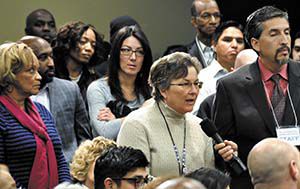
Hancock said he plans to hold more community discussions after the first of the year and that a citywide summit will follow.
Declaring the forum a “safe zone,” where participants could feel free to speak their minds, Hancock asked why chanting “Hands up, don’t shoot!” and “I can’t breathe” – references to the deaths of Michael Brown and Eric Garner, in Missouri and New York, respectively – has turned into a nationwide movement.
Panelist Lisa Calderón, director of the city’s Community Re-entry Project and co-chair of the Denver chapter of the Colorado Latino Forum, touched on the policy of “broken-windows” policing, or the approach that aggressively handling the most minor infractions curbs lawlessness on a bigger scale.
“I pleaded with city government to not unleash ‘broken windows’ policing on our communities,” Calderón said. “What we’re seeing now, 10 years later, is the fruits of that inappropriate and not well-thought-out policy. What we’re seeing in the community is people fed up with being mistreated and being brutalized, with having these incidents caught on tape and not prosecuted,” she said, adding, “It isn’t just black and brown and Native – it’s across the spectrum of people who are demanding that we be treated with full and equal dignity.”
Park Hill-based pastor and community activist Anthony Grimes told the crowd that he recently visited Ferguson, Mo., and stood where Brown was killed, where his body lay on the ground for hours, and understood why residents there felt that justice hadn’t been served. The complicated issue, he added, is “very connected to (the) mass incarceration” of African American men.
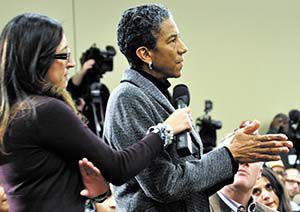
“What is it about our society that has devalued under-represented people?” asked panelist Javon Brame, an official at the Community College of Aurora. “What is it about our society that does not value the lives of African Americans and Latinos and Native Americans?”
Nestor Meza-Zuniga, a community advocate and student at Metro State University of Denver, said that deep-seated racism is only part of the problem. “There’s also a double standard,” he said, when law enforcement officers get away with falsifying reports.
Panelist Estee Dechtman, a ninth-grader at the Denver School of the Arts and a member of the Mayor’s Youth Commission, said that it matters how young people and the police interact.
“I think it’s very important in school that we can build these relationships and not just see law enforcement to correct our behavior,” she said, “but also to come into our schools to support us so we can learn from them and use them as role models in our life.”
Denver Police Chief Robert White blamed the longstanding tension on poor communication and lack of respect between police and the communities they serve.
“When something happens,” he said, “it explodes because of that lack of respect.”
Failure to grapple with – and resolve – these tensions, White said, guarantees “that 20 years from now, there will be another mayor and another police chief sitting here having these discussions.”
Hancock also asked what role the media has played stoking tension – for instance, by focusing on violent responses to grand jury decisions, some in the crowd lamented – and what role personal responsibility plays.
“If you don’t like what you are seeing, or want to see more of it, you are not that busy,” said veteran broadcast journalist Gloria Neal. “Pick up the phone, let them know. If you don’t, you are part of the problem.”
Brame contended that personal responsibility is only part of the equation.
“I refuse to have a conversation about personal accountability without having a conversation about systemic accountability, because, when you look at American society, these are things that are ingrained in our system over two hundred years of slavery, the colonization and forcible removal of Native Americans from their land – these things are in our system, they are who we are as a country, and we have to acknowledge those things,” he said.
Several state lawmakers were among the crowd at the forum, including state Rep. Angela Williams, D-Denver, who praised the event’s organizers for kicking off what she hopes will be a fruitful, ongoing discussion.
“We are having some courageous conversations on how we’re going to build trust between our police and the community, moving forward,” Williams told The Colorado Statesman after the forum concluded. She added that she intends to be part of the conversation in the upcoming legislative session and will be a leading architect of reforms, along with state Rep. Joe Salazar, D-Thornton, who also attended the forum.
“We don’t have a specific agenda,” she said, “but we know there are some concerns we need to address at the state level to make sure we’re building trust between the police and the community.”
State Rep. Beth McCann, D-Denver, agreed that state lawmakers could have a hand in tackling the issues surrounding law enforcement and racial tensions.

“Some options include getting an independent police department to do an investigation, and possibly getting independent prosecutors,” McCann told The Statesman. “Also, possibly, moving the investigation into the attorney general’s office. Those are all things being discussed. I’m not convinced that any of them will actually change the results, but I think that we need to continue to have this discussion… It’s important who does the investigation, it’s important who analyzes it. But an independent prosecutor might not bring any more cases than the elected one in that jurisdiction, so there’s plusses and minuses.”
Acknowledging that “the word is kind of out” that she is planning a run for Denver district attorney – incumbent Mitch Morrissey faces term limits in 2016 – McCann said that it makes a difference who wields prosecutorial power, too.
“Leadership is at the top,” McCann said. “The top of the office sets a tone in how people are treated and how cases are evaluated and how decisions are made. Absolutely, the district attorney can make a big difference.”
Calling the discussion “a meaningful dialogue about race and policing,” state Rep. Rhonda Fields, D-Aurora, told The Statesman that it had been difficult to hear a young African American audience member say she believed that police officers have an incentive to shoot black residents. (A fifth-grader drew gasps from the crowd – and a swift correction from White – when she said she thought cops were paid extra for killing.)
“One of the things I didn’t hear was about the burden of being black,” Fields said. “We heard a young girl talking about how police just want to kill us because they want to get home. That is about the burden of being black – we’re considered to be a threat. That’s why we teach our young men that there are certain things you need to do if you’re approached by the police: You need to be respectful, you need to comply, because, if you don’t, the outcome could not be that favorable to you. That hurt me to hear that young girl say she has a fear of the police. I think we have some work to do.”
– Ernest@coloradostatesman.com

Colorado open records reform bill dies in Senate committee
Marianne Goodland
marianne.goodland@coloradopolitics.com
Updated 3 hours ago
Efforts to overhaul Colorado’s open records law have stalled again. Senate Bill 107, which would have extended response times for public records requests and added accountability measures for late responses, failed to advance out of its first committee and will...
Colorado Supreme Court blocks ballot initiative defining ‘fees’
Michael Karlik
michael.karlik@coloradopolitics.com
Updated 4 hours ago
The Colorado Supreme Court blocked a proposed ballot initiative on Monday that would have required voter approval for new fees above a certain threshold, while also enshrining a definition of “fee” into the state constitution for the first time. Chief...
Colorado joins multi-state call to keep ICE away from polling locations
Jacob Mauk
jacob.mauk@denvergazette.com
Updated 22 minutes ago
Colorado Secretary of State Jena Griswold announced Monday that the state has formally requested written confirmation from the Department of Homeland Security that ICE agents will not be stationed at polling locations during the 2026 election cycle, according to a...
Colorado prostitution decriminalization bill shelved after sponsor says it lacks votes
Marianne Goodland
marianne.goodland@coloradopolitics.com
Updated 2 hours ago
A bill that would have decriminalized prostitution in Colorado will not move forward this year after its sponsor said it lacks the votes to pass its first committee. Sen. Nick Hinrichsen, a Pueblo Democrat, said he will ask to postpone...
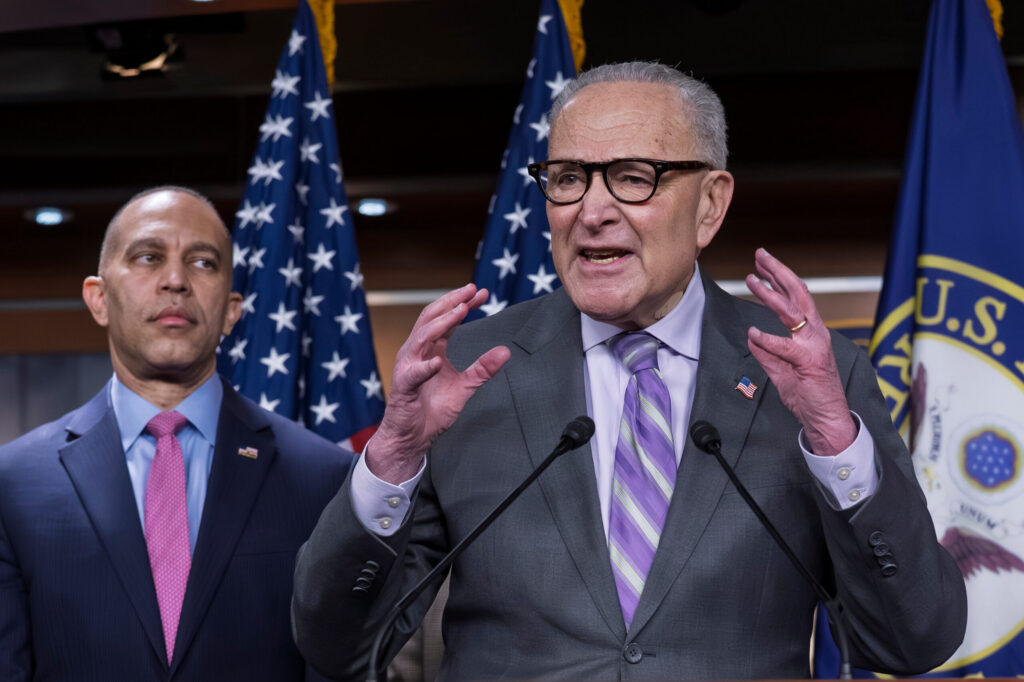
GOP senators push back against Schumer’s ‘Jim Crow 2.0’ description of SAVE Act
Asher Notheis, Washington Examiner
asher.notheis.washington.examiner@gazetteedit.wpenginepowered.com
Updated 4 hours ago
Sens. Rick Scott (R-FL) and Mike Lee (R-UT) pushed back on Senate Minority Leader Chuck Schumer’s (D-NY) framing of the SAVE America Act as “Jim Crow 2.0” on Sunday. President Donald Trump announced Sunday that he will not sign any...
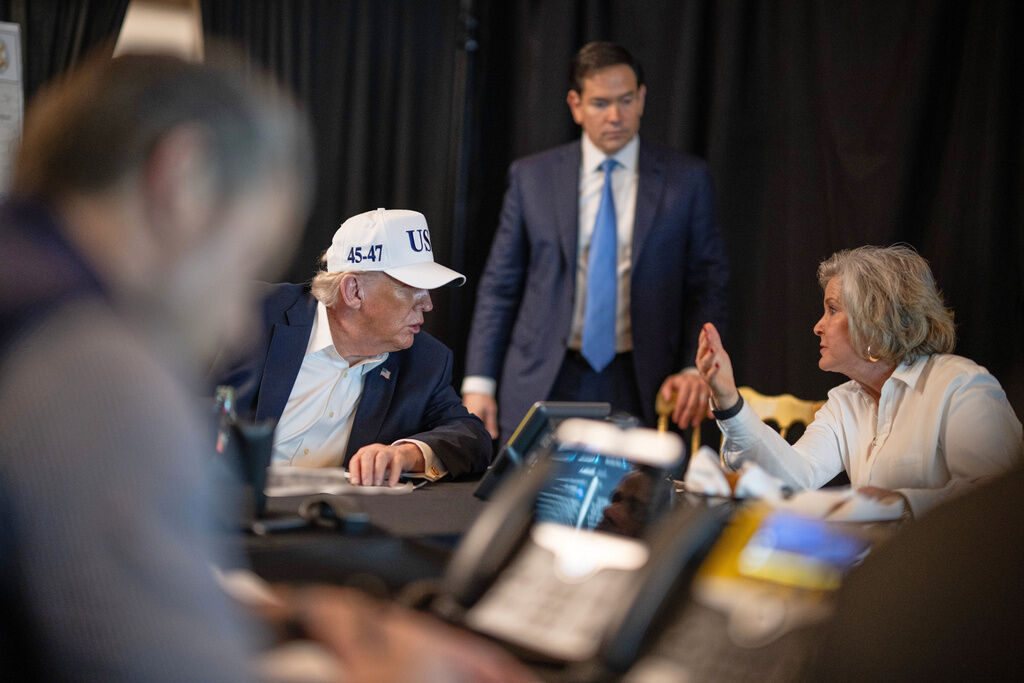
Rubio warns US will no longer tolerate ‘hostage diplomacy,’ claims Iranian military is ‘being eviscerated’
Timothy Nerozzi, Washington Examiner
timothy.nerozzi.washington.examiner@gazetteedit.wpenginepowered.com
Updated 5 hours ago
Secretary of State Marco Rubio is warning hostile state actors, Iran in particular, that the United States will no longer engage in “hostage diplomacy.” Rubio made the remarks ahead of a flag-raising ceremony at the State Department to mark U.S....
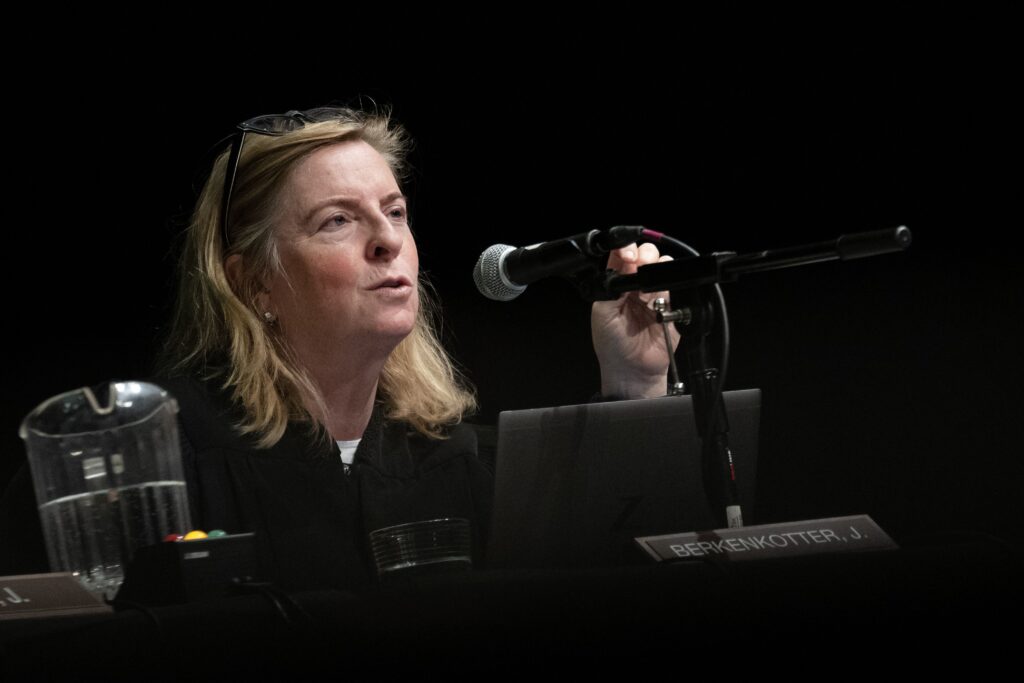
Colorado justices, by 5-2, say Longmont detective did not violate suspect’s Miranda rights
Michael Karlik
michael.karlik@coloradopolitics.com
Updated 6 hours ago
The Colorado Supreme Court’s majority ruled on Monday that a Longmont detective did not coerce a suspect into talking by making references to how a judge would look at his character, and by suggesting he may get out of prison...
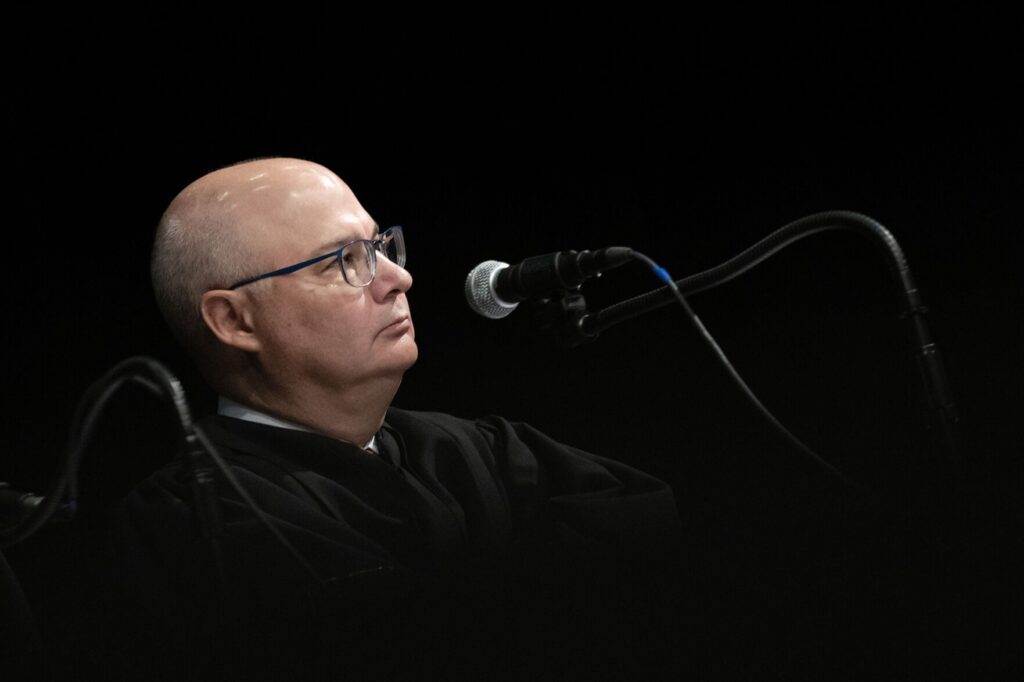
Colorado justices find Fort Collins police lacked probable cause to arrest suspect in park
Michael Karlik
michael.karlik@coloradopolitics.com
Updated 8 hours ago
The Colorado Supreme Court agreed on Monday that Fort Collins police lacked probable cause to arrest a man for a child sex offense based on his presence in a public park around the time they intended to meet with their...

Colorado board delays vote on banning soda purchases with SNAP benefits
Marissa Ventrelli
marissa.ventrelli@coloradopolitics.com
Updated 7 hours ago
The Colorado Board of Human Services voted to delay its decision on whether to allow Supplemental Nutrition Assistance Program recipients to use benefits to buy soft drinks. Under the “Healthy Choice Waiver,” SNAP recipients would be prohibited from using benefits...

Supreme Court to hold oral arguments, discipline commission releases report | COURT CRAWL
Michael Karlik
michael.karlik@coloradopolitics.com
Updated 9 hours ago
Welcome to Court Crawl, Colorado Politics’ roundup of news from the third branch of government. The state Supreme Court is holding oral arguments this week, plus Colorado’s judicial discipline commission released its annual report. Colorado Supreme Court news • The Supreme...
PREV
PREVIOUS
New legislators get advice from the pros
Learn to count. That was the first word of advice from former Senate Majority Leader Norma Anderson, R-Lakewood, to new legislators at the last event of orientation on Wednesday. Anderson was joined by three other distinguished former lawmakers, all who served in the Colorado General Assembly: former U.S. Senator Hank Brown, R-Colo., former Governor Dick […]
Tancredo toasts to conservative principles at dinner with supporters
Supporters of former U.S. Rep. Tom Tancredo raised a glass to toast the Republican and conservative principles at a gathering of a couple dozen key backers of his gubernatorial bid on Sunday night at a Lakewood steakhouse. Noting that he had celebrated his 69th birthday the day before, a wistful-sounding Tancredo observed, “It’s been a […]