

Half of Americans don’t know what the 250th anniversary celebrates | Vince Bzdek
Do you want the good news or the bad news, America?
Let’s start with the bad: Nearly half of all Americans don’t know what America’s 250th anniversary commemorates (namely, the adoption of the Declaration of Independence), according to a new poll from the Cato institute.
And here’s the good: A different national poll sponsored by the Denver-based Daniels Fund, NBC and More Perfect reveals that a broad consensus of Americans (80%) agree on something: The United States should place more emphasis on civic education.
Other findings in the Cato poll contain some good news, too: 86% of respondents said they are grateful to be American and 70% believe the nation’s founding principles remain relevant.

But the bad news is a majority of folks really don’t know what those founding principles are. Nearly 60% don’t know why the colonies declared independence from Great Britain, or that the main purpose of the U.S. Constitution is to limit government power.
And even though they can’t really name those principles, a majority also believes the country has strayed from those principles.
Fifty-six percent also fear the United States could cease to be a free country within the next 50 years, citing corruption and abuse of power as the primary threats. That view was shared by both a majority of both Democrats and Republicans.
And just 12% of adults nationwide said they have confidence in Congress, and only 18% said they have confidence in the federal government. Views of local government were slightly higher, but only 27% expressed confidence. The Cato poll did find that Americans believe freedom of speech is the most important founding principle – music to the ears of journalists like me.
Just more than a third of Americans expressed confidence in colleges and universities. Similarly, 30% expressed confidence in public schools, a level of confidence that has remained relatively unchanged since 2000.
But at least the Daniels and More Perfect poll shows that we agree on something in this polarized nation.
The survey of 3,000 adults nationwide demonstrated there is broad, cross-partisan consensus that we need to teach our founding principles better in order to revive them. A majority (51%) said the country’s focus on civic education is “much too little.“
The same survey reveals that 54% of Americans still believe they share fundamental values compared to 44% who said that most Americans have fundamentally different core values. A majority of both Democrats and Republicans said they would volunteer together, go to church together, and work side by side to strengthen their communities.
Americans across every demographic group say family and freedom are the two values most important in their own lives.
“What people are saying is that we have not lost our commonality,” Hanna Skandera Grady, the president and CEO of the Daniels Fund, wrote recently in a column for this paper. “But they are deeply concerned that we have weakened some of the civic foundations that help citizens understand their country, its institutions, and their role within them.”
“The most striking finding in this poll is that majorities of Americans see more uniting us than dividing us, across gender, race, and background,” John Bridgeland, founder and CEO of poll sponsor More Perfect, said in an email. “That’s the premise More Perfect was built on. We are a first-of-its-kind, bipartisan coalition of 44 Presidential Centers, the National Archives Foundation, and more than 100 organizations, united to help make America a more perfect union through bold, collective action. Our mission is to turn that common ground into a stronger democracy.”
So the good news is that Americans still believe in the promise of the American founding. The bad news is that they are uncertain whether the country is living up to it, as Emily Ekins, vice president for policy and society at the libertarian Cato Institute, put it.
“The challenge for the next 250 years is to rebuild civic knowledge,” Elkins wrote, “restore trust in and recommit to constitutional limits, reduce corruption and special-interest influence, and cultivate the character and restraint required for a free people to govern themselves.”
More Perfect and Daniels are two of the groups trying hardest to do something about all this right now.
The Daniels Fund’s “Civics Big Bet” is a major philanthropic initiative aimed at educating 1 million young Americans on the rights, responsibilities, and values of civic knowledge by 2030.
A centerpiece of this initiative is the National Civics Bee, launched in 2022 by the U.S. Chamber of Commerce Foundation with the Daniels Fund as the founding sponsor. This competition challenges middle school students to engage with civics through essay writing and live competitions. Supported by a $4.5 million grant from the Daniels Fund, the Bee has rapidly expanded and scaled to communities in nearly all 50 states. State champions advance to the national finals in Washington, D.C., where the winner receives the Bill Daniels National Civics Award and a $100,000 scholarship.
More Perfect has focused its democratic revival efforts around five goals:
- Universal civic learning
2. National service and volunteering
3. Bridging divides
4. Trusted elections and more representative and responsive governance
5. Access to trusted news and information
Bridgeland is very focused on collaboration among the burgeoning number of groups and initiatives focusing on democracy revival. And the actionable goals he has articulated are definitely attracting philanthropic investment. More Perfect received a $56 million funding commitment from Carnegie Corporation, Stand Together and the Bezos Family Foundation.
Scott Warren, a fellow at the SNF Agora Institute at Johns Hopkins University, worries that too many of the organizations working on democracy revival are operating in silos, promoting individual solutions rather than uniting around shared, ambitious objectives like Bridgeland has articulated.
“Still, I wonder whether these high-level goals will resonate beyond the grasstops that often define the democracy space, and whether a truly bipartisan approach is possible in today’s hyper-polarized environment,” Warren wrote in the Fulcrum.
Warren is right that democracy renewal needs to happen at the grassroots not the grasstops for revival to gain real traction. Democracy has become too much of a spectator sport, and can’t operate effectively without the fuller participation of citizens in every aspect of it. The 250th anniversary of our founding is a great time for us citizens to rise up again and be the people the founders intended us to be.
Abraham Lincoln, as always, said it best: “The people will save their government, if the government itself will allow them.”
Vince Bzdek, executive editor of The Gazette, Denver Gazette and Colorado Politics, writes a weekly news column that appears on Sunday.

7 years in, Colorado Springs Democratic socialists say they’re making inroads
DEBBIE KELLEY
debbie-kelley@coloradopolitics.com
Updated 2 months ago
If further proof is needed that the political arena in Colorado Springs isn’t like matchups in Denver, the Democratic Socialists of America is a case in point, say some people involved with the local chapter of the nationwide organization. It’s...
The Weiser-Bennet primary election political geography | Cronin & Loevy
Tom Cronin Bob Loevy
tom-cronin-bob-loevy@coloradopolitics.com
Updated 2 months ago
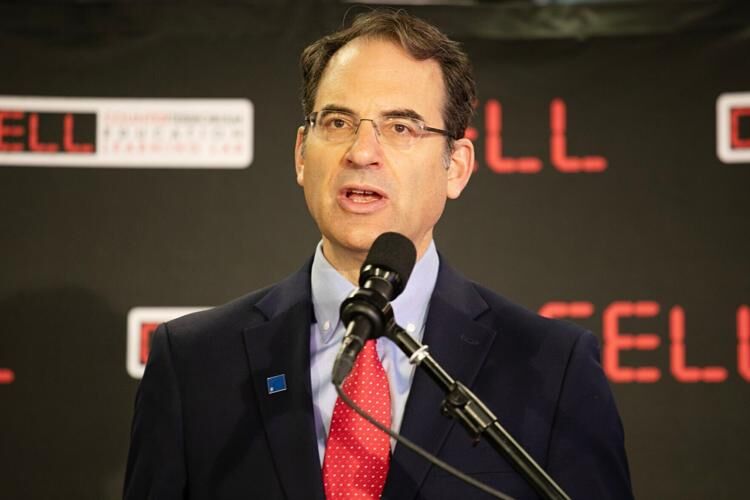
Regional analysis of the vote in the recent Democratic Party primary election for governor of Colorado shows primary election winner Phil Weiser sweeping the Denver metropolitan area with 59.4% of the vote. Weiser’s losing opponent, U.S. Sen. Michael Bennet, garnered...
Latecomer candidate says he has signatures to join race against Melat Kiros in Colorado’s CD1
Mark Samuelson Special to The Denver Gazette
mark.samuelson@denvergazette.com
Updated 1 month ago
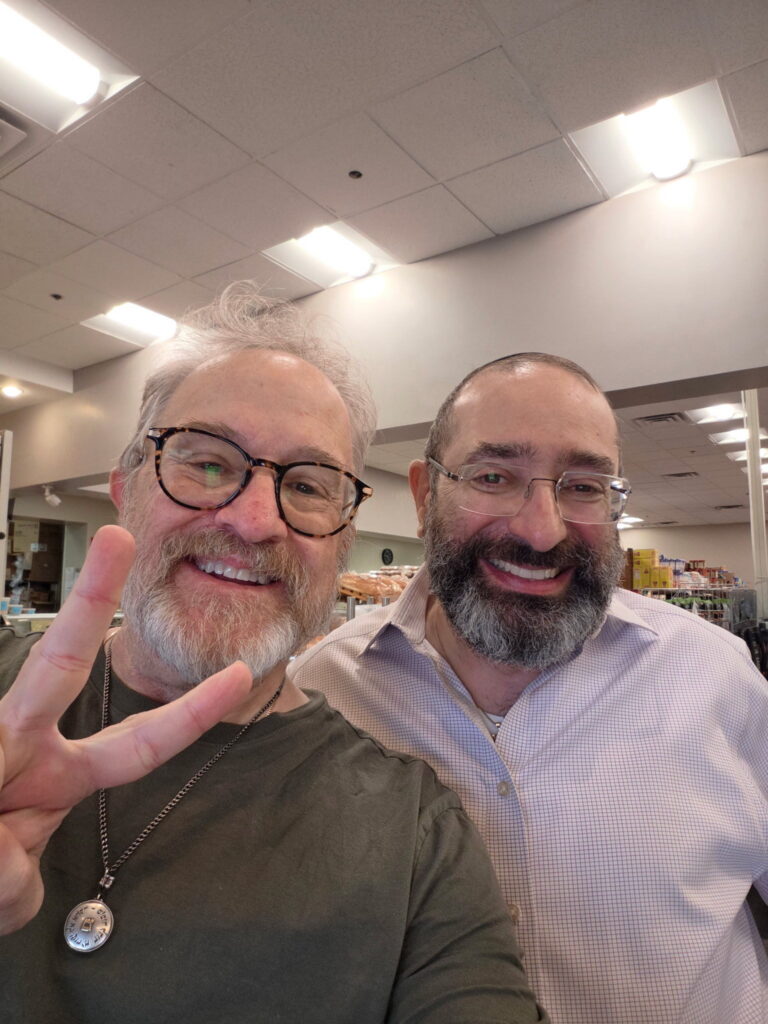
Supporters of latecomer congressional candidate Shimon Blau said Thursday that they had managed to collect well over the required 1,500 signatures to enable Blau to join Colorado’s Congressional District 1 race and face off against Democratic primary winner Melat Kiros...
Meet the Colorado Republican running against Melat Kiros for CD1
Mark Samuelson Special to The Denver Gazette
mark.samuelson@denvergazette.com
Updated 2 months ago
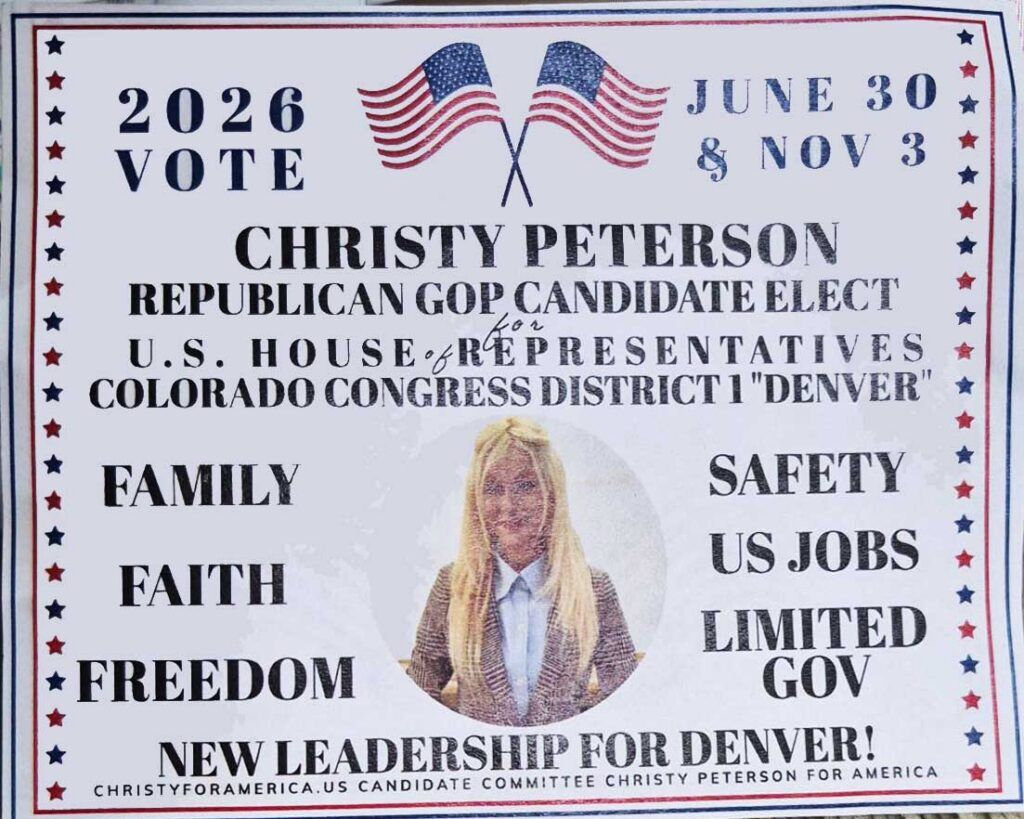
Democratic Socialist Melat Kiros’ victory over 15-term congresswoman Diana DeGette has catapulted into the national consciousness, as part of a larger story about the ideological tug-of-war within the Democratic Party. It also suddenly put the spotlight on the Republican candidate,...
PREV
PREVIOUS

Phil Weiser’s sudden need to find the brake pedal | SONDERMANN
Indulge me with a personal story at the outset. Trust me, it relates. Years ago, when our kids were young, we briefly had a small jalopy for a babysitter’s use. One morning, I discovered that the battery on this poor excuse for a car was dead. Our driveway sat on a bit of an incline, […]
New Mexico governor could seek billions after DEA let fentanyl hit streets | OUT WEST ROUNDUP
NEW MEXICO Governor rips DEA policy ALBUQUERQUE — New Mexico’s governor said on June 29 that state officials could pursue billions of dollars in civil damages after revelations that U.S. Drug Enforcement Administration agents repeatedly allowed shipments of fentanyl to flow into drug-plagued communities as investigators sought to build bigger cases. Democratic Gov. Michelle Lujan […]