

H.R. 1 underscores unfairness in Colorado tax code | OPINION

By Caroline Nutter
On July 4, 2025, Colorado’s budget was overturned with the stroke of a pen. When President Donald Trump signed into law H.R. 1, or the One Big Beautiful Bill Act, he didn’t only cut federal funding by $3.4 trillion, he also cut Colorado’s budget by more than $1 billion.
H.R. 1 expanded corporate tax loopholes — tax breaks like immediate 100% expensing of purchases, loosening restrictions on the minimum tax, and reducing the number of wealthy inheritances subject to estate tax — that amount to billions of dollars in lost revenue federally. So why do these federal changes affect Colorado?
Colorado’s tax code is directly tied to federal law, which means when Congress makes changes, those changes automatically flow into our state. Because of how our system is structured, those changes reduced the revenue Colorado depends on to support families and communities — to the tune of $1.2 billion. Two-thirds of that shortfall comes directly from business and corporate tax breaks.
Taxes aren’t the whole story, either. To offset these tax breaks, H.R. 1 drastically cut funding to Medicaid, SNAP and student loan services that will affect families’ ability to get health care, food and higher education. Working families are asked to stretch further while the rules increasingly tilt in favor of those who need the least help.
All this happened without Colorado state legislators, or those they represent, having a say. As those representatives grapple with a recently introduced state budget that includes cuts to Medicaid, support services for people with intellectual or developmental disabilities and tuition hikes for public colleges and universities, it is more important than ever to attempt to rebalance our tax code.
Legislation being debated now, House Bills 1221, 1222, 1223 and 1289, is a straightforward attempt to respond. It makes targeted adjustments so Colorado is not simply absorbing federal tax changes that move our system further out of alignment. It limits certain expanded tax breaks that disproportionately benefit those at the top and reinvests those dollars into tax credits that help families afford the basics.
That includes strengthening tools like the Family Affordability Tax Credit, which has already helped make Colorado a national leader in reducing child poverty. That is something to be proud of and something worth protecting when federal policy changes threaten to weaken it.
These bills are not about punishing success or singling out businesses. A strong economy depends on businesses, workers and communities all doing well. This is about making sure the rules are working as intended and the benefits of growth are shared more evenly across the people who live and work here.
They are also not a workaround of the law. Legally, they are well within it. The General Assembly has long had the authority to define how state taxable income is calculated, and these changes are structured so any net revenue impact is incidental and minimal under existing constitutional standards.
At the same time, it would be incomplete not to acknowledge the position Colorado is in. The Taxpayer’s Bill of Rights (TABOR) is often described as giving power to taxpayers, but in moments like this, it can have the opposite effect. When Congress changes the tax code in ways that reduce state revenue or shift who benefits, Colorado has very limited ability to respond. We cannot easily undo those changes, even when they move us further away from a system that works for families, because those policies could potentially raise revenue, which legislators are not allowed to do in Colorado.
So we are left reacting, doing what we can within the bounds of the law to restore some balance.
Colorado is not alone in that. States across the country are revisiting their tax codes in light of recent federal changes, making similar adjustments to ensure their systems remain fair and sustainable. In many cases, the kinds of updates proposed here bring Colorado more in line with national norms, not further from them.
As H.R. 1 continues to shred our economy, support services and tax code, we have a responsibility to do everything we can to promote affordability and to rebalance the scales. HB 26-1221, HB 26-1222, HB 26-1223 and HB 26-1289 are sound attempts to do so.
Caroline Nutter is the policy manager at the Colorado Fiscal Institute.


Let the state’s narrative-laundering season begin | Jon Caldara
Jon Caldara
jon-caldara@coloradopolitics.com
Updated 3 days ago
Politics is a game of narrative. Whoever controls the narrative wins. Sure, the truth is interesting. But truth doesn’t sell. It takes time to uncover, assuming people care enough to go digging for it. Narratives are easier. They’re simple, comforting...

Home rule has protected Colorado cities for more than 125 years | Cronin & Loevy
Tom Cronin Bob Loevy
tom-cronin-bob-loevy@coloradopolitics.com
Updated 2 days ago
Colorado is currently gripped by a political struggle. It’s one between the governor and state legislature in Denver on one side and populous “home rule” city governments, mainly on the Front Range — such as Colorado Springs. The state legislature...

Pastors Scott Bottoms, Victor Marx win spots in Colorado GOP’s gubernatorial primary at party assembly
Ernest Luning
ernest.luning@coloradopolitics.com
Updated 2 hours ago
Two pastors from Colorado Springs qualified Saturday for the Republican gubernatorial primary ballot at the Colorado GOP’s state assembly in Pueblo in a party meeting that dragged late into the night. State Rep. Scott Bottoms, who is known as one...
Colorado House finishes work on 2026-27 state budget, finally
Marianne Goodland
marianne.goodland@coloradopolitics.com
Updated 20 hours ago
The House on Saturday, after four days of work – it usually takes two – finished up their work and voted on the $46.8 billion 2026-27 state budget, as contained in House Bill 1410 and 64 accompanying measures designed to...
An “-“ends tribute in a week full of “odds” | Capitol M | Week of April 11, 2026
Marianne Goodland
marianne.goodland@coloradopolitics.com
Updated 3 days ago
The lighter side of the Capitol, usually… The decision to read the budget bill — the long bill, which spans 661 pages this year — put a damper on the House’s already less‑than‑festive mood. So Capitol M decided to catch...
What you need to know about the Colorado legislature reading a 661-page bill aloud
Marianne Goodland
marianne.goodland@coloradopolitics.com
Updated 20 hours ago
A rarely used procedural move by a Republican legislator threw the Colorado House into an extended slowdown, after she invoked her right to have a nearly 700-page state budget bill read aloud in full. Once Rep. Brandi Bradley, R‑Roxborough Park,...
Literal reading of budget bill complicates Colorado legislators’ plans for GOP assembly
Marianne Goodland
marianne.goodland@coloradopolitics.com
Updated 1 day ago
Republican Rep. Brandi Bradley’s decision to force the full reading of the state budget — called the “long bill” for its obvious length — has not only slowed House business to a crawl but also disrupted her colleagues’ plans for...
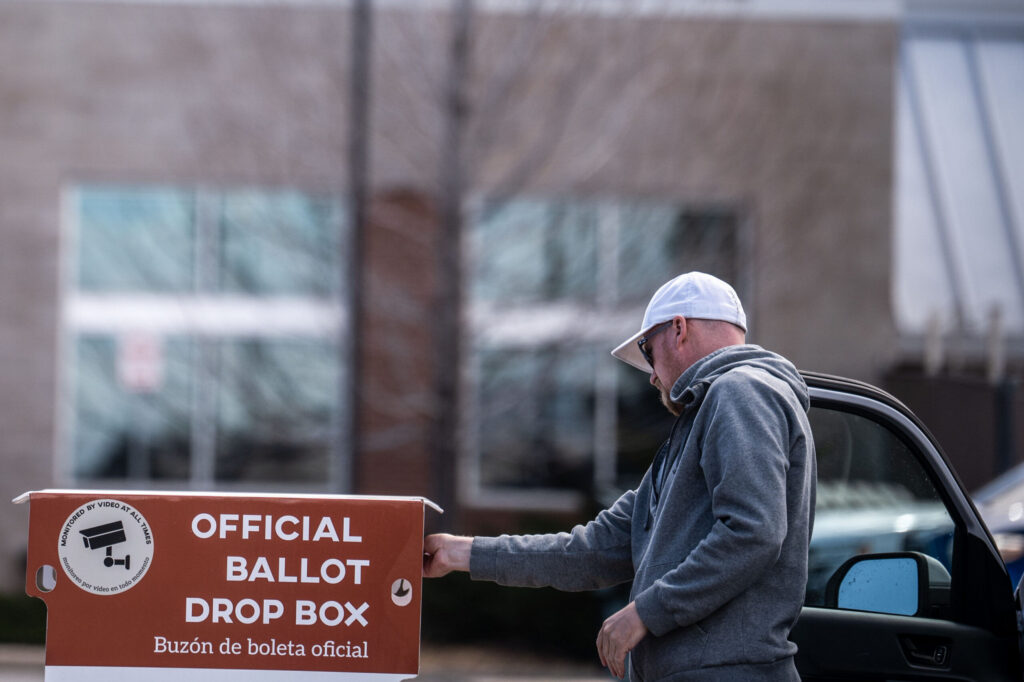
Colorado GOP votes down bid to ask court to prevent unaffiliated voters from voting in June primary
Ernest Luning
ernest.luning@coloradopolitics.com
Updated 2 days ago
Members of the Colorado Republican Party’s executive committee rejected a proposal Thursday night to seek an emergency injunction in federal court to prevent unaffiliated voters from participating in the state’s upcoming June primary election. The proposed motion, backed by Colorado...
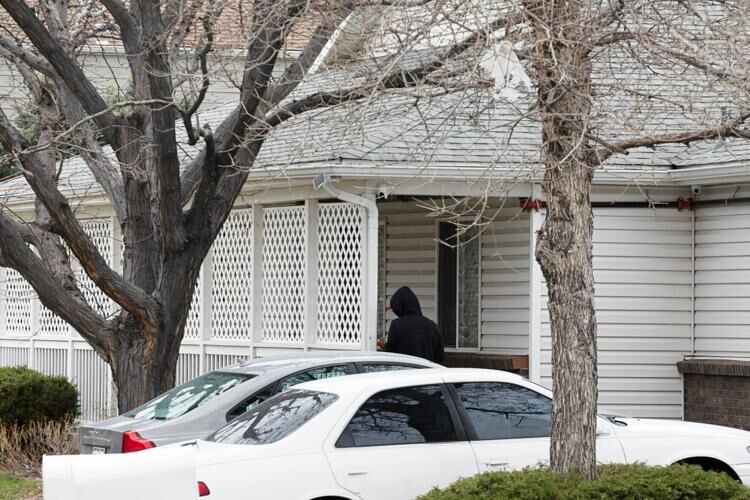
City of Northglenn, state fail to reach agreement on mental health facility amid safety concerns
Marissa Ventrelli
marissa.ventrelli@coloradopolitics.com
Updated 2 days ago
The City of Northglenn said it was unable to reach an agreement with the state on a pair of transitional living facilities for individuals with mental health conditions run by the Colorado Department of Human Services. The facilities, located across...

Colorado Medicaid director’s resignation long-overdue inflection point for our families, kids | OPINION
Colorado Politics
colorado-politics@coloradopolitics.com
Updated 2 days ago
By Heidi Baskfield For years, the consequences of a strained and fragmented Medicaid system have fallen on those least able to navigate it — the children with complex needs and the families fighting to care for them. Though policy debates...
PREV
PREVIOUS
Colorado lawmakers grapple with spending cuts amid $1 billion-plus deficit
The battle over Colorado’s budget for next year — which stalled in the House over a procedural maneuver — entered a more difficult phase on Thursday, when legislators grappled with hundreds of millions of dollars in proposed reductions to balance the budget. The state constitution requires a balanced budget, although that rarely stays balanced for […]

Note to Colorado lawmakers — parents protecting kids isn't abuse, it's their job | OPINION
By Matt Sharp and Sharon Supp During the last few years, the U.S. Supreme Court has made at least one thing clear: Colorado is consistently overreaching to apply its laws in unconstitutional ways. Colorado treated a cake artist with hostility because of his religious beliefs in Masterpiece Cakeshop v. Colorado Civil Rights Commission. The state […]