

Legislation requiring employers to grant unpaid leave to Colorado lawmakers heads to governor’s desk
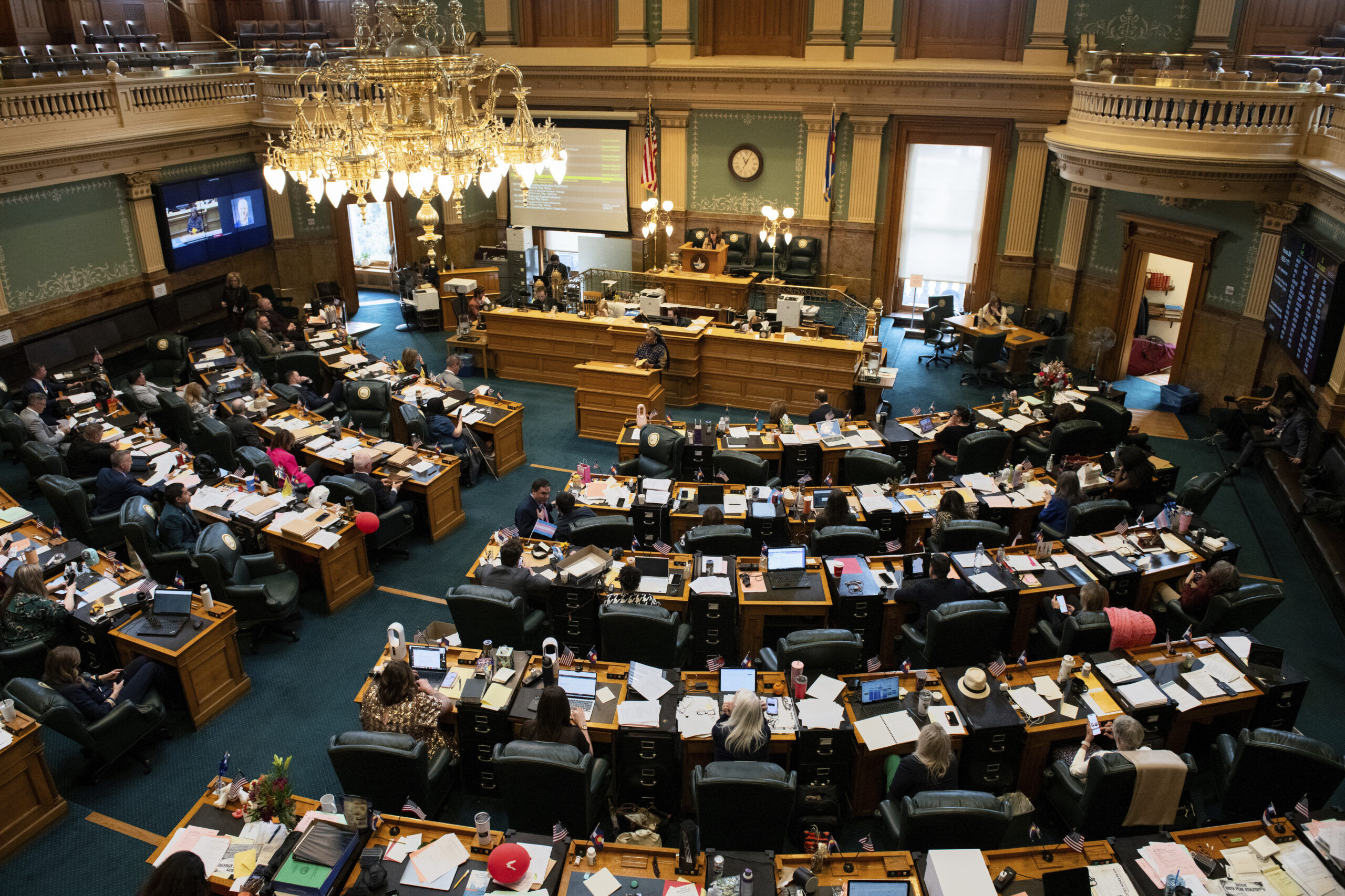
Colorado lawmakers are one step away from securing guaranteed unpaid leave from their day jobs during the legislative session, after the House narrowly approved a proposal Thursday aimed at making it easier for working‑class residents to serve in the General Assembly.
Senate Bill 087, sponsored by Sens. Katie Wallace, D-Longmont, and Byron Pelton, R-Sterling, and Reps. Kenny Nguyen, D-Broomfield, and Mandy Lindsay, D-Aurora, would require businesses to allow employees who are members of the General Assembly to take unpaid leave during the regular legislative session and special sessions.
The bill passed on a 33-31 vote in the House, with all Republicans and nine Democrats voting against it. The bill cleared the Senate on a 23-11 vote, with all Republicans except Pelton voting no. It now heads to the governor’s desk for signature.
The bill, as proposed, would exempt small businesses and employees who make more than 120% of their area’s median income.
Wallace previously told Colorado Politics that the bill is intended to diversify the General Assembly, where the average member is currently over 50 and either retired or working a high-paying job.
“The predominant folks we’re trying to make sure are included in this bill are public sector employees, like teachers, firefighters, and county employees,” Wallace said. “Those folks who really are experts in their issue-areas because of their direct experience in them, but they can’t access this because they would have to give up their job. You need people from all these different career backgrounds to inform the policy, but they can’t come here because of their careers. It kind of defeats the point.”
Republicans argued that being an elected official is a sacrifice, and one that will likely come with a pay cut.
“We must remember that this job is a public service,” said Rep. Ava Flanell, R-Colorado Springs. “It’s not meant to be easy, and we are here to serve our constituents, not ourselves. You are a public servant, and there is some sacrifice that has to be made when taking this position.”
Flanell also argued that if lawmakers stuck to the five-bill limit, they’d have more time to do their outside jobs.
During the House debate, Lindsay told her colleagues, “A representative democracy works best when the people making decisions reflect the full range of experiences, backgrounds, and economic realities of the communities they serve. The General Assembly should include working-class residents, caregivers, public service employees, small business owners, and people in hourly or non-traditional jobs, not just those who can afford to serve.”
Colorado lawmakers are paid just over $40,000 a year — nowhere near enough to support a family without a second job or income, she said.
Employers are required to provide leave to individuals performing other civil duties, such as military service or jury duty, Nguyen reasoned.
Other Republicans opposing the legislation said they agreed that changes were needed to make running for office more accessible to people across different age groups and socioeconomic backgrounds, but didn’t believe this was the way to do so.
While the session is 120 days, being a state lawmaker is undoubtedly a full-time job, said Rep. Matt Soper, R-Delta. He believed lawmakers should be paid accordingly, but felt SB 087 took a “scary approach” to solving the issue.
“To me, it’s difficult to vote yes on a bill to preserve jobs for legislators when legislators make a choice to run,” added Rep. Lori Garcia Sander, R-Eaton, saying that she believed the bill equated to lawmakers “patting themselves on the back” and ensuring they kept their own jobs while their constituents worried about holding down a job.

Proposal outlines $300M deal separating Pinnacol from Colorado state government
Marianne Goodland
marianne.goodland@coloradopolitics.com
Updated 8 minutes ago
Colorado lawmakers are weighing a proposal that would allow Pinnacol Assurance to sever its remaining ties to the state in exchange for a $300 million payment, a long‑debated shift that supporters say could stabilize the insurer’s future and help plug...
Redistricting fight escalates as Colorado Title Board clears competing ballot proposals
Marianne Goodland
marianne.goodland@coloradopolitics.com
Updated 58 minutes ago
Colorado’s title board on Wednesday gave final approval to multiple ballot measures related to congressional redistricting, setting up a series of proposals that could alter how the state draws its U.S. House districts for the 2028 and 2030 elections. The...

Colorado lawmakers propose deep cuts to close $1.2B budget gap
Marianne Goodland
marianne.goodland@coloradopolitics.com
Updated 2 hours ago
The panel of Colorado legislators in charge of crafting next year’s budget has finalized the 2026–27 spending plan built on deep cuts and one‑time cash transfers in an attempt to close a shortfall of more than $1.2 billion. The plan...
Denver judge denies Gov. Polis request to dismiss ICE-related records case
Marianne Goodland
marianne.goodland@coloradopolitics.com
Updated 3 hours ago
A year after blocking the release of state records to federal immigration agents, a Denver judge has now denied Gov. Jared Polis’ effort to end the lawsuit at the center of the dispute. The lawsuit filed against the governor in...
Colorado appeals court orders new sentencing for Tina Peters, upholds convictions
Michael Karlik
michael.karlik@coloradopolitics.com
Updated 6 hours ago
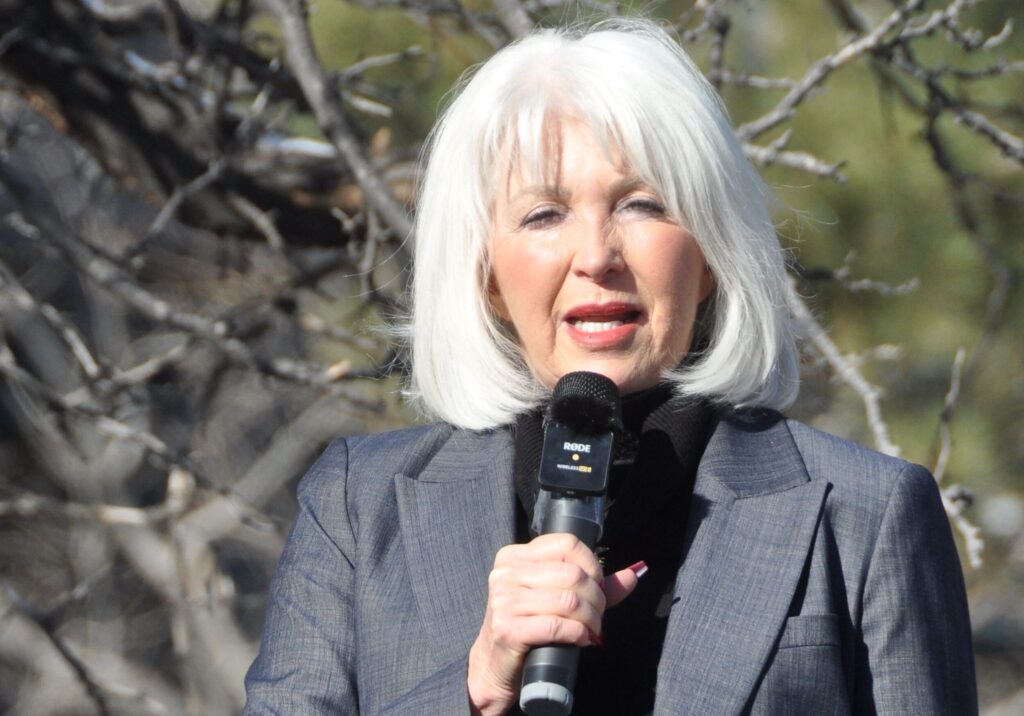
Colorado’s second-highest court determined on Thursday that a trial judge improperly sentenced former Mesa County clerk Tina Peters based upon her exercise of protected speech, while at the same time upholding her convictions. The three-judge Court of Appeals panel also...

Denver promised every school funding from $1B bond — but campuses later closed received far less | Analysis
Nico Brambila
nico.brambila@denvergazette.com
Updated 3 hours ago
Denver voters overwhelmingly approved the largest bond measure in Denver Public Schools history on the promise that every school — including charter campuses — would receive something. And they did. But the nearly $1 billion bond was not distributed evenly....

National conservation area growing by 4,000-plus acres in western Colorado
Seth Boster
seth-boster@coloradopolitics.com
Updated 7 hours ago
A formerly private, sweeping swath of western Colorado is growing a public, red rock wonderland. Spanning 4,000-plus acres, Escalante Ranch has been transferred to the Bureau of Land Management and incorporated into Dominguez-Escalante National Conservation Area, The Conservation Fund recently...
Judge rules that Colorado law makes it too hard for parties to bar unaffiliated voters from primaries
Ernest Luning
ernest.luning@coloradopolitics.com
Updated 6 hours ago
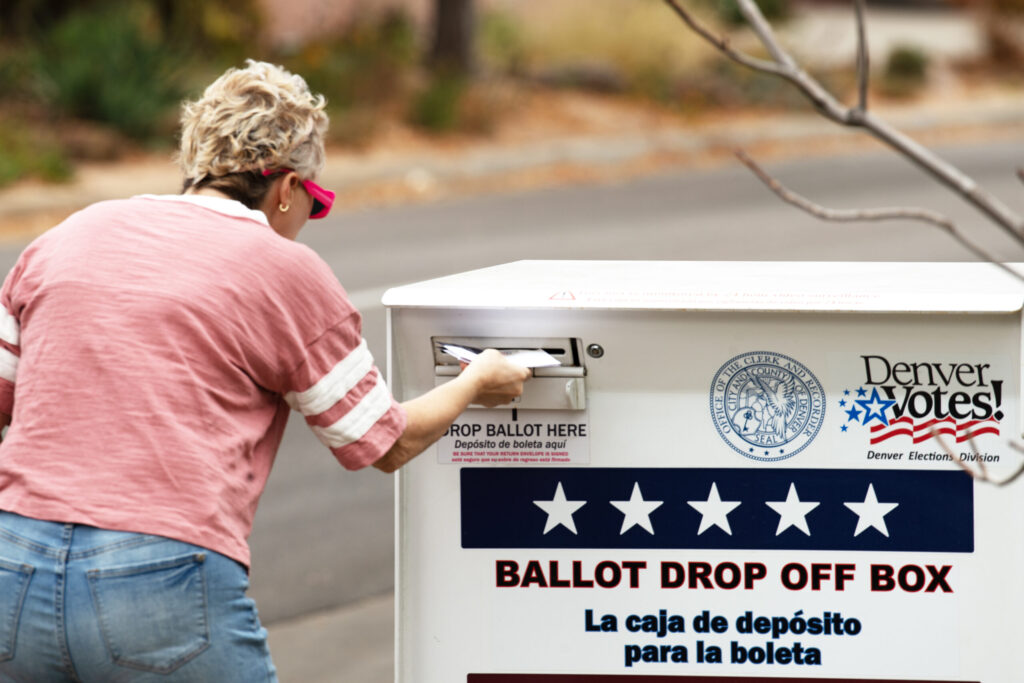
A federal judge ruled in favor of the Colorado Republican Party late Tuesday, saying that a portion of the state law that allows unaffiliated voters to cast ballots in party primaries is unconstitutional because it imposes an unrealistic burden on...

Front Range cities oppose Democratic proposal to permit lot‑splitting
Marianne Goodland
marianne.goodland@coloradopolitics.com
Updated 1 hour ago
Colorado lawmakers are pressing ahead with a plan to let homeowners split their lots to make room for smaller, less expensive houses — a proposal that has drawn sharp opposition from Aurora, Colorado Springs, Denver and other Front Range cities...

Hegseth features Fort Carson soldiers after returning from Middle East, gives warning on Iran war
Reuters
reuters@gazette.com
Updated 1 day ago
Defense Secretary Pete Hegseth said on Tuesday the next few days in the war against Iran would be decisive and warned Tehran that the conflict would intensify if it did not make a deal. Hegseth also highlighted his trip to the Middle...
PREV
PREVIOUS
Redistricting fight escalates as Colorado Title Board clears competing ballot proposals
Colorado’s title board on Wednesday gave final approval to multiple ballot measures related to congressional redistricting, setting up a series of proposals that could alter how the state draws its U.S. House districts for the 2028 and 2030 elections. The board, which has final authority over ballot measure titles and language, has one remaining meeting […]

Proposal outlines $300M deal separating Pinnacol from Colorado state government
Colorado lawmakers are weighing a proposal that would allow Pinnacol Assurance to sever its remaining ties to the state in exchange for a $300 million payment, a long‑debated shift that supporters say could stabilize the insurer’s future and help plug a looming budget shortfall. A draft of the bill obtained by Colorado Politics spells out […]