

Environmentalists and Colorado Springs Utilities split on retirement date for Ray Nixon coal power plant

On Tuesday night, around 25 people gathered at Old Colorado City Brewing to celebrate Ray Nixon’s retirement. Nixon is only 46 years old, but the retirement has been expected for several years. The crowd delivered toasts and signed a poster-sized retirement card.
“It’s just not ‘cool’ to hang on too long, like a pro athlete who plays too many seasons,” one guest wrote.
“Did you know smoking is bad for you? Happy retirement!” said another.
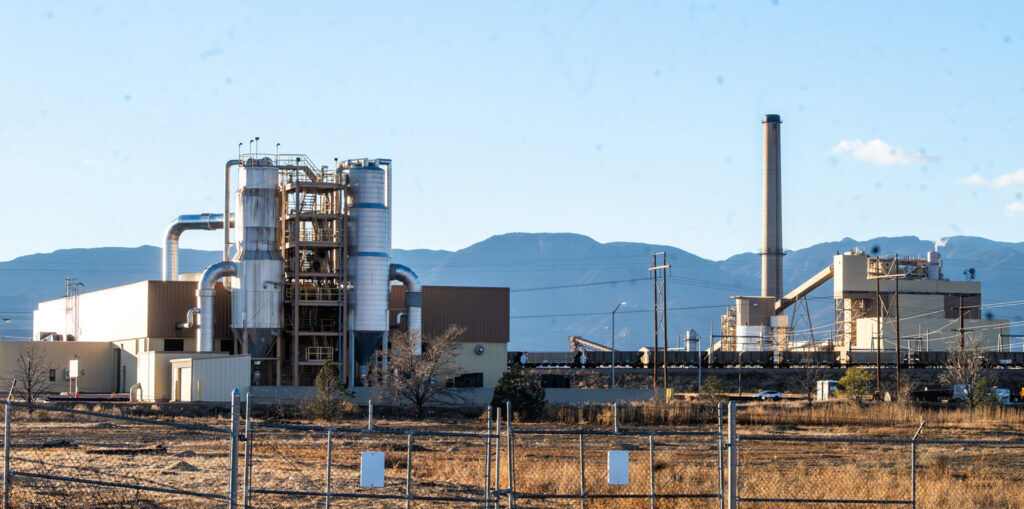
Decades ago, Ray Nixon was the director of Colorado Springs Utilities, but the retirement event was thrown for the large coal-fired power plant named after him south of Colorado Springs. Environmental groups held the event as a way to pressure Utilities to stick by the previously announced deadline for the power plant to be decommissioned by the end of 2029.

The retirement party angle was planned by Olivia West, one of the organizers for Sierra Club Colorado. West said the event was both a sincere celebration of having Ray Nixon join other decommissioned coal power plants and a way to bring awareness to its future.
“Discussing climate change can be serious and discouraging. I wanted to create an event that has a different mood and has a way to celebrate something,” West said.
Utilities staff compared the power plant to a retirement-age worker who was being forced to stay on the job because of the economy. The municipal utility is looking for a temporary delay through a bill in the state legislature, which would keep the plant operating until potentially 2035 while they pursued new angles to replace its power.
“The most affordable option for the community is to hold on for a little longer and get to a situation where transmission can be built to access a better suite of resources,” said Daniel Hodges, Utilities general manager for government affairs.

Ray Nixon produces around 260 megawatts of power from its coal-fired generators. The plant also has natural gas turbines that were added in 1999, providing an additional 54 megawatts of power.
Colorado Springs Utilities announced in 2020 that Nixon would be brought offline in order to meet the state requirements to reduce greenhouse gas emissions by 80%. The same process led to the Martin Drake Power Plant on the southwest side of downtown Colorado Springs being decommissioned in 2023, slightly ahead of the original timeline Utilities had set.
Utilities CEO Travas Deal announced last year that they were struggling to afford the alternative power sources that would replace the coal generators after multiple bids came in well above expectations. The utility is now looking to the state legislature to open the door for a temporary reprieve keeping Ray Nixon open.
“A mandatory power plant retirement, without reliable, affordable sources of replacement power, will threaten electric reliability and drive already high electric rates even higher,” Deal said in a January blog post about the bill.
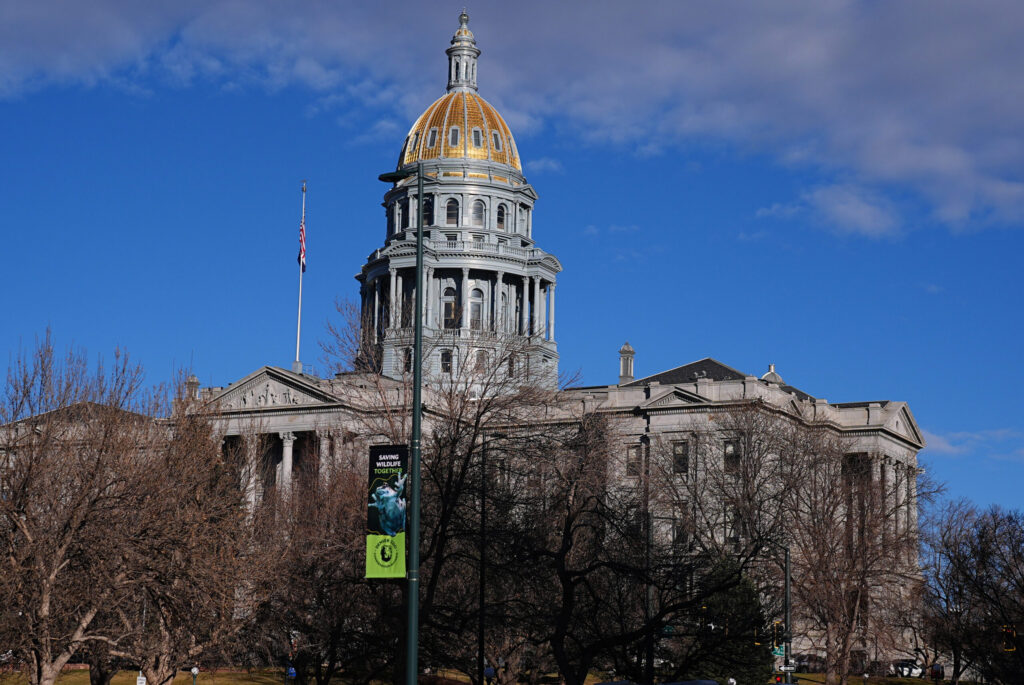
Senate Bill 22 would allow Colorado Springs Utilities and other public utilities to file a new greenhouse gas reduction plan that would push back the 2030 deadline. The utilities would have to provide reasons that the original deadline was unworkable and would increase customers’ power bills by a significant amount.
More than halfway through the four-month session, the bill has not received any public hearings. Hodges said that Utilities had worked with environmentalists and state officials to come up with a new deadline for Nixon’s retirement. The new proposal would move the retirement date back to 2033, with a one-time option to delay it until 2035.
Hodges pointed to developments that happened Wednesday and opened up new pathways for the Nixon replacement. That was the day Colorado Springs Utilities officially joined the Southwest Power Pool, a regional transmission organization that includes utility providers in portions of 17 states.
Hodges said that one of the biggest issues with decommissioning Ray Nixon was that Colorado Springs had limited connections to transmit power from outside the city limits. The regional pool was planning to build new transmission lines connecting Colorado with Wyoming or Kansas, with the cost split between the member organizations. The same cost-sharing pool could also potentially bring down the cost for new renewable energy projects.
How soon can the 17-state group deliver on the goals?
“Now I can request project bids in those zones and if it doesn’t cause new transmission to be built, we can get much more affordable bids than we would have seen even 24 hours ago,” Hodges said Wednesday.
Wednesday was also the day the Sierra Club organizers delivered the retirement card prop to Utilities headquarters, along with 1,000 signatures from Colorado Springs residents and messages from 30 local businesses in support of closing the power plant.
West said the transition away from coal power plants seemed to be broadly popular in the city.
“This is the outcome we all want. We want to invest in the resources for my generation and the generations that come after me,” West said.



Energy constraints loom larger than water for Colorado AI boom, experts say
Deborah Grigsby
deborah.smith@denvergazette.com
Updated 3 days ago
As artificial intelligence reshapes almost every sector of the economy, experts at this year’s Colorado Climate Week gathering in Boulder said it is also reshaping local physical infrastructure. From grid demand and water use to data center construction, scaling the...

Gov. Polis declares April ‘dig safely month’ to mark 40th anniversary of Colorado 811
Scott Weiser
scott.weiser@gazette.com
Updated 5 days ago
Gov. Jared Polis declared April 2026 as “Dig Safely Month” in Colorado, an annual observance that this year highlights the 40th anniversary of Colorado 811, the state’s One-Call Notification System. “Before everyone starts their warm weather projects around the house,...

A perfect storm: Pine beetles thriving following warm, dry winter in Colorado
O'Dell Isaac
odell.isaac@gazette.com
Updated 6 days ago
The warmest winter in Colorado history could lead to record-breaking proliferation of a tiny insect, about the size of a grain of rice, that has killed millions of acres of trees across the Centennial State and contributed to the rapid...
Power grid shutdowns in Colorado bring protection — and problems
Scott Weiser
scott.weiser@gazette.com
Updated 3 days ago
A downed power line in Sunshine Canyon in the mountains west of Boulder in December posed an electrocution risk to firefighters and bystanders after Xcel Energy re-energized it without repairing it, despite being notified of the break the day before....
CDOT pivots from snowplowing to wildfire mitigation along highways
Scott Weiser
scott.weiser@gazette.com
Updated 1 week ago
Colorado Department of Transportation maintenance crews have launched an early push to clear dry vegetation along highways to reduce the chance that sparks or cigarette butts from passing vehicles might ignite fast-moving fires this summer. With CDOT meteorologists forecasting above-normal...
Proposed data center regulation in Colorado draws critics, backers
Scott Weiser
scott.weiser@gazette.com
Updated 2 weeks ago
A packed marathon hearing at the state Capitol in Colorado highlighted the sharp divide between two competing approaches to the effects of data centers, one of America’s fastest-growing technology sectors. Data centers are the physical facilities that host the servers,...

Conservation Colorado proposes measures aimed at oil and gas companies
Marissa Ventrelli
marissa.ventrelli@coloradopolitics.com
Updated 2 weeks ago
A group has introduced four ballot measures it says are meant to counter an initiative that aims to enshrine Colorado businesses and consumers’ right to purchase and sell natural gas in the state’s constitution. Filed with the Secretary of State’s...
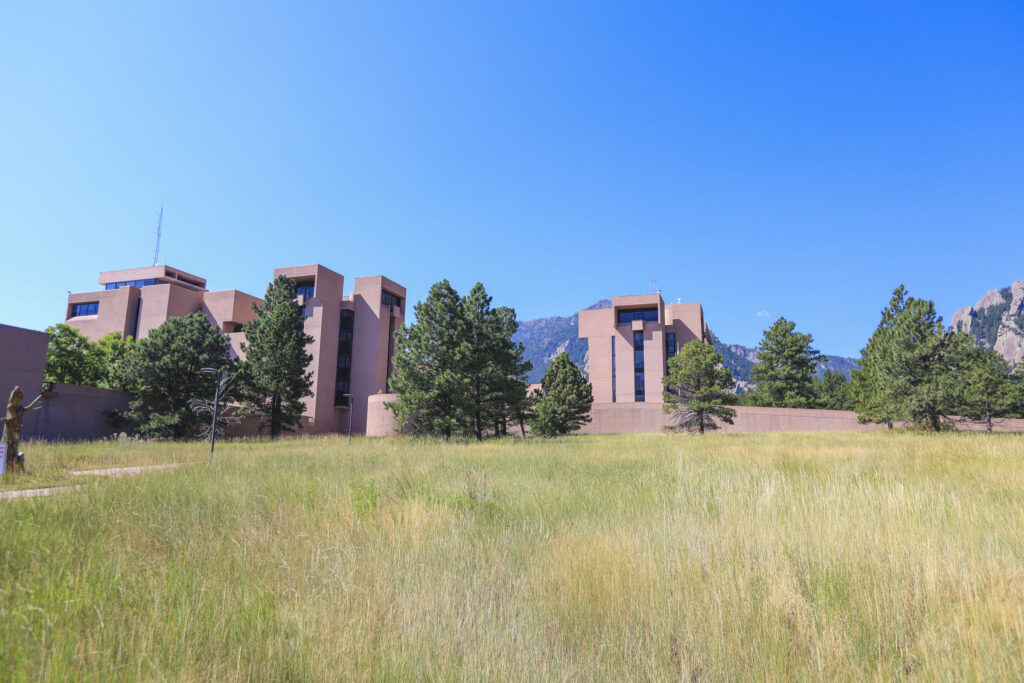
Universities sue to block dismantling of Boulder’s NCAR
Scott Weiser
scott.weiser@gazette.com
Updated 3 weeks ago
A consortium of universities filed a federal lawsuit Monday, alleging the Trump administration’s plan to dismantle the National Center for Atmospheric Research is unlawful retaliation against Colorado. The group also argued that the move violates federal law. The University Corporation...
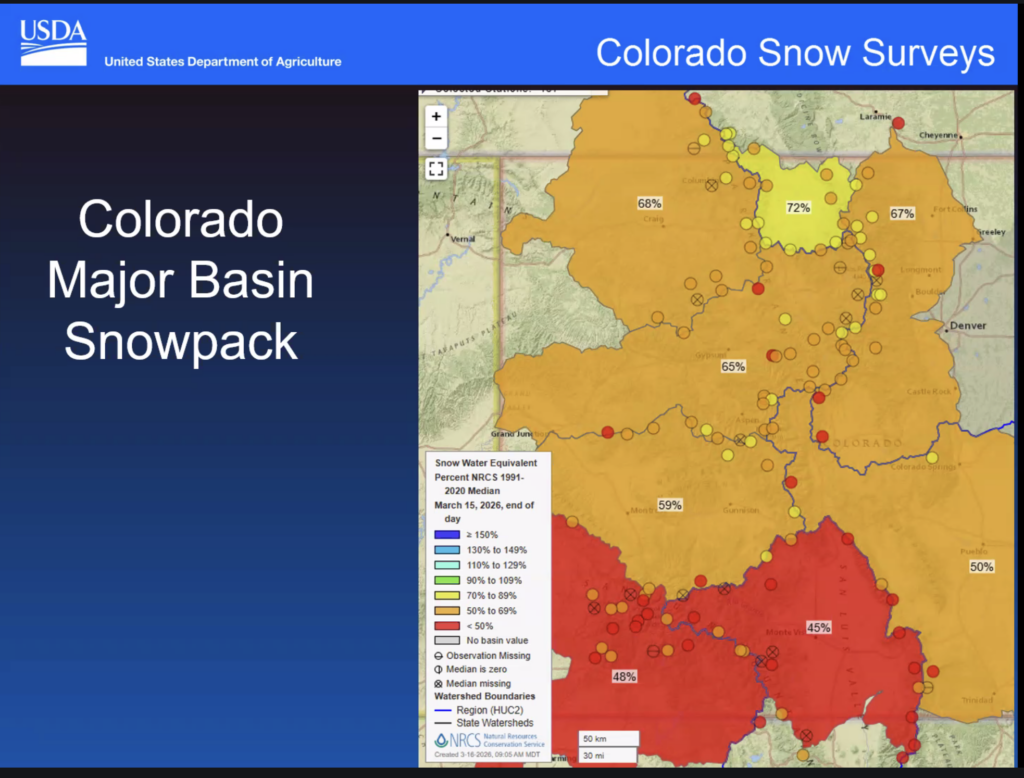
After ‘winter of defeat,’ Colorado hopes for wetter summer
Marianne Goodland
marianne.goodland@coloradopolitics.com
Updated 3 weeks ago
With snowpack melt already peaking in some parts of the state and drought conditions worsening compared to last year, Colorado’s water watchers are hoping for a wetter summer, though they anticipate the situation deteriorating before getting better. Meanwhile, the governor...

Colorado, other states oppose proposal to require EV chargers be made with 100% domestic components
Scott Weiser
scott.weiser@gazette.com
Updated 2 weeks ago
Colorado has joined a coalition of about 20 states in opposing a federal proposal that would require electric vehicle chargers funded with federal dollars to be made with 100% domestic components. The Federal Highway Administration is considering raising the domestic...
PREV
PREVIOUS

Colorado National Guard members deployed to the Middle East
The Colorado Army National Guard announced Thursday that more than 200 members are deploying to the Middle East. The members of the 1st Battalion, 157th Infantry Regiment (Mountain), a unit based at Fort Carson, are deploying to help support an international peacekeeping force that supervises the 1979 Egypt–Israel peace treaty and enforces its terms, according […]
Gov. Lamm challenges Congress to stop ‘decontrol’ of natural gas | A LOOK BACK
Forty-Five Years Ago This Week: In a memo to Colorado’s congressional delegation, Gov. Dick Lamm urged them to vote against the phased pricing deregulation provisions in the Natural Gas Policy Act, a measure introduced in Congress in 1978 and still under sharp debate in Congress. “Immediate, total natural-gas decontrol should be opposed because of significant […]