Killing off the Regional Transportation District | Miller Hudson
This column is appearing the same day state Sen. Matt Ball (D) of Denver and his legislative co-sponsors unveil legislation implementing many of the recommendations advanced by last summer’s Regional Transportation District Accountability Committee. Although it isn’t readily apparent, they have allowed themselves to be enlisted in a plot that will likely lead to the bankruptcy and then the dissolution of the Regional Transportation District within the next five years. That, of course, is not their intention. In fact, they envision themselves as reformers focused on strengthening an agency they perceive to be in decline. A slight reworking of philosopher George Santayana’s admonition, “Those who cannot learn from the mistakes of the past are destined to repeat them,” is instructive regarding how otherwise competent legislators are misfiring so badly.
When assessing the challenges facing RTD, it’s important to recognize they are not unique. Two weeks ago, the New York Times reported on the fiscal challenges facing BART (Bay Area Rapid Transit) and CALTRANS in northern California, where ridership is half their pre-COVID level. Boston, Philadelphia and Washington are also in fiscal trouble. The most startling observation from a member of its board as reported in the Times was, “BART is not too big to fail.” A frequent charge against the competency of RTD is the elected board has failed to return ridership to 2019 daily trips. The Accountability Committee ignored testimony from the board they are fully aware of this ridership erosion, pointing out attracting riders is largely dependent on running more buses and trains more often. This costs money the agency currently lacks.
Last week the San Diego Union-Tribune devoted most of its editorial section to discussion of the impending bankruptcies facing transit operators throughout the state of California. Fourteen systems are facing imminent bankruptcies later this year, including Amtrak’s Pacific Surfliner and the COASTER connecting Los Angeles and San Diego. They are now racing one another to the ballot box for revenue relief from voters. There will be winners and losers. The paper points out nationally, “By 2015, after a 130% increase in the nation’s working population and substantial government (taxpayer) subsidies, transit usage was still slightly less than it was 55 years prior.” Editors question whether increasing subsidies for services with declining ridership is a rational policy. Counter-intuitively, the largest loss of riders has occurred among low-income workers who purchased used cars during the pandemic — having no more appetite for traveling on COVID buses and trains than their wealthier neighbors.
They go on to explain, “…for many government officials who are spending taxpayer money and don’t have shareholders to worry about, their belief in public transit is unwavering. So what if it needs more than 80% in subsidies, year in and year out, and soon maybe 90%. Transit is inherently good and cars are inherently bad. And, if a great majority of Californians disagree, tough luck for them.”
In Colorado, we can include most environmental groups as sharing this mindset. With the exception of Green Latinos, they’ve lined up in lockstep supporting Ball’s bill. Groupthink, without adequate reflection, is on the march. The Union-Tribune may sound like it opposes public transit. Consider this, “Our backs are against the wall, and the stakes couldn’t be higher. Without decisive intervention, we face a future with dramatically reduced rail and transit service and far fewer transportation options.” The same can be said for RTD. While Colorado managers were careful to husband dollars during the pandemic, purchasing us an extra year or two before encountering our own fiscal crisis, RTD predicts a $120 million to $200 million budget shortfall in the near future. Whether it is the existing elected board or some half-baked hybrid board composed of far fewer elected members and a handful of appointed “experts,” RTD will have to ask voters for expanded revenues to service its debt and cover operating costs going forward.
Let’s return to RTD’s history and the mistakes of the past. The appointed board that existed prior to 1980 failed three times to win voter support for transit proposals not to mention compiling a record of overt corruption, misfeasance and incompetence. It is predictable experts look very much like cronies. Only upon voter approval of an elected board did RTD’s service improve. It required nearly a decade to fix the bus system and another two attempts to win voter approval of FasTracks. Democracy has not proven perfect but, over time, it has proven successful. Before the legislature opts to replace the current elected board, however, members should consider which version of an RTD board is more likely to successfully persuade voters to keep transit afloat: 15 elected members representing districts across RTD’s service area or a few elected members from mega-districts as large as congressional seats plus unknown appointees?
Why are riders discounted as experts? During the past 44 years, our elected system has assured virtually continuous representation from our African-American and Hispanic, both of which are disproportionately dependent on reliable transit service. Isn’t it likely the proposed reform scheme is nearly certain to assure there is never again a brown or black face sitting at the table (or a disabled rider for that matter)? Quoting again from the San Diego editors, “No major public transit system covers its costs solely through fares. Stable funding — from taxes, state and federal (not before 2029) sources, and other revenue streams — is essential for operations and long-term improvements.” The RTD Accountability Committee concluded and is now parroted by Sen. Ball and his cohorts that finding solutions is just too much to expect from mere elected officials.
At a time when democracy is under daily assault nationally, there is considerable irony in the fact it is primarily Democrats denying the value of democratic governance in Colorado. If appointed RTD directors will deliver superior leadership, why not appoint our legislators as well? How and why would this change improve transit service for riders? No group has thought harder or longer about the changes in our economy that have reduced transit ridership than the staff and directors at RTD. Who anticipated the work-at-home transformation subsequent to COVID? Downtown Denver office vacancies exceed 30% and when workers only use an office a day or two each week, perhaps ride-sharing apps are more flexible and potentially cheaper than purchasing an RTD monthly pass. It’s also time to consider whether door-to-door, ride-sharing services may be better suited for many disabled riders.
Although there has been occasional grumbling from local government leaders, the possible loss of a local director has set off alarms at both the Metro Mayor’s caucus and DRCOG. Nothing could be more distant than a director representing 650,000 residents. Will voters trust directors who have to raise half-a-million dollars to get elected? Will candidates who can raise that kind of campaign money work to promote campaigns on behalf of tax proposals funding RTD? Don’t count on it. It didn’t work in the past and isn’t likely to work in the future. Democracy has its uses. If reform leads to the collapse of RTD, Matt Ball and the role his allies played in causing that will be forgotten. A reconstituted elected board will have to pick up the pieces.
Miller Hudson is a public affairs consultant and a former Colorado legislator.


Green energy shouldn’t come at expense of Colorado farmers, ranchers feeding us | Rachel Gabel
Rachel Gabel
rachel-gabel@coloradopolitics.com
Updated 2 hours ago
In 2023, the Department of Energy released the National Interest Electric Transmission Corridors (NIETC) study identifying areas they speculate would experience transmission capacity constraints of congestion. The map identified more than 2 million acres or 24% of the state of...

Bill in state legislature would put large apartment projects in single-family neighborhoods | Cronin & Loevy
Tom Cronin Bob Loevy
tom-cronin-bob-loevy@coloradopolitics.com
Updated 1 hour ago
There is an old joke that goes something like this: “When the state legislature is in session, no person and their property are safe.” That is not a joke in the older, more traditional neighborhoods that surround the downtown regions...

Colorado hates its disabled citizens | Jon Caldara
Jon Caldara
jon-caldara@coloradopolitics.com
Updated 3 days ago
This is a selfish column. The legislature is about to hurt my disabled son. My son, Chance, has Down syndrome and a few years ago would have been labeled “retarded.” Then “developmentally delayed.” Now the hypersensitive prefer “intellectually disabled.” Whatever...
Phil Weiser wins top spot in Colorado’s Democratic gubernatorial primary at party’s state assembly
Ernest Luning
ernest.luning@coloradopolitics.com
Updated 1 day ago
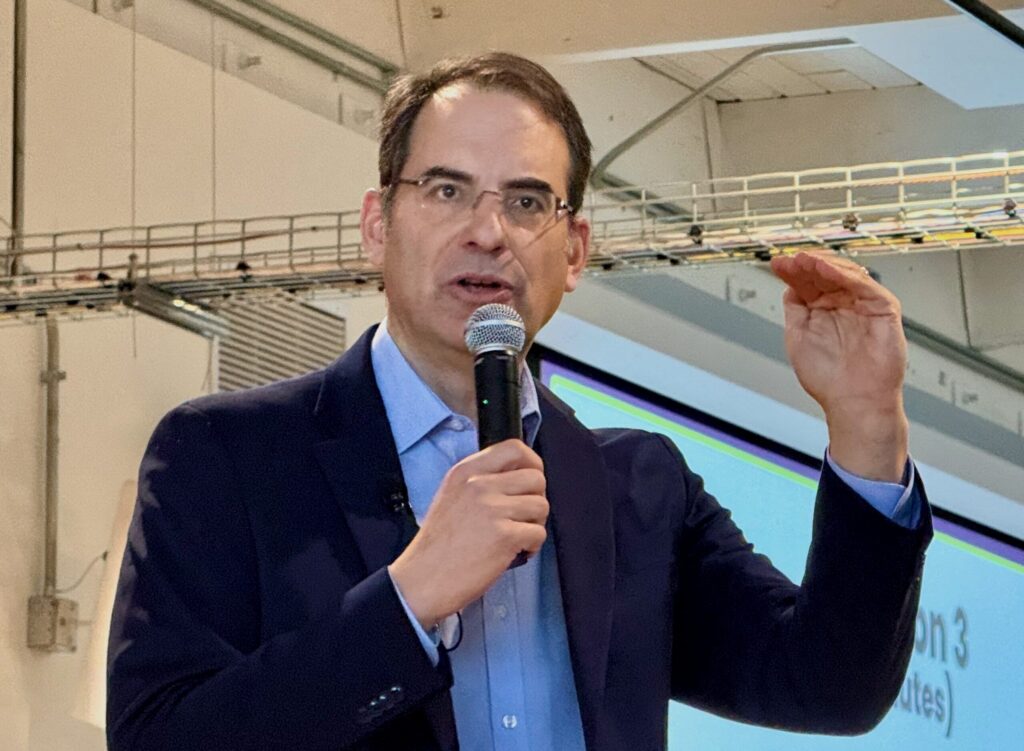
Attorney General Phil Weiser’s name will appear first on Colorado’s Democratic gubernatorial primary ballot after his overwhelming win Saturday at the party’s state assembly in Pueblo. Weiser joins U.S. Sen. Michael Bennet in the June 30 primary for the office...
Denver Democrat Diana DeGette trails challenger Melat Kiros at assembly as both qualify for primary
Ernest Luning
ernest.luning@coloradopolitics.com
Updated 2 days ago
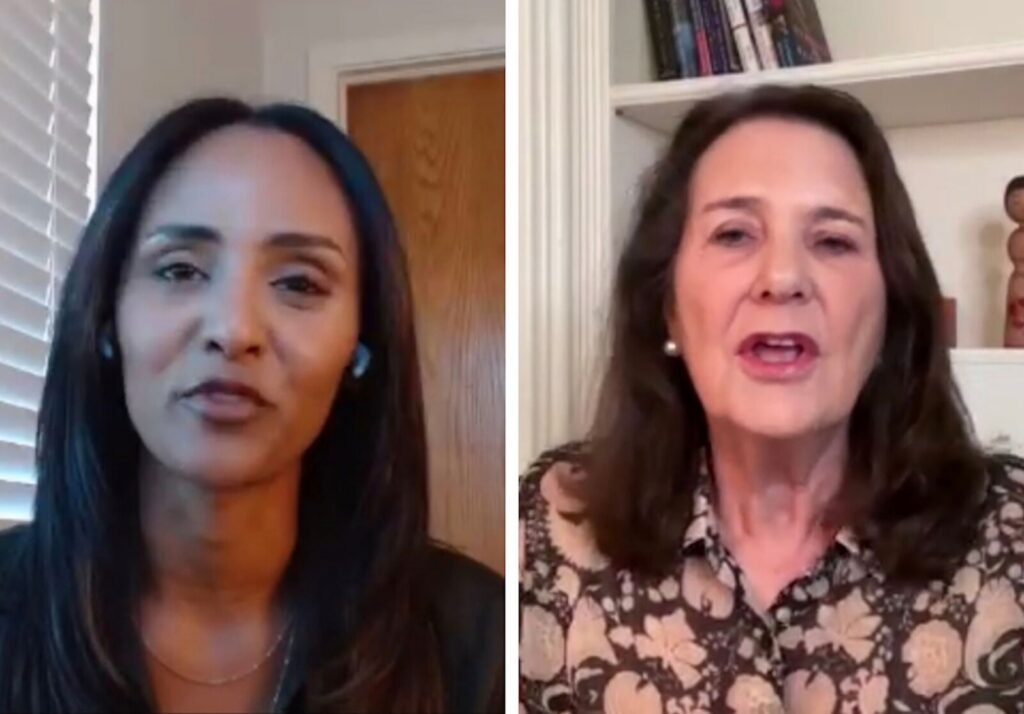
U.S. Rep Diana DeGette, a Denver Democrat, qualified for Colorado’s June primary by the skin of her teeth Friday at the party’s district assembly, where the 15-term incumbent received fewer than half as many delegate votes as her challenger, 28-year-old...
Federal judge upholds constitutionality of Colorado campaign contribution limits
Michael Karlik
michael.karlik@coloradopolitics.com
Updated 2 days ago
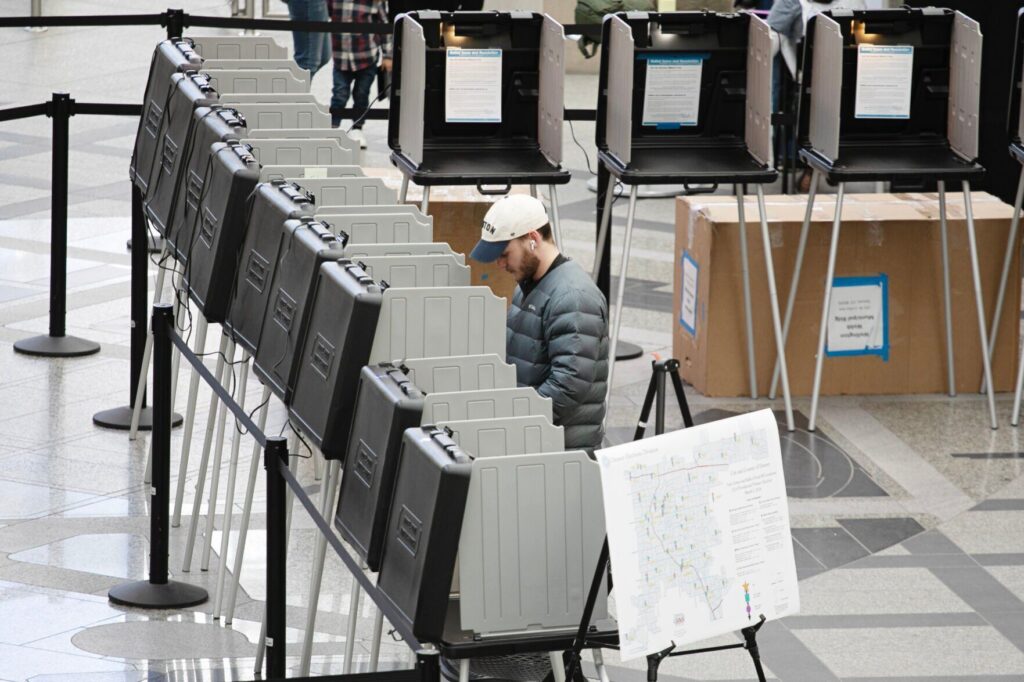
A federal judge upheld Colorado’s individual campaign contribution limits as constitutional on Thursday, finding that three Republican plaintiffs failed to prove the campaign finance framework violates their First Amendment rights. U.S. District Court Senior Judge John L. Kane recognized that...

Seligman, Bridges, Gonzales lead downballot races heading into Colorado Democrats’ state assembly
Ernest Luning
ernest.luning@coloradopolitics.com
Updated 2 days ago
As Colorado Democrats prepare to designate candidates to the June primary ballot at the party’s state assembly in Pueblo on Saturday, three candidates appear poised to win top-line designation in downballot statewide races, according to data compiled by the state...
Planned Parenthood, groups launch campaign against transgender ballot measures in Colorado
Marissa Ventrelli
marissa.ventrelli@coloradopolitics.com
Updated 2 days ago
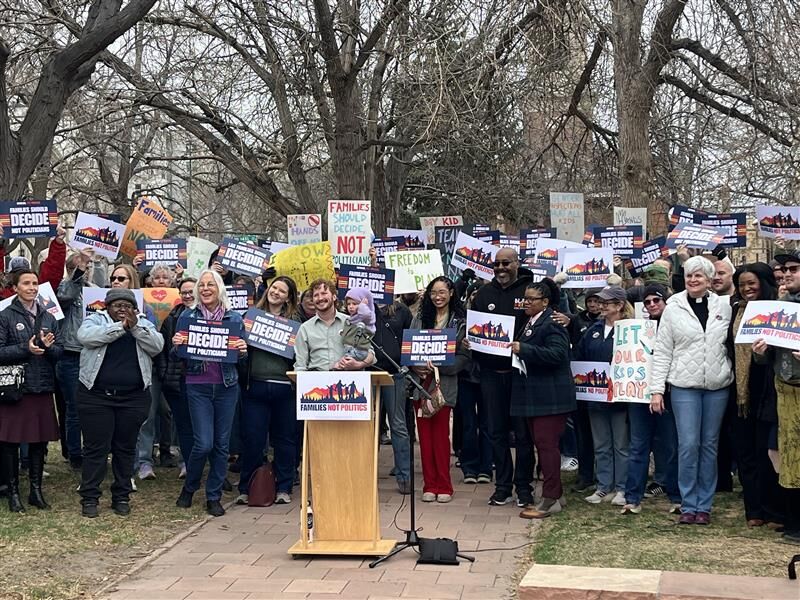
Planned Parenthood and other groups have launched a coalition to oppose two ballot measures that would ban transgender surgeries among children and require student athletes to only join sports teams that correspond to their biological sex. The two measures will...
From pause to progress — a better path on AI policy | OPINION
Colorado Politics
colorado-politics@coloradopolitics.com
Updated 3 days ago
By Brittany Morris Saunders and Loren Furman Last year, following the Special Legislative Session, we wrote in Colorado Politics that delaying Colorado’s AI Act was not a setback. It was an opportunity. We asked state leaders to pause, bring more...
Cutting Prop 123 would cost Colorado far more than it saves | OPINION
Colorado Politics
colorado-politics@coloradopolitics.com
Updated 3 days ago
By Luke Teater Colorado’s legislative budget writers are about to receive updated revenue forecasts and begin making final cuts to close a historic budget gap, and Proposition 123’s affordable housing financing tools are on the chopping block. But in their...