

Colorado coal use seen as in decline in 1980s | A LOOK BACK
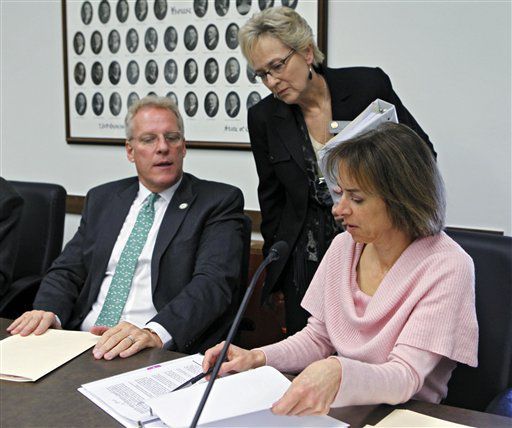
Forty-Five Years Ago This Week: “Contrary to popular belief, it appears that growth in Colorado’s coal industry during the 1980s will be surprisingly sluggish,” said the findings in the Colorado Energy Research Institute’s “Focus Series.”
The institute’s conclusions on the state of energy in Colorado were not surprising to many. In 1979, Colorado had an estimated production capacity of 37 million tons per year, but 1.2 million tons were stockpiled for lack of market. Colorado Energy reported that 38 of Colorado’s 83 coal mines were either failed, idle or closed.
“The industry is not booming,” said Joan Martin, author of the Focus Report. “There are several causes for the problems in Colorado’s coal industry and no easy solutions. But central to an understanding of coal in Colorado is that omnipresent regulator, the federal government.”
For example, the Clean Air Act of 1970 required eastern and midwestern coal users to reduce sulfur dioxide emissions either by installing scrubbers, which were not always reliable, or by importing western coal. Many chose to import Colorado coal.
But in 1979, new source performance standards required the use of the best available emission control technology and the west’s coal advantages were no more. Then the federal government rolled out guidelines to prevent significant deterioration of visibility, like that of Rocky Mountain National Park, Sand Dunes National Monument and other wilderness areas.
“Growth in Colorado’s coal industry is partially tied to nuclear power because the Midwest is a potential market for both power reactors and Colorado coal,” Martin said. “We’ve seen fairly slow electrical generation growth everywhere, but when Midwest utilities do build new plants, they’ll either be nuclear or coal. What’s bad for nuclear is good news for Colorado coal.”
Twenty-Five Years Ago: Colorado’s Fair Share Health Care bill, “the Wal-Mart Bill”, was killed in committee at the request of its House sponsor, state Rep. Judy Solano, D-Brighton.
The so-called “Wal-Mart Bill” was a part of a multiple state-level initiatives after the passage of Maryland Senate Bill 06-790, which required large employers to spend a minimum percentage of payroll, 8%, on health benefits. The response from multiple states was so strong that the New York Times reported in February 2006 that Wal-Mart had announced plans to expand healthcare coverage to more employees.
But in Colorado, the Fair Share Health Care Bill was extremely controversial.
“The Business Affairs Committee members had legitimate questions,” Solano said. “After a seven-minute statement reemphasizing the need for this measure, I asked the committee to kill the Fair Share Health Care Bill so that further study and work could be done to improve the bill.”
Solano said that there wasn’t enough information to move forward and that her team needed the disclosure to do a good job and to see how cost shifting would affect Colorado companies. Solano did not know the number of working employees currently on public health programs and said the absence of this critical information was evident, with many committee-members dissatisfied.
“The absence of information is unacceptable,” said Colorado AFL-CIO political director Carolyn Siegel. “The efforts to pass Fair Share legislation this year demonstrated that the state needs to release information on how many working employees use public health programs, where they work and what their health care costs taxpayers.”
But Republican Gov. Bill Owens had vetoed a bill Solano sponsored in 2005 that would have done just that, revealing the information. The executive branch also denied an open records request from the Front Range Economic Strategy Center.
“I guess some people are afraid to look at the truth,” Solano said.
House Minority Leader Rep. Mike May, R-Parker, said the result was a victory for Republicans and saw the bill as a political move by Democrats to please the unions rather than as a legitimate attempt to pass “anti-business” legislation.
Rachael Wright is the author of several novels, including The Twins of Strathnaver, with degrees in Political Science and History from Colorado Mesa University, and is a contributing columnist to Colorado Politics, the Colorado Springs Gazette, and the Denver Gazette.

Gov. Lamm challenges Congress to stop ‘decontrol’ of natural gas | A LOOK BACK
Rachael Wright, Special to Colorado Politics
rachael.wright@coloradopolitics.com
Updated 2 days ago
Forty-Five Years Ago This Week: In a memo to Colorado’s congressional delegation, Gov. Dick Lamm urged them to vote against the phased pricing deregulation provisions in the Natural Gas Policy Act, a measure introduced in Congress in 1978 and still...
The Centennial State’s nuclear energy opportunity | OPINION
Michael Hancock
michael-hancock@coloradopolitics.com
Updated 7 hours ago
Colorado was given a clear opportunity earlier this year. On Jan. 28, the U.S. Department of Energy issued a Request for Information (RFI) seeking potential hosts for Nuclear Energy Innovation Campuses — an early-stage process designed to identify states serious...

More pain than gain in upending Colorado’s water-access laws | OPINION
Colorado Politics
colorado-politics@coloradopolitics.com
Updated 7 hours ago
By Greg Walcher and Mike King Colorado’s long-standing balance between public recreation and private property along rivers is now under renewed pressure. But changing stream access law would impose significant fiscal and legal costs for relatively limited new recreational benefit....

Guardianship is not a homelessness policy | OPINION
Colorado Politics
colorado-politics@coloradopolitics.com
Updated 7 hours ago
By Amelia McKeon The federal government’s proposal to expand guardianship for homeless veterans is being framed as compassionate. It is anything but. It is a dangerous shift toward using one of the most restrictive legal tools we have as a...

Ready to build next-gen clean-energy infrastructure —data centers included | OPINION
Colorado Politics
colorado-politics@coloradopolitics.com
Updated 7 hours ago
By Nate Bernstein and Jason Wardrip Colorado has long taken pride in doing things a little differently. We are a state of innovators, entrepreneurs and adventurers, and often lead the nation in new policies and new ideas. For generations, our...
Colorado justices accept appeals on Netflix taxation, children pursuing neglect cases
Michael Karlik
michael.karlik@coloradopolitics.com
Updated 12 hours ago
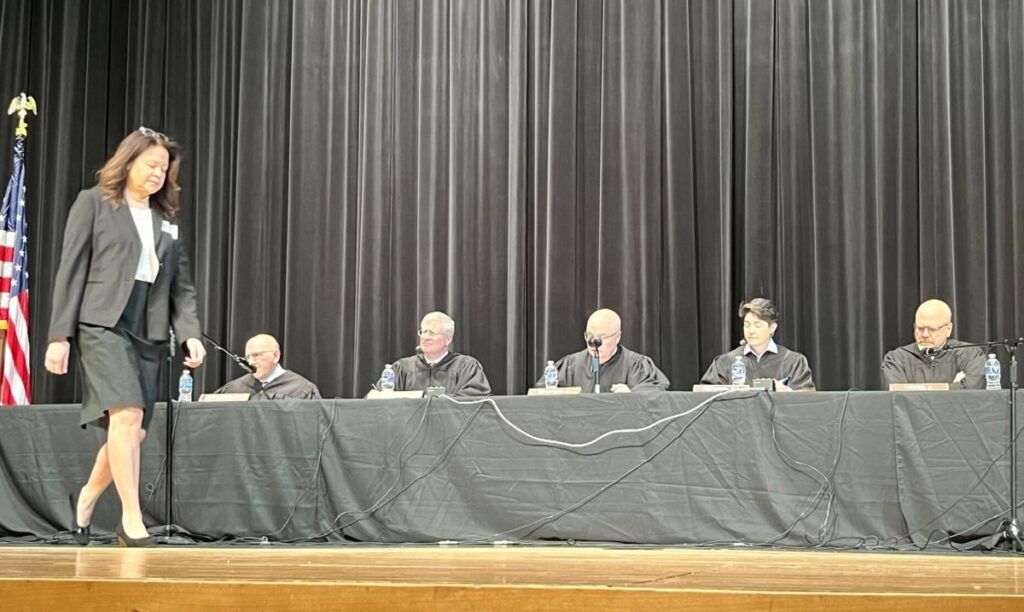
The Colorado Supreme Court announced on Monday that it will decide whether Netflix subscriptions are subject to the state’s sales tax as “tangible personal property.” At least three of the court’s seven members must agree to hear an appeal. The...
Proposal outlines $300M deal separating Pinnacol from Colorado state government
Marianne Goodland
marianne.goodland@coloradopolitics.com
Updated 12 hours ago
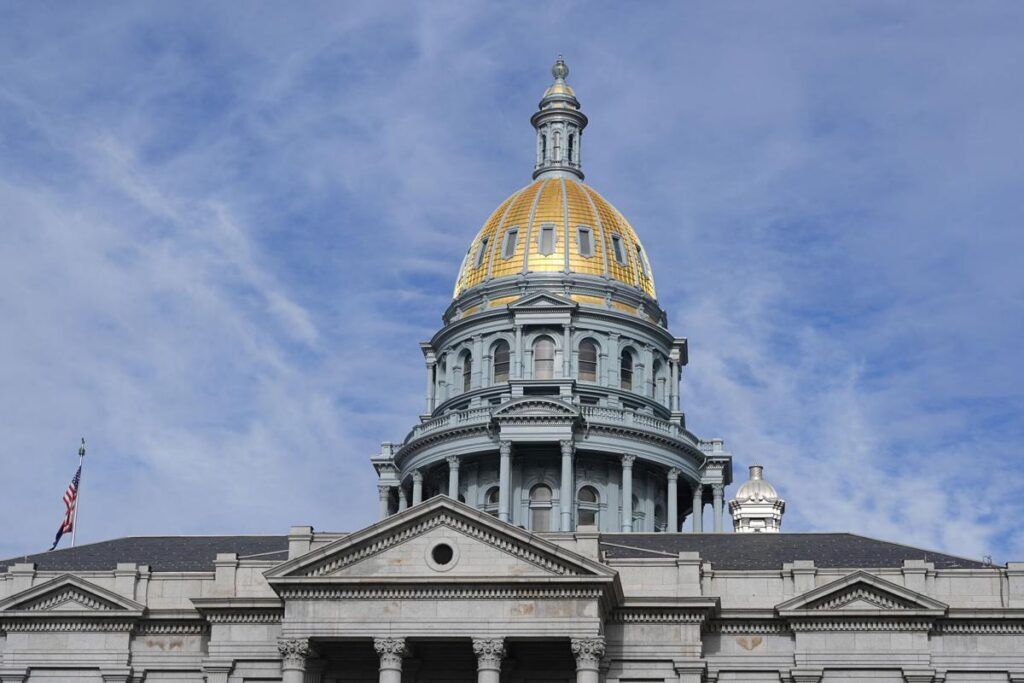
Colorado lawmakers are weighing a proposal that would allow Pinnacol Assurance to sever its remaining ties to the state in exchange for a $300 million payment, a long‑debated shift that supporters say could stabilize the insurer’s future and help plug...
Bill requiring employers to grant unpaid leave to Colorado lawmakers heads to governor’s desk
Marissa Ventrelli
marissa.ventrelli@coloradopolitics.com
Updated 11 hours ago
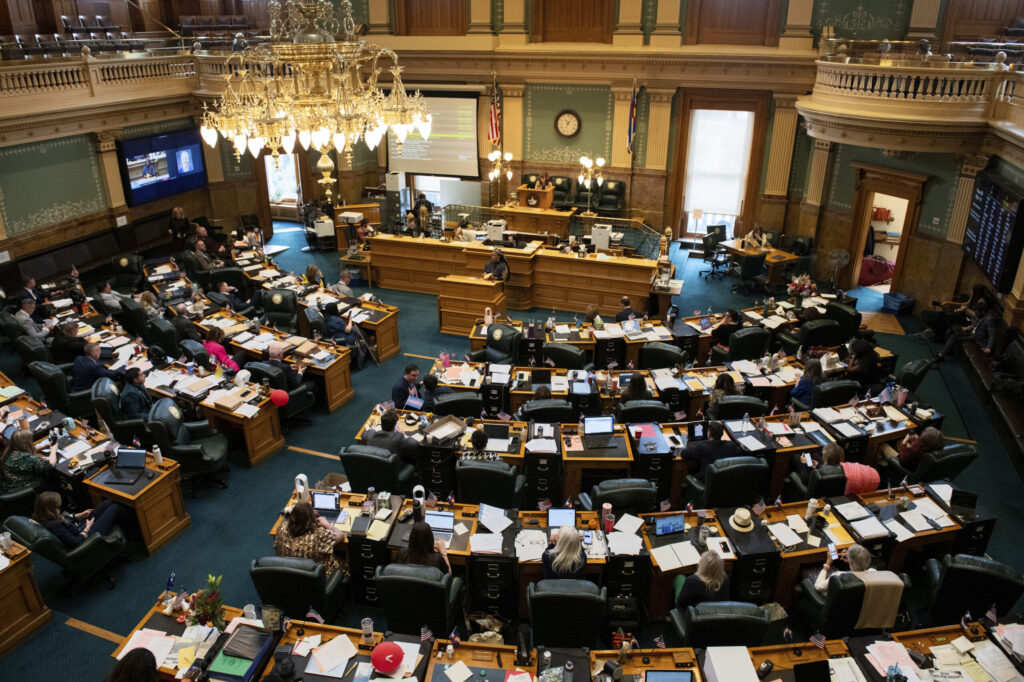
Colorado lawmakers are one step away from securing guaranteed unpaid leave from their day jobs during the legislative session after the House narrowly approved the proposal Thursday. Senate Bill 087 would require businesses to allow employees who are members of...
Redistricting fight escalates as Colorado Title Board clears competing ballot proposals
Marianne Goodland
marianne.goodland@coloradopolitics.com
Updated 12 hours ago
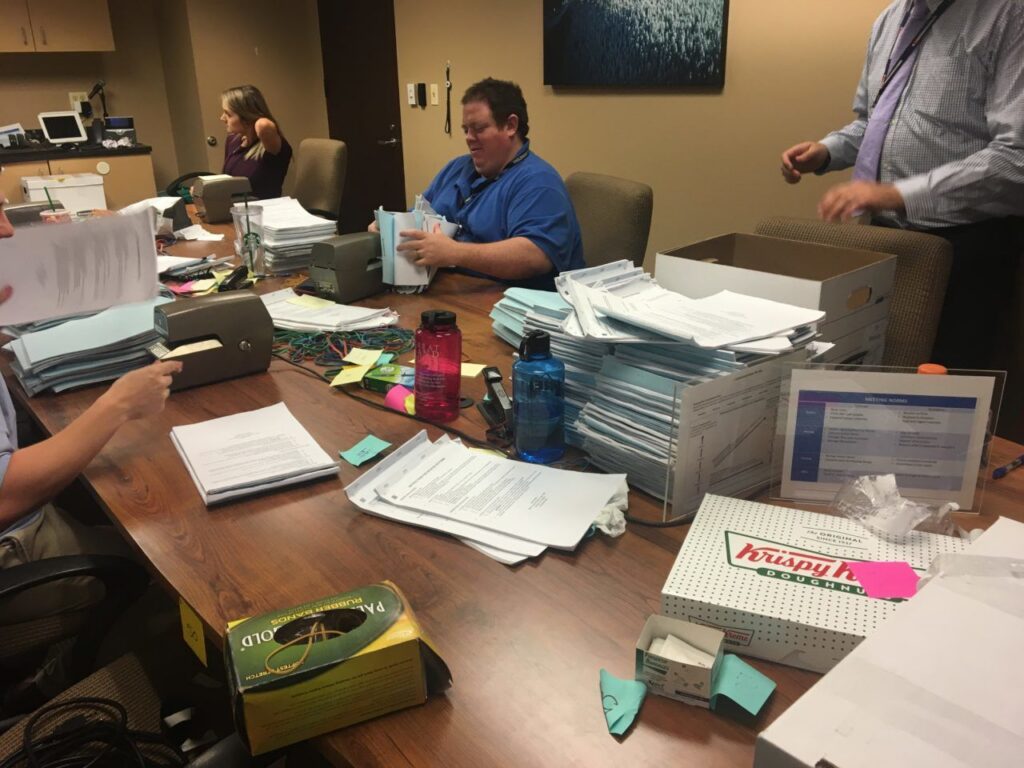
Colorado’s title board on Wednesday gave final approval to multiple ballot measures related to congressional redistricting, setting up a series of proposals that could alter how the state draws its U.S. House districts for the 2028 and 2030 elections. The...
Trump downplays major reform bill and says housing is ‘all about interest rates’
Zach Halaschak, Washington Examiner
zach.halaschak.washington.examiner@gazetteedit.wpenginepowered.com
Updated 14 hours ago
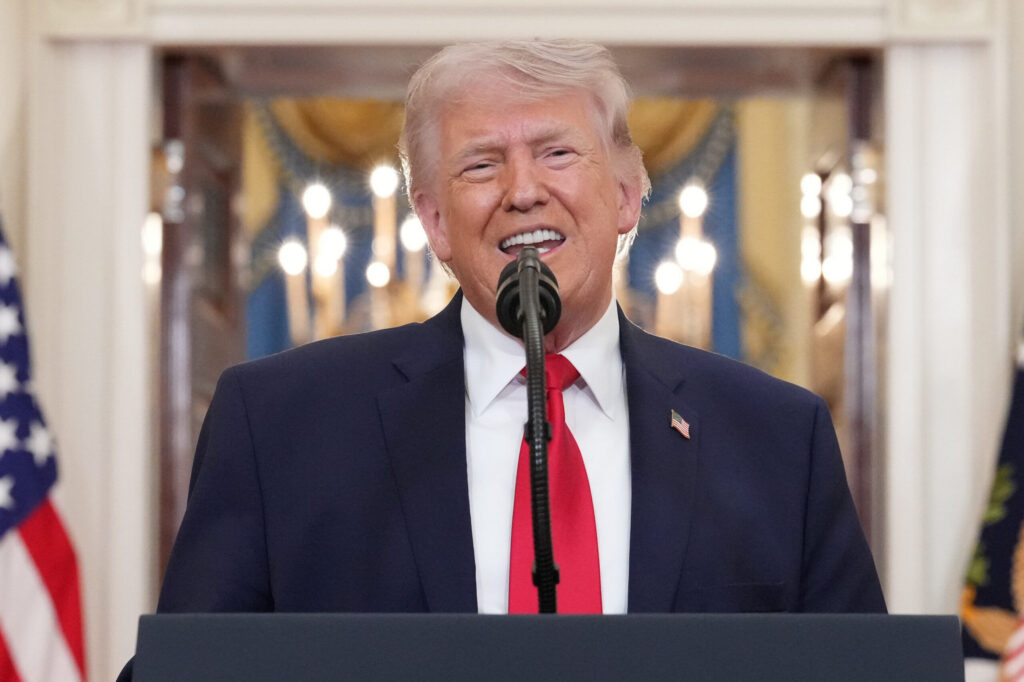
President Donald Trump downplayed the bipartisan housing legislation that many congressional allies hope will ease the affordability worries plaguing voters, saying instead in an exclusive Washington Examiner interview that housing is “all about interest rates.” Trump said on a phone call Thursday morning...