

Federal judge upholds constitutionality of Colorado campaign contribution limits
A federal judge upheld Colorado’s individual campaign contribution limits as constitutional on Thursday, finding that three Republican plaintiffs failed to prove the campaign finance framework violates their First Amendment rights.
U.S. District Court Senior Judge John L. Kane recognized that Colorado’s limitations on individual contributions to state political candidates are among the lowest in the country. Moreover, periodic adjustments to the caps have lagged behind inflation.
However, Kane wrote in a March 26 order that Colorado voters legitimately enacted the limits to guard against “quid pro quo” corruption, and they do not prevent political challengers from mounting successful campaigns.
“Therefore, they do not violate the political expression and association rights of candidates or contributors that are guaranteed by the First Amendment,” wrote Kane, a Jimmy Carter appointee.
The lawsuit was filed more than four years ago by now-Sen. Rod Pelton, R-Cheyenne Wells; Steve House, a former state Republican Party chair; and Greg Lopez, a past and current candidate for governor who served for six months as a Republican congressman in 2024. An attorney for the plaintiffs did not respond to a request for comment.
“We are glad this case is resolved, and will continue to uphold the state’s campaign finance laws,” said Jack Todd, a spokesperson for Secretary of State Jena Griswold, who was named as a defendant.
The plaintiffs alleged that Article 28, which voters approved as a state constitutional amendment in 2002, set contribution limits to political candidates so low that they violate the First Amendment and federal court precedent. Although complex, there were two key parts of Article 28 in dispute.
First, the constitution places dollar caps on how much a candidate can receive from a single contributor in a primary and general election cycle, now amounting to $1,450 for “Tier 1” candidates running for statewide office and $450 for “Tier 2” offices, including state legislative seats.
Second, if a candidate opts to voluntarily restrict the total money spent on their campaign, they are eligible to collect donations in twice those amounts from individuals. The limits vary between offices, with only candidates for governor and lieutenant governor being able to exceed $1 million.
Kane declined to block enforcement of the limits shortly after the plaintiffs filed suit. He decided at the time that several factors weighed in favor of the government. For example, there was no apparent disadvantage to challengers from Article 28’s donation limits. Political parties are able to donate substantially higher amounts to candidates. And while the caps for legislative candidates had almost never experienced an inflationary increase since 2002, Article 28 does permit the caps to rise.
Kane then held a multiday trial in July 2024. He heard testimony from the plaintiffs, other elected officials, and expert witnesses who attempted to quantify the relationship between campaign contribution limits and electoral competitiveness.
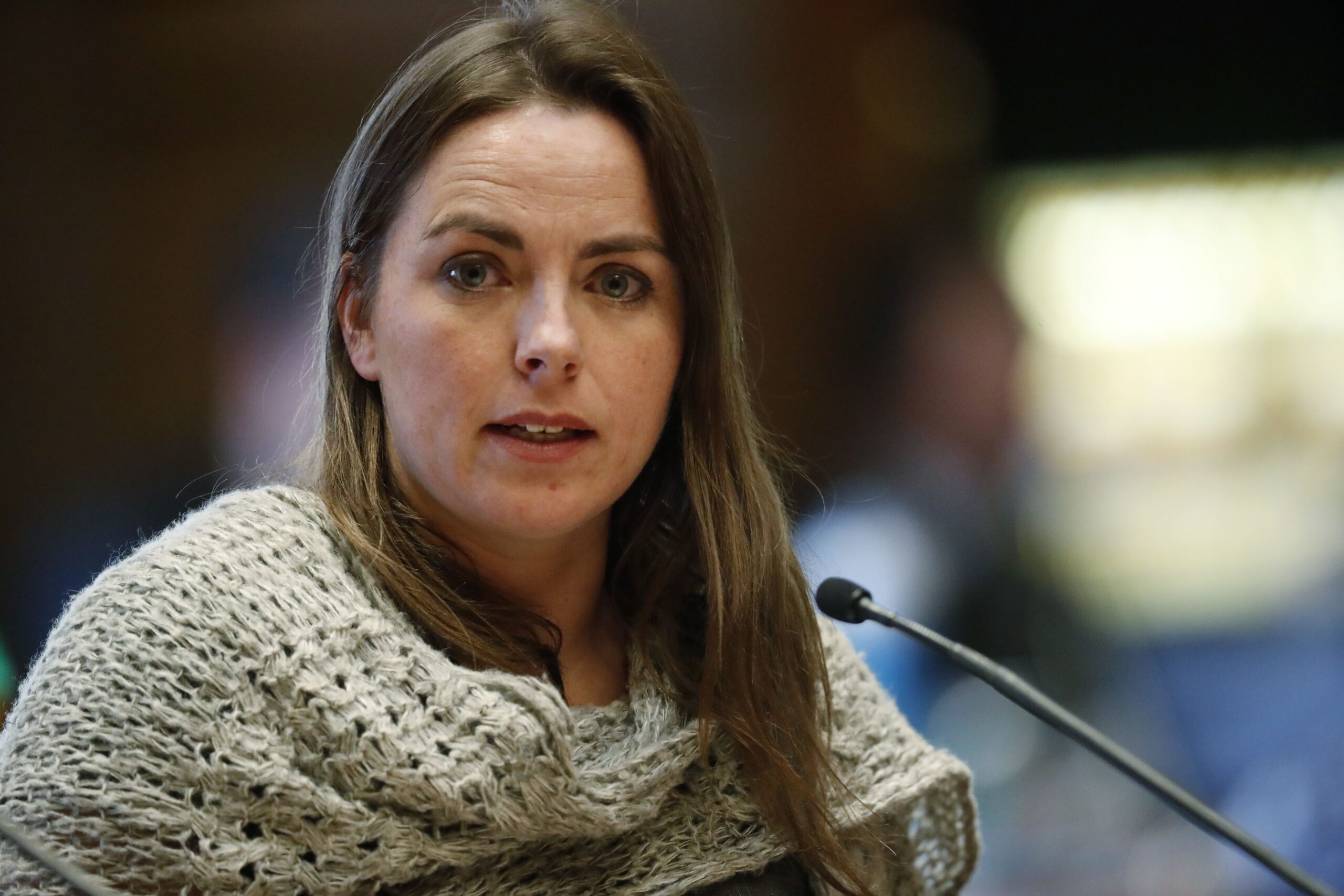
Although several witnesses told Kane that they were unaware of any instances of quid pro quo corruption in Colorado related to individual campaign contributions, former Sen. Kerry Donovan, D-Vail, testified that an interest group attempted to sway her by putting money figuratively on the table.
“During their candidate interview, they asked me directly how I would vote on a hypothetical bill that would likely come up in the next session, and then directly implied that their endorsement and subsequent financial support hinged on my answer to that question,” she said. “I did not have to infer anything in this. It was basically like, ‘Your vote on this bill is this money.'”
In his order, Kane wrote that the U.S. Supreme Court has found that spending money in connection with politics is a constitutionally protected activity. While the court’s reasoning involved the importance of a robust debate over ideas, “in the digital age, their means of protection may need to be reconsidered,” Kane added.
He concluded the contribution limits served a permissible purpose in preventing corruption.
“From this history, it is easily inferred that the contribution limits were adopted because the public believed that the previously set higher limits for individual contributions presented opportunities for abuse,” he wrote.
In turning to the relatively small caps, Kane noted the Supreme Court has recognized “danger signs” for contribution limits if they are substantially lower than what other states have enacted or lower than what the court has previously upheld. To evaluate the constitutionality of those limits, courts employ the “Randall factors,” named for the Supreme Court’s 2006 decision in Randall v. Sorrell that invalidated Vermont’s campaign finance act based on its unjustifiably low contribution limits.
Based on the evidence, Kane did not find that the limits harmed the ability of challengers to mount campaigns against incumbents. He also reiterated that political parties themselves are able to contribute to candidates in far greater amounts, should they choose to do so. Further, the limits largely do not apply to volunteers performing campaign duties.
As for the fourth Randall factor, Kane noted his “genuine concern” about the way Colorado’s campaign finance framework accounts for inflation. Although the caps are adjusted every four years, the mechanism for rounding down has resulted in almost no increase for “Tier 2” candidates, and an understated increase for “Tier 1” candidates over the years.
“If I were in the business of policymaking, the indexing mechanism … might not be the one I would use,” wrote Kane. “It is, however, the mechanism that Colorado voters chose in this context.”
He added that candidates in Colorado appear able to fundraise adequately, so the limits are “within the constitutionally acceptable range.”
The case is Lopez et al. v. Griswold et al.


Killing off the Regional Transportation District | Miller Hudson
Miller Hudson
miller-hudson@coloradopolitics.com
Updated 1 hour ago
This column is appearing the same day state Sen. Matt Ball (D) of Denver and his legislative co-sponsors unveil legislation implementing many of the recommendations advanced by last summer’s Regional Transportation District Accountability Committee. Although it isn’t readily apparent, they...

Green energy shouldn’t come at expense of Colorado farmers, ranchers feeding us | Rachel Gabel
Rachel Gabel
rachel-gabel@coloradopolitics.com
Updated 1 hour ago
In 2023, the Department of Energy released the National Interest Electric Transmission Corridors (NIETC) study identifying areas they speculate would experience transmission capacity constraints of congestion. The map identified more than 2 million acres or 24% of the state of...
Bill in state legislature would put large apartment projects in single-family neighborhoods | Cronin & Loevy
Tom Cronin Bob Loevy
tom-cronin-bob-loevy@coloradopolitics.com
Updated 58 minutes ago
There is an old joke that goes something like this: “When the state legislature is in session, no person and their property are safe.” That is not a joke in the older, more traditional neighborhoods that surround the downtown regions...

Colorado hates its disabled citizens | Jon Caldara
Jon Caldara
jon-caldara@coloradopolitics.com
Updated 3 days ago
This is a selfish column. The legislature is about to hurt my disabled son. My son, Chance, has Down syndrome and a few years ago would have been labeled “retarded.” Then “developmentally delayed.” Now the hypersensitive prefer “intellectually disabled.” Whatever...
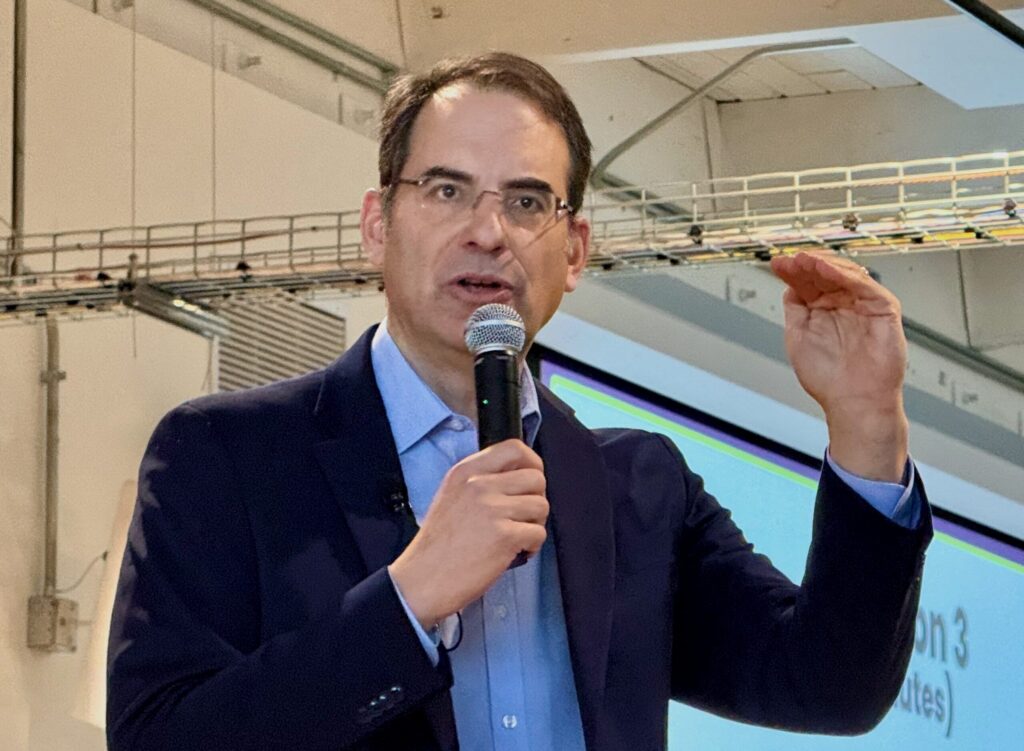
Phil Weiser wins top spot in Colorado’s Democratic gubernatorial primary at party’s state assembly
Ernest Luning
ernest.luning@coloradopolitics.com
Updated 1 day ago
Attorney General Phil Weiser’s name will appear first on Colorado’s Democratic gubernatorial primary ballot after his overwhelming win Saturday at the party’s state assembly in Pueblo. Weiser joins U.S. Sen. Michael Bennet in the June 30 primary for the office...
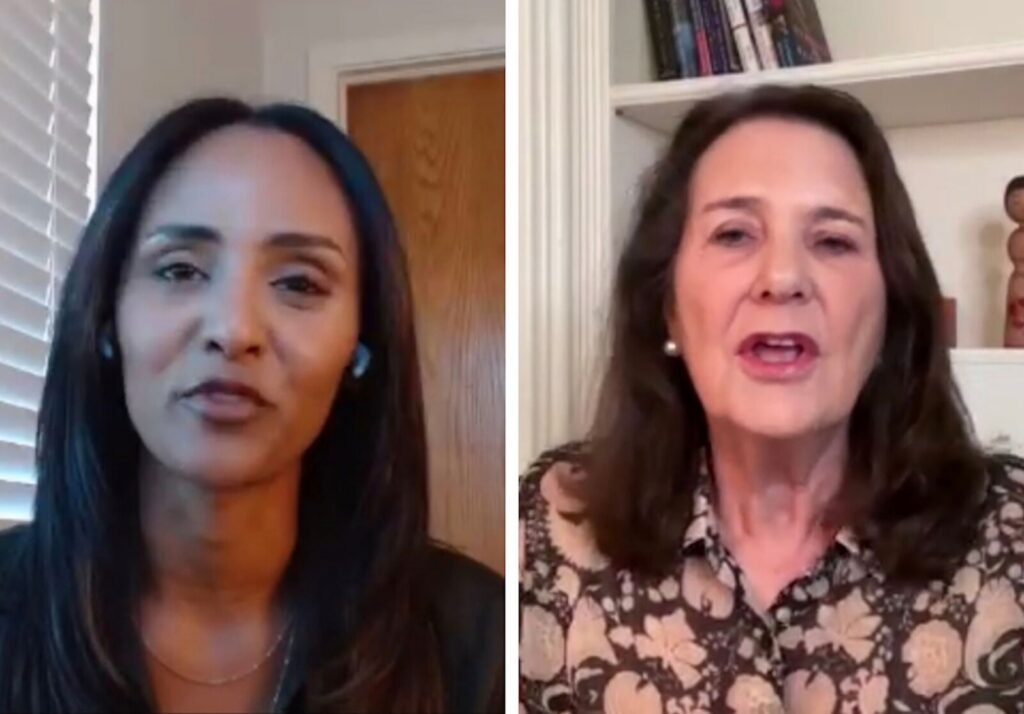
Denver Democrat Diana DeGette trails challenger Melat Kiros at assembly as both qualify for primary
Ernest Luning
ernest.luning@coloradopolitics.com
Updated 2 days ago
U.S. Rep Diana DeGette, a Denver Democrat, qualified for Colorado’s June primary by the skin of her teeth Friday at the party’s district assembly, where the 15-term incumbent received fewer than half as many delegate votes as her challenger, 28-year-old...
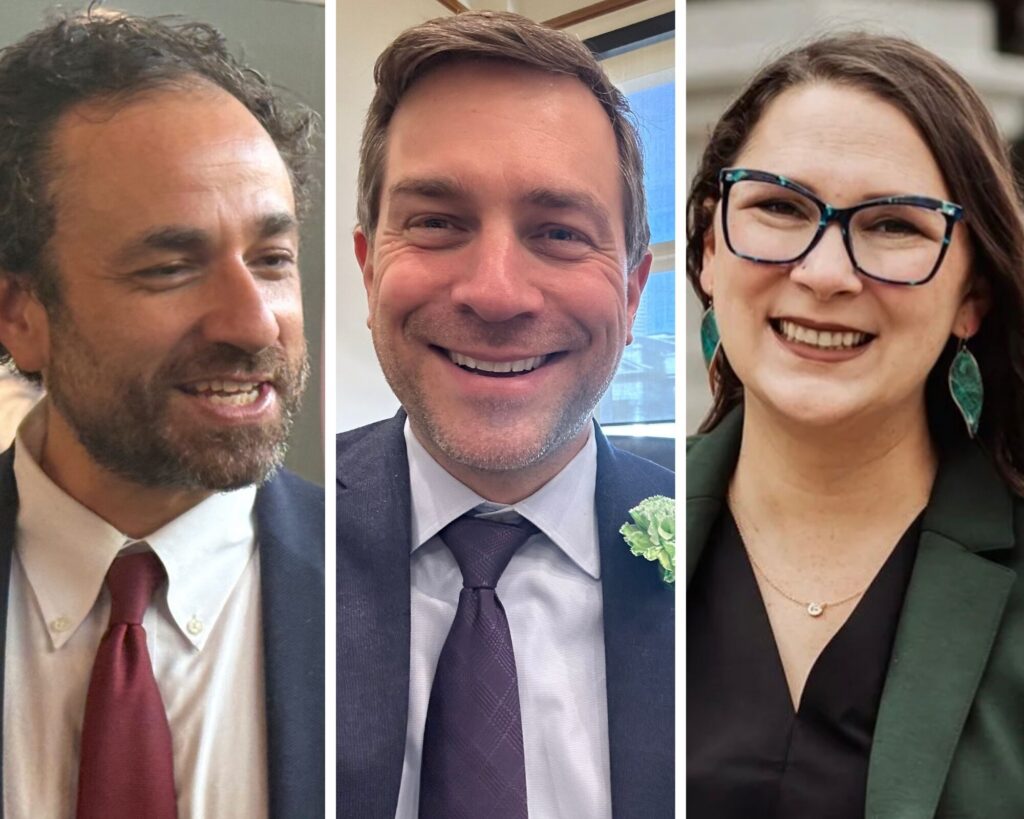
Seligman, Bridges, Gonzales lead downballot races heading into Colorado Democrats’ state assembly
Ernest Luning
ernest.luning@coloradopolitics.com
Updated 2 days ago
As Colorado Democrats prepare to designate candidates to the June primary ballot at the party’s state assembly in Pueblo on Saturday, three candidates appear poised to win top-line designation in downballot statewide races, according to data compiled by the state...
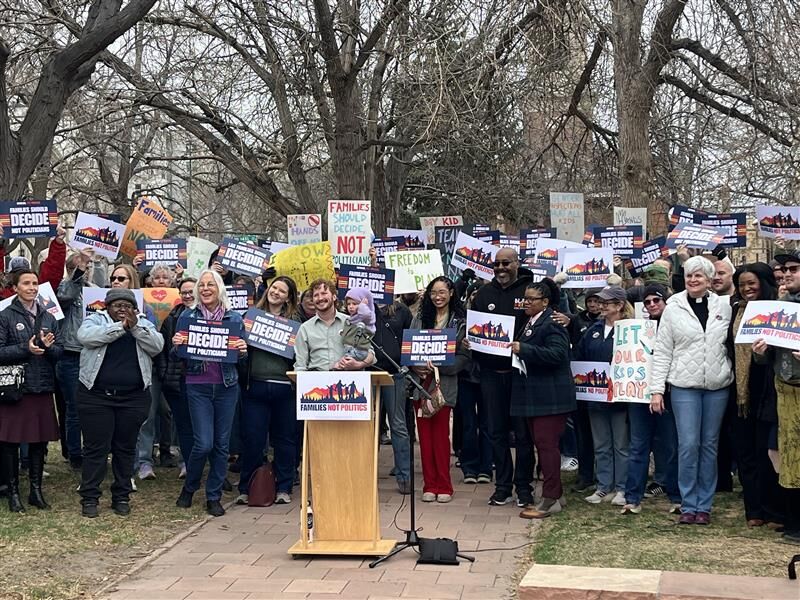
Planned Parenthood, groups launch campaign against transgender ballot measures in Colorado
Marissa Ventrelli
marissa.ventrelli@coloradopolitics.com
Updated 2 days ago
Planned Parenthood and other groups have launched a coalition to oppose two ballot measures that would ban transgender surgeries among children and require student athletes to only join sports teams that correspond to their biological sex. The two measures will...
From pause to progress — a better path on AI policy | OPINION
Colorado Politics
colorado-politics@coloradopolitics.com
Updated 3 days ago
By Brittany Morris Saunders and Loren Furman Last year, following the Special Legislative Session, we wrote in Colorado Politics that delaying Colorado’s AI Act was not a setback. It was an opportunity. We asked state leaders to pause, bring more...
Cutting Prop 123 would cost Colorado far more than it saves | OPINION
Colorado Politics
colorado-politics@coloradopolitics.com
Updated 3 days ago
By Luke Teater Colorado’s legislative budget writers are about to receive updated revenue forecasts and begin making final cuts to close a historic budget gap, and Proposition 123’s affordable housing financing tools are on the chopping block. But in their...
PREV
PREVIOUS

Appeals court rejects theory that existing tax revenue undermines need for new fees
Colorado’s second-highest court rejected a plaintiff’s claim on Thursday that the tax revenue generated by an existing activity should prevent local governments from imposing new fees aimed at regulating the activity. The question stemmed from Colorado’s unique constraints on taxation under the 1992 Taxpayer’s Bill of Rights. The constitutional amendment generally requires voter approval of […]

Kwame Spearman warrants plenty of criticism, not cancellation | SONDERMANN
All of us are flawed humans, some more so than others. This is the tale of Kwame Spearman who burst onto Denver’s business and political scene a handful of years back. His ride has taken a downhill trajectory. Within the past week, Spearman was shown the door as an undefined executive at the just-opened Denver […]