

Public figures have limited path to sue over accusations of criminality, says appeals court
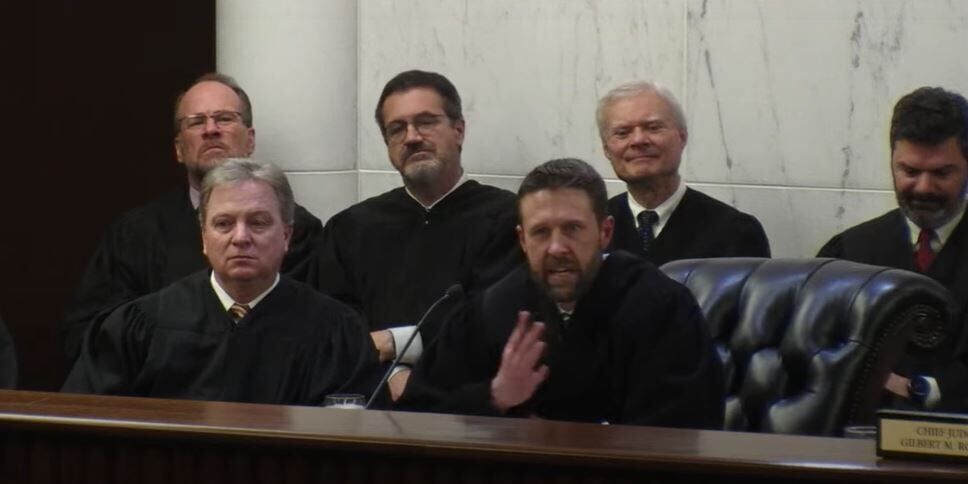
Colorado’s second-highest court ruled last week that a public figure cannot sue for defamation solely because a person publicly accuses them of committing a crime, as the statement may be constitutionally protected opinion.
A three-judge Court of Appeals panel narrowed the claims that Academy School District 20 board member Derrick Wilburn may pursue against Bernadette Guthrie, who has repeatedly accused Wilburn of being a “predator.” Although the panel decided that Guthrie may be legally liable for her assertions, which can be proven true or false, her free speech rights permitted her to air her conclusions about Wilburn based on undisputed facts.
“The line between fact and opinion can grow blurry when one person accuses another — particularly a public figure — of committing a crime,” wrote Judge Karl L. Schock in the March 12 opinion. “But there is a difference between falsely accusing someone of committing a criminal act and expressing the view that an act the person indisputably undertook violates the law.”
Case: Wilburn v. Guthrie
Decided: March 12, 2026
Jurisdiction: El Paso County
Ruling: 3-0
Judges: Karl L. Schock (author)
Matthew D. Grove
David H. Yun
When Wilburn was a candidate for the El Paso County-based school district in 2023, he appeared at a candidate forum. The moderator asked participants how they would ensure that “banned books do not negatively impact students’ access to diverse educational literature.”
Wilburn responded that he was “going to speak some words now that have not come from my lips in 30 years, and I apologize in advance.” He then read passages from three books that he said were available in District 20 libraries. The excerpts contained explicit sexual references, curses, and the N-word.
“If you want your children to have access to and read this material, that’s none of my business. But as an independent taxpayer in this district, don’t ask me to pay for it,” Wilburn concluded.
Guthrie, who was present with her 11-year-old daughter, grew offended. On social media and in school board meetings, she called Wilburn a “predator,” a “pervert,” and said he committed “this crime” of promoting obscenity. She also wrote to the Colorado Association of School Boards about what to do when “a sitting school board director is under investigation for sexual crimes against minor children.”
The association’s executive director responded that the “board member (should) exercise caution.” Guthrie instead posted on social media that the email had advised the “school board to exercise caution in allowing Mr. Wilburn access to children.”
Wilburn sued Guthrie for defamation and outrageous conduct. In response, Guthrie sought to dismiss under Colorado’s “anti-SLAPP” law, which stands for “strategic lawsuits against public participation.” Through the law, the legislature provided a mechanism for quickly resolving litigation arising from a person’s rights to free speech and to petition the government.
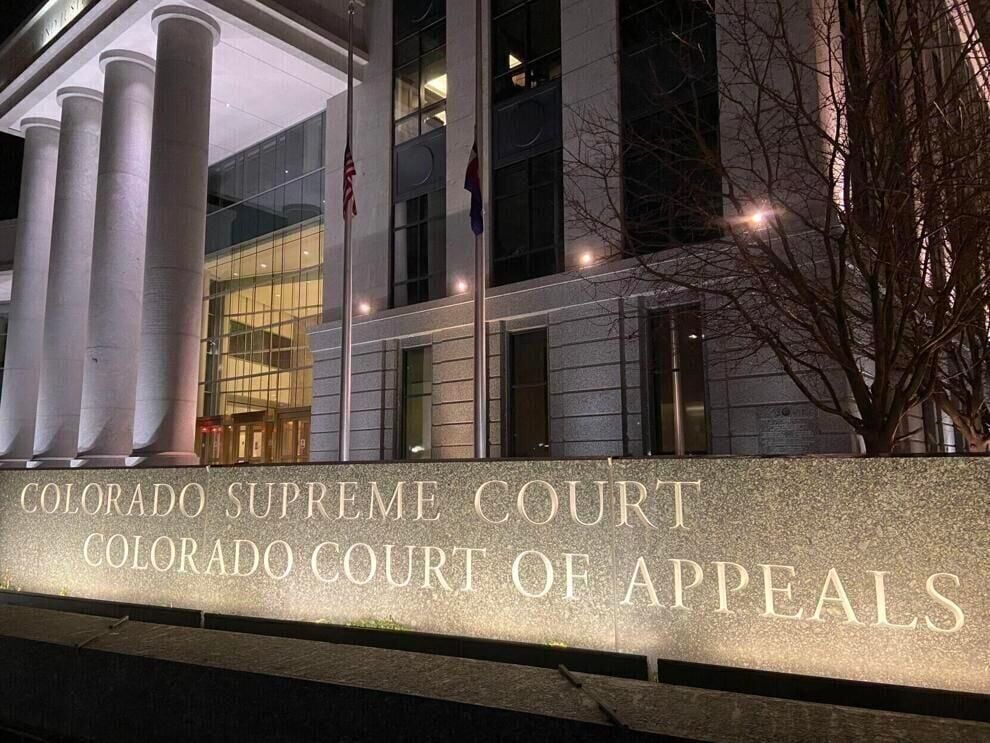
In April 2025, District Court Judge Gregory R. Werner declined to dismiss the case. He noted Guthrie’s various claims about Wilburn could be proven true or false, and they amounted to defamation if they falsely accused him of a crime or serious sexual misconduct.
“Guthrie’s attempt to claim these statements are simply statements of her opinion has no merit. Otherwise, someone would always be able to avoid liability simply by saying, ‘well, this is what I believe,'” wrote Werner. “In this case, a jury could conclude that Guthrie had some ill will against Wilburn because she continued to make statements claiming Wilburn was promoting obscenity to a minor even though there was no basis for that claim.”
Guthrie turned to the Court of Appeals, arguing her statements were “rhetorical hyperbole.”
“To reasonable observers, Guthrie’s statements express moral condemnation rather than factual claims of a criminal conviction,” wrote attorney Edward C. Hopkins Jr.
“The full context of her statements is sufficient for a jury to find at trial that Guthrie was attempting to convince her listeners,” countered attorney David W. Illingworth II for Wilburn, “that Mr. Wilburn was the sort of child predator who committed sex crimes against children because he was aroused by material that contained a description of child rape.”
In the appellate panel’s opinion, Schock wrote that a speaker’s words may be constitutionally protected opinion when they present a characterization extrapolated from “fully and accurately disclosed” facts.
In many instances, “Guthrie explicitly tied her assertions that Wilburn was a ‘predator,’ a ‘pervert,’ and a ‘danger to children’ to his readings at the forum,” Schock wrote. “To the extent Guthrie expressed her view that his doing so was criminal, predatory, or otherwise improper, a reasonable listener would understand these accusations as Guthrie’s opinion of Wilburn’s behavior.”
Although courts have found accusations of criminality to be defamation when the public figure’s actions are in dispute, “We decline to hold that a person may be liable for defamation for calling a public figure’s public acts a crime,” wrote Schock.

The panel permitted Wilburn’s lawsuit to proceed against Guthrie on a subset of her statements that “do not include any context for her accusations of criminal and predatory behavior.” Those included Guthrie’s allegations that there was a pending investigation into Wilburn, her representation of the school board association’s email, and her characterizations of Wilburn’s behavior toward her individually.
Christopher Beall, a First Amendment lawyer and University of Denver law professor who recently served as Colorado’s deputy secretary of state, said he believed the appellate panel correctly drew the line between protected opinion and defamatory statements.
“My criticism of the court’s decision is the court is misunderstanding the context of social media,” he said. “I think our culture today has authorized people to say outrageous things on social media, and everyone who sees outrageous commentary on social media takes it with a grain of salt and does not perceive it to be a statement of fact.”
To that end, Beall said he did not believe public officeholders should ever bring lawsuits in response to critical comments about them.
“I grant you that this defendant pursued what may feel like even a vendetta or a character assassination. But in our politics today, this is what happens,” he said. “What the public official in this case is attempting to do is to impose liability for speech he doesn’t like.”
Hopkins, the attorney for Guthrie, told Colorado Politics that a person “can sincerely believe that a public official’s conduct broke the law, say so publicly, and be constitutionally protected in doing so — as long as she discloses the conduct she is talking about and lets the public evaluate it for themselves. That is what Mrs. Guthrie did.”
“No parent should be intimidated by a public official for advocating for their child’s safety and well-being,” added Guthrie in a statement. “This ruling sends a clear message that parents can’t be silenced for speaking up.”
Wilburn’s lawyers did not respond to an email seeking comment.
The case is Wilburn v. Guthrie.

Federal judge to consider sanctioning ex-Colorado judicial discipline director
Michael Karlik
michael.karlik@coloradopolitics.com
Updated 3 hours ago
A federal judge ordered Colorado’s former head of judicial discipline on Wednesday to explain why she should not sanction him for making inaccurate statements about the defendants in his lawsuit against the Colorado Supreme Court and related entities. U.S. District...
Federal judge green-lights trial against Denver officer over race-based enforcement
Michael Karlik
michael.karlik@coloradopolitics.com
Updated 1 day ago
A federal judge green-lit a jury trial last week on a man’s claim that a Denver police officer engaged in racially selective enforcement of the law by arresting him for video recording at a police station, while not arresting a...
Federal judge says 8 years in solitary confinement not grounds to reduce man’s sentence
Michael Karlik
michael.karlik@coloradopolitics.com
Updated 1 day ago
A federal judge concluded earlier this month that a man’s eight years allegedly spent in solitary confinement did not justify granting his request for a sentence reduction. However, U.S. District Court Senior Judge William J. Martínez signaled his willingness to...
10th Circuit rejects ‘potential for violence’ when police arrest vehicle occupant’s romantic partner
Michael Karlik
michael.karlik@coloradopolitics.com
Updated 2 hours ago
The Denver-based federal appeals court rejected the idea on Tuesday that a vehicle occupant poses a danger to police solely because they are romantically involved with another occupant who officers are arresting. By 2-1, a three-judge panel of the U.S....

Colorado justices grill debt collector about compliance with law
Michael Karlik
michael.karlik@coloradopolitics.com
Updated 1 day ago
The Colorado Supreme Court repeatedly pressed a debt collection company last week to explain how its lawsuit against a Boulder woman for an unpaid credit card balance complied with the specific requirements that state lawmakers have created. Portfolio Recovery Associates,...
Appeals court agrees defendant’s speech constitutionally protected against El Paso County judge
Michael Karlik
michael.karlik@coloradopolitics.com
Updated 2 days ago
Colorado’s second-highest court agreed last week that a defendant’s critical statements toward an El Paso County judge were constitutionally protected and could not form the basis of a retaliation charge. A three-judge Court of Appeals panel concluded that, in context,...
Colorado justices, 4-3, order new murder trial due to wrongfully excluded evidence
Michael Karlik
michael.karlik@coloradopolitics.com
Updated 2 days ago
The Colorado Supreme Court agreed on Monday that a trial judge incorrectly faulted a defendant for refusing to cooperate in a mental health examination, even though the state’s hospital was the entity that botched its responsibility to evaluate her during...

Overdose deaths from opioids dip in America — but not in Colorado, study says
Jacob Mauk
jacob.mauk@denvergazette.com
Updated 2 days ago
Overdose deaths from opioids rose in Colorado, diverging from the national trend, which has been decreasing, according to a new study from a think tank. In its new report, the Common Sense Institute said synthetic opioid overdose deaths in Colorado...
Error-prone Douglas County judge triggers another reversal of criminal convictions
Michael Karlik
michael.karlik@coloradopolitics.com
Updated 2 days ago
Colorado’s second-highest court overturned a defendant’s Douglas County convictions on Thursday due to the error of a judge whose actions have triggered a disproportionate number of reversals to convictions and sentences in recent years. Since 2021, the Court of Appeals...

Federal judge formalizes injunction blocking USDA’s ‘pilot project’ for Colorado food assistance
Michael Karlik
michael.karlik@coloradopolitics.com
Updated 1 day ago
A federal judge formalized his order on Monday to prevent the U.S. Department of Agriculture from requiring Colorado to participate in a food assistance “pilot project,” finding that it violates the law, the U.S. Constitution, and “the bounds of reasoned...
PREV
PREVIOUS

Proposed data center regulation in Colorado draws critics, backers
A packed marathon hearing at the state Capitol in Colorado highlighted the sharp divide between two competing approaches to the effects of data centers, one of America’s fastest-growing technology sectors. Data centers are the physical facilities that host the servers, networking equipment and storage systems — the backbone of the world’s digital infrastructure. Senate Bill […]
Highway 115 fire blows up, road closed south of Colorado Springs
A fast-moving fire burning along Colorado 115 south of Colorado Springs blew the containment line Thursday, spreading farther east onto Fort Carson and scorching nearly 700 acres, officials said. The blaze was fully uncontained as of late Thursday afternoon, officials said, despite having been 50% contained earlier in the day. Smoke will remain visible along the […]