

Proposed evictions bill fails to improve housing stability while threatening higher rents | OPINION

No landlord wants to evict a tenant for non-payment of rent. That is true for large housing providers, small “mom-and-pop” owners and nonprofit housing rental providers alike. Evictions are financially and emotionally costly for everyone involved. But when rent goes unpaid, eviction is the only legal way to regain possession of a rental housing unit so it can return to the housing market.
The Colorado General Assembly is currently debating House Bill 26-1106. This legislation would create legal red tape that will further delay the eviction process. Though the bill may reduce eviction filings on paper by limiting how many cases courts can process, it would not help one tenant pay their rent or help a single landlord — some with only a handful of units — recoup the average $8,000 to $10,000 that each eviction costs.
Though there are good intentions behind HB 26-1106, it does nothing to address the underlying issue of tenants struggling to pay rent. Most housing providers already work with tenants who fall behind. Payment plans, rental assistance programs and other solutions are often the first step because eviction is costly and time-consuming for everyone involved. But when those efforts fail, the legal process must be able to move forward in a reasonable timeframe. Extending the process even longer does not help tenants catch up on rent — it only prolongs an already difficult situation.
Evictions hurt tenants. And not just the tenants evicted. When a rental home is occupied by someone who is not paying rent, that unit cannot be rented by someone who can. Until that non-paying tenant moves out, that home is not part of the rental housing supply.
Higher numbers of housing units on the market result in lower rent. Don’t believe me? You can rent an apartment along the Front Range for less today than you could in 2023. HB 26-1106, however, will slow the eviction process even more than the current 4-month process. That is time units are unavailable to other renters in the market which results in higher rents for all tenants.
Evictions regulations themselves also increase rents. Extensive research shows those costs ultimately get passed on to other tenants. Eviction regulations such as HB 26-1106 are shown to increase rent by 5.9% to 6.5%. That means the cost of this bill won’t be footed by the government, taxpayers or even housing providers. It will be renters themselves saddled with the bill.
Evictions also hurt housing providers by driving up their costs. I work for a large housing provider, but I also personally own two rental condos. I have worked for nonprofit rental housing providers and public housing authorities. Though these organizations have different missions and resources, they all share one basic reality: they must cover their costs. If they cannot cover their costs, they must receive additional funding from the private sector or government agencies. Otherwise, they go out of business.
Evictions can be devastating to both tenants and landlords. Nobody wants evictions. But sometimes tenants cannot pay rent. Unreasonably extending the eviction process only makes the problem of eviction worse. Ultimately, HB 26-1106 will not help people stay in their homes long-term. It will only lengthen the process and further raise the costs of eviction for all who are involved.
HB 26-1106 moves Colorado in the wrong direction. If lawmakers want to reduce evictions, keep housing affordable and actually provide families with housing stability, the focus should be on helping tenants stay current on rent and increasing housing supply — not slowing down the legal process that returns homes to the market.
The most effective way to reduce evictions is simple: build more housing, increase supply and make it easier for more Coloradans to find a place they can afford. HB 26-1106 not only fails to do those things but will lead to the exact opposite.
Rocky Sundling is a Colorado housing professional, rental property owner and longtime advocate for the multifamily housing industry with more than 35 years of experience.


Costs explode for Colorado program covering pregnant women and children living in the U.S. illegally
Marianne Goodland
marianne.goodland@coloradopolitics.com
Updated 13 hours ago
A state program providing health care to pregnant women and children living in the country illegally is costing far more than lawmakers expected, with expenses nearly tripling in just a year and threatening to squeeze Colorado’s budget amid a $1...
Costs explode for Colorado program covering pregnant women and children living in the U.S. illegally
Marianne Goodland
marianne.goodland@coloradopolitics.com
Updated 13 hours ago
A state program providing health care to pregnant women and children living in the country illegally is costing far more than lawmakers expected, with expenses nearly tripling in just a year and threatening to squeeze Colorado’s budget amid a $1...

Penny wise but foolish by pounds | Paula Noonan
Paula Noonan
paula-noonan@coloradopolitics.com
Updated 4 hours ago
Leadership of Colorado’s General Assembly introduced the Fiscal Year 2026-2027 Legislative Appropriation bill, HB26-1333, at $75.72 million. That will be the budget to run the state legislature next year. About $74 million comes out of the general fund and the...

Prevention works — invest in conflict prevention with wolves | FEEDBACK
Colorado Politics
colorado-politics@coloradopolitics.com
Updated 4 hours ago
The recent reporting on Colorado’s wolf depredation payouts exceeding $700,000 highlights a critical problem with the current approach to wolf recovery: current mainstream systems focus on compensation and ineffective reactive non-lethals. These systems are not designed to prevent conflict but attempts...
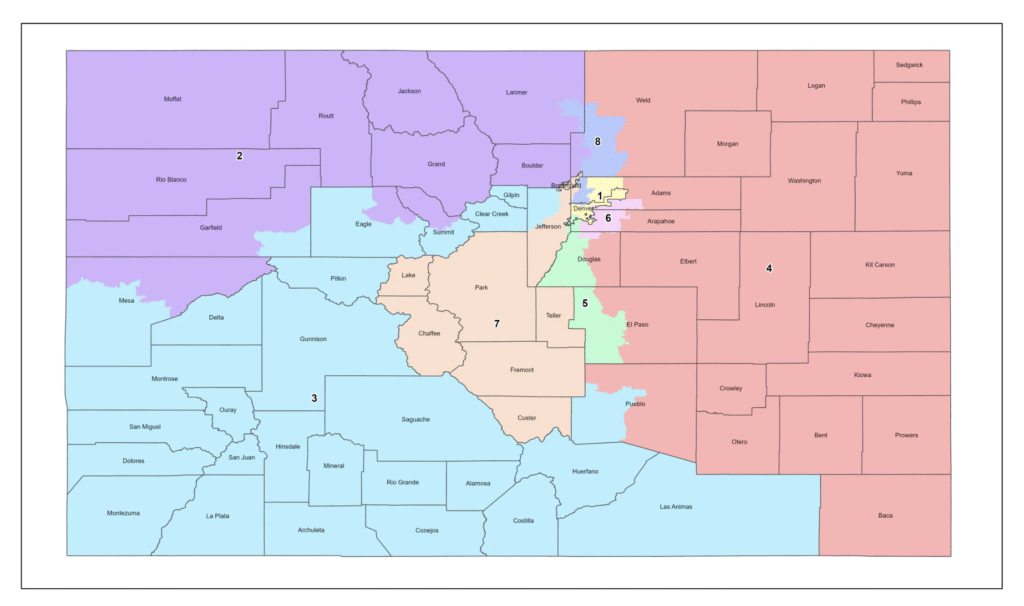
Colorado Title Board advances competing redistricting proposals and revised Pinnacol measure as April ballot deadline nears
Marianne Goodland
marianne.goodland@coloradopolitics.com
Updated 13 hours ago
With just two meetings left before an April 15 deadline, the state’s Title Board on Wednesday pushed through a slate of ballot measures — including a revised proposal to privatize Pinnacol Assurance and dueling plans to redraw Colorado’s congressional map...

Senate panel advances bill to tighten Colorado sports betting rules amid youth addiction concerns
Marissa Ventrelli
marissa.ventrelli@coloradopolitics.com
Updated 13 hours ago
A divided Senate Finance Committee on Tuesday narrowly advanced a bill to impose new restrictions on Colorado’s booming sports betting industry, as lawmakers cited rising concerns about youth gambling and addiction while operators warned the changes could drive bettors to...

Democrat Matt Cavanaugh ends campaign in Colorado’s 5th CD, says petition firm came up short
Ernest Luning
ernest.luning@coloradopolitics.com
Updated 12 hours ago
Democratic congressional candidate Matt Cavanaugh said Wednesday that he was ending his bid to challenge Republican U.S. Rep. Jeff Crank in Colorado’s 5th District because the firm his campaign hired to gather petition signatures failed to deliver. Cavanaugh, an Army...

Colorado voters to decide whether to ban gender surgeries for minors
Marissa Ventrelli
marissa.ventrelli@coloradopolitics.com
Updated 11 hours ago
Colorado voters will decide this November whether to prohibit gender surgeries for minors and bar public funding or insurance coverage for procedures that alter children’s biological sex characteristics. The measure qualified for the ballot amid a push by the federal...

Democrats want to bar use of consumer data to set Colorado prices, employee wages
Marissa Ventrelli
marissa.ventrelli@coloradopolitics.com
Updated 13 hours ago
A closely divided House committee advanced a bill aimed at curbing the use of personal data to set individualized prices and wages, reviving a proposal that failed last year and setting up a broader debate over how far the state...

Colorado’s clean-energy future must be affordable for older adults | PODIUM
Colorado Politics
colorado-politics@coloradopolitics.com
Updated 11 hours ago
By Jason DeaBueno Last winter, one of the older adults we serve at Silver Key shared something that has stayed with me. She begun turning her heat down at night — not because she wanted to, but because she was...
PREV
PREVIOUS

Prevention works — invest in conflict prevention with wolves | FEEDBACK
The recent reporting on Colorado’s wolf depredation payouts exceeding $700,000 highlights a critical problem with the current approach to wolf recovery: current mainstream systems focus on compensation and ineffective reactive non-lethals. These systems are not designed to prevent conflict but attempts to appease tensions after losses occur. This is coexistence, but we can co-thrive. As a […]

Penny wise but foolish by pounds | Paula Noonan
Leadership of Colorado’s General Assembly introduced the Fiscal Year 2026-2027 Legislative Appropriation bill, HB26-1333, at $75.72 million. That will be the budget to run the state legislature next year. About $74 million comes out of the general fund and the remainder from other sources. The allocation works out to about $12.80 per Colorado resident at […]